
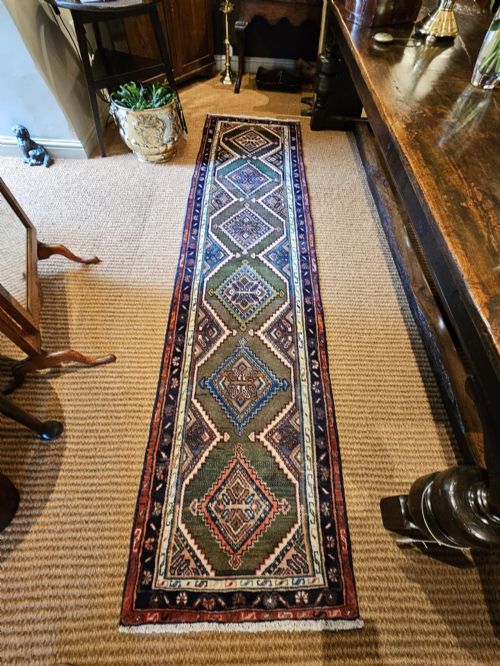
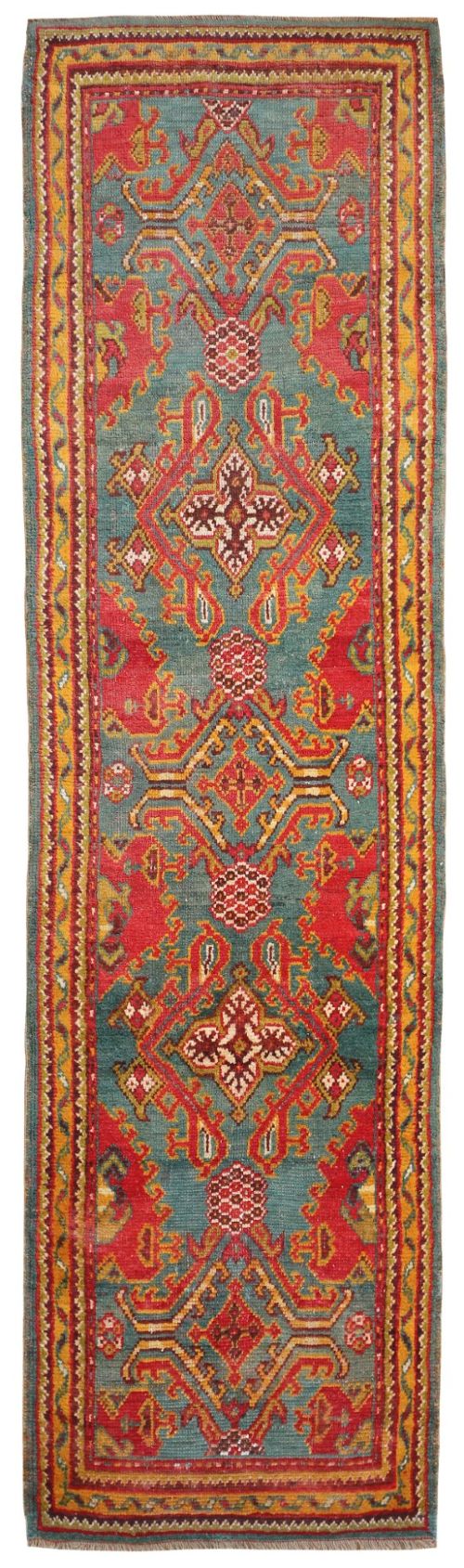

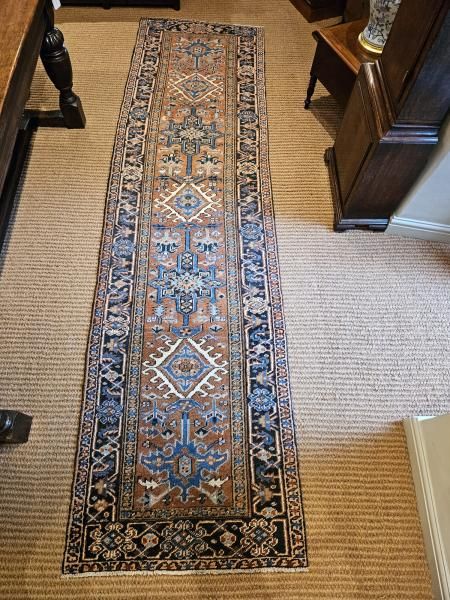
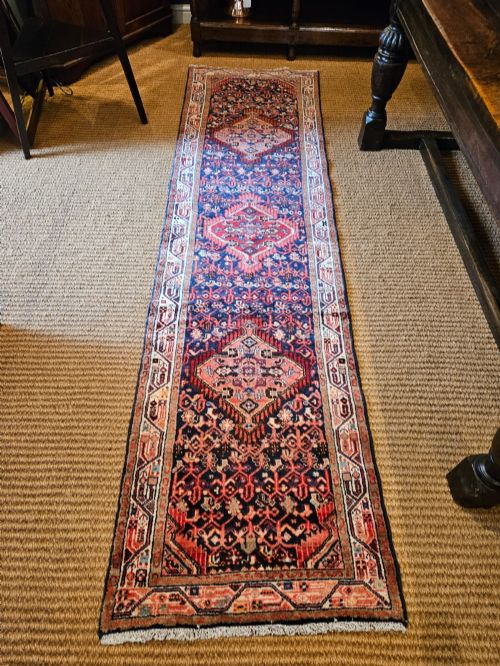
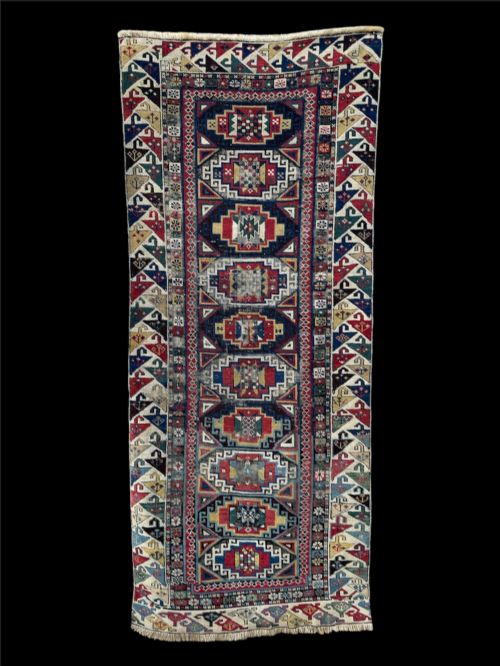
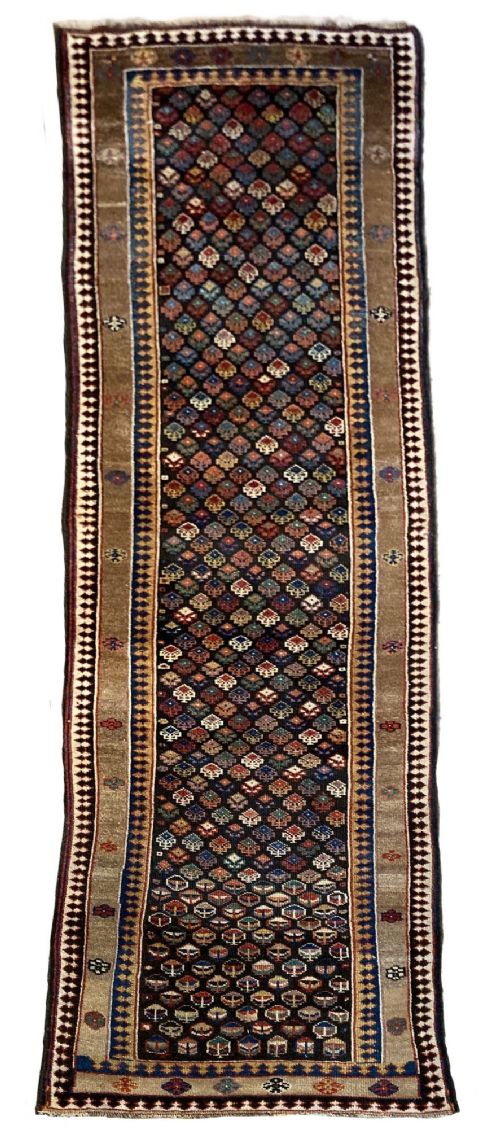
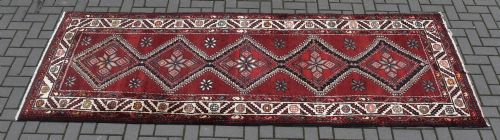


Handwoven Oriental Hallway Rug
A handwoven oriental hallway rug brings centuries of tribal and regional weaving traditions straight to the floor.
Handwoven Oriental Hallway Rug
A handwoven oriental hallway rug comprises narrow floor coverings sourced from Persian, Caucasian, Turkish, and Afghan regions. These runners span from the late nineteenth century into the early decades of the twentieth century, including pieces from specific districts such as Heriz, Hamadan, Shirvan, and Bakhtiari.
The format is typically elongated to suit corridors and passages, appearing in various lengths alongside traditional kilim and pile structures. Buyers encounter antique village weaves and tribal pieces showing distinct geometric or floral layouts.
Materials and construction
These textiles rely on wool for the pile and cotton for the structural foundation, spun and woven by hand across nomadic and village workshops. Natural dyes produce the deep tones seen in traditional Caucasian and Persian examples.
Weavers utilise knotting techniques alongside flatweave methods such as kilim construction, resulting in durable surfaces designed for heavy domestic traffic in corridors.
Certain antique runners incorporate cloud band designs that seem to drift quietly across the field.
Assessing the weaving
Quality depends on the density of the knotting and the crispness of the regional design, from bold Caucasian geometric motifs to intricate Persian medallion patterns. Tighter construction and well-preserved wool pile indicate superior durability.
The integrity of the foundation threads and the consistency of the hand-spun wool separate standard village work from finer city or workshop productions.
The Handwoven Oriental Hallway Rug Glossary
- Runner
- A long, narrow carpet format designed specifically for corridors, hallways, and staircases. These pieces measure significantly longer than they are wide.
- Kilim
- A flatwoven textile produced without a pile by tightly interweaving warp and weft threads. This technique creates a lightweight rug with a completely flat surface.
- Boteh
- A stylised almond or pear-shaped motif representing a leaf, bush, or flame. This ancient pattern appears frequently in Persian and regional textile designs.
- Gul
- A medallion or repeating octagonal motif used extensively in tribal rugs from Central Asia and the Caucasus. Each design often signifies a specific clan or weaving tradition.
- Warp
- The stationary vertical strings stretched on the loom that form the structural skeleton of the rug. The pile knots are tied around these parallel foundation threads.
Handwoven Oriental Hallway Rug: Frequently Asked Questions
How do I measure for a hallway runner?
Measure the clear floor space of your corridor, leaving an even border of exposed floorboards or tiles on all sides. Account for door clearances so the door swings freely over the pile thickness without catching.
Take measurements along multiple points of the hallway to check for straight walls or irregularities before selecting a runner length.
Where were these rugs made?
These textiles originate from traditional weaving centres across Persia, the Caucasus, Turkey, and Afghanistan. Specific districts like Heriz, Hamadan, and Shirvan developed distinct regional patterns.
Nomadic tribes and village workshops produced these pieces using locally sourced wool and traditional dyeing methods.
Are these runners suitable for heavy traffic?
Wool pile and cotton foundations provide natural resilience, making these textiles well-suited for hallways and busy corridors. The density of the hand-knotting contributes directly to long-term durability.
Using a quality underlay helps absorb foot pressure and keeps the runner securely in place on smooth flooring.
How do I identify a Caucasian rug?
Caucasian pieces typically feature bold geometric patterns, sharp diagonals, and stark colour contrasts rather than curved floral scrolls. Motifs like stars, crosses, and stylized animals appear frequently in these village weaves.
The palette often includes saturated primary colours anchored by dark indigo or madder red backgrounds.