
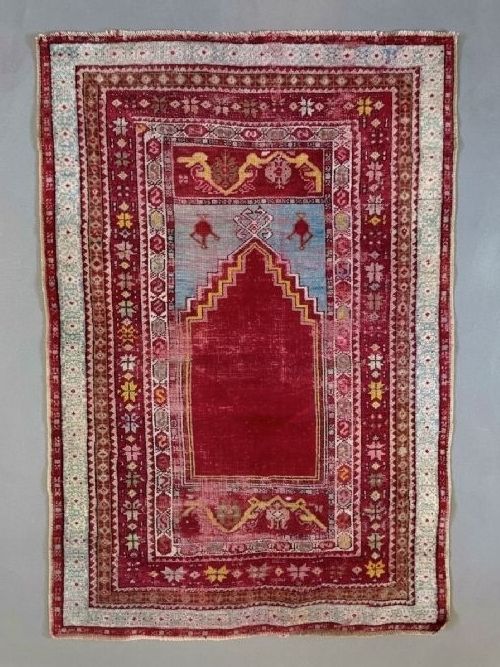
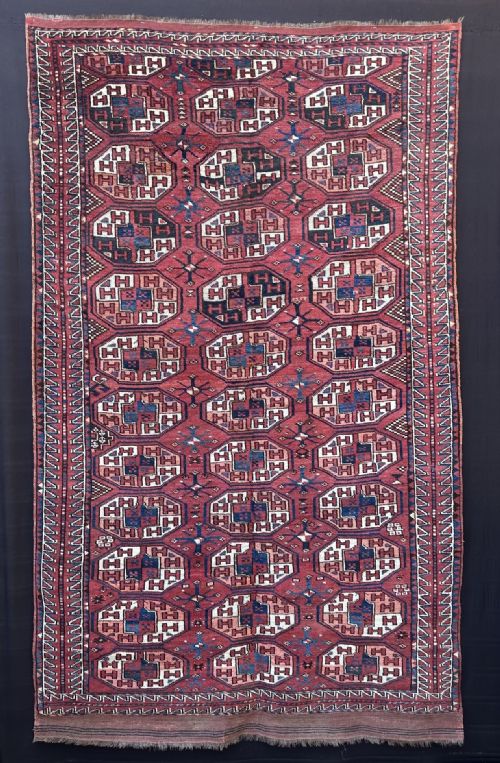

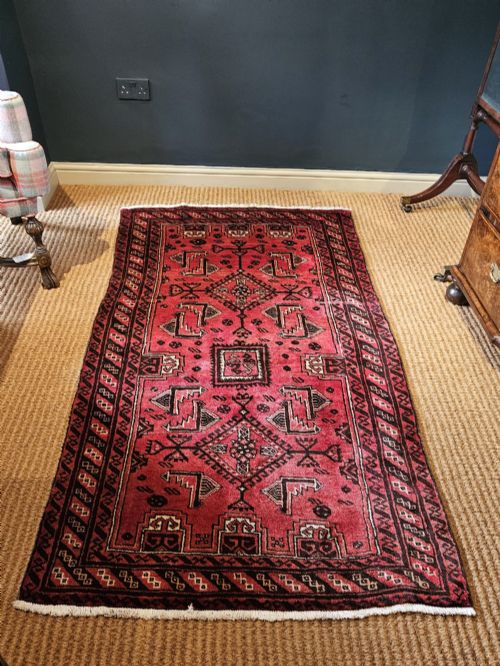
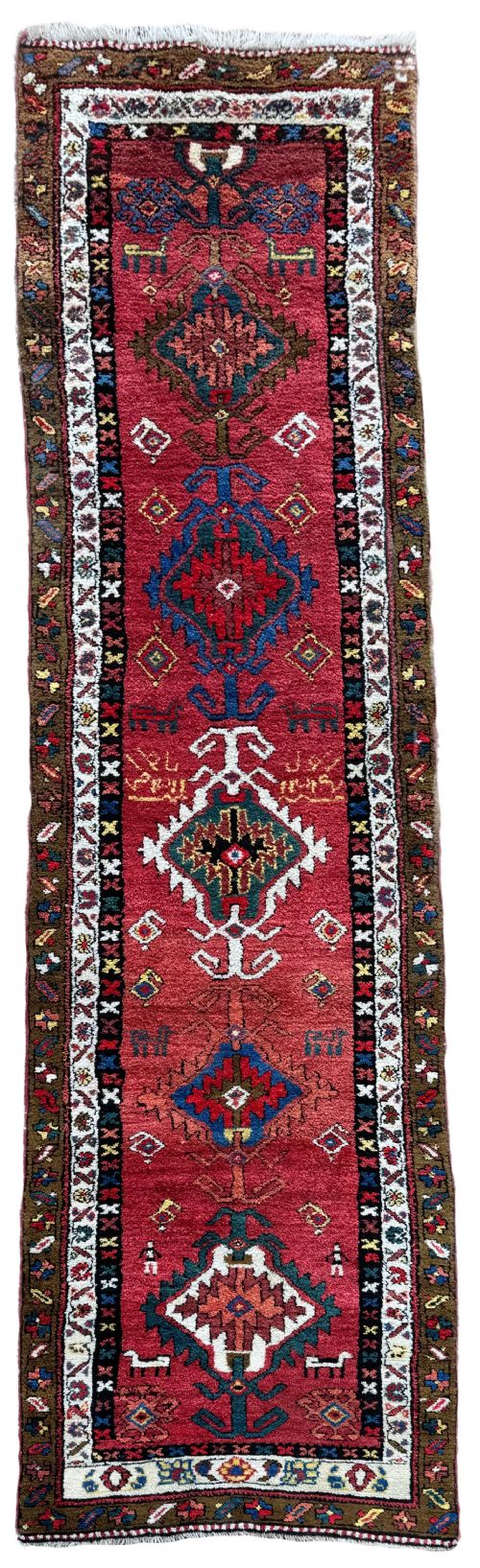
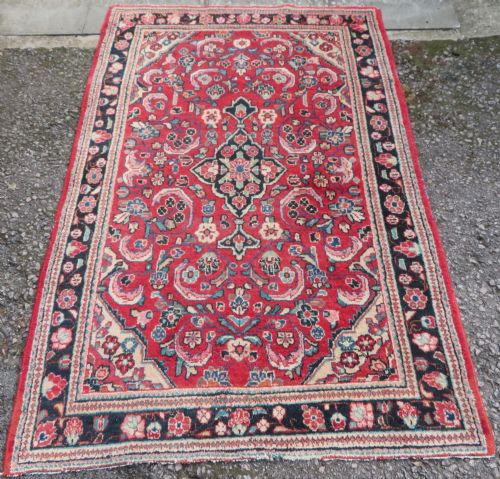
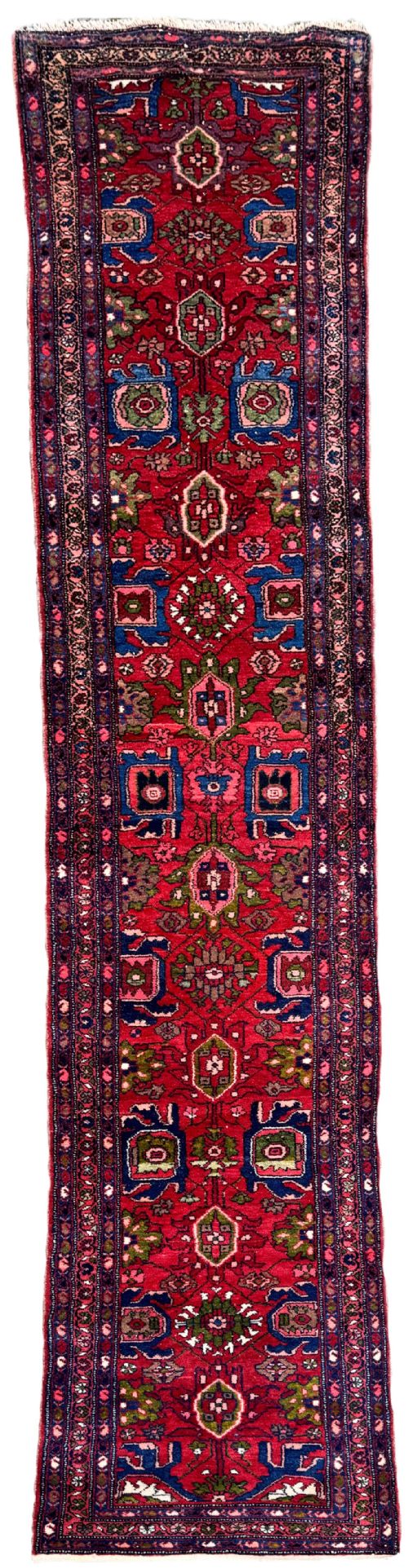
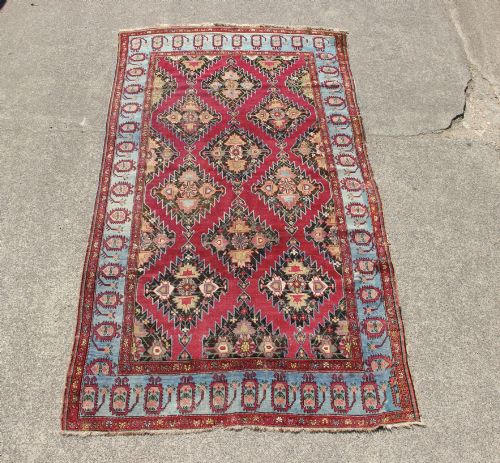
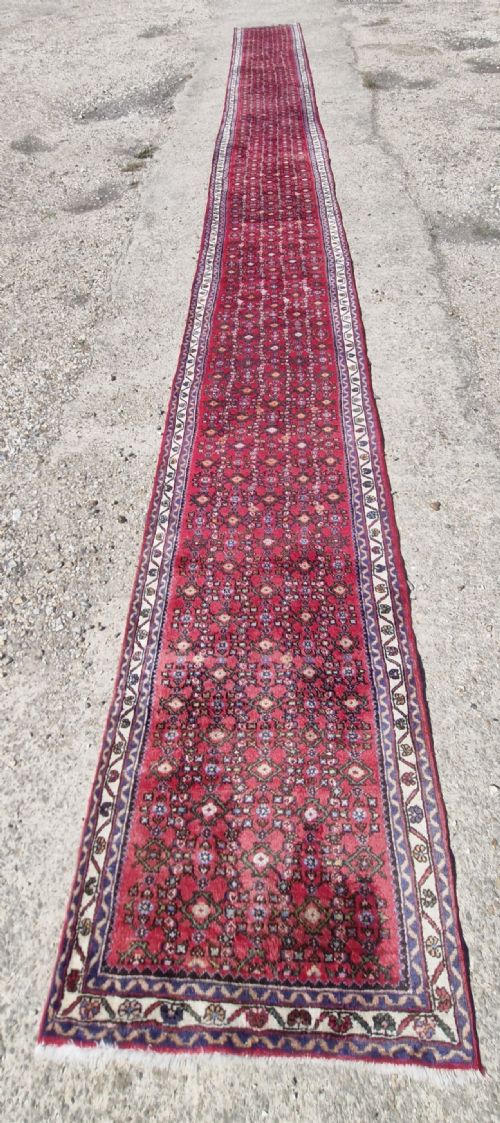
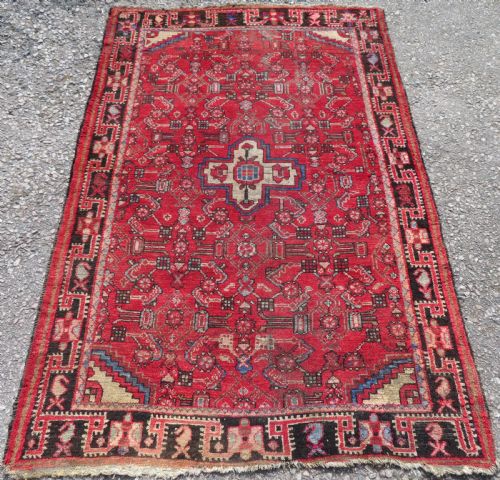
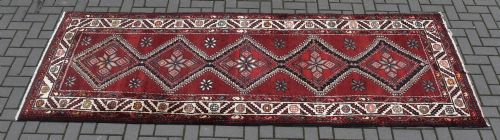


Crimson Wool Runner Rug
When seeking a crimson wool runner rug, collectors examine hand-knotted village and tribal textiles woven from the late nineteenth century through the early twentieth century.
Crimson Wool Runner Rug
A crimson wool runner rug is a long, narrow floor covering created by weavers across Persia, Anatolia, and Central Asia to line corridors, halls, and large rooms. These textiles belong to traditions such as Hamadan, Heriz, Baluch, and Turkmen tribal weaving, spanning the period from the nineteenth century through the 1930s.
The pieces available on this page encompass various formats including Heriz runners, Hamadan runners, and traditional handwoven long formats. Their dimensions suit long hallways and landings, providing durable floor coverings constructed by tribal and village workshops.
Originating from specific regions like West Persia, Turkmenistan, and the Caucasus, these runners display distinct regional motifs such as tribal guls, geometric medallions, and traditional field designs rendered in rich red and crimson tones.
How they were made
The construction relies heavily on wool and hand-spun wool, often combined with cotton foundations to form dense, resilient piles capable of withstanding heavy foot traffic. Weavers utilised natural dyes to achieve deep crimson and red hues that deepen in character as the wool ages.
Craftsmen knotted each rug by hand on vertical looms, employing traditional techniques passed down through generations in tribal and village communities. The utilisation of hand-spun wool imparts subtle variations in texture and colour across the surface of each runner.
Several antique runners preserve lively depictions of horses and people woven directly into the traditional wool pile.
What varies in quality
Quality in a crimson wool runner rug depends on the density of the knotting and the fineness of the wool used in the pile. Tighter knots allow intricate geometric and floral patterns to remain crisp and well-defined.
The depth and stability of the natural dyes influence the visual longevity of the piece. Runners featuring rich, saturated crimson tones derived from traditional dye sources command greater appreciation for their lasting vibrancy.
The Crimson Wool Runner Rug Glossary
- Runner
- A long, narrow carpet designed specifically for hallways, corridors, and staircases. These pieces measure significantly longer than they are wide.
- Pile
- The vertical or inclined loop of yarn that forms the textured surface of the rug. It is created by knotting wool yarn onto the warp threads.
- Warp
- The longitudinal threads stretched vertically on the loom before weaving begins. The pile knots are tied around these foundational strands.
- Gul
- A medallion or repeating octagonal motif commonly found in Turkmen and Central Asian tribal weaving. Each tribe often utilised distinct variations.
- Natural Dyes
- Colourants extracted from plants, insects, and minerals rather than synthetic chemicals. These dyes produce complex, muted tones that age gracefully over time.
Crimson Wool Runner Rug: Frequently Asked Questions
Where should I place a long runner rug?
These narrow floor coverings suit high-traffic corridors, long hallways, and entryways where their length can guide movement through a home. Their sturdy construction handles daily footsteps while adding warmth to transitional spaces.
Ensure the dimensions match the passage, leaving an equal margin of exposed floorboards or stone around the edges. Placing a suitable underlay beneath prevents slipping on smooth surfaces.
How do I clean an antique wool rug?
Routine maintenance involves gentle shaking or light vacuuming without a rotating brush roll to prevent pulling the wool pile. Professional rug cleaning is recommended for deep washing to protect natural dye stability.
Avoid chemical detergents and excessive moisture, which can damage the foundation threads and cause bleeding in antique natural dyes. Address spills immediately by blotting with a dry cloth.
What is the difference between village and tribal rugs?
Village rugs are typically woven by settled communities in established workshops or homes, often displaying structured geometric patterns and repeated medallions. Tribal rugs originate from nomadic or semi-nomadic groups whose designs reflect ancestral motifs and spontaneous creativity.
Both categories utilise hand-spun wool and natural dyes, but tribal pieces frequently exhibit more asymmetrical elements and distinctive regional colour palettes.
How can I tell the age of a runner?
Determining age involves examining the consistency of the wool, the composition of the dyes, and the wear patterns across the pile. Natural irregularities in hand-spun yarn and subtle shifts in crimson tones often indicate nineteenth or early twentieth-century production.
Structural details such as selvedges, fringe construction, and knot density also provide clues to the period and regional origin of the textile.