

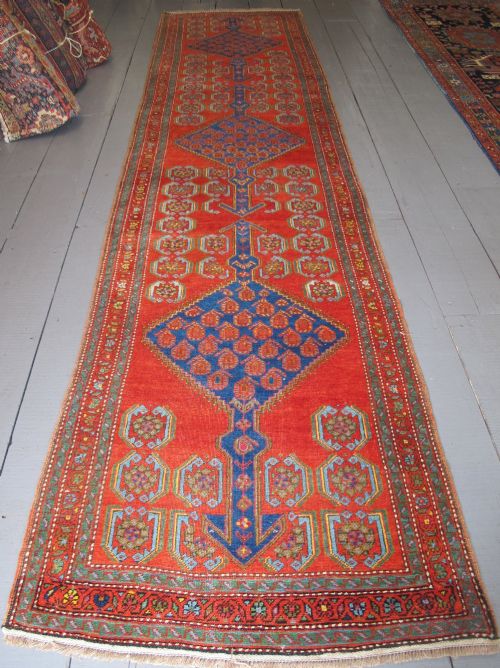


Red Persian Hall Carpet
When you search for a red persian hall carpet, you are looking for long wool runners woven across Persia and the Caucasus during the nineteenth and early twentieth centuries.
Red Persian Hall Carpet
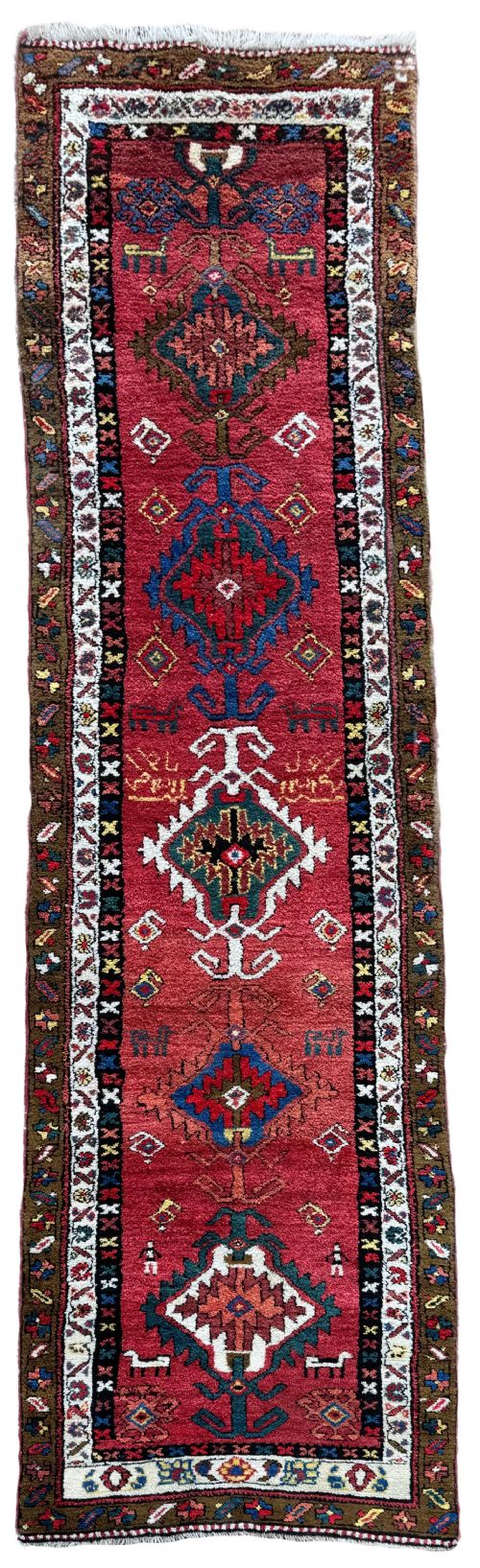
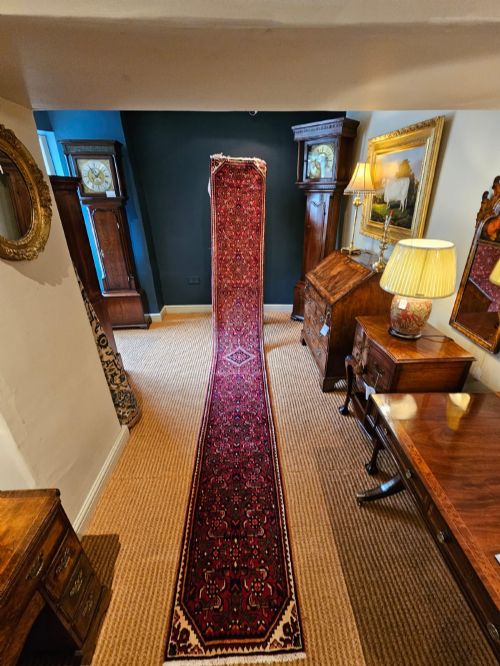
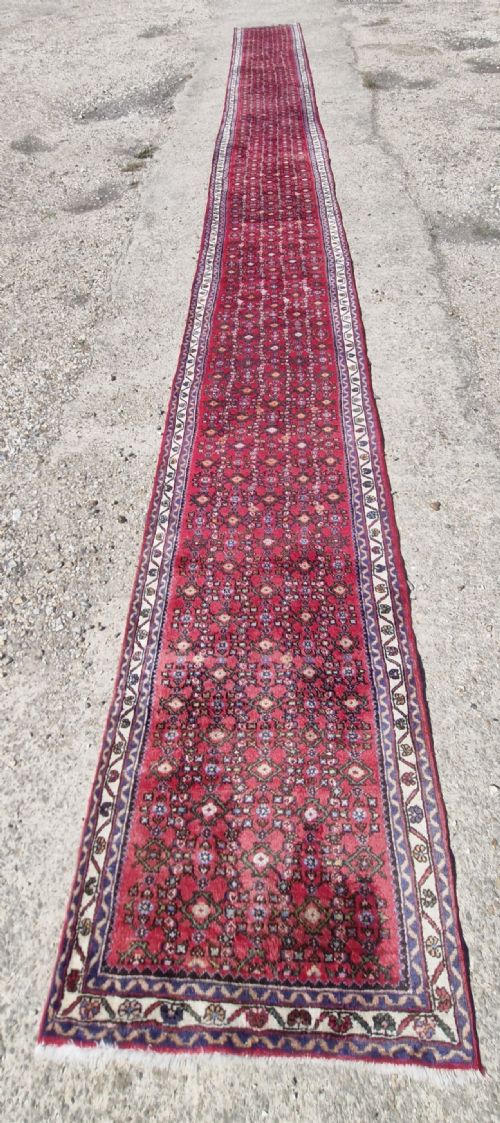
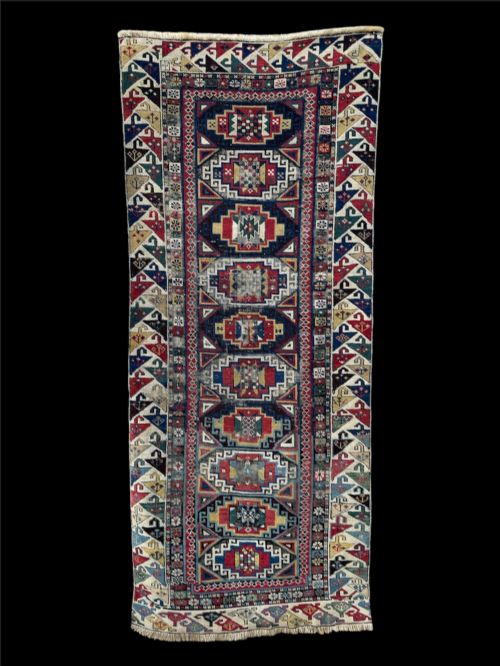
A red persian hall carpet serves as a practical floor covering for corridors, landings, and long hallways, utilising narrow proportions that range from compact lengths to over ten metres. These textiles appear under regional designations such as Heriz, Bakshaish, Kurdish, Hamadan, and Sarouk, reflecting specific weaving traditions from villages and tribal groups.
The pieces on this page span from the mid-nineteenth century through to the early twentieth century, incorporating styles described as Persian Tribal, Traditional Persian, and Kurdish Tribal. Buyers encounter narrow formats designed specifically to frame wooden floorboards in domestic hallways and long corridors.
How They Were Made
The weavers constructed these runners using a foundation of durable cotton or wool, onto which dense wool piles were hand-knotted. Natural dyes provided the characteristic red ground tones alongside contrasting blues and neutrals.
Village and tribal workshops relied on hand-spun materials and traditional upright looms. This method produced sturdy textiles capable of withstanding heavy foot traffic in domestic environments.
Listings feature runners dated from the mid-nineteenth century up to the 1960s, constructed primarily from wool and cotton.
What Varies in Quality
The standard of a runner depends on the density of the knotting and the complexity of the drawn design. Finer examples display precise geometric or floral motifs with consistent tension across the entire length.
Depth of colour and the quality of the wool dictate the visual richness of the piece. Well-preserved foundations and even pile wear distinguish superior examples from heavily degraded textiles.
The Red Persian Hall Carpet Glossary
- Runner
- A long, narrow carpet format designed specifically for corridors, hallways, and staircases. These pieces measure significantly longer than they are wide.
- Heriz
- A region in north-west Persia known for producing sturdy carpets featuring bold geometric medallions and durable structures. These rugs often utilise robust wool.
- Natural Dyes
- Colouring agents derived from plants, insects, and minerals before the introduction of synthetic alternatives. These dyes yield rich tones that age with subtlety.
- Kurdish
- Pertaining to rugs woven by Kurdish tribes inhabiting regions of western Persia and the Caucasus. These pieces frequently display distinctive tribal motifs and strong borders.
Red Persian Hall Carpet: Frequently Asked Questions
How do I clean an old wool runner?
Regular gentle vacuuming without a beater bar removes surface dust and grit from the wool pile. Professional specialist cleaning remains necessary for deeper washing.
Water and harsh detergents damage natural dyes and cotton foundations. Immediate blotting handles accidental spills safely.
Are these runners suitable for heavy hallways?
Traditional village runners were constructed for demanding domestic traffic using durable wool and sturdy foundations. They withstand daily corridor use effectively.
An appropriate underlay protects the textile from sliding and cushions the foundation against hard flooring.
How do I identify a Heriz runner?
Heriz runners typically display bold geometric central medallions and strong corner spandrels woven in characteristic red and blue palettes. The wool feels substantial and heavy.
These pieces originate from north-west Persia and reflect a tradition of robust, architectural design.
What dates are common for these rugs?
The pieces listed span from the mid-nineteenth century through the early decades of the twentieth century. Examples from this era show traditional hand-spun materials.
Dating relies on stylistic markers, colour palettes, and structural characteristics rather than exact documentation.