



Heriz Runner and Carpet
These heavy floor coverings, known through the search phrase heriz runner and carpet, bring geometric structure and durable wool to hallways and principal rooms.
Heriz Runner and Carpet
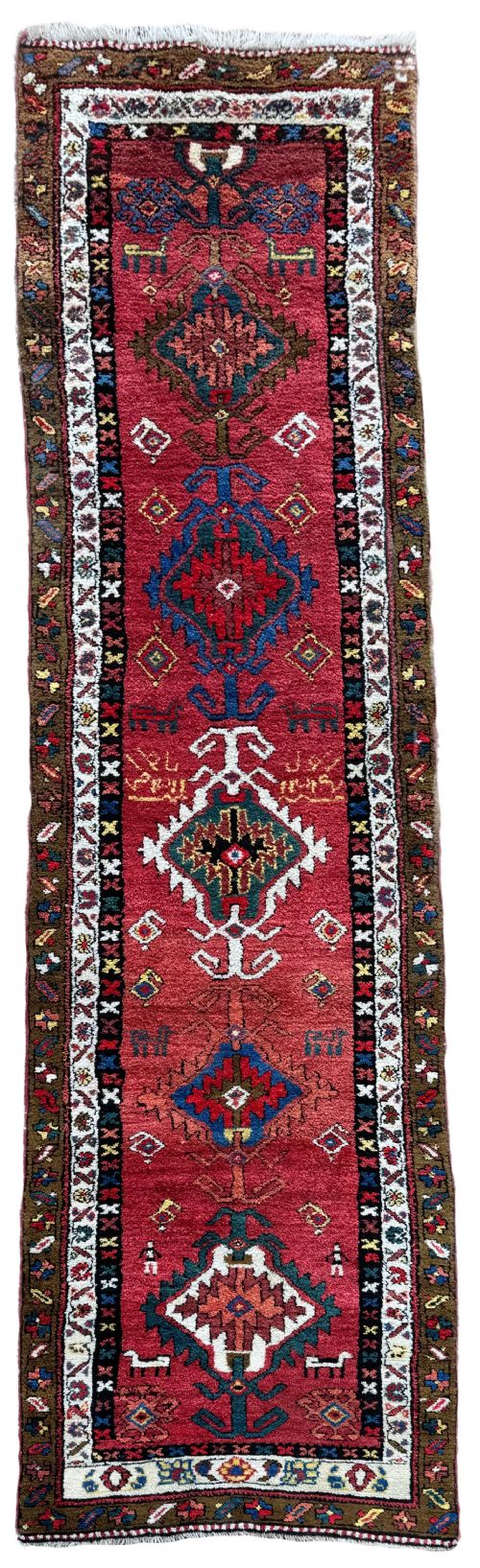
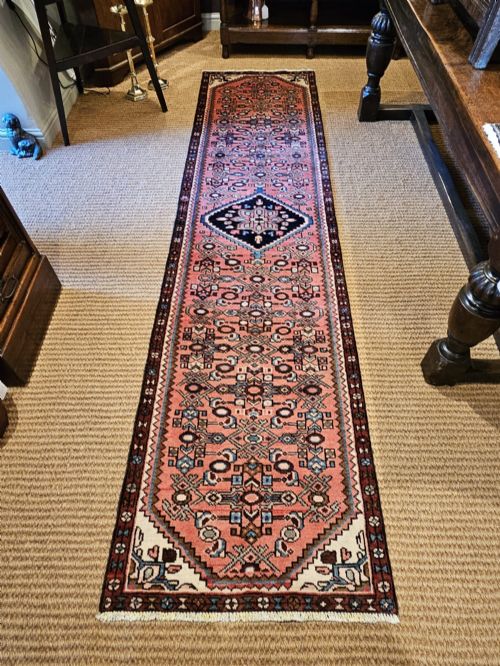
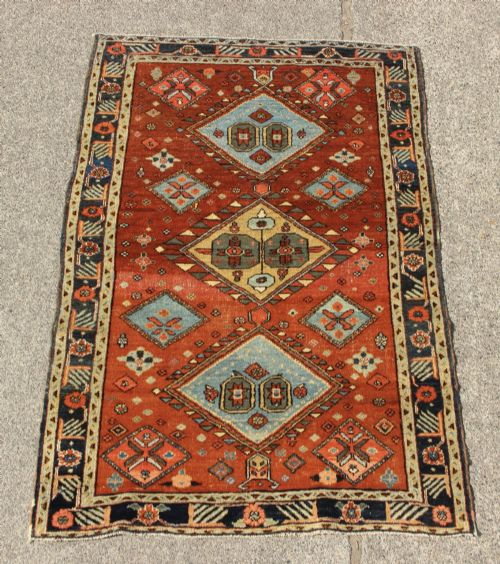
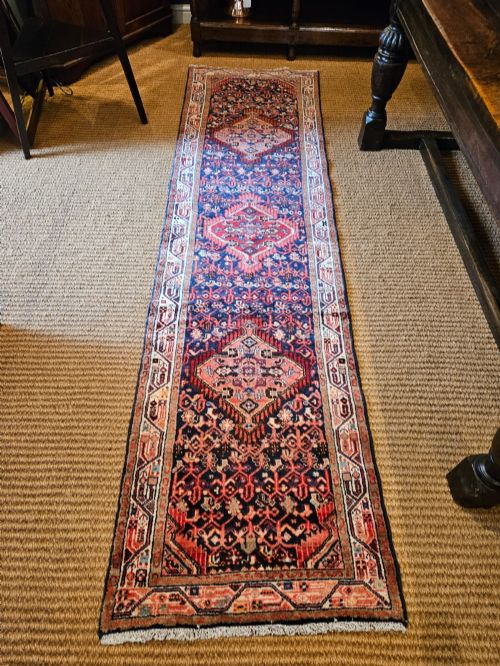
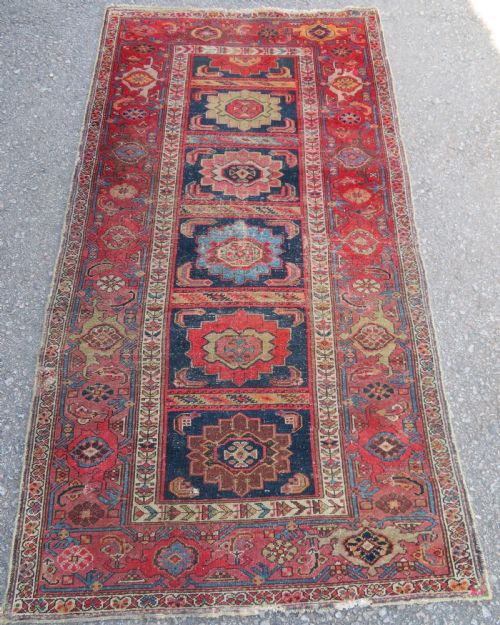
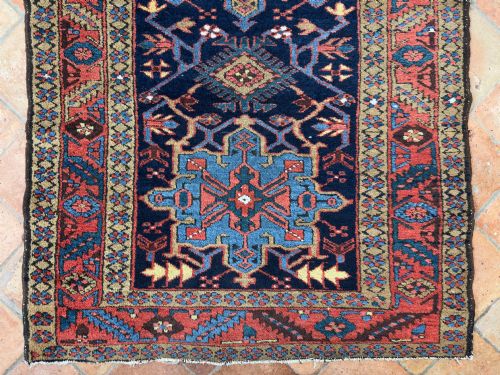
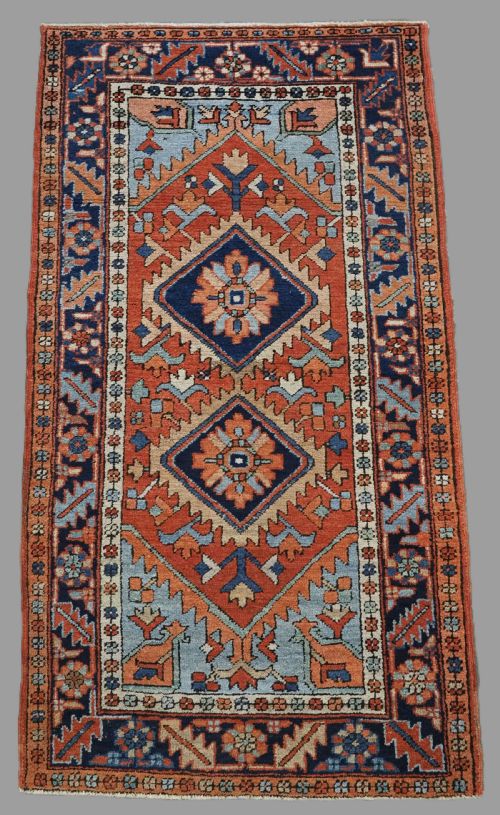
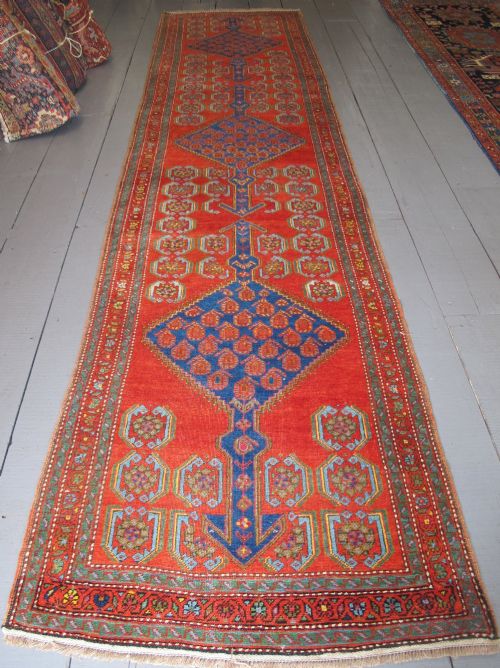
A heriz runner and carpet represents the weaving traditions of north-west Persia, encompassing distinctive geometric medallion designs and substantial formats. These pieces appear frequently in long formats for corridors alongside larger room scales dated from the nineteenth century into the 1930s.
The regional output includes distinct stylistic variants such as Karaja, Serapi, Gorevan, Bakshaish, Sarab, and Hastrud, which share geographic roots in the Heriz district. Makers utilised robust construction methods suited to heavy domestic traffic in country houses and town residences.
Geometric patterns dominate the field design, often featuring prominent central medallions balanced by angular corner spandrels and stylised botanical motifs. Colour palettes rely on rich vegetal dyes applied to sturdy wool foundations.
Materials and Construction
Weavers constructed each heriz runner and carpet using wool for the pile and cotton for the foundational warps and wefts. This combination creates a dense, heavy fabric that resists crushing underfoot while maintaining structural stability.
The yarn relies on traditional dyeing techniques using natural materials to produce deep terracotta, indigo, and ivory tones. Hand-knotting secures the pile firmly to the cotton grid, resulting in a resilient textile designed for enduring utility.
Some runners survive with crab-shaped border motifs that give a cheerful scuttle to the hallway.
Distinctions in Quality
Quality in a heriz runner and carpet depends on the fineness of the knotting and the clarity of the geometric drawing. Superior examples exhibit precise symmetry in the medallion design and subtle variations in the hand-spun wool pile.
The handling of natural dyes creates depth within the field, where tonal shifts across the surface indicate skilled dyeing practices. Earlier production dates and balanced proportions also influence the standing of individual pieces.
Waring and Gillow
The Heriz Runner and Carpet Glossary
- Medallion
- A large central ornamental motif set within the field of a carpet. This symmetrical design anchors the geometric composition characteristic of north-west Persian weaving.
- Spandrel
- The triangular corner area situated between the central field and the outer borders. Weavers often fill these spaces with contrasting angular floral or geometric patterns.
- Warp
- The vertical threads stretched tightly on the loom that form the structural foundation of the textile. Cotton provides the tensile strength required for these heavy room-sized formats.
- Weft
- The horizontal threads passed across the warp strands between rows of knots to bind the structure together. Proper tension ensures the rug maintains its linear dimensions over decades of use.
Heriz Runner and Carpet: Frequently Asked Questions
How do I care for my Heriz rug?
Regular vacuuming without a beater bar removes trapped grit from the wool pile. Professional cleaning should be undertaken periodically to preserve the integrity of the natural dyes.
Positioning the rug away from direct, harsh sunlight prevents uneven fading of the indigo and terracotta tones. Using a quality underlay protects the cotton foundation from friction against hard flooring.
Where should I place a runner?
Runners suit long hallways, corridors, and narrow landings where foot traffic is frequent. Their dense wool construction handles heavy daily use while defining linear spaces.
They also function effectively in kitchens or beside beds where narrow dimensions complement the floor plan. Measuring the clearance for doors is essential before placement.
How do I distinguish Serapi from Heriz?
Serapi carpets generally represent older nineteenth-century production featuring broader drawing and more open fields. The palette often incorporates softer terracotta and ivory tones.
Standard Heriz pieces from later decades tend to display denser geometric patterns and tighter knot counts. Both share the same regional north-west Persian heritage.
What materials make up these carpets?
The pile consists of hand-spun wool, valued for its natural resilience and lanolin content. This fibre resists dirt and wears down slowly under heavy pressure.
Foundations rely on sturdy cotton warps and wefts that keep the heavy rectangular format square. This material combination ensures long-term structural stability.