

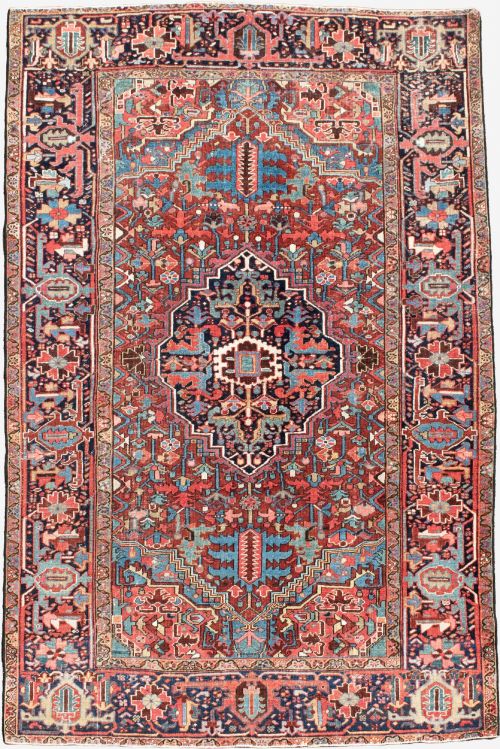


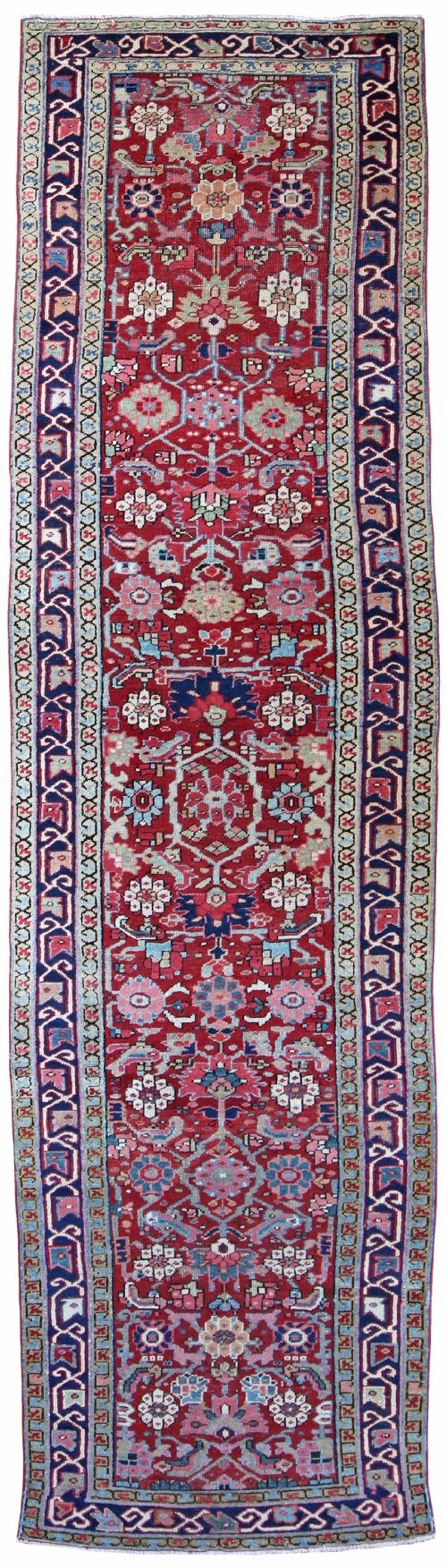


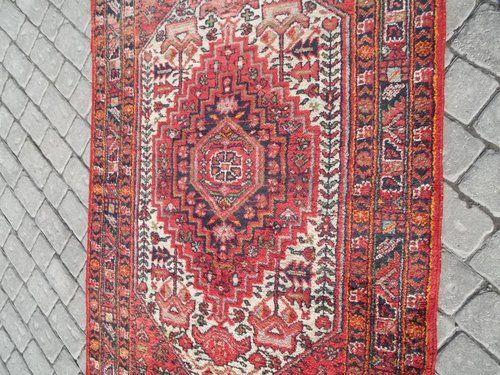
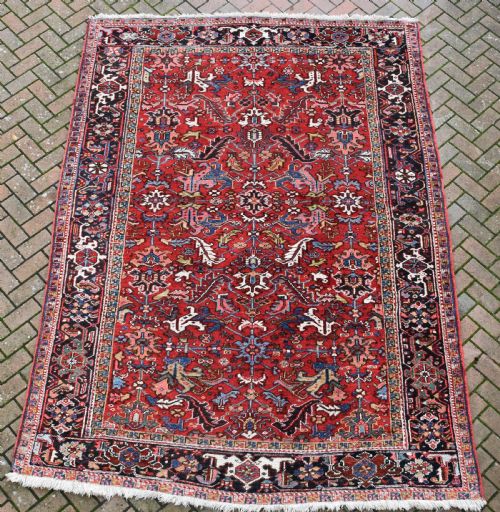
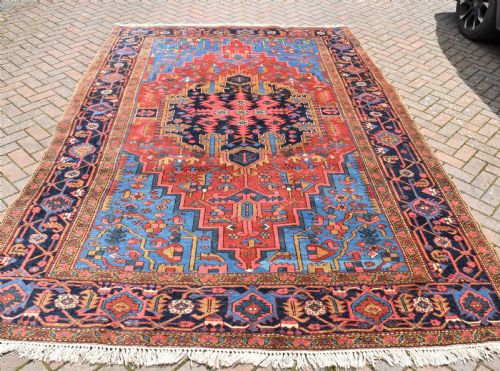


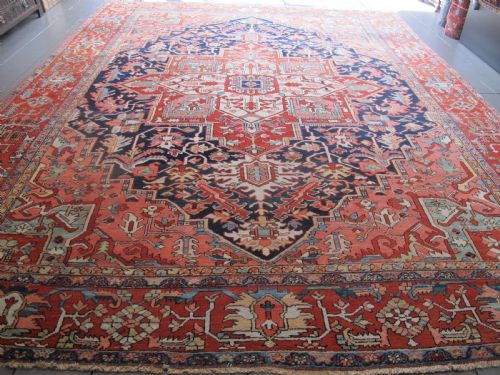


Authentic Heriz Carpet
An authentic heriz carpet brings robust Persian geometry and earthy tones into a room, offering durability alongside time-honoured village design.
Authentic Heriz Carpet
An authentic heriz carpet is a traditional Persian floor covering originating from the North-West Persia region. These items date from various decades spanning the late nineteenth century through to the early twentieth century, specifically between eighteen ninety and nineteen thirty. Buyers encounter a range of formats here, from compact rugs and small carpets to substantial room-size carpets and hallway runners.
The assortment includes specific colour variants such as sky blue alongside standard room-size proportions. Each piece reflects the enduring aesthetic of Persian Heriz and traditional Persian styles, produced as practical floor coverings for domestic interiors.
How they were made
Makers constructed these floor coverings utilising wool for the pile and cotton for the foundational warp and weft structures. This combination provides the dense, resilient surface necessary for heavy daily wear in residential spaces.
Weavers knotted the wool by hand onto the cotton foundations, executing geometric medallion layouts and traditional motifs characteristic of North-West Persian workshops. The reliance on these specific materials accounts for the substantial weight and structural longevity seen across the inventory.
Authentic Heriz Carpet Retail Price Guide 2026
Typical asking prices for authentic heriz carpet among the pieces listed under this phrase on Sellingantiques today, from the lower quarter to the upper quarter. They describe what is for sale here now, not the wider market.
The listings show pieces dated across five distinct decades, spanning from eighteen ninety to nineteen thirty.
What varies in quality
Quality differences lie in the precision of the wool knotting and the complexity of the traditional geometric patterns. Finer examples display tighter pile tension and crisp, well-defined medallion layouts.
The integrity of the cotton foundation and the evenness of wear across the wool surface determine the overall standard of preservation. Greater care in original material selection yields superior structural coherence in the finished carpet.
The Authentic Heriz Carpet Glossary
- Heriz
- A style of Persian carpet originating from North-West Persia known for bold geometric medallions and durable construction. These pieces typically feature sturdy wool pile on cotton foundations.
- Runner
- A long, narrow format of carpet designed specifically for hallways and corridors. This shape accommodates restricted floor spaces while displaying central traditional motifs.
- Pile
- The upright yarn loops that form the tactile surface of the carpet. In these listings, the pile consists of wool.
- Warp
- The longitudinal threads stretched tightly on the loom that form the skeletal foundation of the textile. These threads are made of cotton in the pieces shown here.
Authentic Heriz Carpet: Frequently Asked Questions
How do I clean an old carpet?
Professional specialist cleaning is essential for wool and cotton textiles of this age. Avoid harsh domestic detergents and mechanical scrubbing.
Gentle immersion washing by a conservator preserves the natural lanolin in the wool pile. Regular light vacuuming without a beater bar removes surface dust safely.
Where were these woven?
These pieces originate from the North-West Persia region, specifically associated with the Heriz tradition. Local weavers produced them using regional geometric design vocabularies.
The materials and structural methods reflect the craft practices of Persian village workshops from eighteen ninety to nineteen thirty.
Are these suitable for hallways?
Specific formats in the inventory include hallway runners designed for narrow passageways. The sturdy wool and cotton construction handles high foot traffic effectively.
Utilising a proper underlay prevents slipping and protects the foundation from uneven floorboards.
How do I date a carpet?
Dating relies on structural analysis, material characteristics, and stylistic evolution within Persian weaving. The listings here span specific years from eighteen ninety to nineteen thirty.
Comparison of knot density and natural dye usage provides further indication of the period of manufacture.