


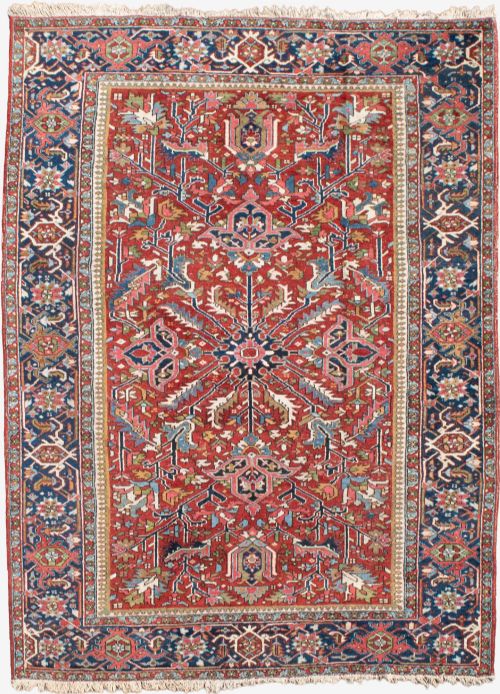
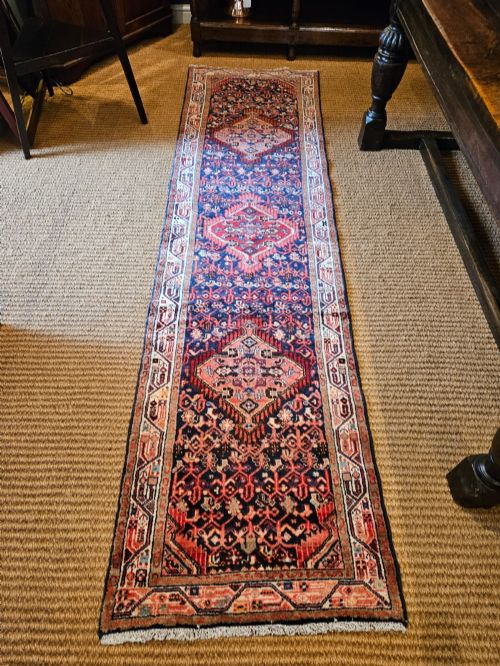


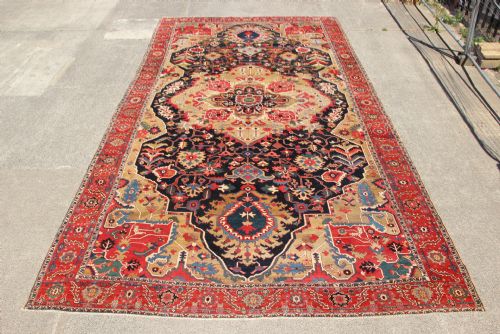
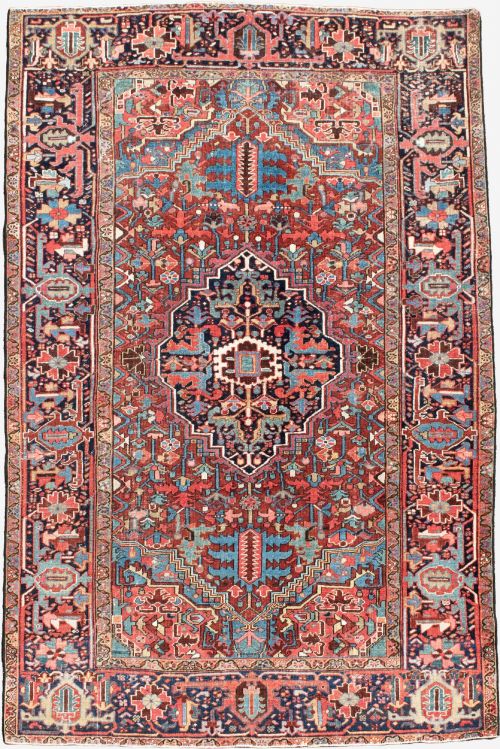
Blue Heriz Rug
A blue heriz rug brings geometric strength and botanical depth to a room, woven in North-West Persia across the nineteenth and twentieth centuries.
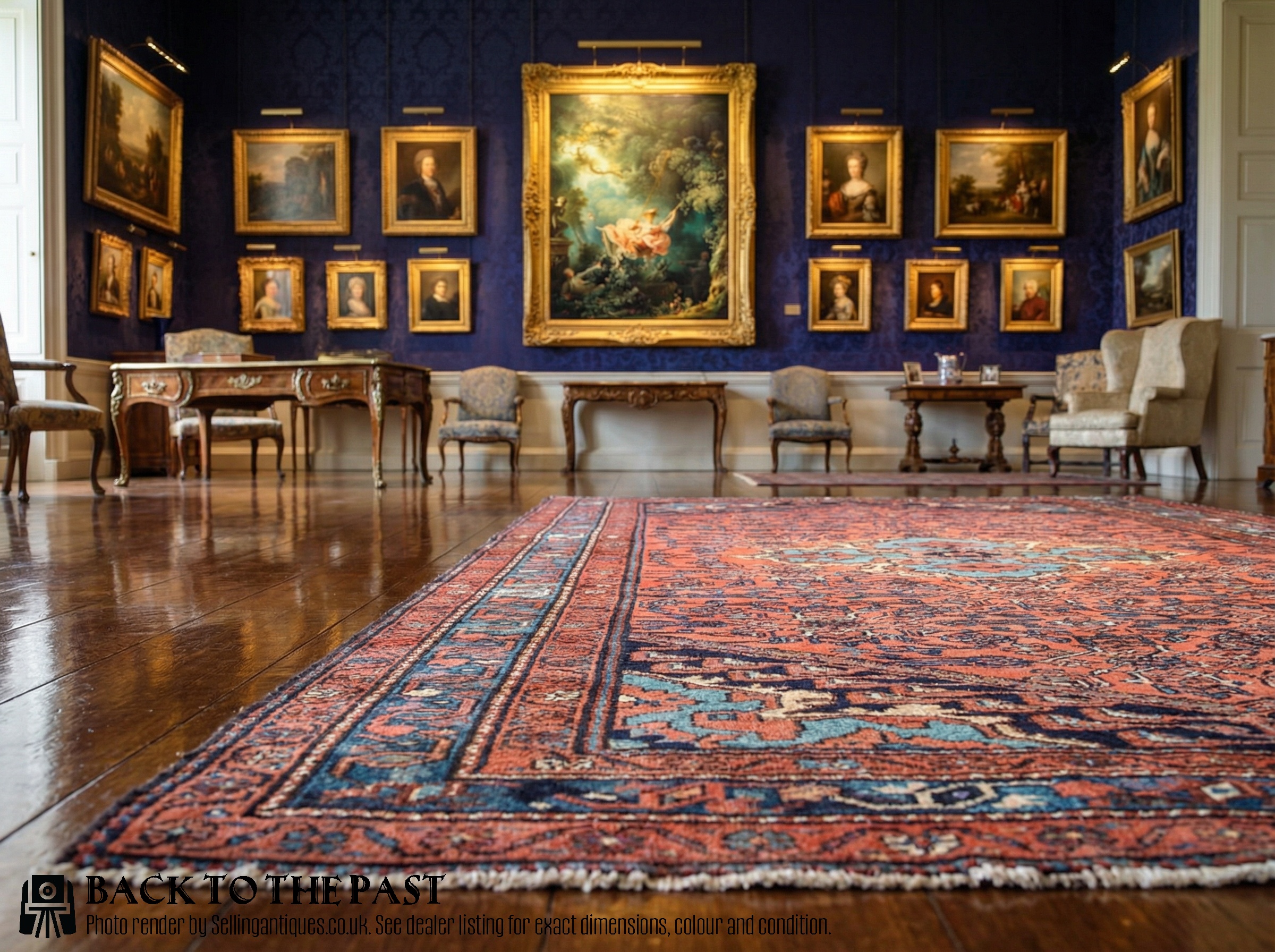
Blue Heriz Rug
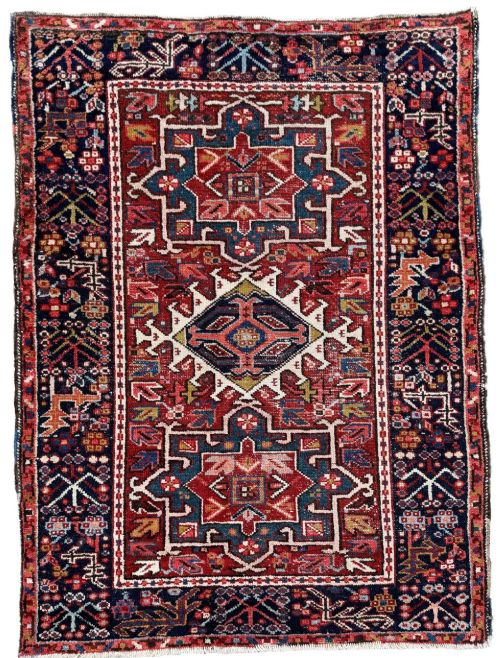
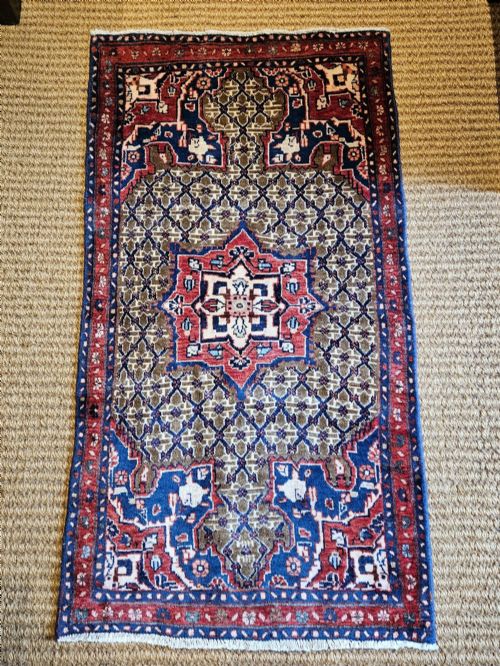
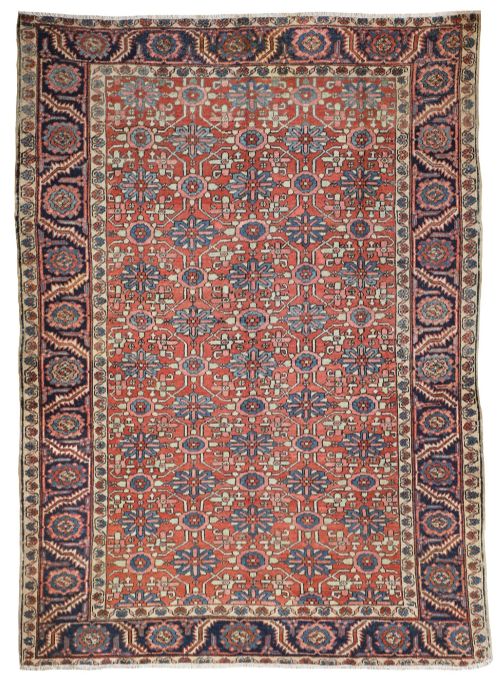
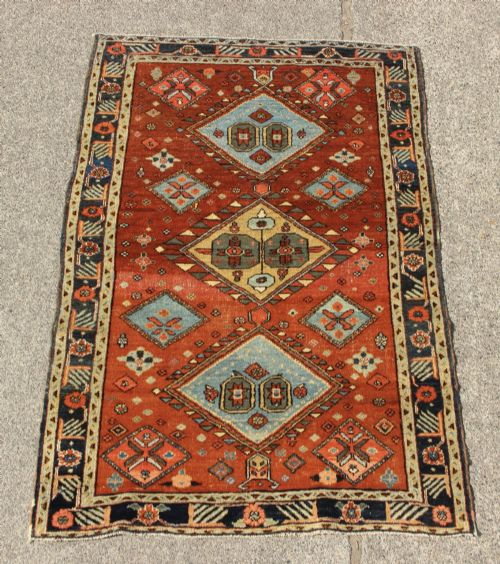
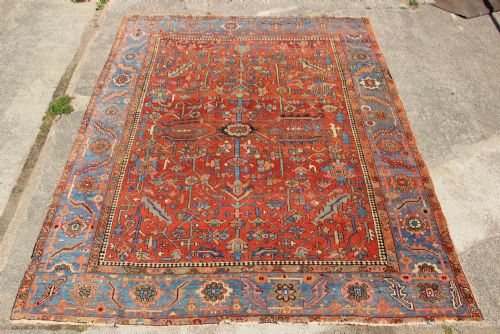
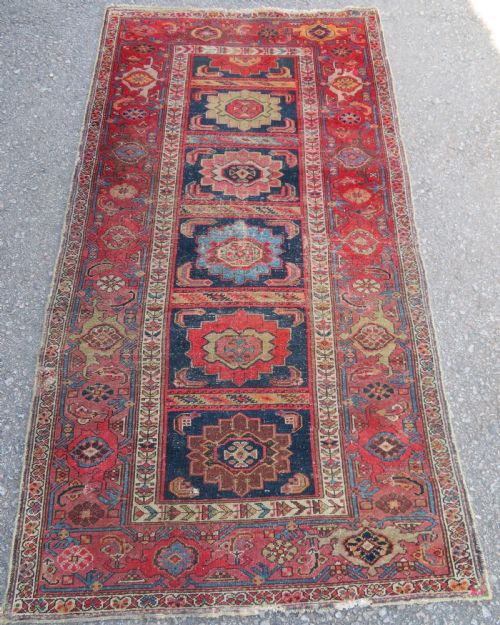
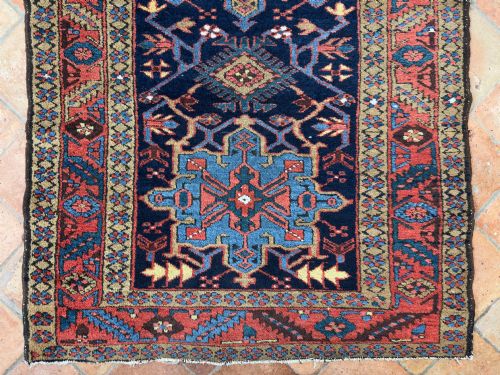
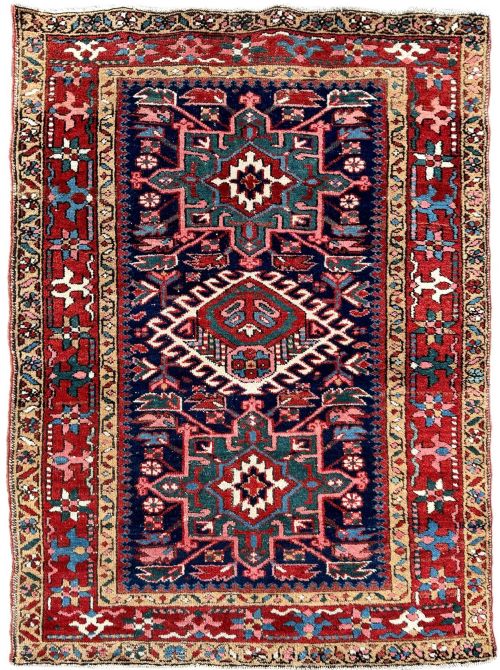
A blue heriz rug represents a distinct category of Persian carpet originating from the mountainous regions of North-West Persia, spanning various periods from the late nineteenth century through the early twentieth century. These textiles appear in forms ranging from compact hearth-sized pieces to expansive carpets and long hallway runners.
The aesthetic centres on robust geometric motifs, bold medallions, and stylized floral patterns executed in striking shades of blue, set apart from standard red-ground examples. Buyers encounter these floor coverings categorized under traditional Persian styles, including related village weaves from the surrounding region.
Materials and construction
Construction relies upon durable wool piles knotted onto sturdy cotton foundations, utilising hand-spun wool that absorbs natural dyestuffs with notable depth. The integration of a cotton warp provides structural stability to larger formats such as carpets and runners.
Weavers in this North-West Persian district employed sturdy hand-weaving techniques suited to village production, creating dense pile surfaces capable of withstanding generations of daily use.
Listings span production dates from 1850 through 1930, encompassing wool and cotton materials across runner, carpet, and rug formats.
Assessing quality and character
Quality rests in the precision of the geometric drawing, the clarity of the blue field coloration, and the integrity of the wool pile across the surface. Finer examples display intricate secondary detailing within the central medallions and well-balanced border guards.
The handling of natural dyes dictates the visual richness of the textile, distinguishing standard village pieces from exceptionally fine carpets attributed to regional centres like Serapi.
The Blue Heriz Rug Glossary
- Heriz
- A region in North-West Persia renowned for sturdy, large-scale geometric carpets woven by village artisans. These pieces typically feature bold central medallions and robust corner spandrels.
- Serapi
- A sub-category of Heriz carpet from the nineteenth century known for more open designs, finely spaced geometry, and a generally spacious artistic layout. Collectors prize these older weaves for their relaxed proportions.
- Karaja
- A village weaving centre near Heriz producing smaller rugs and runners with distinct geometric repeat patterns or multiple medallions. The palette often mirrors that of larger regional carpets.
- Warp
- The vertical foundation threads stretched lengthwise on the loom, composed of cotton in these Persian rugs. The knots of wool are tied around these stationary threads.
- Bag face
- The front panel of a utilitarian nomadic storage bag, woven with decorative pile before being separated for domestic use as a small mat.
Blue Heriz Rug: Frequently Asked Questions
Where were these rugs made?
These textiles originate from village workshops and households situated in the mountainous North-West region of Persia, centred around the town of Heriz and surrounding districts.
Production spanned the late nineteenth and early twentieth centuries, drawing upon localized traditions of geometric design and sturdy construction.
How do I style a blue heriz rug?
The strong geometric layouts and striking blue fields anchor both traditional and contemporary interior schemes, working effectively beneath dining tables or in high-traffic hallways.
Pairing them with neutral furnishings allows the saturated indigo and sky blue tones to define the room's colour palette.
How do I tell Heriz and Serapi apart?
Serapi carpets generally date to the nineteenth century and exhibit a slightly finer, more open geometric drawing with muted palettes and spacious compositions.
Standard Heriz pieces from later periods tend to feature denser ornamentation, heavier outlines around the central medallion, and bolder primary colours.
Are these rugs durable enough for daily use?
The combination of dense hand-spun wool pile and sturdy cotton foundations creates a resilient floor covering designed for heavy domestic traffic.
Routine care involving gentle vacuuming without rotary brushes preserves the wool surface and structural integrity over decades of use.