
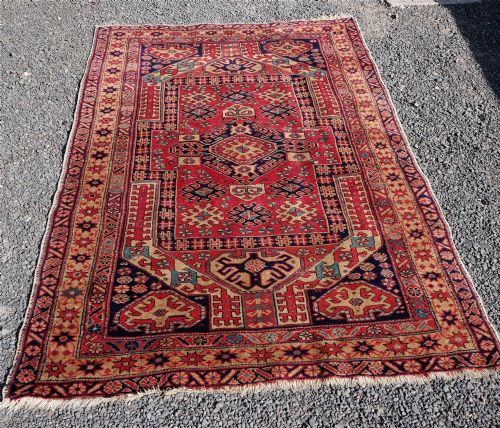
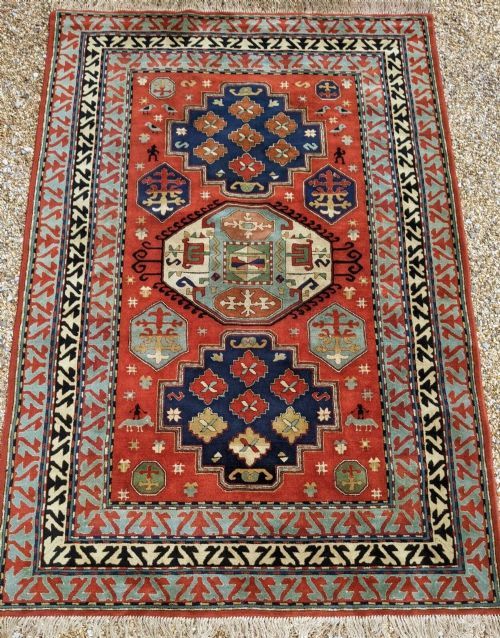


Edwardian Persian Rug
An Edwardian Persian rug brings enduring craftsmanship and rich palettes of red and blue to a room.
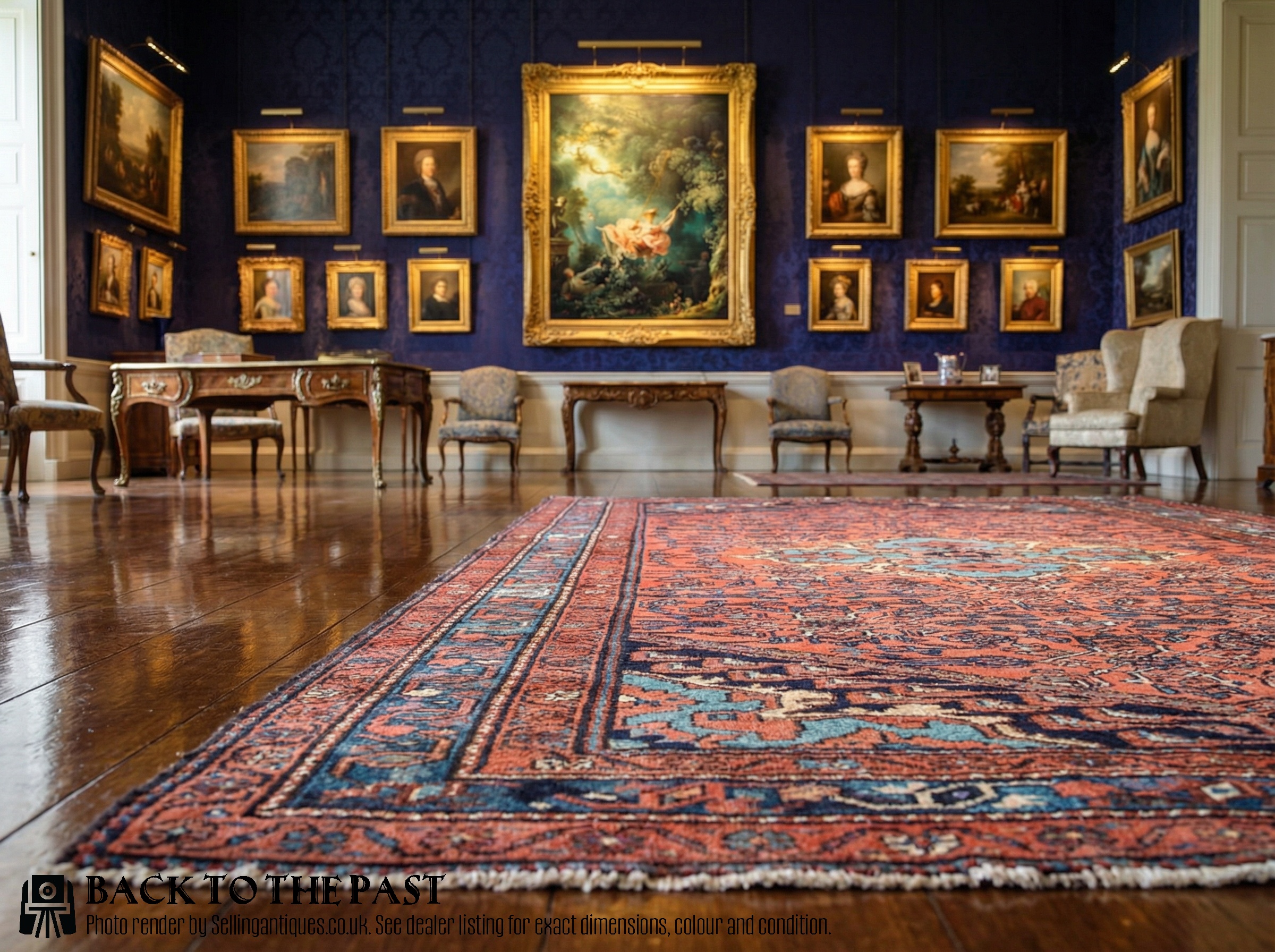
Edwardian Persian Rug
An edwardian persian rug encompasses floor coverings, carpets, and runners originating from workshops and villages across Persia during the early decades of the twentieth century. These pieces range from large room-size carpets suitable for country houses to smaller area rugs and long runners.
Buyers seeking an edwardian persian rug will find traditional woven formats featuring regional styles such as Heriz, Tabriz, Mahal, and Malayer. The selection includes tribal formats like Baluch and Kurdish pieces alongside finely knotted city rugs.
The dominant aesthetic draws upon historic Persian motifs executed in wool, cotton, and silk. Many examples date from around nineteen hundred to nineteen twenty, aligning precisely with the Edwardian period.
How they were made
Weavers constructed these textiles predominantly with durable wool pile anchored on sturdy cotton foundations, though certain delicate city pieces incorporate silk. Natural dyes provided the foundational tones, yielding soft pastels, ivory grounds, and deep blues that mellow gracefully over decades.
Production methods varied between nomadic tribal weaving, village workshops, and established urban centres. Village and tribal pieces often utilised geometric medallions and spontaneous designs, whilst city workshops produced precise floral layouts with high knot densities.
Certain early twentieth-century Malayer rugs feature unexpected flocks of butterflies hidden amongst traditional floral motifs.
What varies in quality
Quality rests upon the fineness of the weave, the integrity of the materials, and the sophistication of the design. Dense knotting permits sharper detail in intricate medallion and garden patterns, setting master city carpets apart from simpler village work.
Condition and colour palette significantly influence desirability. Pieces retaining rich, unblemished natural dyes and strong structural foundations command greater appreciation among collectors and interior designers alike.
Tetex·Benlian·Ziegler
The Edwardian Persian Rug Glossary
- Medallion
- A central ornamental motif dominating the field of the rug. It serves as the primary focal point in designs such as those found on Heriz carpets.
- Boteh
- A stylised almond or paisley motif representing a floral shoot or cypress tree. This ancient Persian symbol appears frequently in Sarouk and village weaves.
- Runner
- A long, narrow carpet format designed specifically for hallways, corridors, and staircases. These pieces provide functional floor coverage in linear spaces.
- Pile
- The vertical or slanted loops of yarn that form the usable surface of the carpet. Wool and silk pile provide the tactile texture and visual depth of the textile.
- Ground
- The background colour of the main field behind the central design elements. Common examples in these listings include ivory, camel, and blue.
Edwardian Persian Rug: Frequently Asked Questions
How do I identify an Edwardian Persian rug?
Examination of the materials, dye palette, and structural characteristics helps determine the approximate period of manufacture between eighteen ninety and nineteen thirty. Persian rugs from this era typically combine traditional village or city motifs with durable wool pile on cotton foundations.
Comparing regional styles such as Heriz, Malayer, and Tabriz provides further context. Specific design traits and structural weaves often point directly to particular Persian weaving districts.
Where were these carpets originally placed?
Large room-size carpets served as principal floor coverings in country houses, drawing rooms, and formal dining spaces. Smaller formats and runners were utilised in hallways, studies, and bedrooms.
Tribal and village pieces brought warmth to domestic interiors through robust construction. City carpets offered refined elegance suited to formal architectural settings.
How do I care for a wool floor rug?
Regular gentle vacuuming without a beater bar removes surface dust and prevents grit from settling into the wool pile. Professional cleaning by specialists in antique textiles ensures the preservation of natural dyes and delicate fibres.
Placing an appropriate underlay beneath the carpet prevents slippage and reduces wear from friction against hard flooring. Minimising direct exposure to harsh sunlight helps protect the colours over time.
What is the difference between village and city rugs?
Village and tribal rugs usually feature geometric patterns, memory-driven designs, and a slightly heavier, rustic handle. These pieces reflect the individual expression of weavers working in communities such as Hamadan or Malayer.
City rugs from centres like Tabriz or Kashan exhibit precise floral curves, balanced symmetry, and much finer knotting. Urban workshops employed master designers to create detailed cartoons for weavers to follow.