



Antique Heriz Room Rug
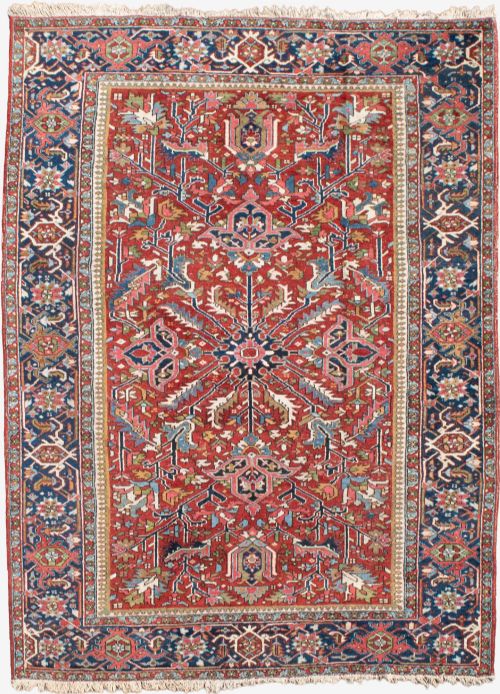
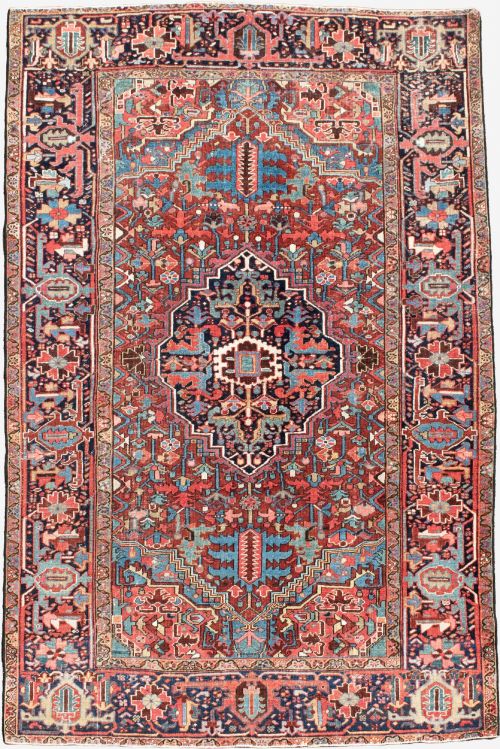
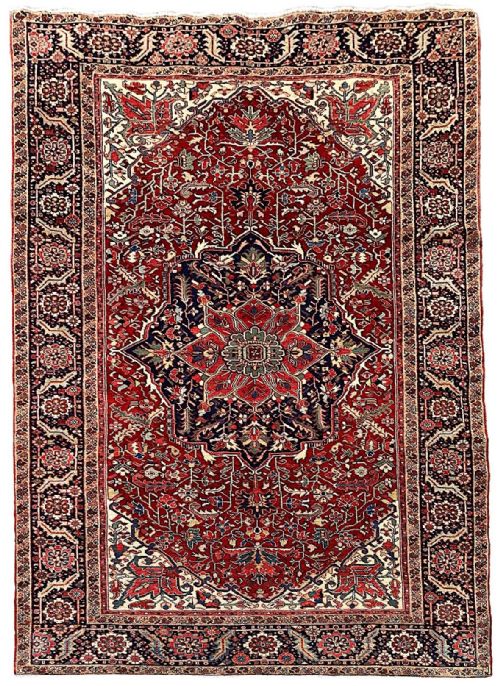
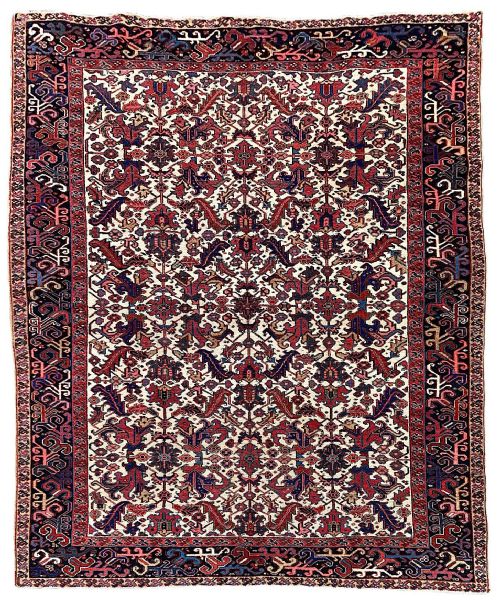
An antique heriz room rug anchors a floor with robust geometric medallions and rich wool pile woven in Northwest Persia.
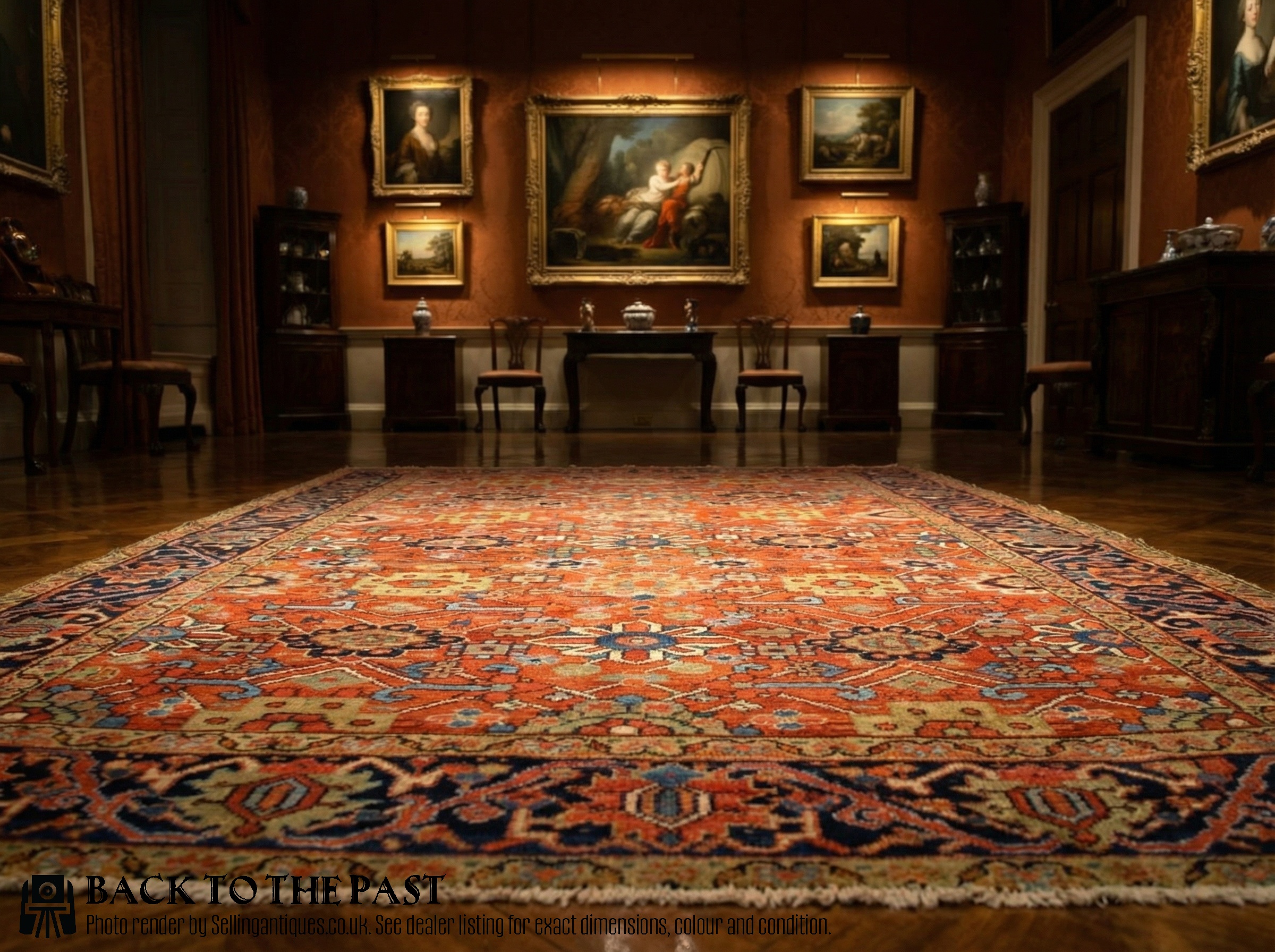
Antique Heriz Room Rug
An antique heriz room rug delivers large-scale floor coverings characterised by bold central medallions and sturdy room dimensions. These pieces originate from Northwest Persia and span several decades from the mid nineteenth century into the twentieth century.
Buyers commonly encounter substantial roomsize formats and large carpets that served country houses and traditional reception spaces. The forms range from compact roomsize examples to extensive carpets exceeding five metres in length.
The aesthetic centres on traditional Persian tribal and regional motifs executed with geometric rigidity rather than fluid curves. This makes each surviving room rug a practical furnishing designed for heavy foot traffic.
How They Were Made
The construction relies on durable hand-knotted wool pile secured upon sturdy cotton foundations. This pairing provides the dense structure necessary to withstand decades of daily use in busy interiors.
Weavers utilised local wool resources to build resilient pile surfaces that hold deep red grounds and sky blue highlights. The manual knotting technique allows intricate geometric patterns to maintain crisp structural integrity across expansive room dimensions.
Many large carpets accommodate country house proportions so expansively that furniture practically swims inside the central medallion.
What Varies in Quality
Quality rests in the precision of the geometric design and the crispness of the medallion layout against the red ground. Finer examples display balanced proportions and consistent knot density across large room formats.
The integrity of the cotton foundation and the overall preservation of the wool pile determine how well the structure survives. Superior pieces maintain robust pile heights and clear colour contrast without heavy restoration.
The Antique Heriz Room Rug Glossary
- Heriz
- A region in Northwest Persia known for producing durable room-sized carpets with geometric medallion designs.
- Medallion
- A large central ornamental motif dominating the field of the rug.
- Hand-Knotted
- A traditional method where individual yarn lengths are tied manually to the foundation warp and weft.
- Ground
- The primary background colour of the main field, frequently seen in red or sky blue tones.
- Roomsize
- Generous dimensional proportions intended to anchor major living spaces and reception rooms.
Antique Heriz Room Rug: Frequently Asked Questions
How do I date an antique heriz carpet?
Dating relies on stylistic indicators, structural wear patterns, and wool characteristics recorded across pieces originating from the nineteenth and early twentieth centuries.
Examinations of the foundation materials and palette shifts help place individual examples within distinct decades from eighteen-fifty to nineteen-thirty.
Where were these rugs made?
These floor coverings originate from the Heriz region located in Northwest Persia.
Local workshops developed distinct geometric weaving traditions distinct from other Persian styles.
Are these rugs suitable for heavy traffic?
The heavy hand-knotted wool construction and robust cotton foundations were originally built for traditional country house furnishing.
These durable carpets tolerate regular movement when protected by appropriate underlays.
What colours typically appear in these designs?
Traditional palettes frequently centre on strong red grounds contrasted by sky blue highlights and earthy secondary tones.
Natural dyes produce rich variations across the wool pile over long periods of time.