

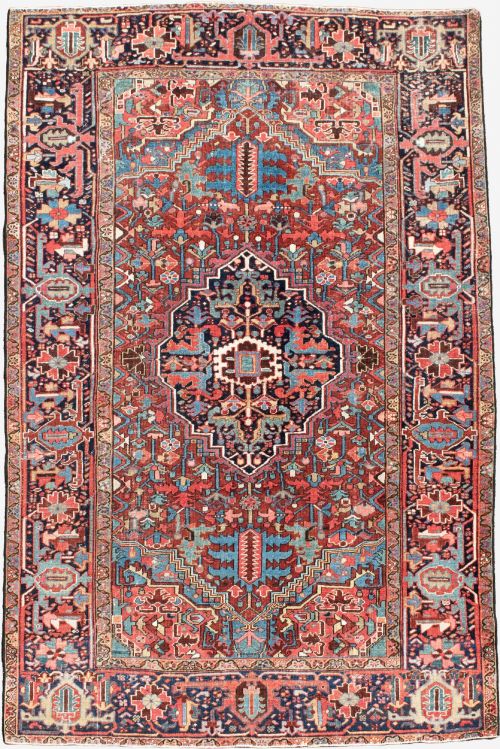
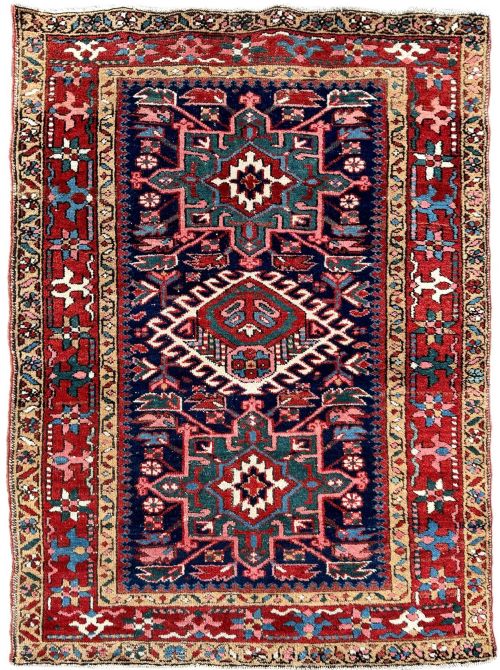
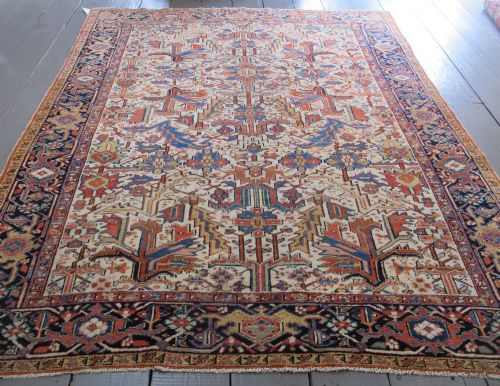
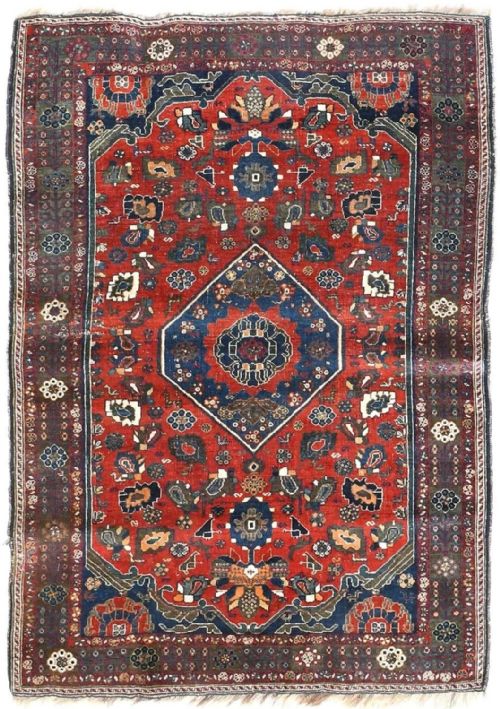


Handwoven Heriz Floor Rug
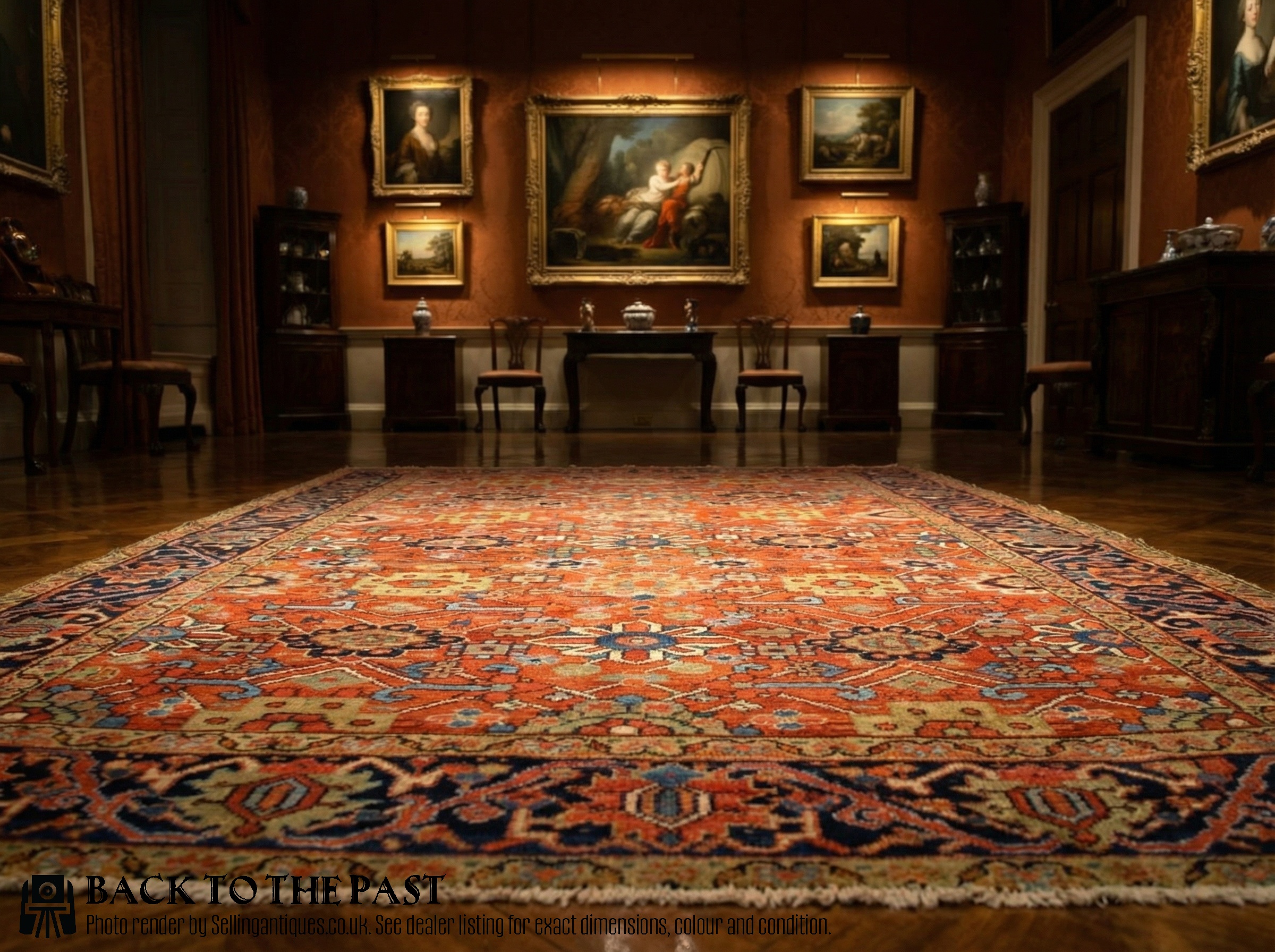
A handwoven heriz floor rug brings robust wool construction and bold geometric design into a room, serving as a durable anchor for traditional interiors.
Handwoven Heriz Floor Rug
A handwoven heriz floor rug represents traditional Persian weaving originating from north-west Persia, built to withstand heavy daily use. The pieces gathered here include full room-size carpets, compact square formats, and long hallway runners.
Most examples date from the late nineteenth century through to the 1930s, spanning periods like the Edwardian era and the early twentieth century. Buyers encounter classic formats featuring ivory or red and blue ground colourways.
The inventory encompasses closely related regional types from the same weaving tradition, including Karadja and Serapi carpets alongside standard Heriz productions.
How they were made
These floor coverings utilise natural wool pile knotted firmly onto cotton foundations, a combination that ensures structural longevity and resilience underfoot. Artisans in north-west Persian workshops employed hand-knotting techniques to build dense, hard-wearing surfaces.
Dyes derived from natural sources provide the rich red, blue, and ivory tones seen across the pieces. The resulting heavy weave creates a substantial textile designed to lie flat and endure decades of domestic traffic.
The listings span from the late nineteenth century through to 1930, utilising wool and cotton exclusively.
What varies in quality
Knot density and structural tightness set the finest examples apart from standard room-size furnishings, dictating how sharply the geometric motifs resolve. Finer specimens maintain crisp lines within their medallion designs and even wear across the wool pile.
The clarity of the natural dye palette and the integrity of the cotton foundation determine the overall grade. Carpets retaining strong contrast between ivory grounds and primary borders demonstrate superior wool preparation and dyeing skill.
The Handwoven Heriz Floor Rug Glossary
- Serapi
- A distinct sub-category of Heriz carpet from the nineteenth century known for more open designs and lighter colour palettes. These pieces are often prized by collectors for their spacious compositions.
- Karadja
- A village rug style originating from the same region as Heriz, typically featuring smaller dimensions and bolder geometric tribal patterns. They share the same robust wool and cotton material structure.
- Runner
- A long, narrow carpet format designed specifically for hallways and corridors. These pieces accommodate restricted floor spaces while retaining traditional Persian village designs.
- Pile
- The vertical surface of yarn formed by knots tied to the foundation. In these rugs, dense wool pile provides both cushioning and durability.
Handwoven Heriz Floor Rug: Frequently Asked Questions
How do I clean a Heriz rug?
Regular gentle vacuuming without a beater bar removes surface grit from the wool pile. Professional specialist cleaning remains essential for deep washing to protect the natural dyes.
Harsh chemical treatments or soaking will damage the cotton foundation and dull the traditional colours. Prompt attention to spills prevents staining on antique wool fibres.
Where were these rugs made?
These textiles originate from the town of Heriz and surrounding villages in north-west Persia. Local weavers utilised readily available highland wool and durable cotton.
Production centered on domestic workshops crafting floor coverings intended for demanding daily use. The regional style reflects distinct geometric traditions rather than court designs.
Are these rugs suitable for hallways?
Long runner formats serve well in hallways and corridors due to their narrow proportions and tough wool construction. Their dense pile absorbs heavy foot traffic without losing structural integrity.
Placing a quality underlay beneath the runner prevents slipping and cushions the foundation against hard floors. This ensures the antique textile lies flat and wears evenly over time.
How do I date an old Heriz?
Dating relies on assessing the wool quality, natural dye characteristics, and structural wear patterns seen across the piece. Stylistic shifts between late nineteenth-century Serapi designs and 1930s productions offer further clues.
Examinations of the foundation weave and selvedges help confirm the period of manufacture. Most examples span from the Victorian era up to the interwar period.