



Traditional Wool Hall Runner
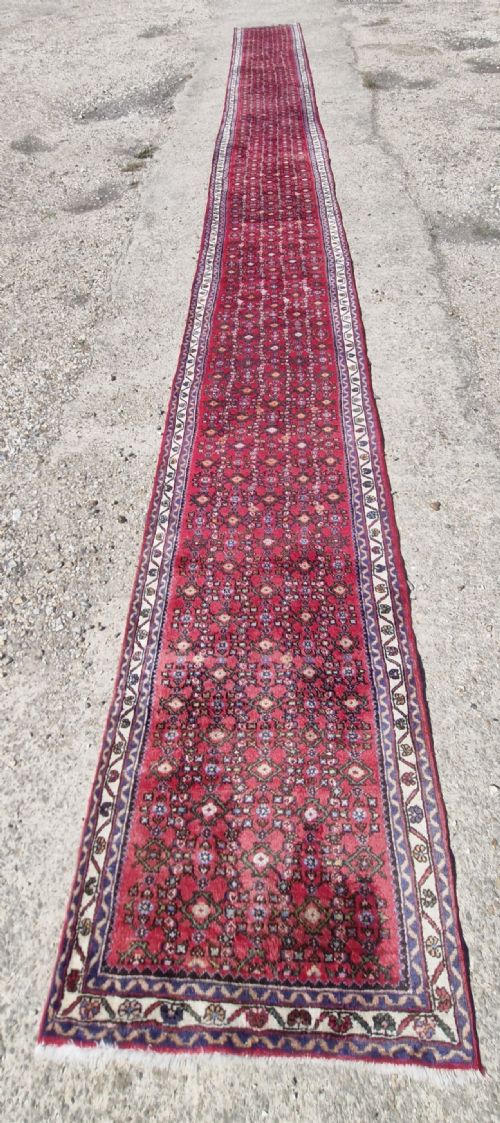
When you search for a traditional wool hall runner, you are looking at narrow floor coverings woven for corridors, landings and extended spaces.
Traditional Wool Hall Runner
A traditional wool hall runner is a long, narrow floor covering designed specifically for corridors, hallways and landings. These pieces bring warmth and pattern to long, narrow architectural spaces that might otherwise remain bare.
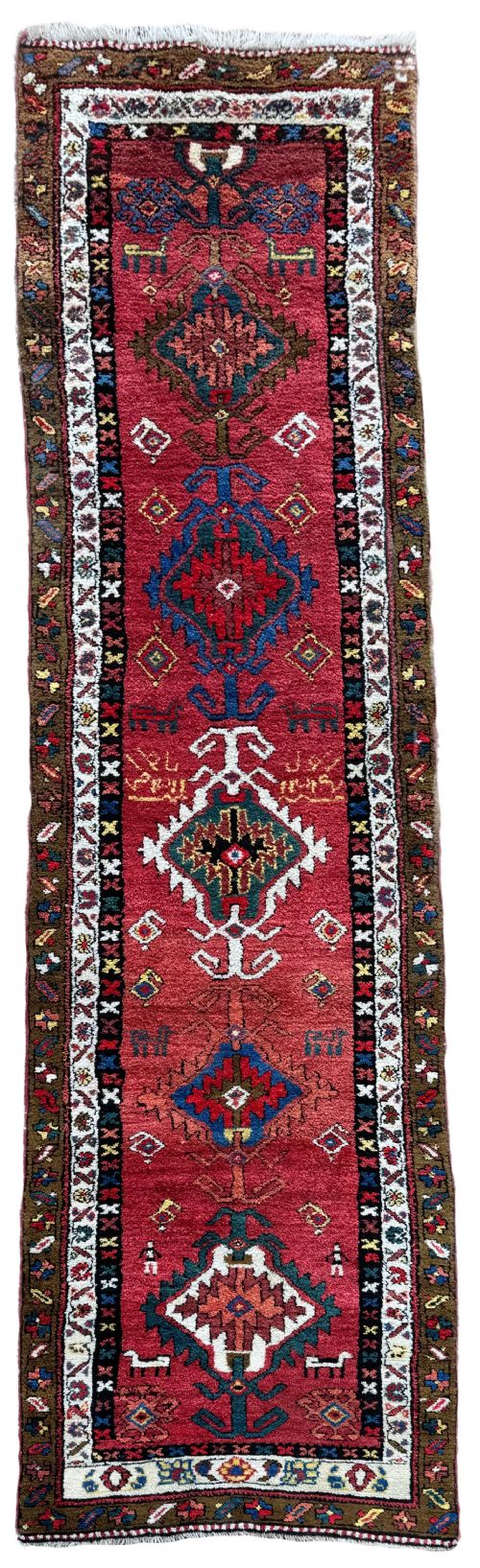
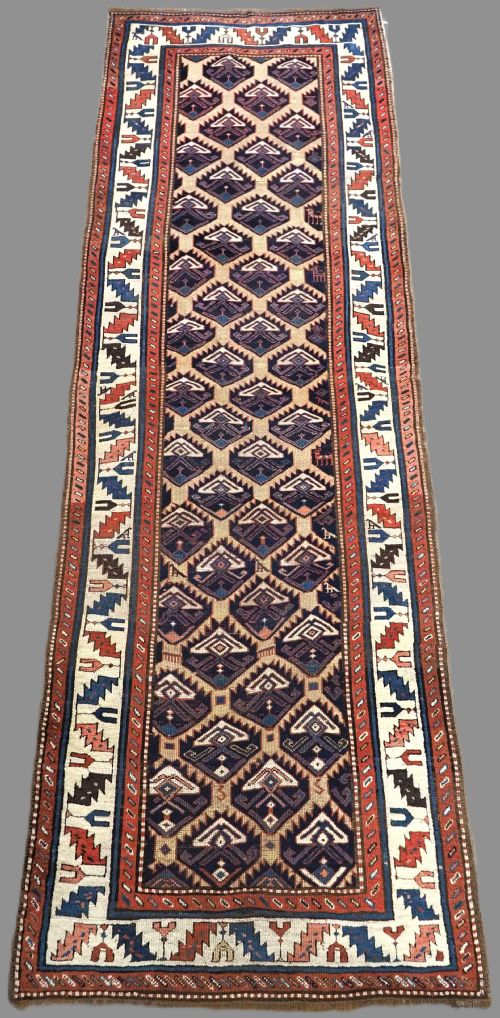
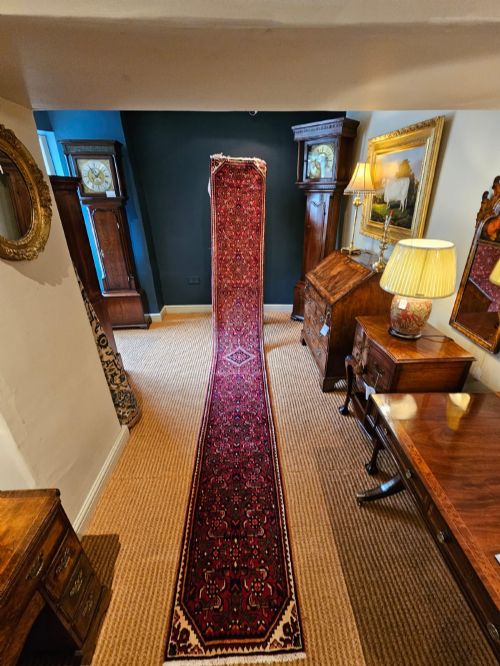
The pieces on this page span from the nineteenth century through the mid twentieth century, drawing on Persian, Caucasian, Anatolian and tribal weaving traditions. They arrive in various lengths, from modest apartment sizes to room-spanning corridors.
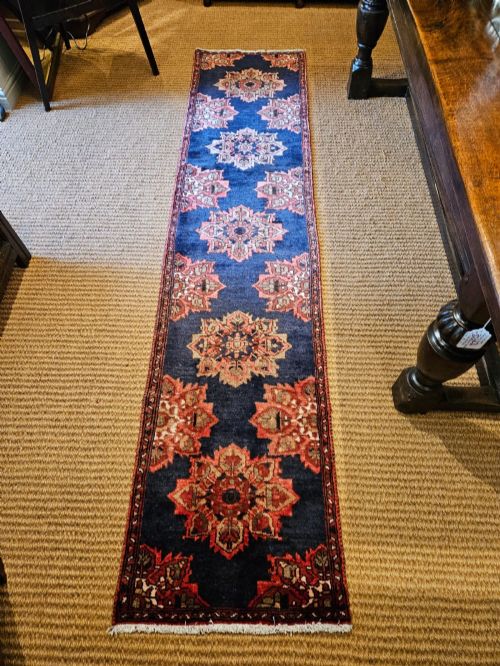
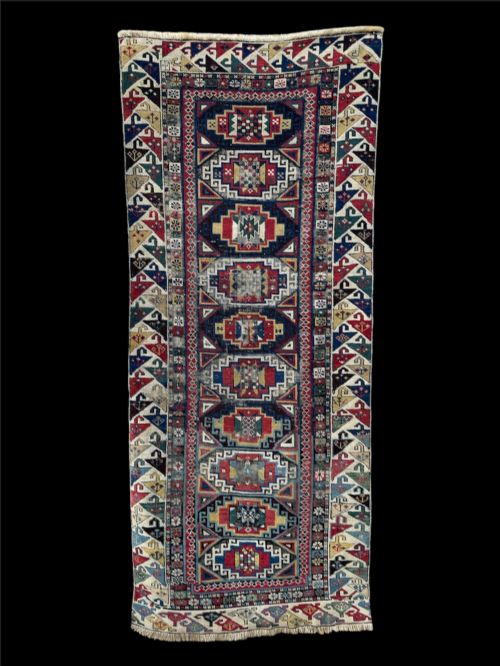
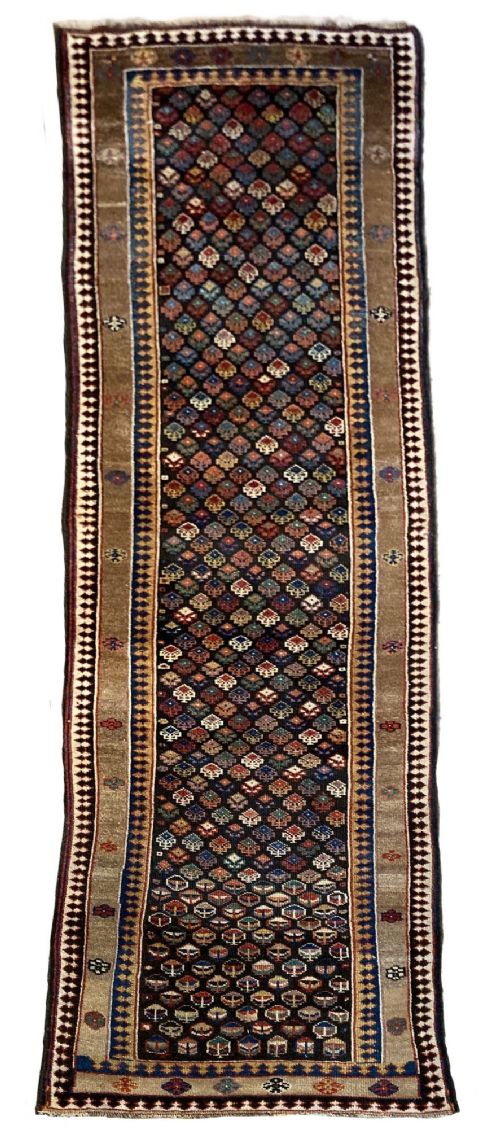
Most examples take the form of runner rugs or corridor carpets, utilising traditional village and tribal designs such as geometric medallions, boteh motifs and lattice patterns. These textiles served both decorative and practical purposes in homes across different regions.
How They Were Made
These textiles are built primarily from wool and hand-spun wool, often paired with cotton foundations for stability and longevity. Natural dyes provide the palette, yielding rich blues, reds and earth tones that settle gracefully over decades.
Weavers knotted or wove these runners by hand on upright looms, employing dense pile techniques suited to heavy foot traffic in domestic hallways. Camel hair also appears in select pieces, adding a distinct natural tone and texture to the wool mix.
Some nineteenth-century runners stretch over ten metres long, originally woven to warm the chilly stone corridors of grand traditional homes.
What Varies in Quality
Knot density and structural tightness set finer examples apart from coarser village work, influencing how sharply defined the geometric or floral patterns appear. Tighter foundations endure generations of hallway traffic while maintaining their structural integrity.
The depth and vibrancy of the natural dyes create another distinction, with superior pieces showing subtle abrash where dye batches shift naturally across the field. The handling of wool quality, from hand-spun softness to resilient pile depth, determines the lasting character of each runner.
The Traditional Wool Hall Runner Glossary
- Runner
- A long, narrow carpet designed for hallways, stairs and corridors. Their proportions direct the eye along a passage.
- Pile
- The upright yarn loops or cut ends that form the soft surface of a rug. Pile thickness affects both underfoot comfort and wear resistance.
- Abrash
- Variations in colour shade across a rug caused by different dye lots or hand-spun batches. This variation is prized by collectors as a mark of genuine artisanal creation.
- Boteh
- A stylised almond or paisley motif representing a floral spray or cypress tree. It appears frequently across Persian and Caucasian weaving.
- Warp
- The vertical threads stretched on the loom that carry the structural weight of the rug. The foundation strength relies entirely on these parallel strands.
Traditional Wool Hall Runner: Frequently Asked Questions
How do I clean a wool runner?
Regular gentle vacuuming without a beater bar removes surface grit before it settles into the wool pile. Professional specialist washing is recommended for deeper cleaning to protect natural dyes.
Avoid harsh chemical cleaners or excessive water saturation, which can damage the traditional wool and cotton foundation. Proper underlays help reduce friction and wear during daily use.
Are these runners suitable for stairs?
Many narrow wool runners possess the length and durability required for hallway stairs and landings. Their sturdy construction handles the concentrated pressure of foot traffic on steps.
Professional fitting with appropriate stair underlay ensures the textile stays securely in place. Checking the flexibility of the foundation helps determine if a specific piece bends well over stair nosings.
How do I identify a tribal design?
Tribal runners typically display bold geometric motifs, stylised animals and repeating latch-hook polygons rather than complex curvilinear court designs. Weavers working in nomadic or village settings created these patterns from memory.
Regional characteristics, such as the palette of Caucasian workshops or the earthy tones of Kurdish pieces, help pinpoint origin. Irregularities in symmetry often point to authentic tribal work rather than mass production.