

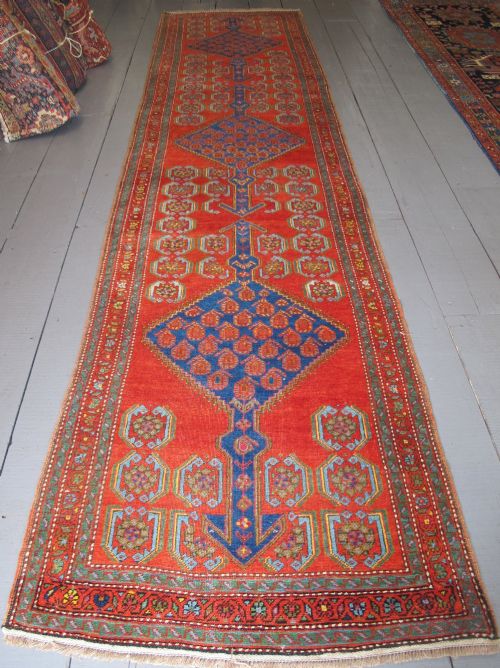


Persian Heriz Runner Rug
A persian heriz runner rug brings bold geometric patterns and enduring resilience to long corridors and narrow spaces.
Persian Heriz Runner Rug
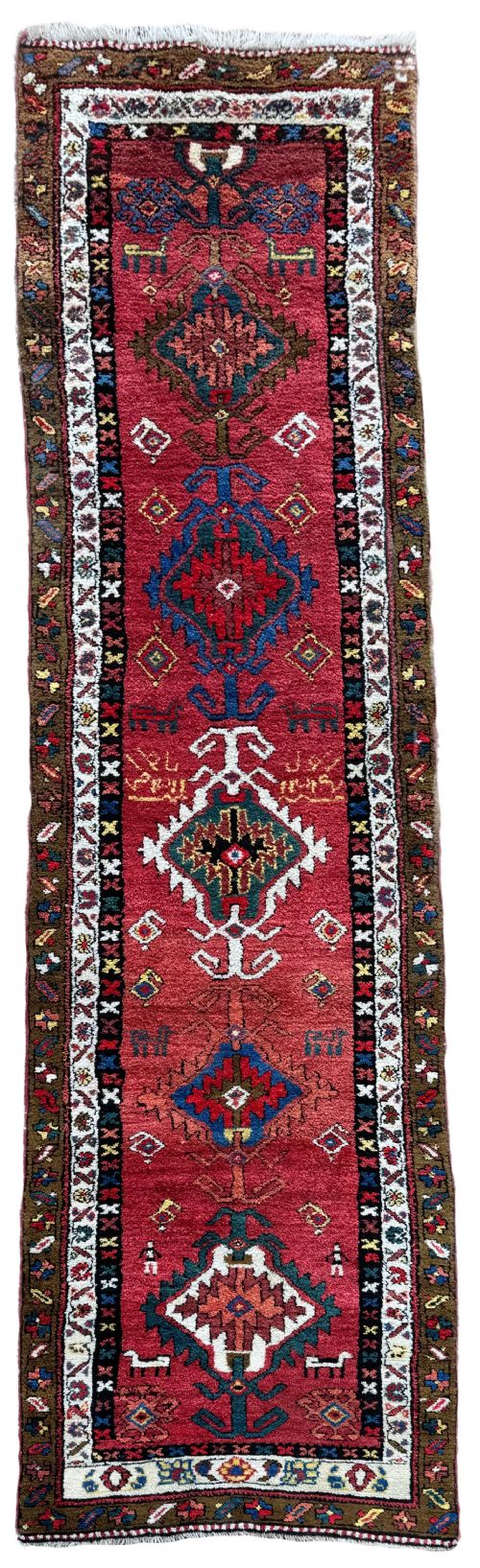
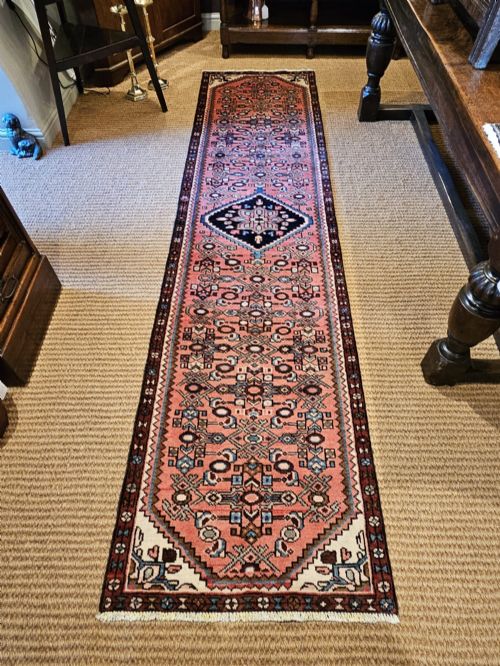
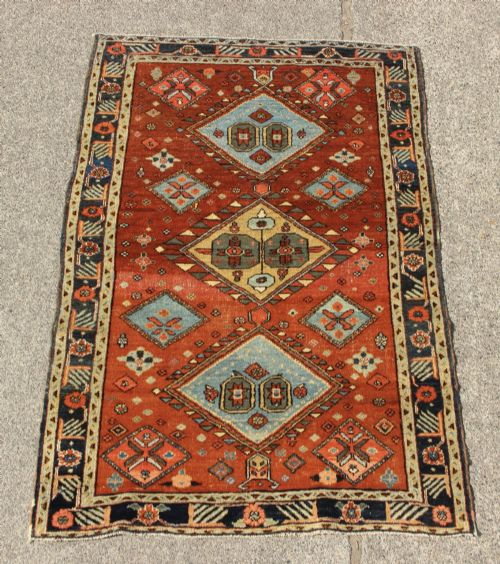
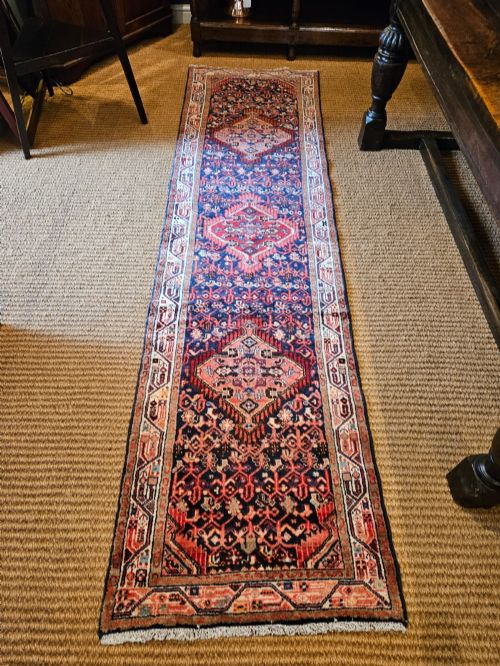
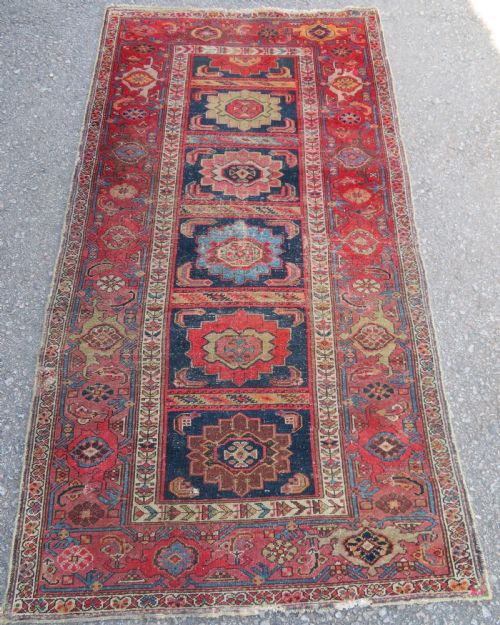
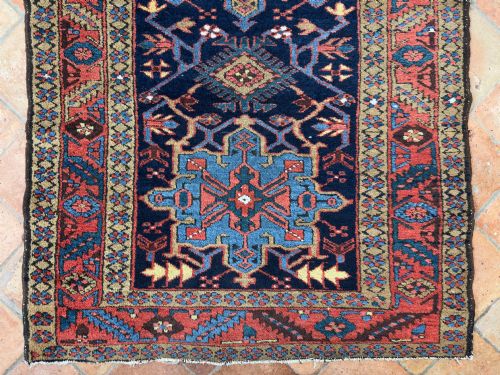
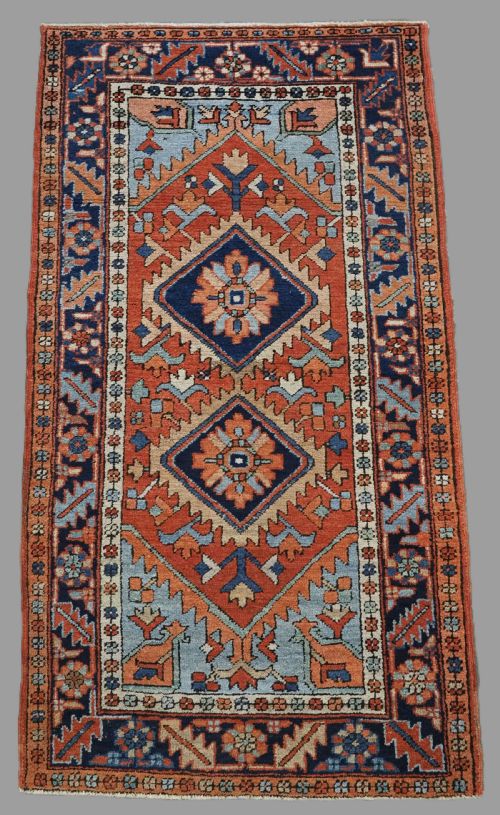
A persian heriz runner rug displays the characteristic geometric medallions and large-scale botanical motifs associated with the Heriz region in North-West Persia. These long, narrow pieces serve primarily as hallway runners and floor coverings for extended spaces.
The pieces on this page span several decades, reaching back to the late nineteenth century alongside examples from the early twentieth century. Variations in nomenclature connect the main Heriz style to regional neighbours such as Karaja, Gorevan, Serapi, Bakshaish, and Sarab.
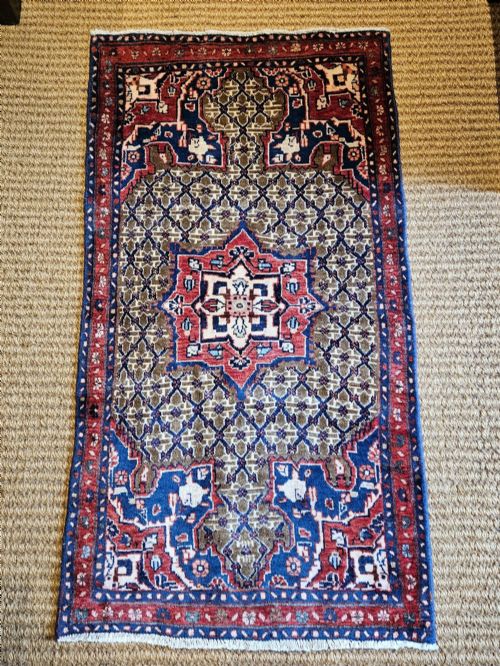
Dimensions vary widely, with lengths stretching from compact formats over a metre to gallery carpets exceeding four metres. Format types include narrow runners, long rugs, and hearth-sized floor coverings.
Materials and construction
These floor coverings utilise wool for the pile and cotton for the foundation warp and weft threads. Handweaving traditions dictate the dense knotting structure that gives these textiles their physical weight.
Natural dye traditions provide the rich colour palette seen across the wool surfaces. The combination of sturdy cotton foundations and heavy wool pile accounts for the survival of nineteenth and twentieth-century examples.
An antique Waring and Gillow Heriz runner brings early twentieth-century department store provenance straight to the hallway floor.
Distinctions in standard
Quality rests in the crispness of the geometric drawing within the central medallion and the balance of the secondary motifs. Tighter knot counts and finer wool preparation yield sharper definition in the botanical patterns.
The handling of natural dyes creates subtle tonal shifts across the field, known as abash, which adds visual depth. Condition and structural integrity of the cotton foundations also determine the standing of an individual piece.
Waring and Gillow
The Persian Heriz Runner Rug Glossary
- Heriz
- A region in North-West Persia renowned for geometric rug and runner designs with prominent central medallions. The style is distinct from the curvilinear patterns found in urban Persian weaving centres.
- Serapi
- An older designation often applied to nineteenth-century Heriz carpets and runners featuring particularly open, bold geometric designs and spacious fields. These pieces frequently date from the Victorian era.
- Karaja
- A style associated with the Heriz region, typically featuring geometric repeat patterns or multiple small medallions rather than a single dominant central motif. Pieces often appear in smaller runner and rug formats.
- Gorevan
- A trade term historically used for Heriz carpets and runners that display slightly more relaxed or geometric field arrangements. They share the same material origins in North-West Persia.
- Warp
- The vertical threads stretched on the loom that form the structural foundation of the rug. In these pieces, the warp consists of cotton.
- Weft
- The horizontal threads passed across the warp to bind the knots in place. Cotton is the standard material utilised for this purpose in these runners.
Persian Heriz Runner Rug: Frequently Asked Questions
Where should I place a long runner?
These pieces suit long hallways, narrow corridors, and galleries where length takes precedence over width. Their narrow proportions allow them to anchor linear architectural spaces effectively.
Ensure the dimensions match your floor space, leaving a consistent border of exposed flooring around the perimeter of the room.
How do I care for wool floor coverings?
Regular gentle vacuuming without a rotating brush roll prevents dust accumulation in the wool pile. Address spills immediately by blotting with a damp cloth rather than rubbing the fibres.
Professional cleaning tailored for antique textiles ensures the cotton foundations and wool pile remain preserved over decades of use.
How do I date an antique runner?
Dating relies on stylistic markers, structural analysis of the wool and cotton, and the character of the natural dyes. Pieces from the nineteenth century often display more archaic colour palettes and wider abrasions.
Comparing the geometric drawing style to documented pieces from periods like 1900 or 1890 helps narrow down the decade of origin.
What is the difference between Heriz and Serapi?
Serapi rugs and runners generally represent an earlier nineteenth-century aesthetic with more spacious field compositions and bolder geometric drawing. They are often treated as a distinct sub-category within the broader Heriz tradition.
Standard Heriz pieces from later decades tend to feature denser ornamentation and tighter medallion structures within the central field.