



Serapi Runner Rug
A serapi runner rug brings bold geometric motifs and rich heritage to a hallway.
Serapi Runner Rug
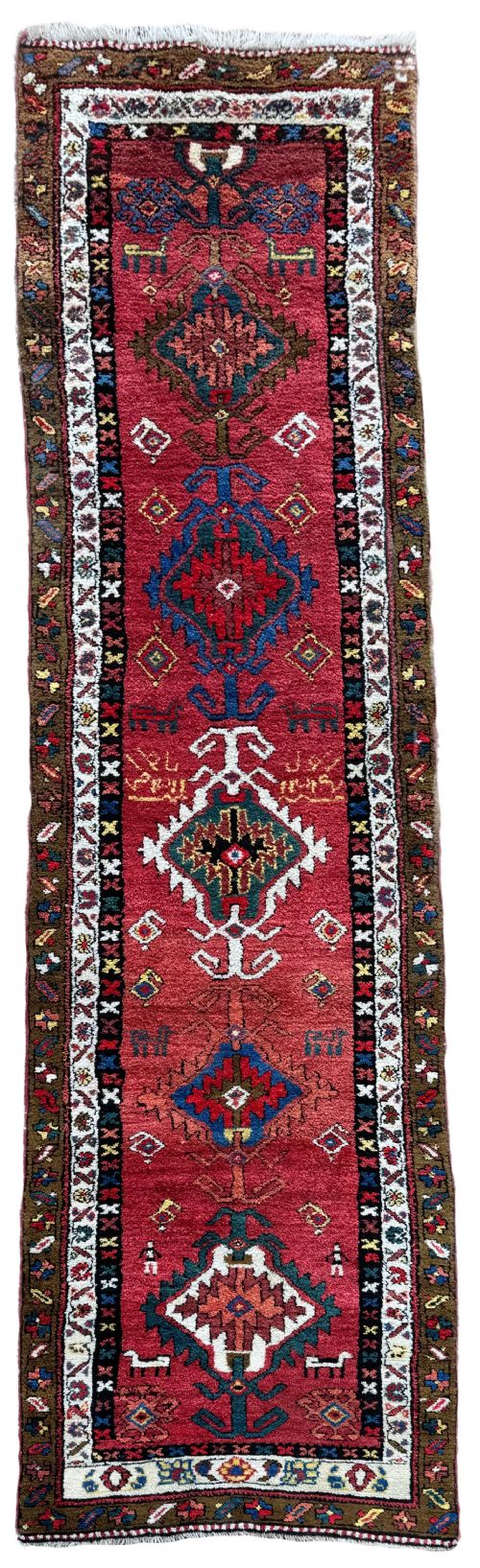
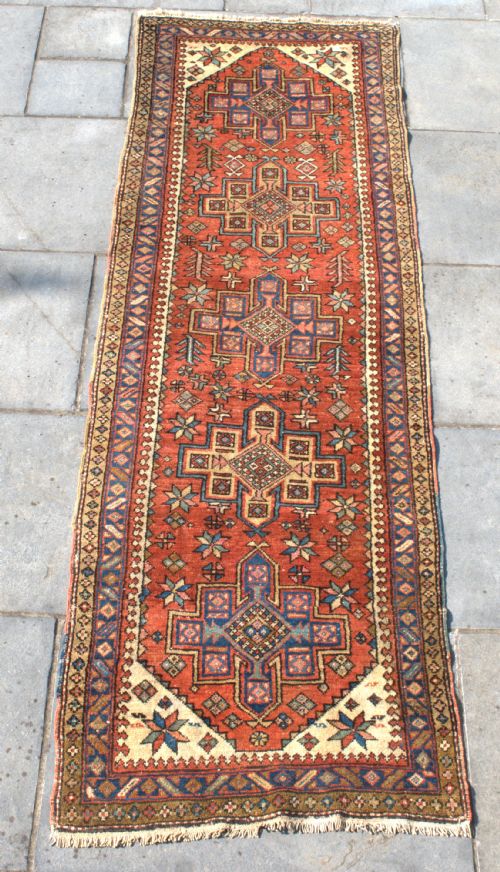
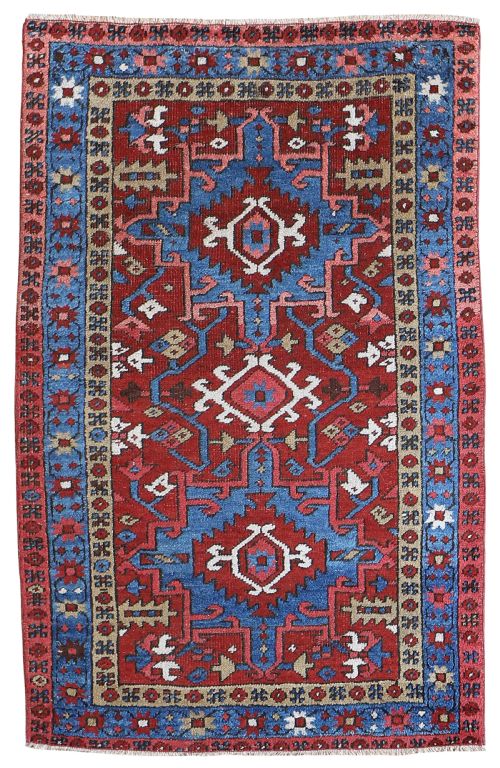
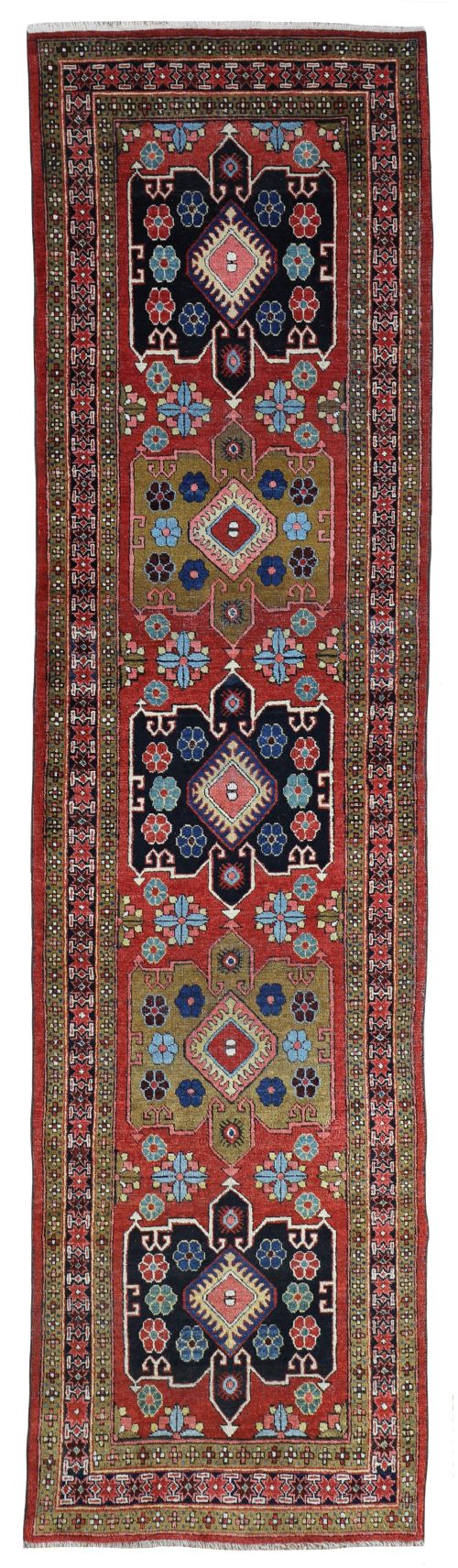
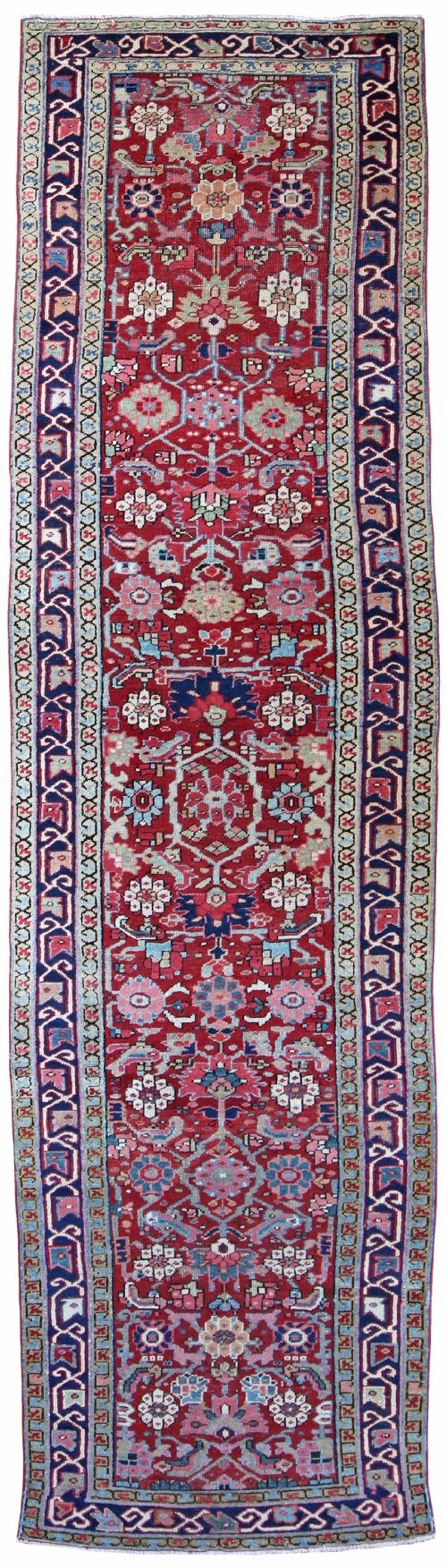
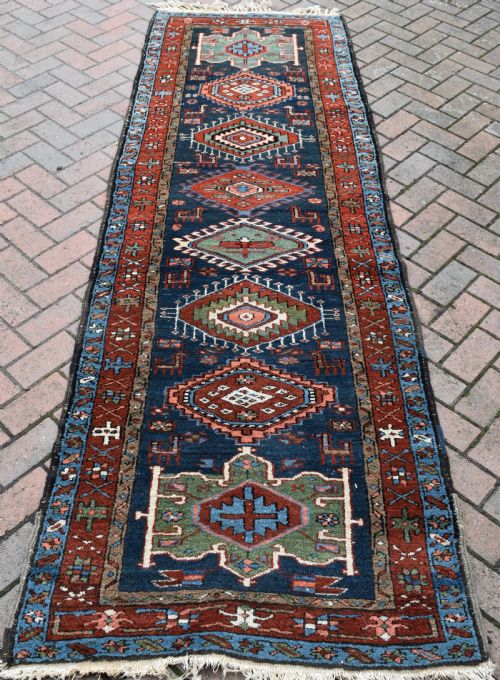
A serapi runner rug represents a distinguished subset of Persian weaving, known for striking large-scale geometric medallions and spacious fields. Pieces on this page span the late nineteenth century into the early twentieth century, taking the form of elongated hallway runners, smaller rugs, and gallery carpets.
Makers in this tradition favoured grand central designs flanked by intricate borders, creating an authoritative focal point for corridors and long spaces. The aesthetic bridges the gap between traditional Persian artistry and architectural geometry, appealing to collectors seeking character and history underfoot.
Materials and construction
These antique textiles utilise natural wool for the pile, chosen for its resilience and ability to hold deep, saturated dye tones over generations of wear. The foundations rely on sturdy cotton warps and wefts, providing structural stability to the elongated runner format.
Weavers knotted these pieces by hand using traditional Persian techniques, building up dense geometric patterns that withstand heavy foot traffic while maintaining flexibility. The interaction of wool pile and cotton foundation defines the durable tactile quality found across these nineteenth and early twentieth-century examples.
Ancient weavers occasionally worked stray desert sand into the cotton foundation as a quiet signature of the workshop floor.
Assessing quality in antique weaving
Quality in a serapi runner rug rests upon the crispness of the geometric drawing and the harmonious balance of the field design. Superior examples exhibit deliberate, uncluttered compositions where the central medallion commands the space with authority and precision.
The nuance of the dye palette further distinguishes finer specimens, as subtle shifts in tone provide depth and visual movement across the wool surface. Knot density and the structural integrity of the cotton foundation complete the measure of a superior antique piece.
The Serapi Runner Rug Glossary
- Serapi
- A distinct style associated with the Heriz region, characterised by large geometric medallions and spacious, bold designs. This term denotes a prized aesthetic within nineteenth-century Persian carpet production.
- Heriz
- A region in northwest Iran renowned for durable village and workshop carpet weaving. Pieces originating here typically employ robust cotton foundations and hard-wearing wool.
- Medallion
- The central ornamental motif dominating the field of a rug or runner. In this tradition, it often takes a bold, geometric form that anchors the entire composition.
- Warp
- The vertical threads stretched lengthwise on the loom that form the structural skeleton of the rug. Cotton is standard in these antique examples for its tensile strength.
- Weft
- The horizontal threads passed across the warp to secure the knots in place. Together with the warp, it forms the grid that supports the wool pile.
Serapi Runner Rug: Frequently Asked Questions
Where should I place a serapi runner rug?
These elongated pieces suit high-traffic corridors, grand entryways, and narrow galleries where their geometric patterns can be fully appreciated. Their sturdy construction handles daily movement while anchoring the surrounding architecture with historic character.
Ensure you use a quality underlay to prevent slipping and protect the cotton foundation from friction against hard flooring.
How do I care for an antique wool runner?
Regular gentle vacuuming without a beater bar removes trapped dust and grit from the wool pile. Professional cleaning by specialists in antique textiles ensures the natural dyes remain stable and vibrant.
Protect the piece from direct, prolonged sunlight to prevent fading of the saturated tones across the field.
What is the difference between Heriz and Serapi designs?
Serapi designs generally feature bolder, more open geometric layouts with larger central medallions and fewer intricate filler motifs. They often date to the nineteenth century and possess a distinct graphic simplicity.
Standard Heriz carpets tend towards slightly denser floral and geometric integration within the field, though both share robust regional craftsmanship.
How can I date an antique runner?
Dating relies on stylistic markers, dye characteristics, and structural analysis of the wool and cotton materials. Pieces from the late nineteenth century often display specific natural colour palettes and looser knotting conventions compared to later twentieth-century productions.
Comparing the border designs and medallion proportions against documented regional examples helps narrow the period of origin.