


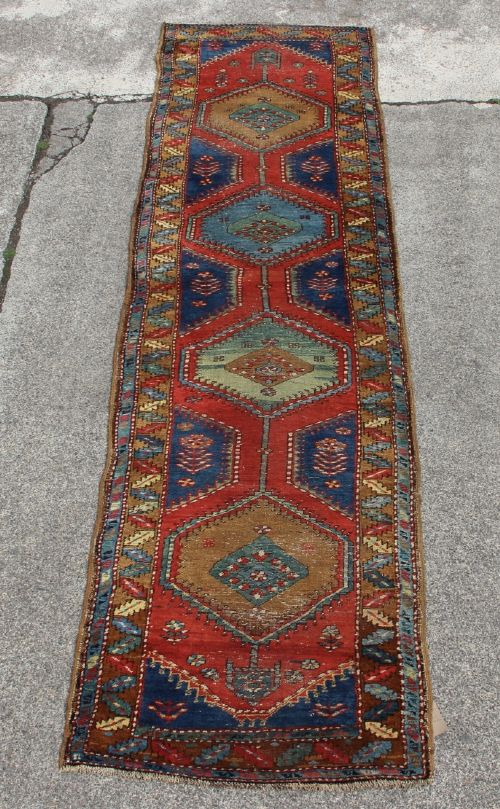


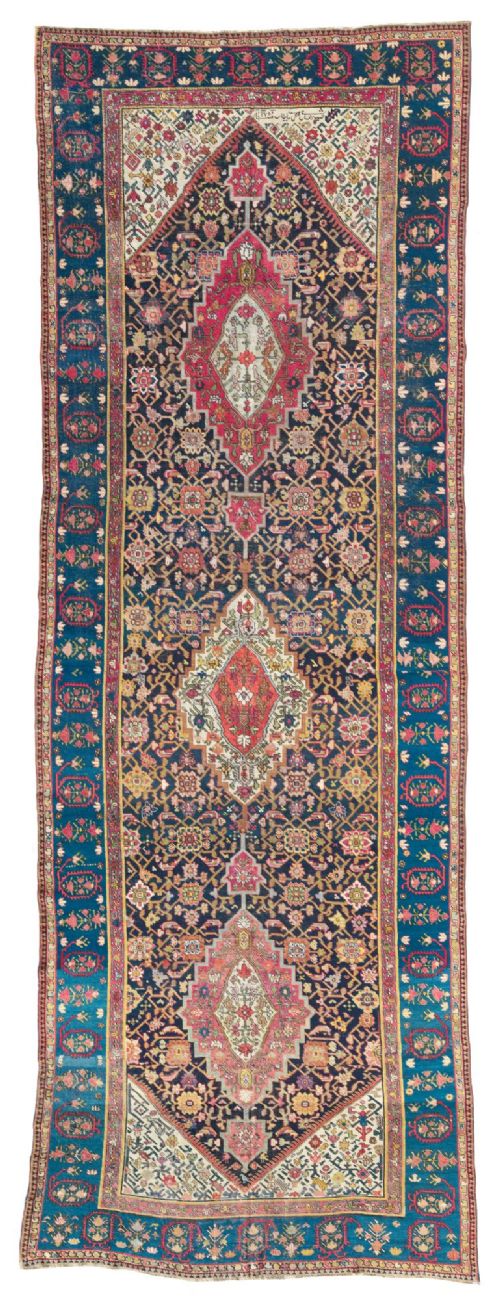
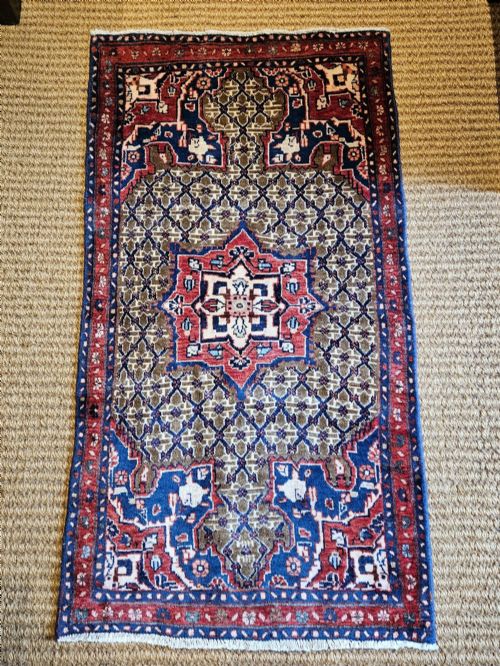
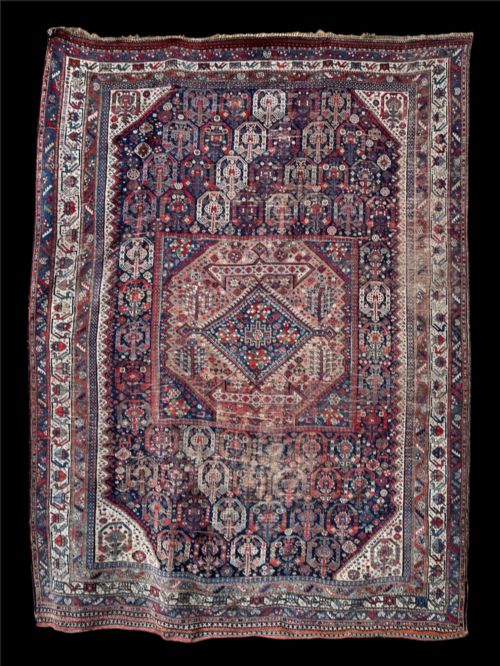
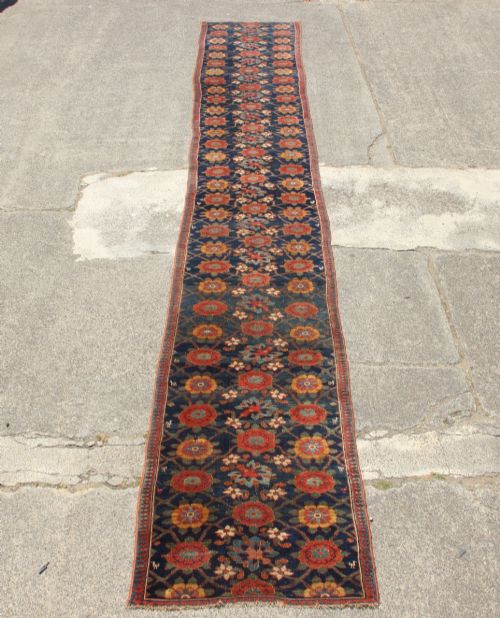
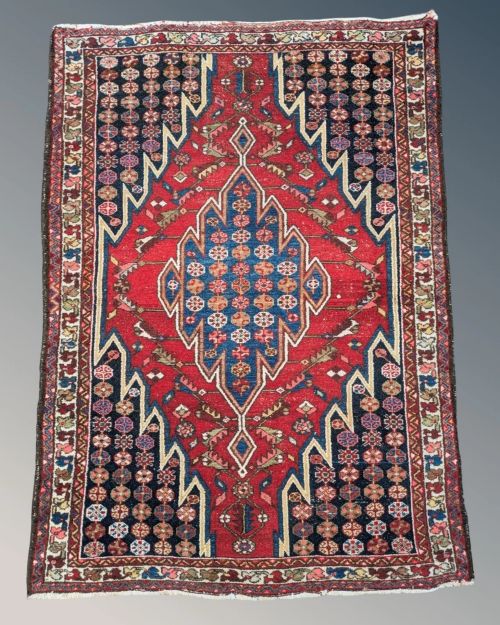
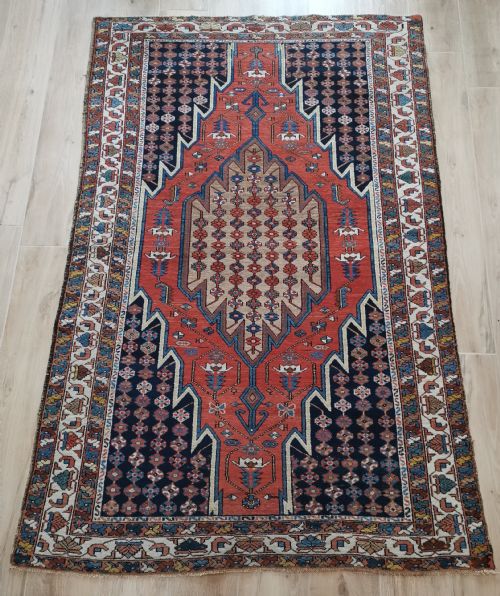
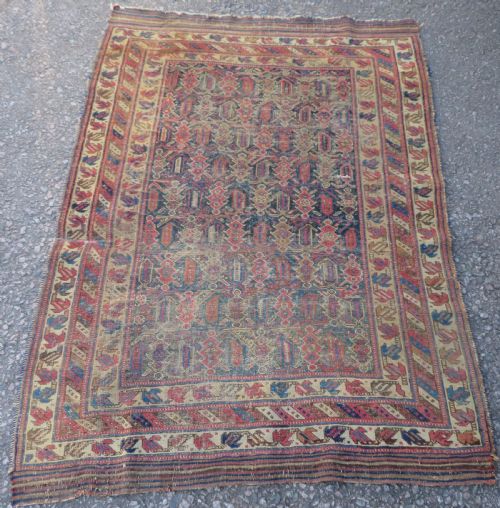
Blue Wool Persian Runner
A blue wool persian runner brings warmth and grounded pattern to a hallway through enduring regional weaving traditions.
Blue Wool Persian Runner
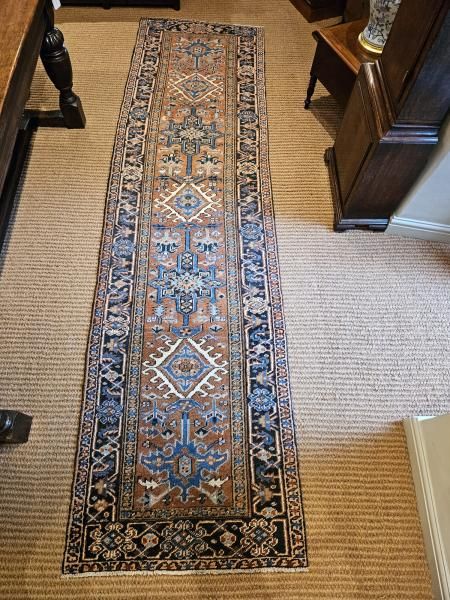
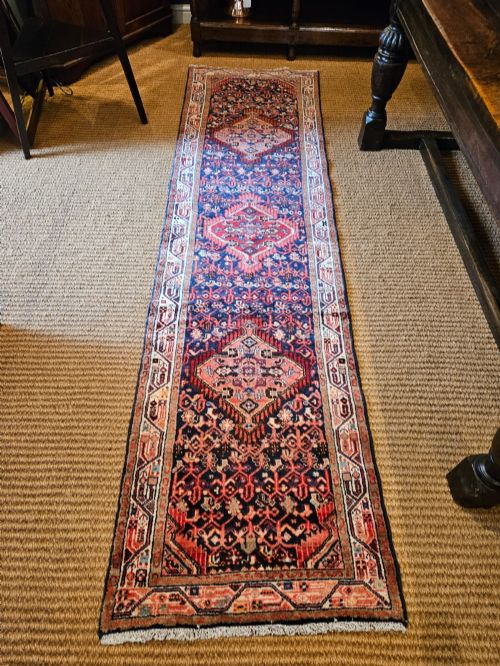
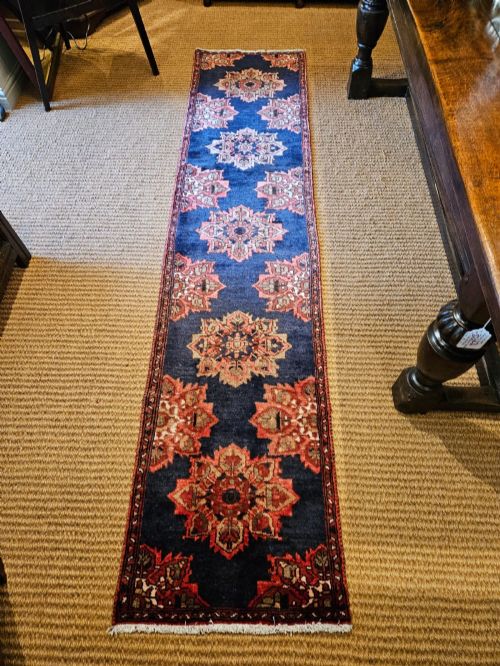
A blue wool persian runner is a long, narrow floor covering designed for corridors and passages, emerging from regional weaving traditions across Persia and the Caucasus. These textiles take the form of elongated formats suited for heavy footfall, produced by various tribal and village groups.
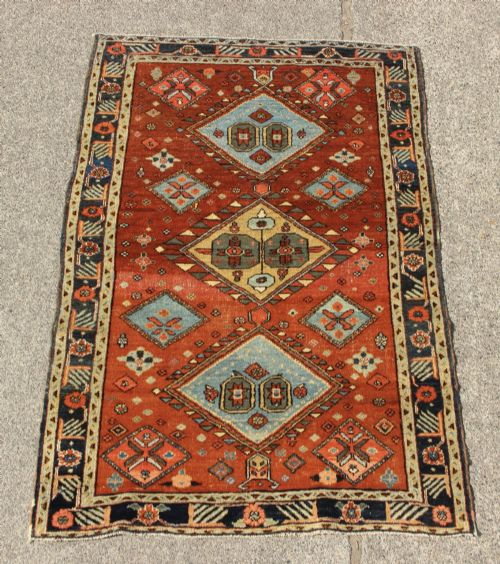
The pieces listed here span from the nineteenth century into the early twentieth century, incorporating traditional village and tribal designs. Buyers encounter formats originating from centres such as Heriz, Kurdistan, and Khamseh, demonstrating distinct regional motifs.
Most examples rely on saturated indigo fields paired with geometric or stylised floral layouts. These runners serve both practical insulation and decorative balance in narrow domestic spaces.
Factors influencing quality
Quality rests upon the integrity of the wool foundation and the density of the knotting, which dictate how well the structure holds its shape along narrow formats. Tighter knotting supports sharper definition within geometric and floral medallions.
The depth and variation of natural dye absorption determine the visual richness of the indigo field. Examples displaying nuanced shifts in colour hold greater visual complexity than those with flat, uniform saturation.
Materials recorded across the inventory include hand-spun wool, cotton foundations, and natural dyes.
Bakhtiar·Kurdish·Heriz·Afshar·Seneh
The Blue Wool Persian Runner Glossary
- Runner
- A long, narrow carpet format traditionally utilised in hallways, corridors, and alongside larger beds.
- Warp
- The stationary vertical foundation threads stretched tightly on a loom before weaving begins.
- Weft
- The horizontal threads passed alternately over and under the warp threads to bind the knots in place.
- Natural Dyes
- Colourants extracted from plants, insects, and minerals rather than synthetic chemical sources.
- Knot
- The individual loops of wool tied around warp threads that form the plush surface pile of the rug.
Blue Wool Persian Runner: Frequently Asked Questions
Where should a runner be placed?
These narrow formats suit hallways, stair landings, and long entryways where floor traffic requires both protection and visual definition. They add structure to transitional spaces without overwhelming the surrounding architecture.
Ensure the area allows the runner to lie flat without folding over door swings or high-friction thresholds. Proper placement protects timber floors while softening sound in corridors.
How do I care for antique wool?
Regular gentle vacuuming without a rotating brush roll prevents dust from settling deep into the wool pile. Professional cleaning suited to natural dyes maintains the integrity of the fibres over time.
Avoid excessive moisture and direct, continuous sunlight to preserve the natural dye compounds. Rotating the piece periodically ensures even wear across high-traffic areas.
How do I identify regional styles?
Regional attribution relies upon examining specific knotting structures, characteristic colour palettes, and recurring geometric or floral motifs. Different tribal groups utilised distinct border arrangements and symbol sets.
Comparing the weave density on the reverse side often reveals whether a piece originated from a settled workshop town or a nomadic tribal weaving group.
What makes indigo blue distinct?
Natural indigo yields deep, luminous tones that develop a rich patina through age and light exposure. Unlike flat synthetic dyes, plant-based indigo absorbs and reflects light with subtle tonal shifts.
These variations across the field demonstrate the hand-dipping process used by traditional dyers before the introduction of synthetic alternatives.