

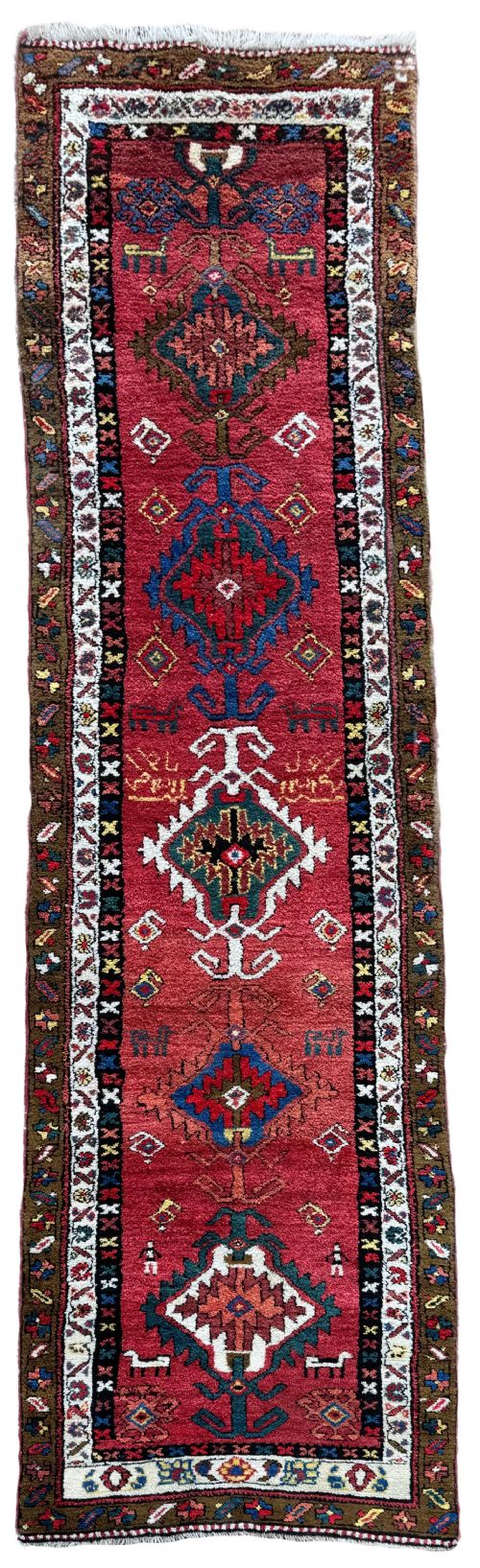


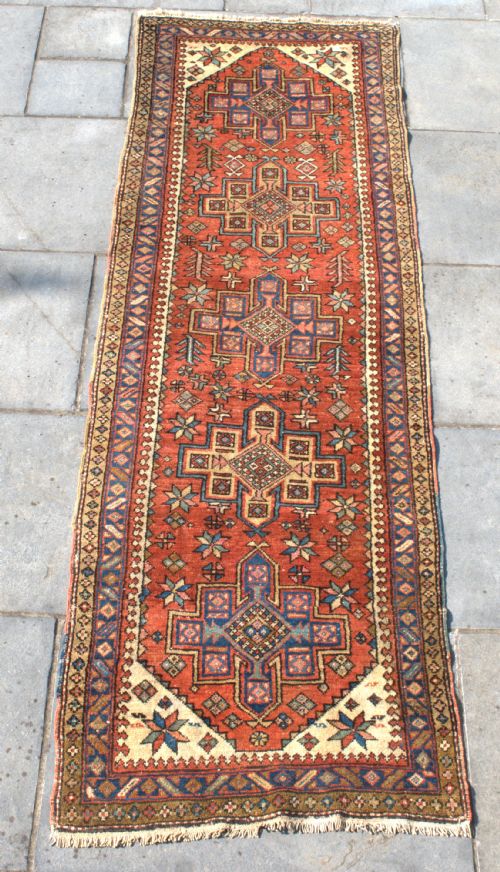

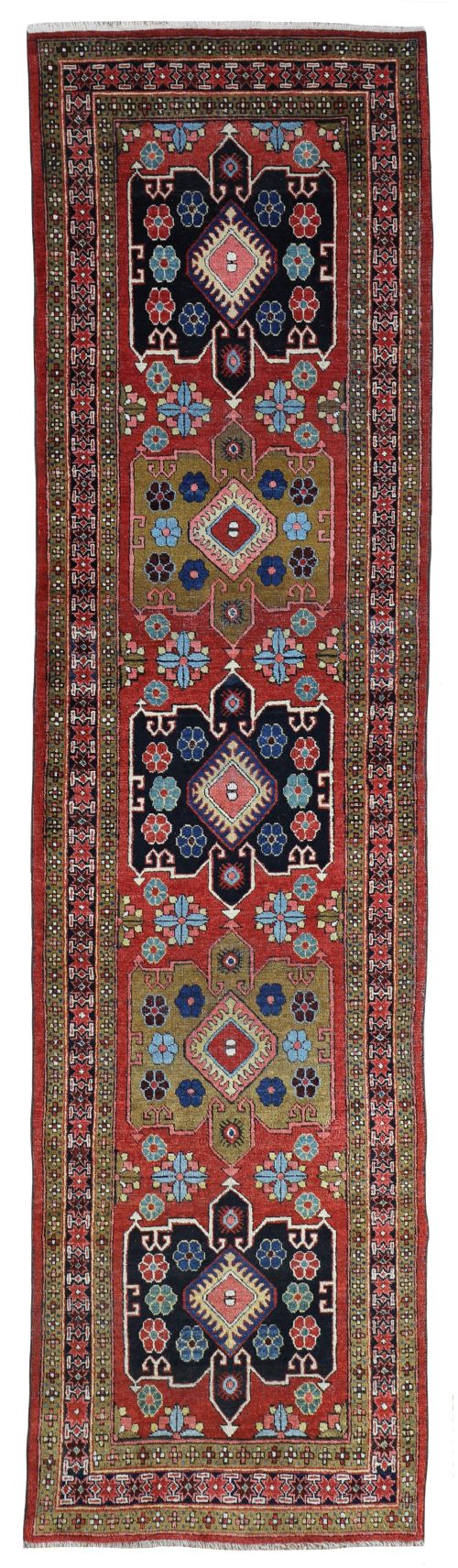


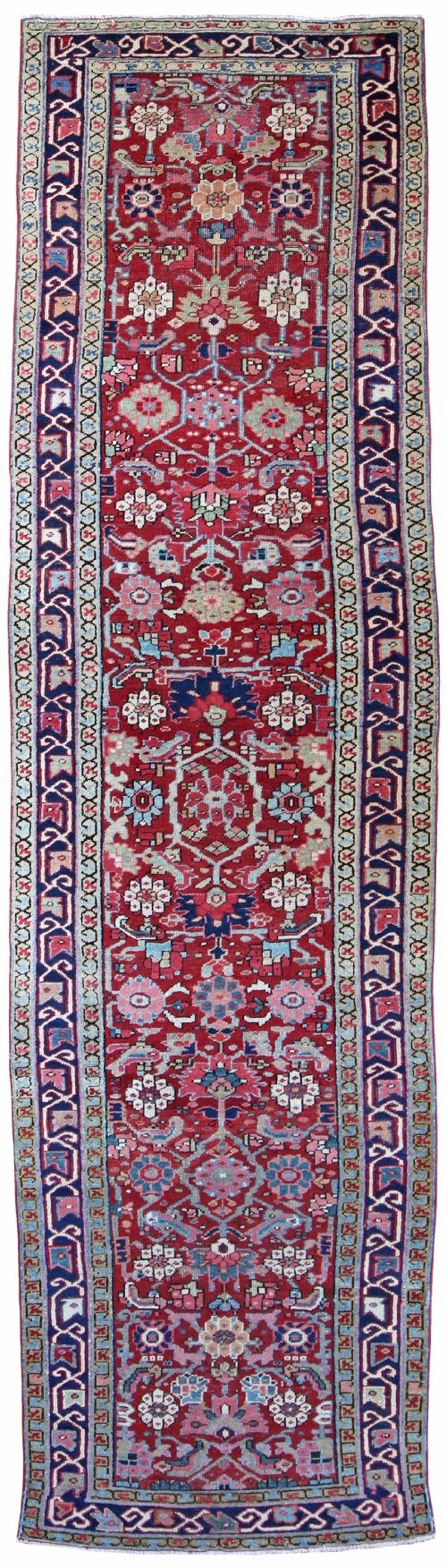

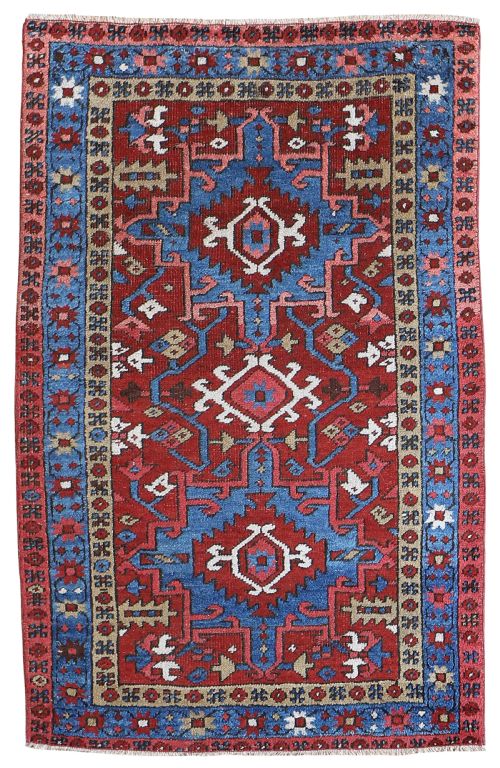
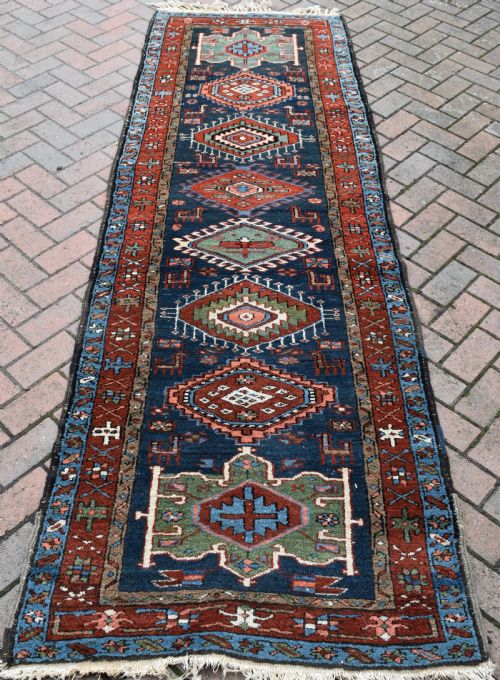
Antique Serapi Carpet Runner
An antique serapi carpet runner brings geometric warmth and enduring Persian craftsmanship to long hallways.
Antique Serapi Carpet Runner
An antique serapi carpet runner belongs to the wider family of Persian Heriz and Serapi woven floor coverings produced during the nineteenth and early twentieth centuries. These elongated pieces served practical purposes in corridors and galleries while displaying bold geometric motifs.
How they were made
Weavers constructed these carpets using traditional wool pile knotted onto sturdy cotton foundations. This combination provided the necessary durability for high-traffic hallways and sustained daily use over generations.
The construction relies on sturdy knotting techniques characteristic of the Persian Heriz region, ensuring the geometric designs remain crisp and structurally sound.
Antique Serapi Carpet Runner Retail Price Guide 2026
Typical asking prices for serapi carpet runner among the pieces listed under this phrase on Sellingantiques today, from the lower quarter to the upper quarter. They describe what is for sale here now, not the wider market.
Early weavers occasionally incorporated charming minor irregularities in their geometric borders that reveal the human hand behind the loom.
What varies in quality
Quality in these runners depends on the precision of the geometric layout and the handling of the central medallion. Finer examples display balanced proportions and deliberate colour distribution across the field design.
The integrity of the wool and the tightness of the foundation cotton dictate the longevity of the piece. Superior specimens retain dense piles and sharp outlines despite decades of foot traffic.
The Antique Serapi Carpet Runner Glossary
- Runner
- A long, narrow carpet designed specifically for hallways, corridors, and stairs. These pieces guide movement through domestic spaces.
- Medallion
- A distinct central ornamental motif set within the field of the carpet. It anchors the symmetrical geometry of Persian weaving.
- Pile
- The upright loops or cut ends of yarn that form the usable surface of the carpet. Wool pile provides softness and resilience.
Antique Serapi Carpet Runner: Frequently Asked Questions
Where should I place a runner?
These long carpets suit narrow spaces such as hallways, corridors, and galleries where length is required. They protect flooring while adding warmth and traditional pattern to transition areas.
Ensure the dimensions match your hallway proportions so the borders remain fully visible rather than hidden beneath furniture.
How do I date these carpets?
Dating relies on stylistic markers, construction materials, and historical production periods spanning from the late nineteenth century to the early twentieth century. Examining the wool and cotton foundation offers further clues.
Pieces from the 1870s and 1880s often display distinct Serapi characteristics compared to later 1920s examples.
Are wool and cotton standard?
Traditional Persian runners utilise wool for the soft upper pile and cotton for the underlying structural foundation. This pairing delivers both comfort underfoot and long-term durability.
The sturdy cotton warps and wefts keep the elongated runner straight and stable over decades of use.
What defines a Serapi style?
Serapi designs are a subset of Heriz weaving known for bolder, more spacious geometric patterns and larger central medallions. They often feature balanced, harmonious colour palettes.
Collectors prize this specific aesthetic for its striking graphical impact compared to denser floral carpets.