
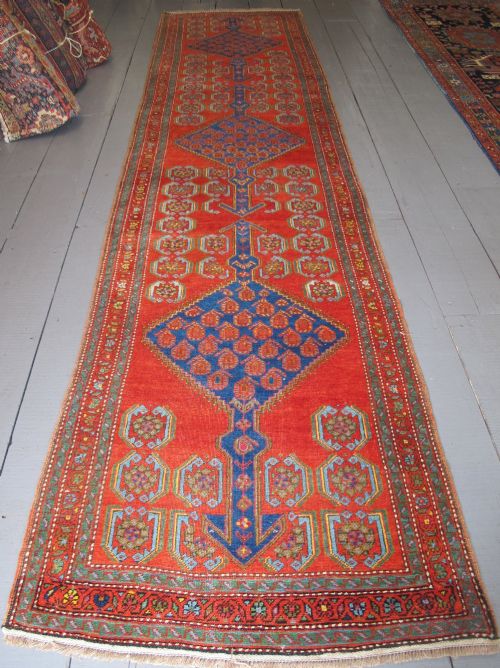


Antique Wool Hall Runner
An antique wool hall runner brings warmth and pattern to long corridors using hand-woven materials from Persian and Caucasian traditions.
Antique Wool Hall Runner
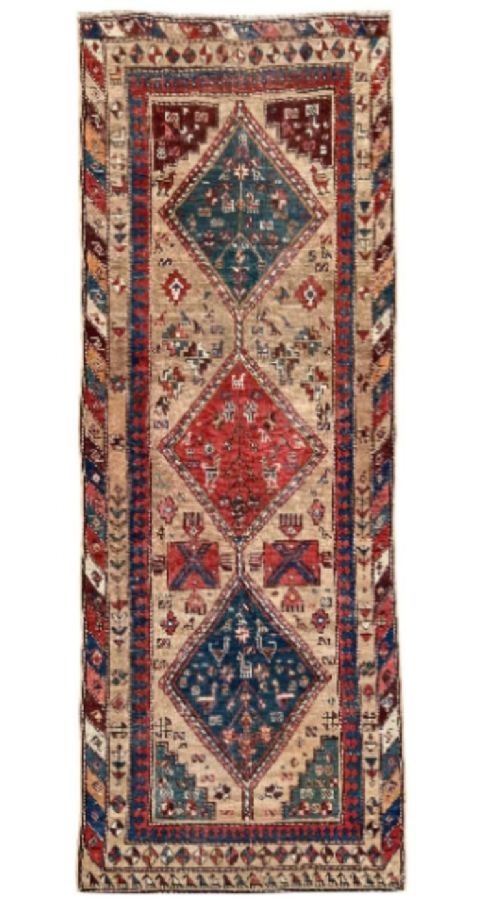
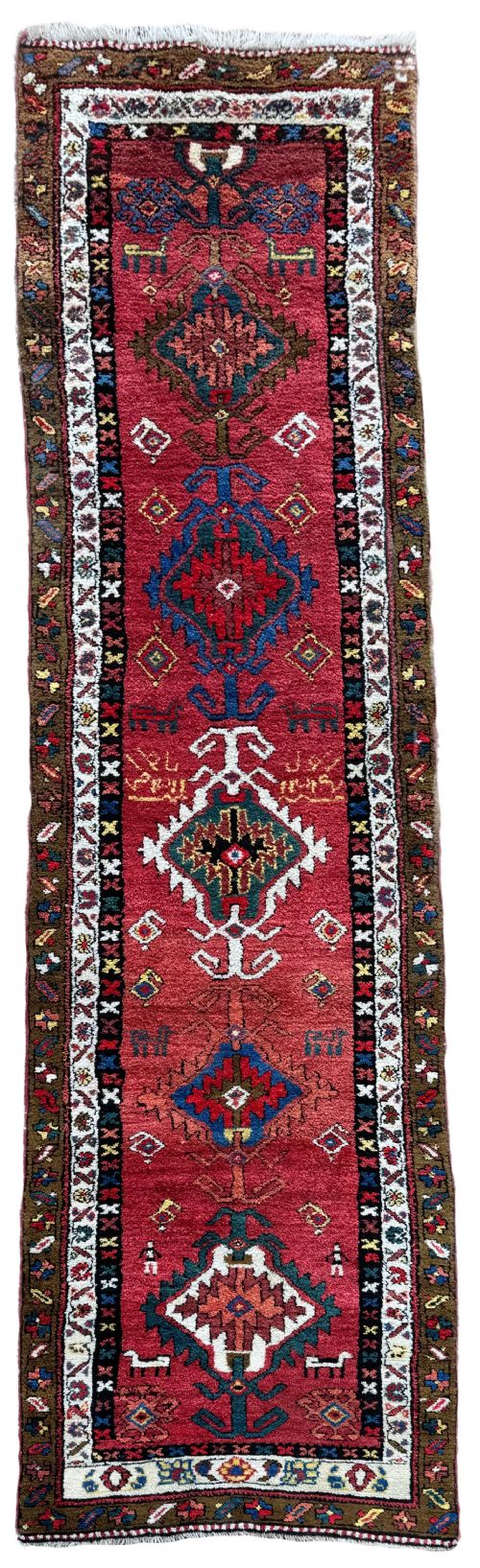
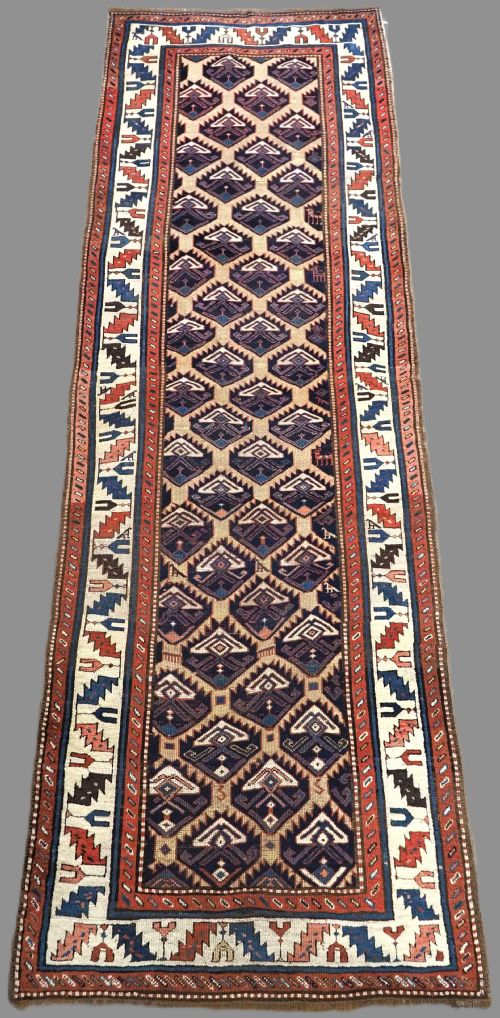
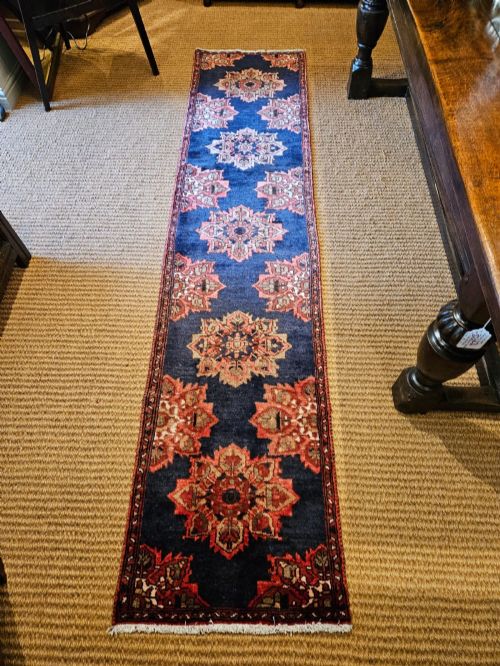
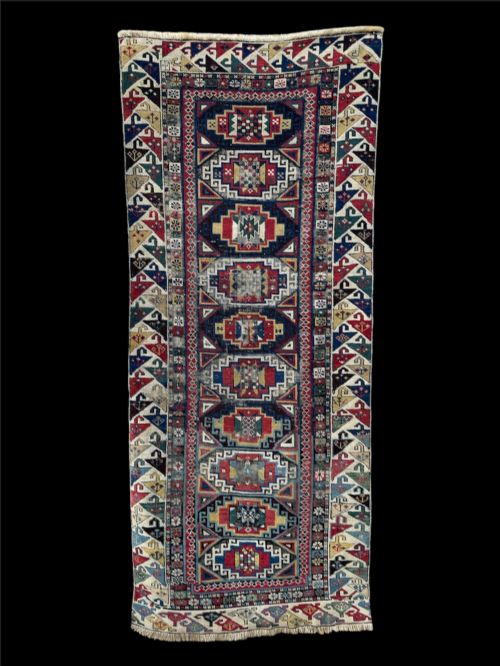
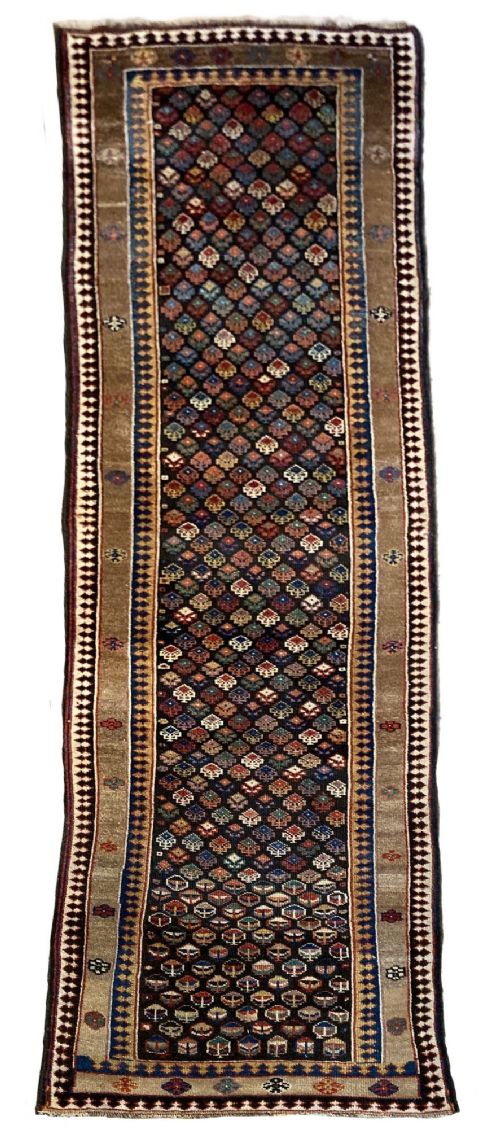
An antique wool hall runner is a long, narrow floor covering designed for corridors, landings and passageways. Buyers searching for an antique wool hall runner encounter various regional styles, including Persian weaves from Heriz, Bakshaish, Hamadan, and Kurdish districts, alongside Caucasian pieces from Shirvan, Gendje, and Kazak. These floor coverings bridge heavy traffic areas while displaying traditional geometric or floral motifs.
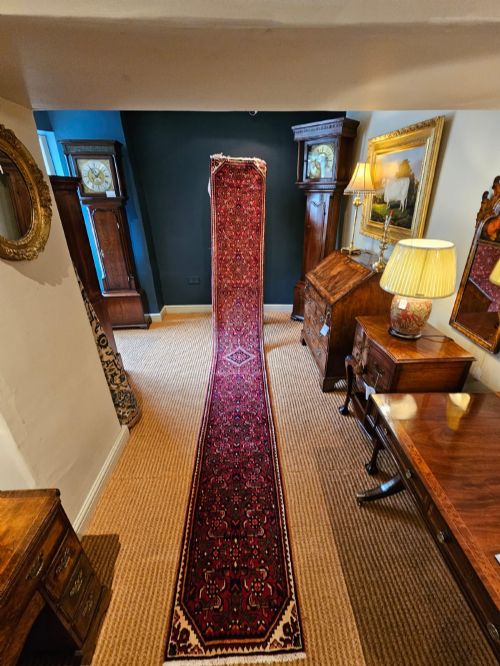
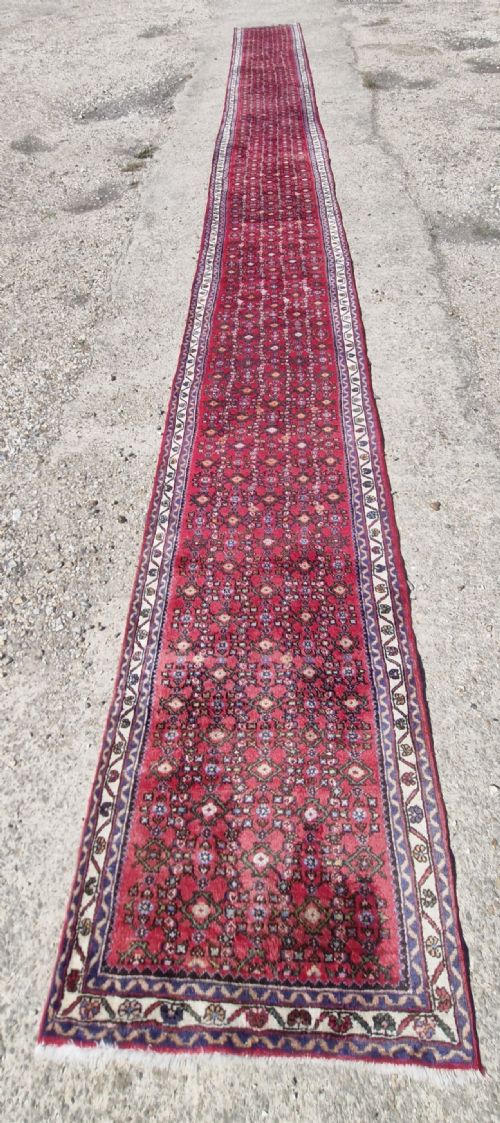
The pieces on this page span the nineteenth century through the early twentieth century, showing formats from narrow formats under a metre wide to lengths exceeding thirty feet. Formats range from formal room-edge runners to tribal long rugs utilised in hallways. Regional traditions dictate whether a piece displays bold medallions or repetitive lattice designs.
Most examples rely on durable wool construction combined with cotton foundations to withstand regular foot traffic in domestic settings. The palette typically encompasses deep indigos, reds, and muted secondary tones derived from natural colour sources. Each runner reflects the weaving practices of specific villages or nomadic groups across Persia and the Caucasus.
How They Were Made
Weavers constructed these runners using hand-spun wool for the pile, knotted by hand onto sturdy cotton or wool warp and weft foundations. This dense knotting technique provided the structural resilience required for prolonged use in busy hallways. Natural dyes extracted from plants and minerals supplied the characteristic colour schemes that mellow gradually over decades.
Nomadic and village workshops employed upright wooden looms to execute traditional tribal patterns without printed templates. Artisans utilised camel hair in select areas for undyed natural brown tones alongside dyed wool yarns. Finishing involved securing the lateral selvages and binding the ends to prevent fraying during daily use.
Some runners stretch past thirty-two feet, requiring considerable hallway space and dedicated nomadic weaving stamina.
What Varies in Quality
Quality in these runners depends upon the fineness of the knot count and the precision of the weave along extended lengths. Tighter knots allow intricate geometric details and lattice patterns to remain sharp and well-defined. The consistency of hand-spun wool and the stability of the foundation dictate how well the piece maintains its structural integrity.
The chemistry and depth of natural dyes create subtle variations in visual richness across the surface. Pieces retaining vibrant, light-fast colours achieved through traditional dyeing methods display superior chromatic depth. Structural uniformity from one end of a long narrow format to the other marks the work of experienced weavers.
The Antique Wool Hall Runner Glossary
- Warp
- The stationary vertical threads stretched on a loom that form the structural foundation of the rug. Fringe ends typically consist of these exposed warp threads.
- Weft
- The horizontal threads passed alternately over and under warp threads to bind the knots in place. Proper weft tension ensures the runner maintains its rectilinear shape.
- Selvage
- The reinforced side edges of a runner formed by wrapping lateral warp threads. Secure selvages prevent the pile edges from unravelling under heavy foot traffic.
- Boteh
- A stylised almond or paisley motif representing a floral shoot or cypress tree. This ancient design appears frequently in Caucasian and Persian tribal weaving.
- Natural Dyes
- Colourants derived from organic sources such as plants, insects and minerals prior to synthetic aniline discoveries. These dyes produce complex patinas as they age.
Antique Wool Hall Runner: Frequently Asked Questions
How do I choose the right length for my hallway?
Measure the clear floor space of your corridor while leaving equal margins of exposed wood or stone around the perimeter. Narrow formats under a metre wide generally suit standard domestic hallways.
Consider door clearances along the path to ensure the runner thickness does not obstruct movement. Longer corridors benefit from continuous formats or paired runners placed in sequence.
Are these runners durable enough for everyday hallway use?
Traditional wool pile combined with sturdy cotton foundations provides natural resilience against heavy foot traffic. Dense knotting allows the fibres to withstand constant friction without losing structural form.
Using a quality underlay beneath the runner prevents slipping and cushions the fibres against hard flooring. Regular gentle sweeping maintains the surface without disturbing the foundation.
How do I distinguish between Persian and Caucasian regional styles?
Caucasian pieces typically exhibit sharper geometric medallions, bold primary colours, and structured lattice work originating from regions like Kazak and Shirvan. Persian village runners often incorporate curving floral motifs, boteh sprays, or large central medallions from towns such as Heriz and Hamadan.
Palettes also offer clues, with Caucasian weaves favoring crisp indigo and ivory contrasts against saturated reds. Persian examples frequently display more nuanced abrash shifts within earthy tones.
What causes colour variations within a single runner?
Natural dye batches varied according to seasonal plant harvests and mineral water compositions used during preparation. Weavers utilised successive dye pots as a project progressed, resulting in subtle tonal shifts known as abrash.
These natural irregularities demonstrate genuine hand-dyeing processes rather than uniform synthetic manufacturing. The resulting variation adds visual depth across the expanse of the runner.