





Desktop Letter Box
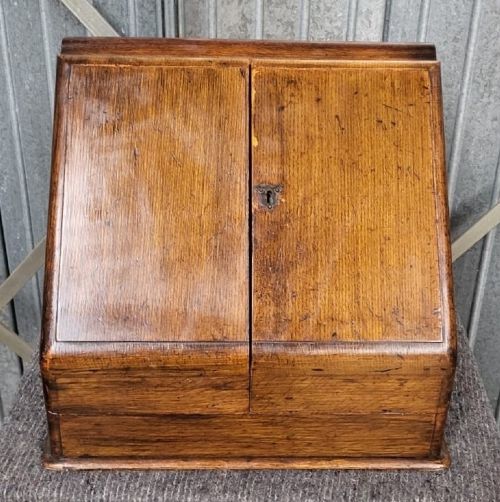
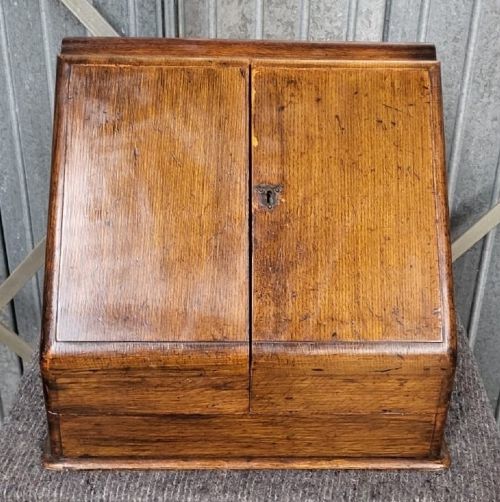
A desktop letter box organises daily correspondence in sturdy timber, bringing practical nineteenth-century desk furniture into modern rooms.
Desktop Letter Box
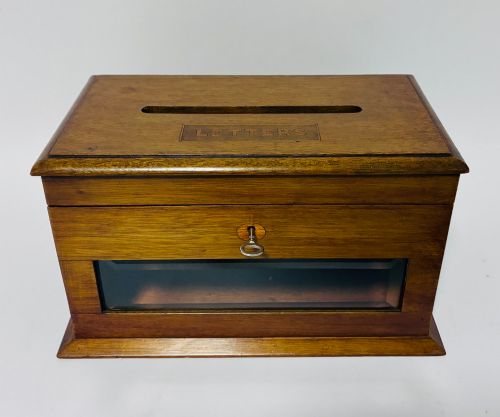
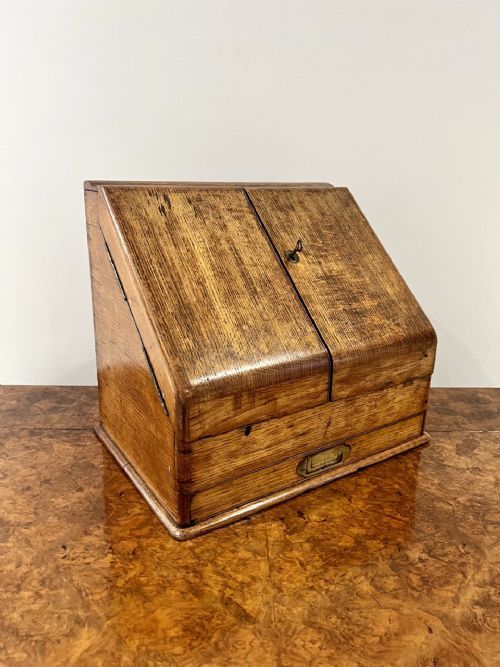
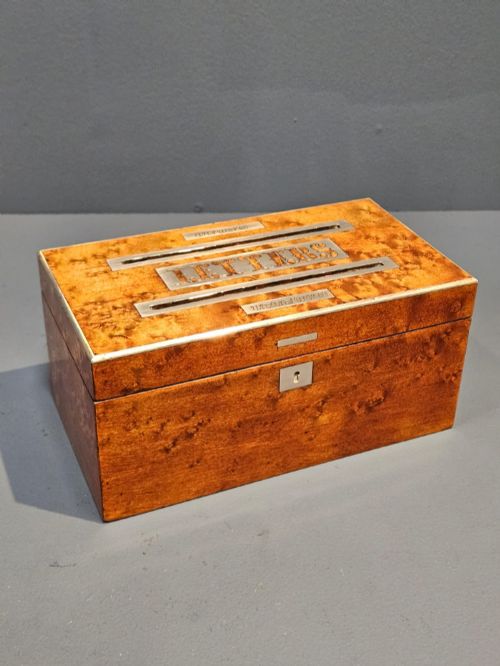
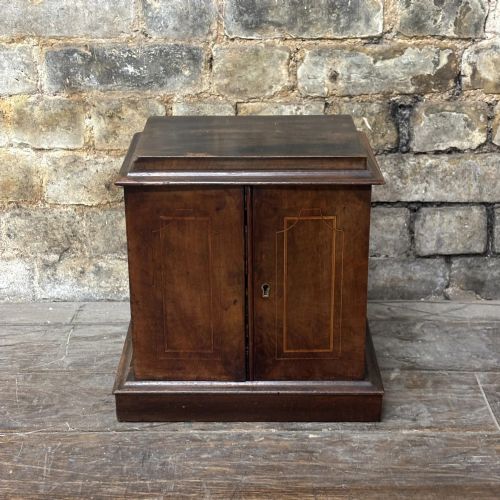
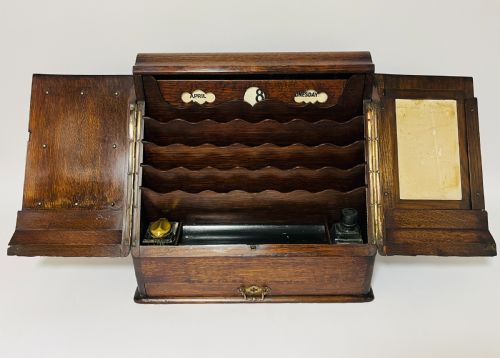
The selections range from compact slant-lidded boxes to substantial stationery cabinets equipped with letter racks, ink bottles and adjustable dates. Common forms also encompass correspondence chests and novelty mail holders designed to sit squarely on a writing table.
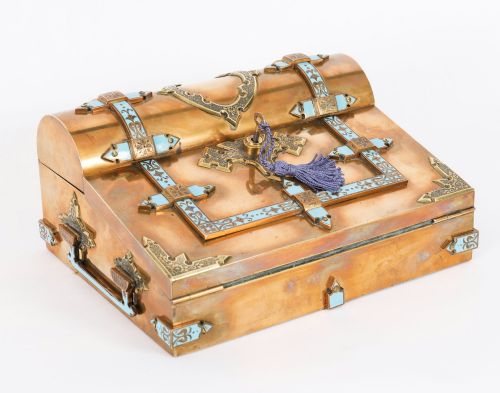
Earlier Georgian examples reflect simpler vernacular carpentry, while nineteenth-century pieces showcase architectural ambition through brass mounts, sloping roofs and glazed panels. Buyers frequently encounter oak and mahogany variants alongside more decorative satinwood and walnut constructions.
Assessing craftsmanship and finish
Quality rests upon the selection of figured timbers and the precision of the joinery, particularly where mitred corners and internal stationery divisions meet. Superior pieces exhibit seamless marquetry, crisp woodcarving and robust original brass hardware rather than later replacement fittings.
The presence of functional accessories such as working locks, maker labels, secret drawers, matching ink bottles and adjustable calendars elevates the distinction of an item. Interior arrangement and clever engineering distinguish standard utility boxes from exhibition-grade cabinet work.
Desktop Letter Box Retail Price Guide 2026
Typical asking prices for desktop letter box among the pieces listed under this phrase on Sellingantiques today, from the lower quarter to the upper quarter. They describe what is for sale here now, not the wider market.
Listings feature oak, mahogany, walnut and exotic satinwood, spanning Georgian, Victorian and Edwardian periods with brass and glass accents.
F Waller·Houghton & Gunn·Amberg
The Desktop Letter Box Glossary
- Stationery box
- A desk accessory fitted with upright divisions designed specifically to hold writing paper, envelopes and correspondence.
- Tunbridge ware
- A form of decorative woodwork produced in Kent featuring intricate mosaic patterns assembled from thousands of tiny tinted wood blocks.
- Marquetry
- The art of applying thin veneers of different woods to a structural carcase to form elaborate decorative pictures or geometric patterns.
- Pollard oak
- Timber taken from trees that have been repeatedly cut back, producing a dense, knotty grain highly prized for decorative cabinet fronts.
- Correspondence chest
- A larger desktop receptacle built to house letters, documents and writing implements in secure, compartmentalised drawers or shelves.
Desktop Letter Box: Frequently Asked Questions
What is a desktop letter box?
A desktop letter box is a dedicated wooden container designed to hold mail, envelopes and writing paper neatly upon a desk or table.
These pieces range from simple lidded boxes to elaborate cabinets featuring internal compartments, letter slots and glass panels.
How were letter boxes used?
Households and offices utilised these boxes to sort incoming post, store unanswered correspondence and keep stationery organised before the daily collection.
Many designs included answered and unanswered slots or integrated ink bottles and letter racks to streamline correspondence.
How do I date an antique letter box?
Dating relies upon timber selection, hardware styles and prevailing design movements such as the Victorian Gothic Revival or Arts and Crafts.
Nineteenth-century examples frequently employ pollard oak, brass mounts and heavy locks, whereas Edwardian pieces often display lighter marquetry inlay.
Where should I place one at home?
These boxes sit naturally on modern writing desks, console tables or study bookshelves where their compartments remain useful for sorting letters.
Placing them in dry environments away from direct heat sources protects the polished wood finishes and delicate veneer work.