

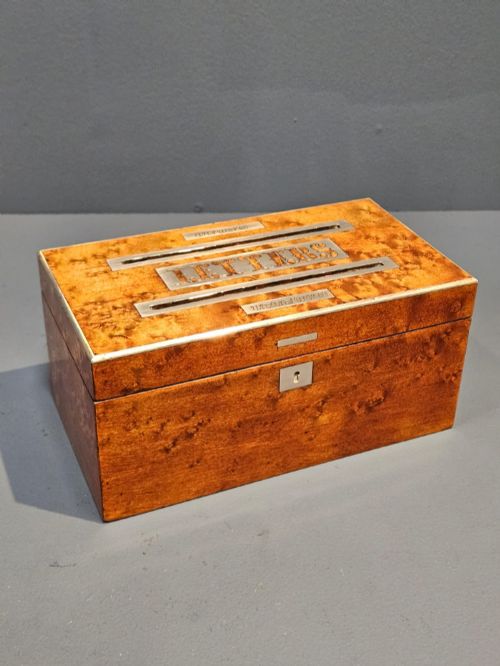
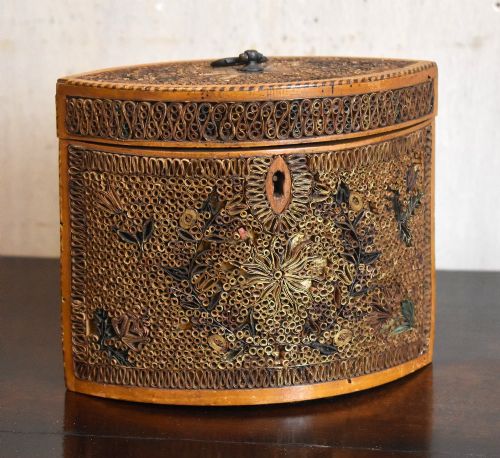


Golden Brown Wooden Box
A golden brown wooden box brings warmth and rich grain to a desk, crafted in periods spanning the eighteenth century to the early twentieth.
Golden Brown Wooden Box
A golden brown wooden box in these listings covers practical containers designed for storage and daily use, most frequently appearing as tea caddies, writing slopes, and stationary cabinets. These pieces span several eras, including Georgian, Regency, and Victorian periods, alongside items from around nineteen hundred.
Buyers seeking a golden brown wooden box will find forms ranging from navette-shaped paper scroll tea caddies to figured walnut writing slopes and oak desktop cabinets. The selection relies heavily on rich timber tones and functional desk accessories rather than purely decorative objects.
The assortment relies on traditional forms produced across distinct stylistic movements, encompassing Art Nouveau monks benches and Grand Regency wine coolers alongside fitted dressing boxes. Each object retains the warm timber hues that define the category.
How they were made
Cabinet makers utilised choice timbers such as burr satinwood, burr yew-wood, amboyna, oak, and burr thorn wood to achieve distinct figured grains and golden brown tones. These woods were selected for their natural decorative patterns and durability under frequent handling.
Construction frequently incorporated intricate wood inlay to enhance the visual depth of the surfaces, alongside brass hardware such as locks and keys. Specialised items like writing slopes also featured internal secret drawers and fitted compartments.
Golden Brown Wooden Box Retail Price Guide 2026
Typical asking prices for golden brown wooden box among the pieces listed under this phrase on Sellingantiques today, from the lower quarter to the upper quarter. They describe what is for sale here now, not the wider market.
The selection includes pieces from the Georgian, Regency, and Victorian periods, alongside items dated around nineteen hundred.
What varies in quality
The standard of a golden brown wooden box depends on the choice of timber veneer and the precision of the wood inlay work across the exterior surfaces. Finer examples display harmonious grain matching and careful selection of exotic woods such as amboyna or burr yew.
Interior fittings and mechanical details also separate standard examples from finer works, visible in the execution of secret compartments, fitted stationery dividers, and original locking mechanisms. The preservation of original surface patination remains a primary marker of excellence.
The Golden Brown Wooden Box Glossary
- Tea Caddy
- A container built for storing tea leaves, often featuring internal compartments and a locking lid. These boxes were essential items in affluent households when tea was an expensive commodity.
- Writing Slope
- A portable desk featuring an angled writing surface that folds flat, often housing inkwells, pen trays, and hidden compartments. They were designed for travel and home correspondence.
- Burr Wood
- Wood taken from a tree growth where the grain has grown in a deformed manner, resulting in complex and highly decorative patterns. Cabinet makers prized burr timbers for veneering prominent surfaces.
- Wood Inlay
- The technique of inserting small pieces of contrasting wood into a recess to form decorative patterns or pictures on a surface. This method demands high precision from the artisan.
- Stationery Cabinet
- A desktop piece designed to hold writing paper, envelopes, and correspondence supplies in upright compartments or pull-out drawers. They became particularly popular during the Victorian era.
Golden Brown Wooden Box: Frequently Asked Questions
What is a golden brown wooden box used for?
These boxes served practical purposes such as housing loose tea leaves, storing writing materials, or keeping correspondence organised on a desk.
Today, they function well as decorative storage pieces for modern accessories while retaining their original character.
How do I care for a wooden box?
Keep wooden boxes away from direct sunlight and sudden temperature changes to protect the delicate timber veneers and natural finishes.
Dust them gently with a dry cloth and apply appropriate wax sparingly when the wood appears dry.
How can I tell the period of a box?
Examine the construction methods, the style of the hardware, and the choice of timber veneers characteristic of specific eras like the Georgian or Victorian periods.
Stylistic cues such as Art Nouveau motifs or Regency shapes also provide clear indications of when the piece was made.
Are keys usually included with these boxes?
Some boxes retain their original working locks and keys, while others survive without them due to centuries of use and movement.
Listings specify whether a key is present with the piece.