
Decorative Pedestal Urns
These decorative pedestal urns bring classical form and substantial presence into a room, drawing the eye with their sculptural proportions.
Decorative Pedestal Urns
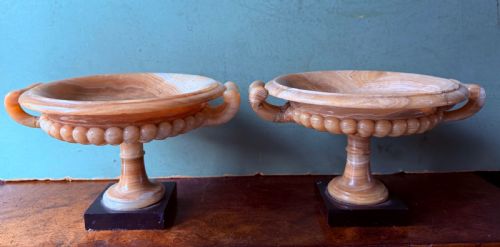
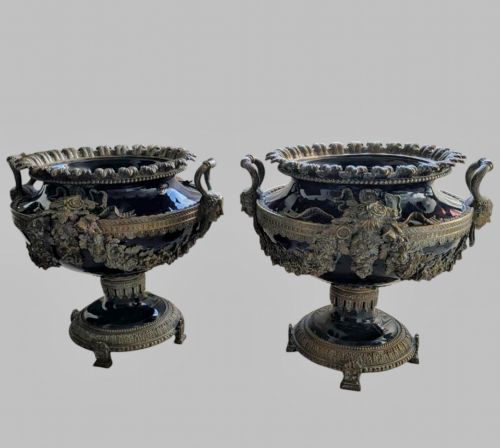
Decorative pedestal urns combine raised vessels with supportive plinths, drawing heavily on classical antiquity and later revival movements. These pieces appear frequently in nineteenth-century forms, encompassing grand tour souvenirs, campana shapes, and classical garden vessels.
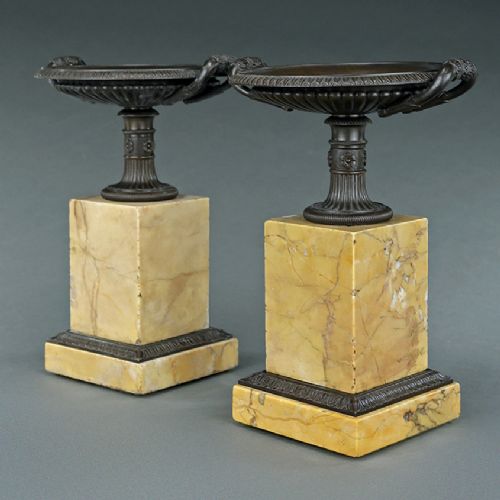
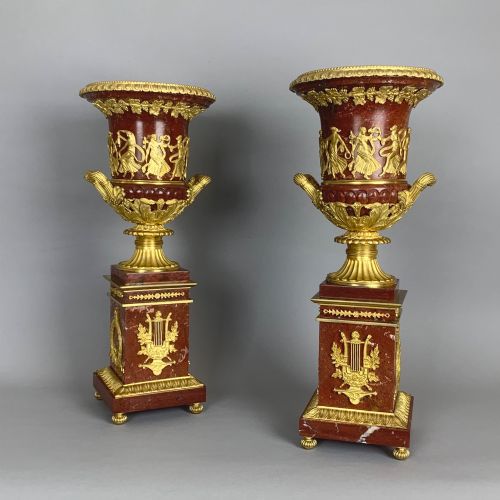
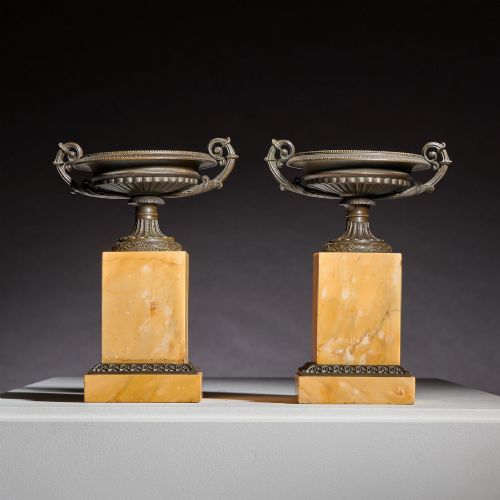
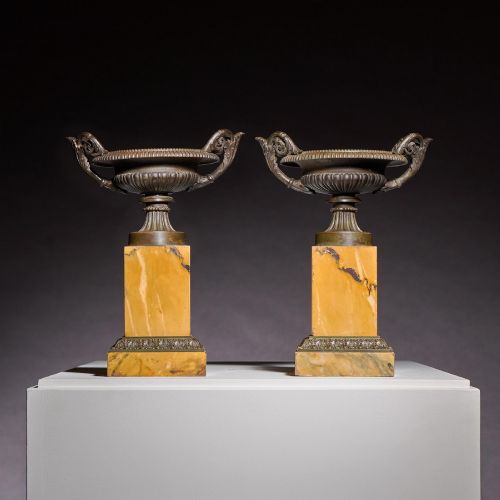
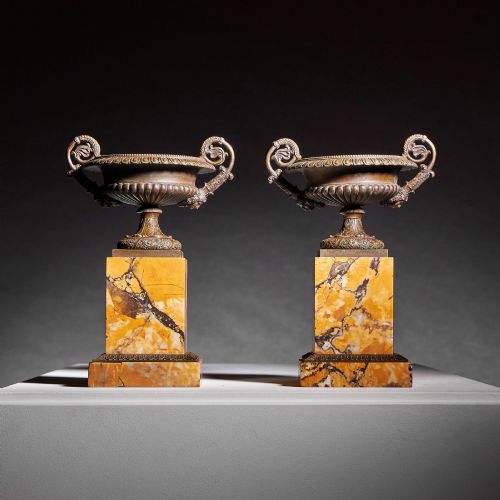
Buyers encounter variations ranging from bronze and marble tabletop tazzas to monumental cast iron garden urns and ceramic planters on stands. French Empire, Italian Renaissance, and Victorian neoclassical styles dominate the selection available on this page.
The objects serve primarily as focal points within interior spaces, mantelpieces, or gardens, often combining utility as planters or vases with strict decorative symmetry.
Materials and Construction
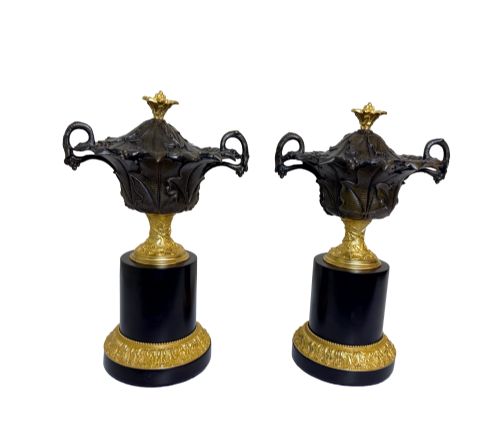
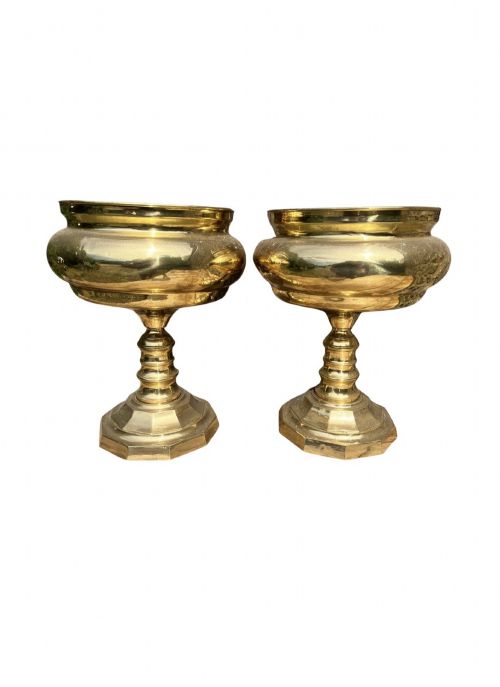
Makers utilised a combination of cast metals, natural stone, and ceramic bodies to achieve weight and visual depth. Bronze, brass, and gilt ormolu frequently pair with siena, black, or white marble bases to create sturdy architectural contrast.
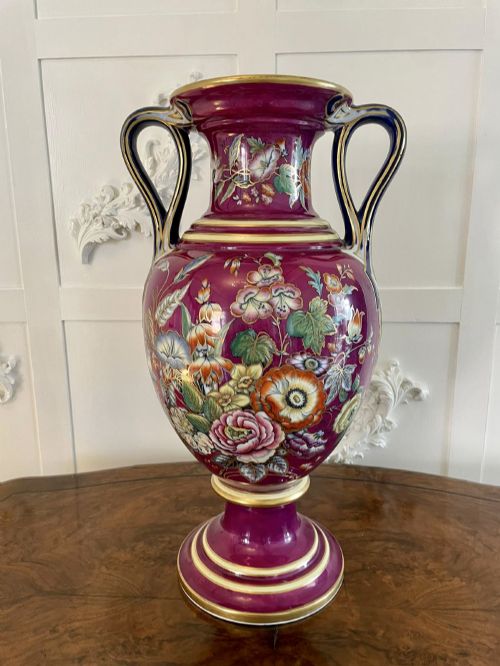
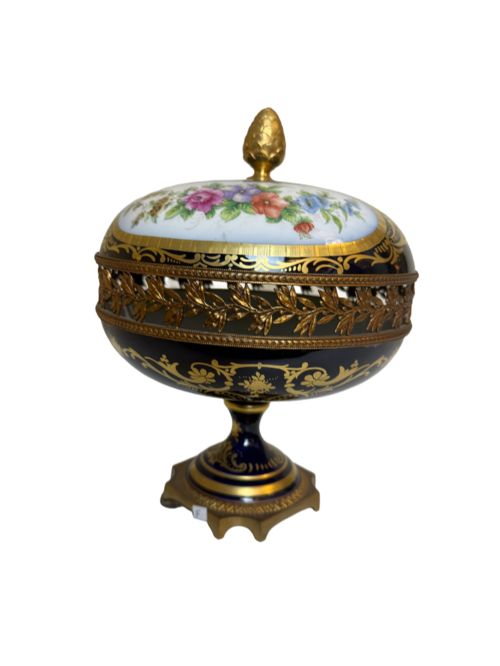
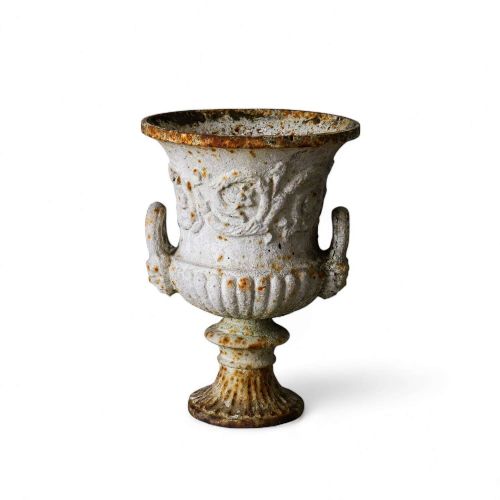
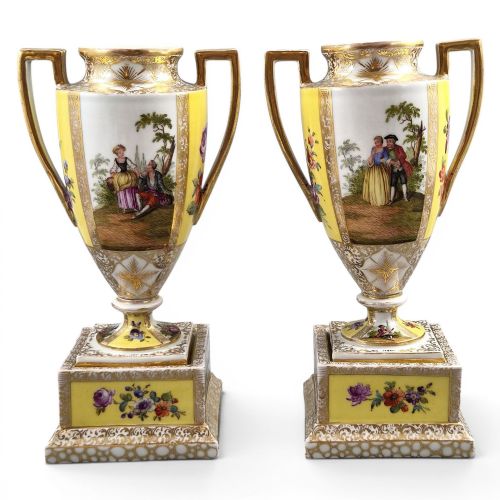
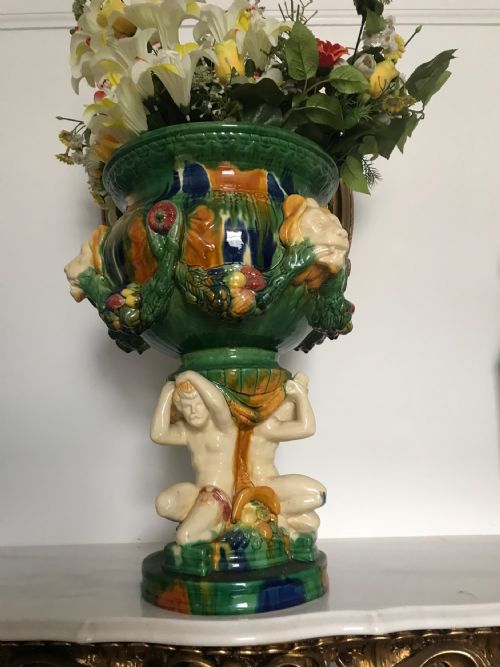
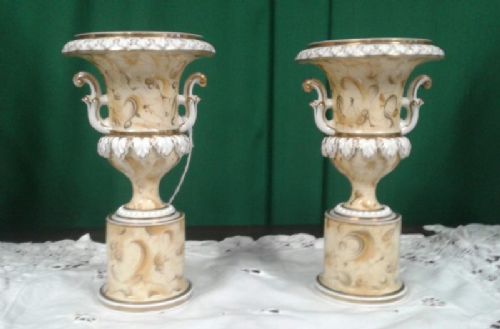
Ceramic and porcelain examples employ detailed moulding, hand-painting, and applied bas-reliefs, such as jasperware or majolica glazes. Cast iron and spelter versions rely on detailed mould work for outdoor garden settings or interior pedestals.
Listings feature nineteenth-century materials including bronze, marble, porcelain, enamel, ormolu, gold leaf, gilt bronze, and brass.
Assessing Quality and Execution
The standard of a piece rests in the crispness of its casting, the weight and choice of its stone base, and the precision of its hand-finished details. Finer examples display sharp acanthus leaf moulding, clean patination on bronze, and tightly fitted joints between stone and metal components.
Proportion and scale dictate the visual success of the urn relative to its pedestal. Superior items maintain balanced symmetry and authentic period casting techniques rather than simplified modern reproduction methods.
Andrew Handyside·Helena Wolfsohn·Ridgeways·Minton·Hadley's Worcester·Wedgwood
The Decorative Pedestal Urns Glossary
- Campana
- A bell-shaped garden urn or vase with an inverted profile, widely produced during the nineteenth century in iron, terracotta, and bronze.
- Ormolu
- Gilded bronze used extensively in French Empire and neoclassical decorative arts to highlight handles, rims, and plinths.
- Tazza
- A shallow saucer-like vessel or cup mounted on a stem and foot, commonly associated with nineteenth-century grand tour souvenirs.
- Majolica
- Heavy earthenware pottery covered in an opaque tin glaze, known for vibrant colours and elaborate moulded figural decoration.
Decorative Pedestal Urns: Frequently Asked Questions
Where should I place a pedestal urn?
These pieces suit prominent locations where their vertical height and sculptural qualities can be fully appreciated. Console tables, mantelpieces, and dedicated pedestals provide stable platforms for heavier marble and bronze examples.
Larger cast iron or ceramic versions function effectively as floor-standing focal points in hallways, drawing rooms, or sheltered garden spaces.
How do I care for bronze and marble?
Bronze surfaces benefit from gentle dusting with a soft cloth and occasional light application of microcrystalline wax to protect the patination. Avoid harsh chemical cleaners that strip the finish.
Marble components require simple wiping with a damp cloth and mild soap. Prevent acidic liquids from contacting polished stone surfaces to avoid etching.
Are these urns waterproof?
Many nineteenth-century ceramic, glass, and metal urns were designed to hold floral arrangements, water, or plants. However, older glazes and internal joins can develop hairline fractures over long periods.
Using a discreet inner liner protects antique ceramic and pottery interiors from moisture damage and prevents staining on porous materials.