




Decorative Footed Dish
A decorative footed dish elevates fruit and confections on the table, bringing height and ornament to period dining.
Decorative Footed Dish
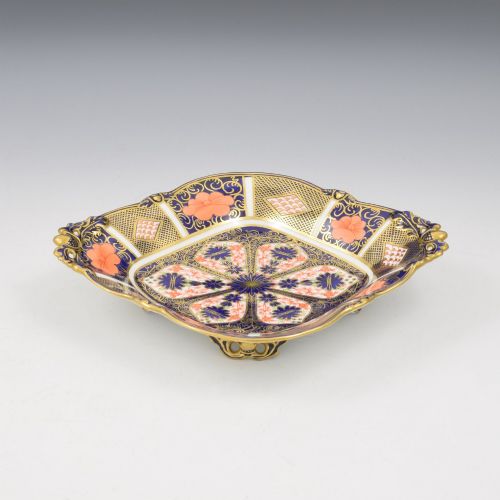
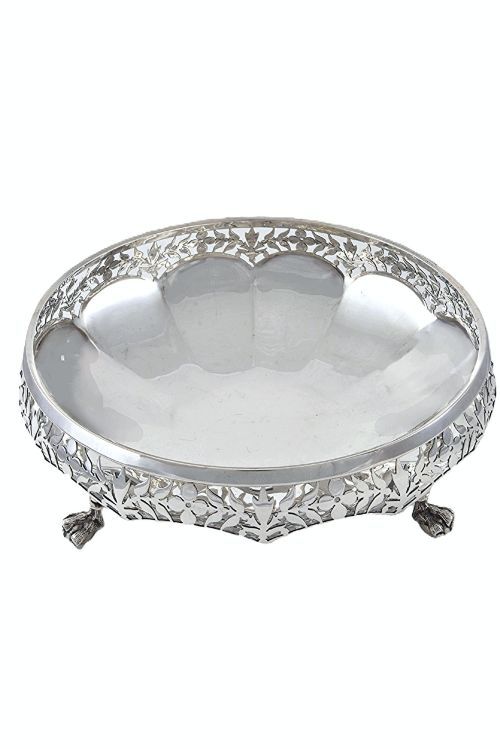
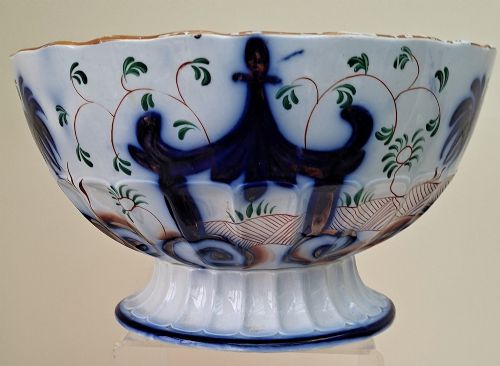
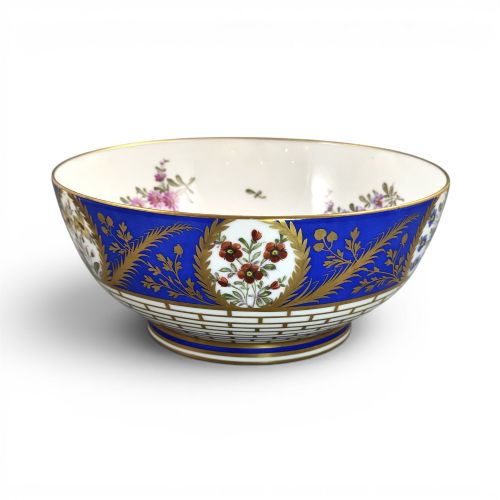
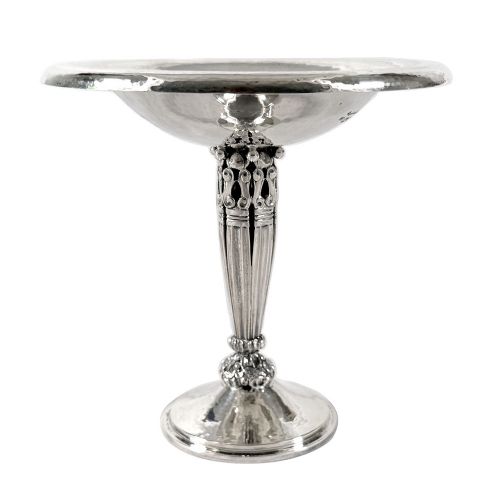
A decorative footed dish serves as a raised vessel for display or service, taking the form of tazzas, comports, and pedestalled bowls. These pieces lift the presentation above the flat surface of a table, offering a distinct profile that catches the eye.
The selections span the nineteenth century through the art deco era, encompassing Victorian pottery, Edwardian porcelain, and early twentieth-century glass. Examples range from modest earthenware footed bowls to grand silver and bronze centrepieces.
Makers and factories across England, France, Bohemia, and beyond produced these vessels to sit centrally on tables or sideboards. The variety of styles includes English Imari, Japonisme, and Art Nouveau interpretations.
Materials and construction
Ceramic pieces rely on porcelain, bone china, earthenware, and ironstone, shaped and fired before receiving hand-painted enamels, gilding, or transfer-printed patterns. Glass examples utilise blown or moulded techniques, sometimes finished with iridescent treatments or acid-etched designs.
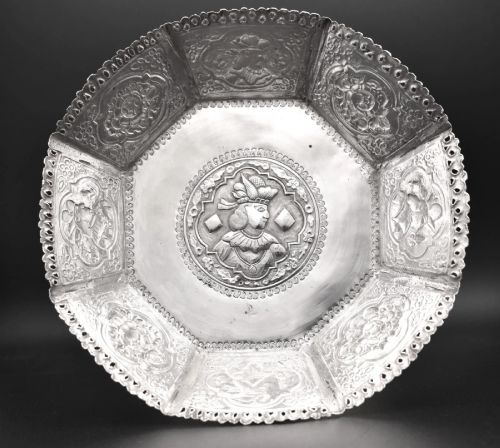
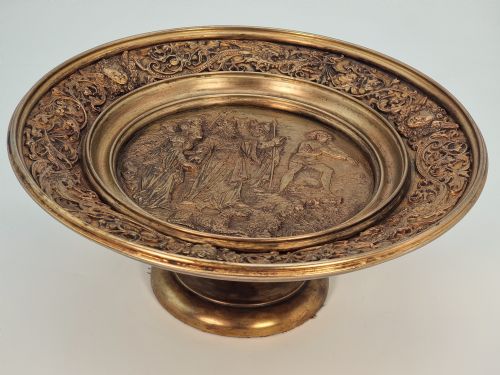
Metal vessels employ sterling silver, silver plate, bronze, and brass, formed through repoussé work, casting, and hand-chasing. Combinations of stone, such as alabaster with pietra dura mounts, also appear in the selection.
Butterflies flutter across lustre surfaces and dragons coil in silver, proving that antique dining vessels took their duty to amuse very seriously indeed.
Judging the range
Quality rests upon the crispness of the modelling and the precision of the hand-applied decoration, whether in the fine detail of repoussé metalwork or the exact brushwork on porcelain. Superior pieces demonstrate complete harmony between the form of the foot and the bowl above.
The reputation of the maker or house dictates distinction at the upper end, alongside the ambition of the design. Heavy gauge metals and flawless execution of challenging glass techniques separate exceptional items from standard production.
Royal Crown Derby·Charles Boyton·R. Lalique·Loetz·François-Eugène Rousseau·Baccarat·Louis Pierre Malpass
The Decorative Footed Dish Glossary
- Tazza
- A shallow bowl or dish mounted on a stem and foot, used originally for serving wine or food. This form provides height and architectural presence to a table setting.
- Comport
- A large dish on a foot, typically used for fruit or sweetmeats at dessert. The term frequently overlaps with centrepiece bowls in nineteenth-century cataloguing.
- Plique-a-jour
- An enamelling technique where the enamel is applied within a network of metal wire without a backing, allowing light to shine through like stained glass. It requires immense skill to prevent the enamel from cracking during firing.
- Repoussé
- A metalworking method where the artisan hammers the design from the reverse side to form a raised relief on the front. This creates deep, tactile surface decoration on silver and bronze vessels.
- Pietra dura
- An inlay technique using cut and fitted polished coloured stones to create geometric or pictorial designs. It appears on architectural table pieces alongside brass and alabaster.
Decorative Footed Dish: Frequently Asked Questions
What is a decorative footed dish used for?
These vessels were designed to hold fruit, sweetmeats, or floral arrangements, elevating the items above the table surface for better visibility and presentation.
In modern settings, they serve equally well as standalone decorative objects on sideboards or coffee tables, requiring no contents to command attention.
How do I care for antique silver and glass dishes?
Silver vessels benefit from gentle cleaning with specialised polish to maintain their lustre without abrading the raised repoussé details.
Glass and ceramic pieces require careful hand washing in lukewarm water, avoiding harsh detergents that might harm historic gilding or enamels.
How can I identify the period of a piece?
Stylistic indicators provide the clearest guide, such as the flowing organic lines of Art Nouveau or the geometric abstraction of Art Deco.
Backstamps on ceramics and hallmarks on silver offer definitive makers' marks and date letters to pinpoint the exact year of manufacture.