
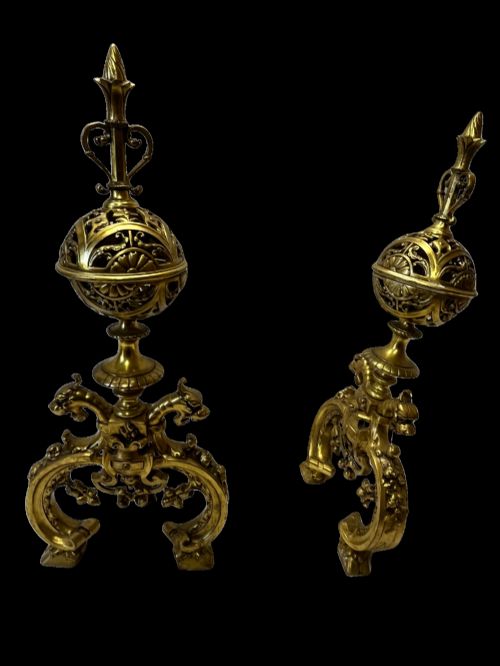


Decorative Fireplace Dogs
These decorative fireplace dogs are functional hearth furniture designed to support logs, arriving mostly as matched pairs from the Victorian period onwards.
Decorative Fireplace Dogs
Decorative fireplace dogs serve as ornamental and practical supports for burning wood within an open hearth. When you search for decorative fireplace dogs, you encounter heavy functional ironmongery and lighter decorative furnishings designed to sit at the front of a hearth.
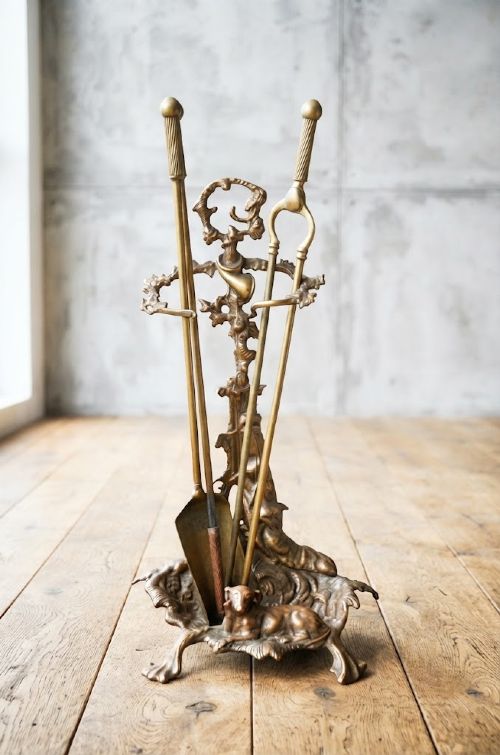
The pieces appearing on this page span the nineteenth century up to the mid-twentieth century, with Victorian examples and French regional variants forming the bulk of the selection. Alongside standard andirons, the listings include related hearth furnishings such as fire baskets, grates, companion stands, and chenets.
Origin points stretch across English workshops and continental foundries, demonstrating diverse stylistic influences from Gothic Revival to French Rococo. Buyers primarily select these items to anchor a period fireplace scheme or to provide genuine hearth utility.
How they were made
Makers utilised durable metals suited to extreme hearth temperatures, principally casting iron, brass, and bronze into solid structural shapes. Cast iron provided the heavy weight required for load-bearing andirons and fire baskets, while softer metals allowed for detailed ornamentation.
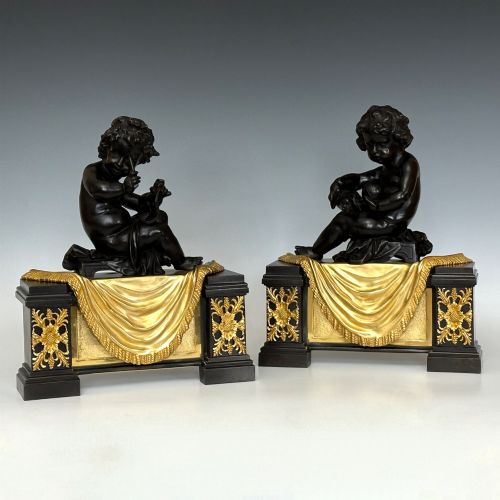
Decorative surfaces often combined patinated iron with polished brass or fire-gilt ormolu mounts fixed by threaded pins. Wrought iron elements were hammered and shaped by hand, giving individual character to legs, billets, and scrolling uprights.
Listings feature Victorian and nineteenth-century items alongside twentieth-century Arts and Crafts pieces.
What varies in quality
Quality rests in the crispness of the casting and the precision of the assembly, separating mass-produced hardware from bespoke foundry work. Superior items display deep, sharp chasing on bronze and ormolu mounts rather than soft, blurred surface relief.
Weight and structural integrity dictate longevity, particularly in pieces subjected to intense heat and regular movement. The refinement of stylistic details, such as figurative castings and hand-finished mounts, distinguishes standard utilitarian fire irons from finer decorative showpieces.
The Decorative Fireplace Dogs Glossary
- Andirons
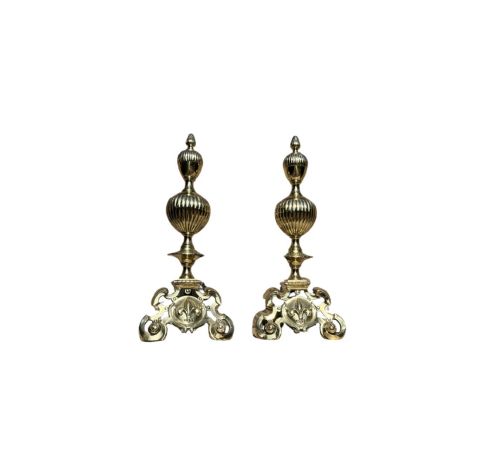
- Heavy metal supports used in pairs to raise logs above the hearth floor for better airflow. They often feature decorative front terminals.
- Chenet
- The French term for an andiron, frequently denoting lighter decorative pairs featuring bronze or ormolu embellishments. They sit at the hearth front.
- Ormolu
- Gilded bronze produced by applying a mercury and gold amalgam to a bronze base. This technique creates a rich, lasting surface finish.
- Fire Basket
- An iron grate holding burning fuel elevated within the fireplace opening. These assemblies sometimes incorporate decorative brass or cast iron frames.
- Firedog
- An alternative term for an andiron used interchangeably in English and continental hearth furniture terminology.
Decorative Fireplace Dogs: Frequently Asked Questions
What is the difference between andirons and fire dogs?
Andirons and fire dogs are essentially the same objects, serving the identical function of supporting wood within an open fireplace.
Regional preferences often dictate the terminology used, with French pairs frequently called chenets.
Can these decorative fireplace dogs burn wood?
Many solid iron and steel examples remain robust enough to support active wood fires in a working hearth.
Lighter decorative pieces featuring fragile ormolu mounts are better suited for display purposes rather than heavy logs.
How do I identify French rococo pairs?
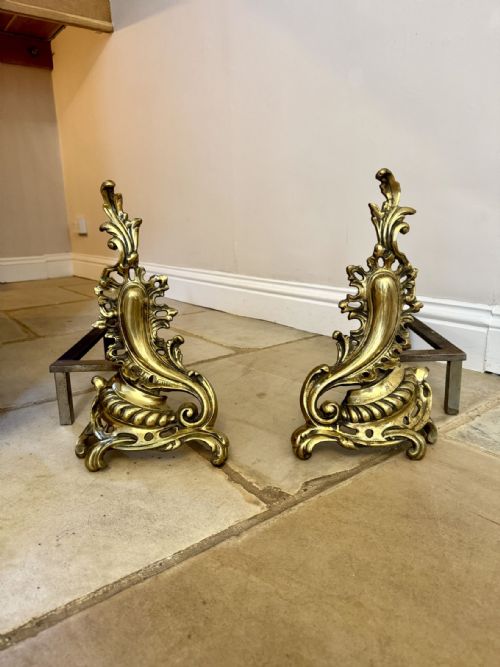
French rococo pairs display asymmetric scrolling, C-scrolls, and naturalistic leaf motifs cast in bronze or brass.
These pieces often incorporate ornate fire-gilt ormolu mounts reflecting eighteenth-century design revivals.
Are all listed pieces matched pairs?
The selection consists primarily of matched pairs designed to sit symmetrically on either side of the hearth.
Individual companion stands and single grates also appear alongside the main run of andirons.