
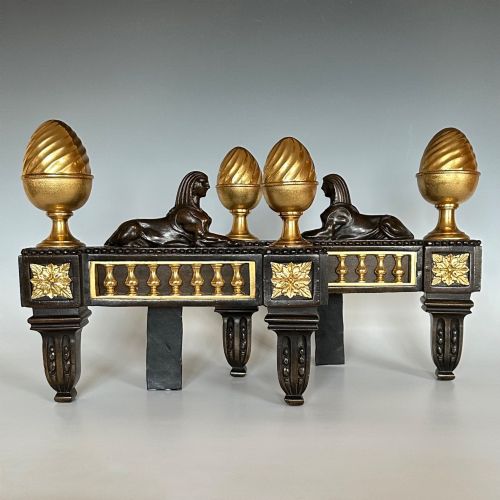
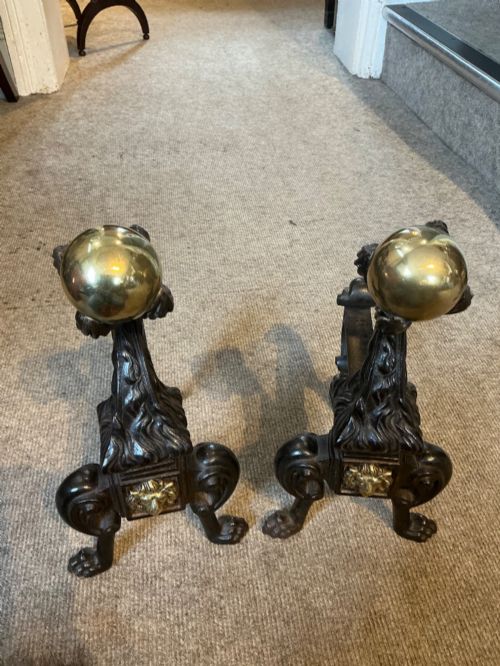
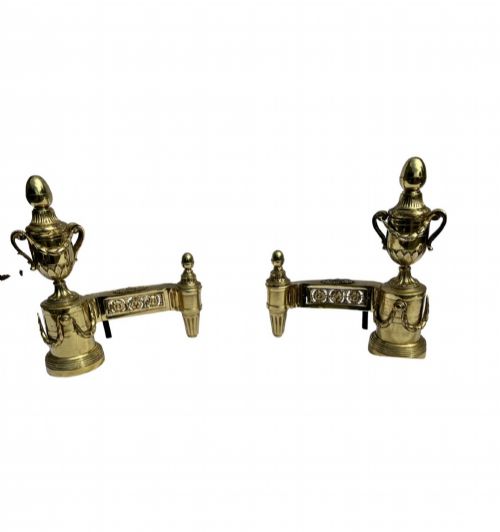

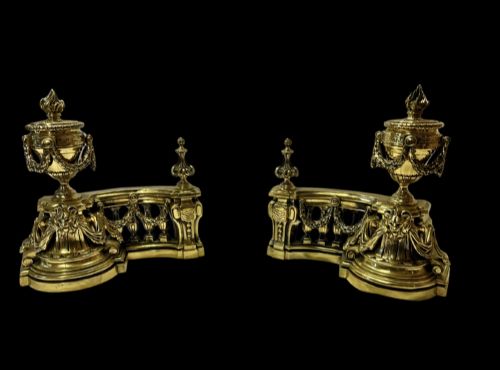
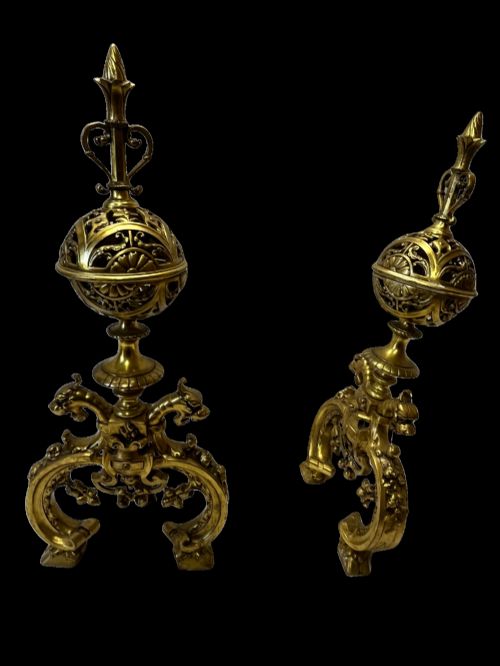


Pair of Brass Andirons
A pair of brass andirons anchors the hearth, combining utility and ornament to elevate any fireplace period.
Pair of Brass Andirons
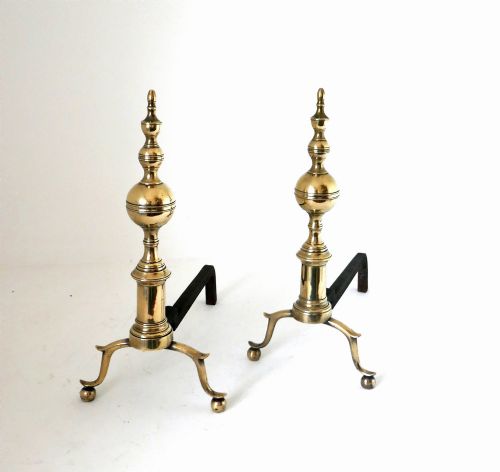
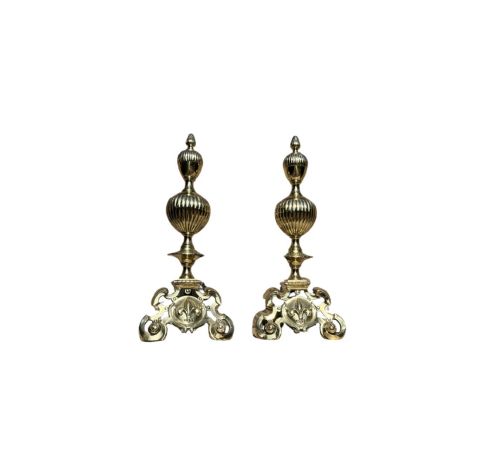
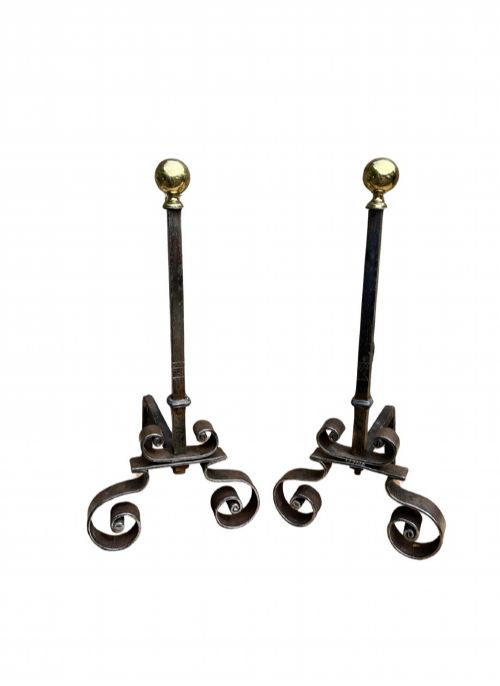
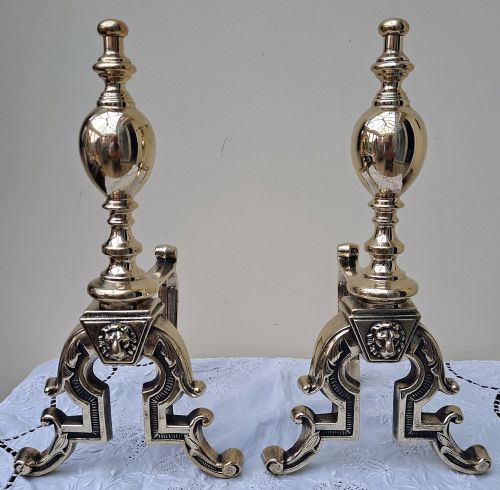
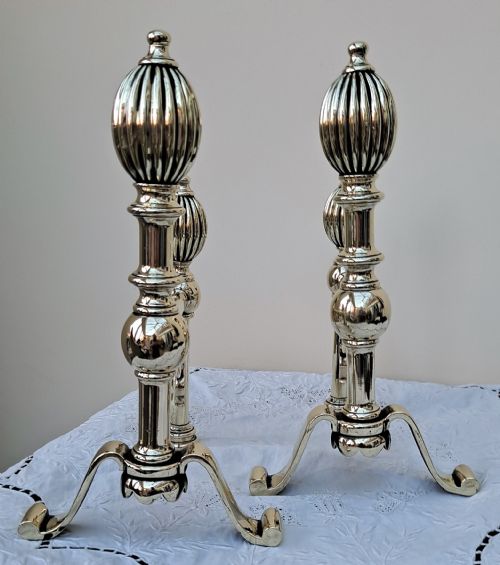
A pair of brass andirons comprises matched metal supports designed to hold logs above the hearth floor for better airflow and combustion. When searching for a pair of brass andirons, buyers encounter robust nineteenth-century Victorian pieces alongside eighteenth-century Georgian examples and continental French designs.
Most surviving examples combine cast or sheet brass uprights with sturdy iron billets or bar supports that project into the grate. English and French workshops produced the majority of these functional fireplace furnishings, spanning domestic hearths to grand country house drawing rooms.
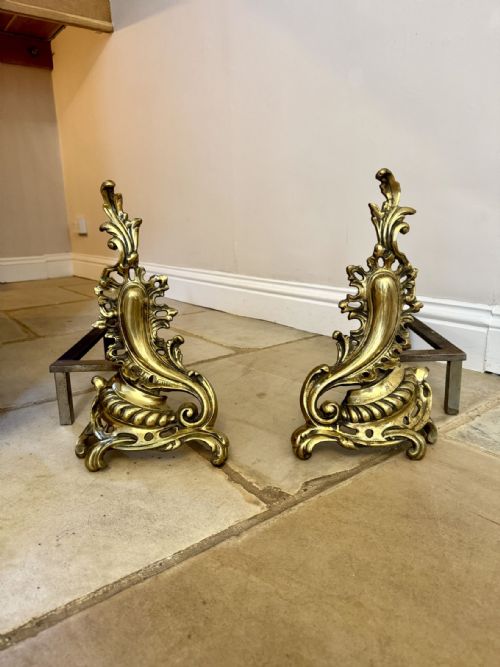
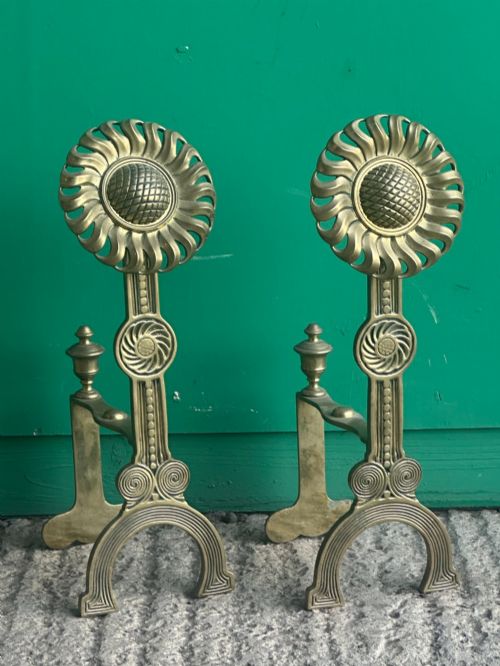
Design vocabulary shifts across the inventory from restrained Georgian simplicity to ornate French Rococo curves and geometric Aesthetic Movement motifs. Buyers meet both standalone firedogs and companion sets equipped with integrated tool rests or matching fire irons.
Materials and construction
Foundry workers utilised sand casting and lost-wax methods to form complex brass fronts, achieving crisp botanical or scroll details. Iron bars and wrought iron components provided structural strength for the heavy horizontal billets that sustained burning wood.
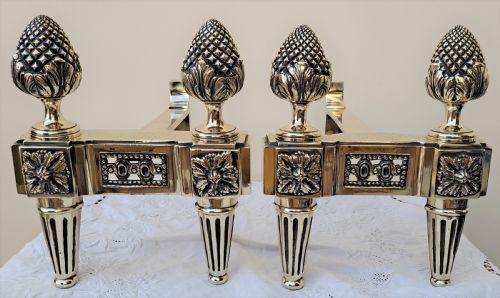
Gilding, ormolu mounting, and polished surfaces created varied light reflections against the flames, while bronze elements added weight and durability to high-end domestic hardware. Artisans joined these mixed metals using threaded rods, rivets, and heavy nuts concealed behind decorative finials.
Listings feature brass, iron, bronze, and ormolu across Victorian, Georgian, and French Rococo styles.
Assessing craftsmanship and design
Superior pairs display deep, hand-chased relief work on the brass fronts, whereas lesser pieces rely on shallow mechanical casting with softer edges. Heavier gauge metalwork and substantial iron substructures indicate higher domestic utility and longevity.
Design ambition separates standard hearth hardware from exceptional studio pieces influenced by known designers such as Christopher Dresser or Thomas Jeckyll. Original matching components, including tool rests and integrated grates, preserve the integrity and visual balance of the assembly.
James Cartland & Sons·William Tonks
The Pair of Brass Andirons Glossary
- Andiron
- A horizontal metal support raised on legs, used in pairs to hold logs in an open fireplace. Also known historically as a firedog.
- Chenet
- The French term for an andiron, frequently applied to ornate continental pieces featuring cast brass or ormolu mounts. These items often display elaborate Rococo or Baroque scrollwork.
- Ormolu
- Finely ground high-zinc brass applied to bronze surfaces to create a gold-like finish. This technique appeared widely on French Regency and nineteenth-century decorative hearth equipment.
- Billet bar
- The horizontal iron bar extending backward from the upright front to support the burning logs. Sturdy examples use heavy wrought iron to resist intense heat.
- Tool rest
- A horizontal projection or attached rack designed to hold fireplace pokers and tongs near the heat source. Such additions usually indicate mid-to-late nineteenth-century domestic production.
Pair of Brass Andirons: Frequently Asked Questions
What is the difference between andirons and firedogs?
The terms describe the exact same fireplace supports, with andiron used predominantly in England and America while firedog remains interchangeable.
Regional preference and period terminology dictate which word appears in historical descriptions rather than any functional distinction.
How do I choose the right size for my fireplace?
Scale depends on the depth and width of the hearth opening, ensuring the horizontal iron billets fit comfortably inside the grate area without obstructing the flue.
Larger nineteenth-century examples require deep hearths to balance their visual weight and accommodate standard fireplace logs.
Can these andirons be used with a real wood fire?
Most antique pairs with iron billets remain fully functional for burning wood, provided the metal shows no deep structural cracks from past heat stress.
Regular use requires gentle cleaning with appropriate brass polish to maintain the surface without removing historical patina.
How do I identify Victorian pieces from Georgian ones?
Georgian examples generally exhibit restrained neoclassical lines and lighter brass casting, whereas Victorian pieces often display heavier proportions and ornate revival ornament.
Stylistic cues such as Aesthetic Movement sunflowers or heavy Rococo scrolls help date the manufacturing period accurately.