
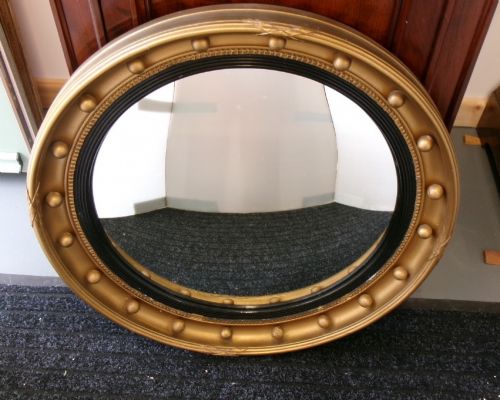



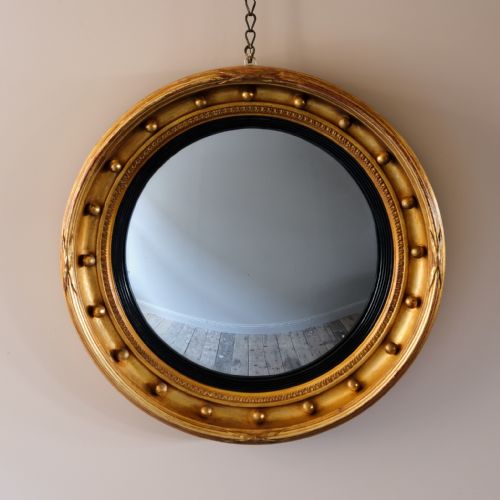


Decorative Convex Wall Mirror
A decorative convex wall mirror pulls the entire room into its curved glass, and these circular pieces come in giltwood, ebonised wood, and gesso.
Decorative Convex Wall Mirror
A decorative convex wall mirror is a circular glass piece designed to reflect a wide, distorted view of an interior space. These pieces appear across the nineteenth century, the Victorian era, and into the twentieth century under various revivals.
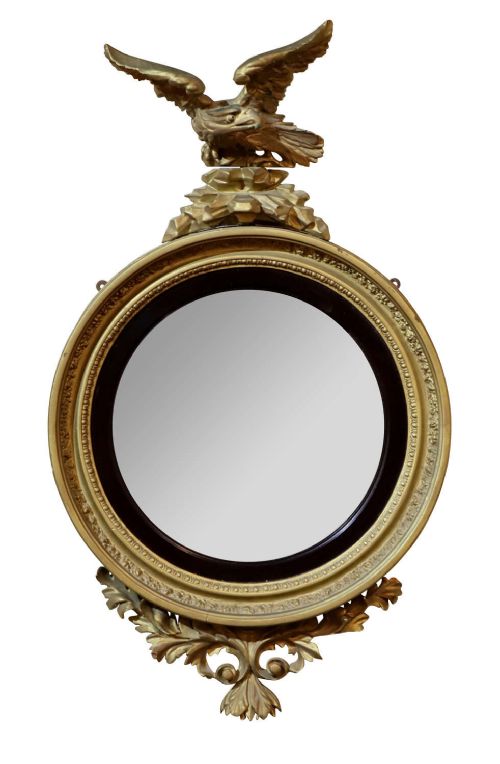
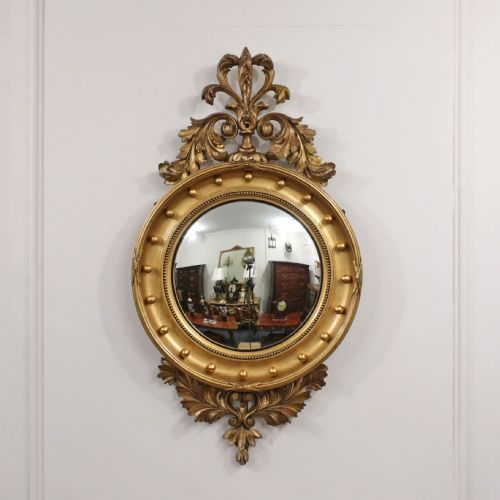
Buyers most frequently meet Regency and Regency style examples finished in giltwood, often featuring classical details like eagle crests. Victorian porthole mirrors and French sunburst designs from the nineteen-twenties also populate the selection.
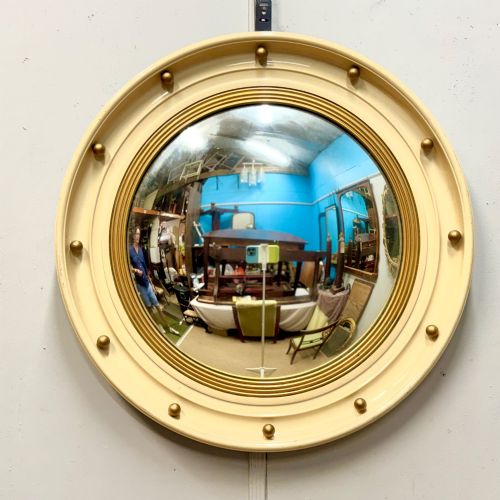
Forms range from simple round butlers mirrors with painted wooden frames to large nineteenth century items fitted with ebonised slips. Sorcerer type mirrors offer an alternative variation within this circular wall format.
Materials and construction methods
Frames are constructed from wood, mahogany, and gesso, which provided a smooth base for subsequent gilding or paint. Giltwood and gilt finishes dominate the traditional examples, applied to create a bright reflective border.
Makers utilised ebonised wood for inner slips to provide a dark contrast against the shining gilt frames. The curved convex glass sits securely within these heavy wooden and plaster structures, warping the reflected room.
Nineteenth-century superstition held that sorcerer mirrors could ward off evil spirits by trapping them in the curved glass.
Assessing quality and craftsmanship
The sophistication of the carved wooden ornaments, such as eagle surmounts, separates standard pieces from finer work. Superior examples show crisp detail in the giltwood and gesso moulding rather than soft, blurred edges.
The depth and clarity of the convex glass plate also influence the overall standard of the mirror. Consistency in the gilding and the stability of the heavy circular frame determine the integrity of the piece.
The Decorative Convex Wall Mirror Glossary
- Convex glass
- A curved glass plate that bulges outward toward the viewer. This shape creates a wide-angle reflection of the surrounding room.
- Giltwood
- Timber coated with a thin layer of gold leaf or gold paint. It provides a bright, reflective surface around the mirror glass.
- Ebonised wood
- Timber stained or painted black to imitate ebony. This dark finish often appears on the inner slip of the frame.
- Gesso
- A plaster mixture applied to wood frames to create a smooth surface for gilding. It allows intricate decorative details to be moulded.
- Sorcerer mirror
- An alternative name for a convex wall mirror. The curved surface resembles mystical globes historically used in divination.
Decorative Convex Wall Mirror: Frequently Asked Questions
Where should I hang a convex mirror?
These mirrors suit principal reception rooms, hallways, or above mantelpieces where their curved reflection can encompass the entire room. Their circular shape contrasts well with rectangular furniture.
Because they concentrate light and space, position them opposite a window or an interesting architectural feature to maximise the visual effect.
How do I date a convex mirror?
Dating relies on examining the framing materials, the style of carving, and the construction of the wooden backboards. Regency examples often feature distinct eagle surmounts and detailed giltwood.
Later Victorian and nineteen-twenties pieces introduce painted wood finishes and French sunburst motifs that reflect the design revivals of those decades.
Are these mirrors heavy?
Many of these circular pieces are surprisingly heavy due to the solid wood construction, thick gesso layers, and heavy glass plates. Secure wall fixings are essential for safe hanging.
Checking the weight and the strength of the hanging hardware on the back of the frame ensures the piece remains secure on the wall.