


Gilt Wood Round Mirror
A gilt wood round mirror brings light and a distinct sense of depth into a room, drawing the eye instantly to its curved frame.
Gilt Wood Round Mirror
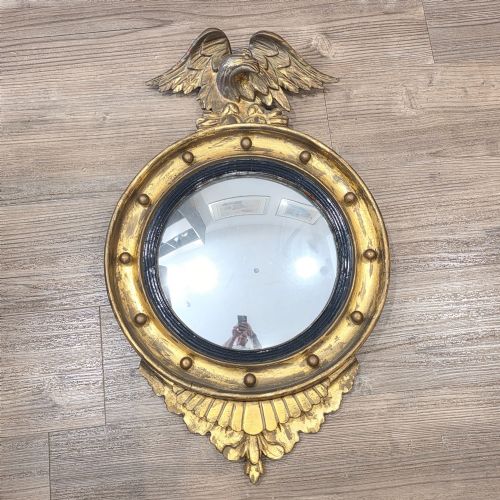
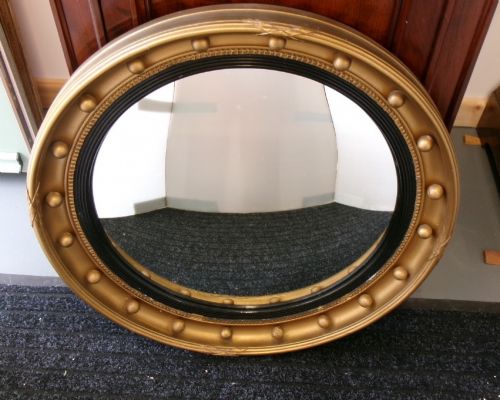
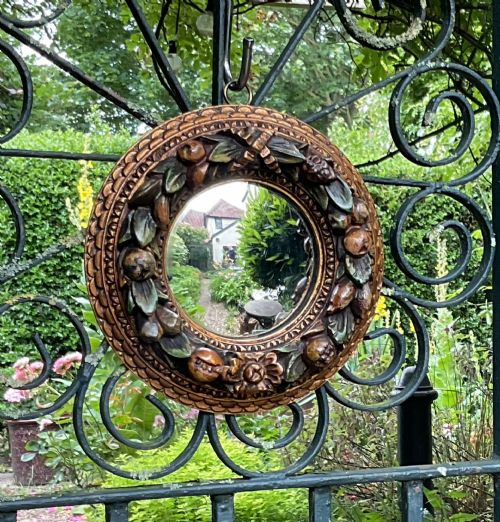
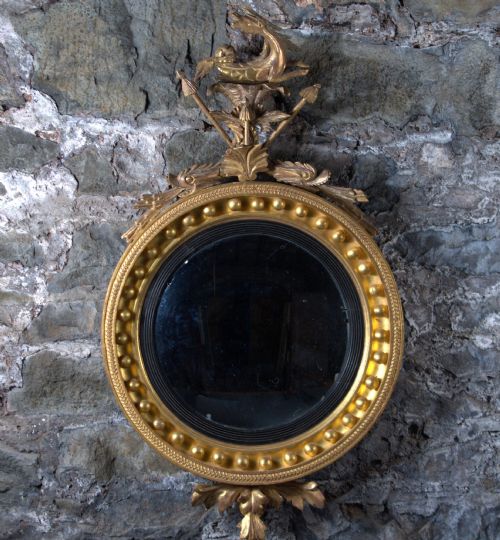
A gilt wood round mirror is a circular wall hanging designed to reflect light and expand interiors, frequently encountered on this page in convex formats from the nineteenth century and the Regency period.
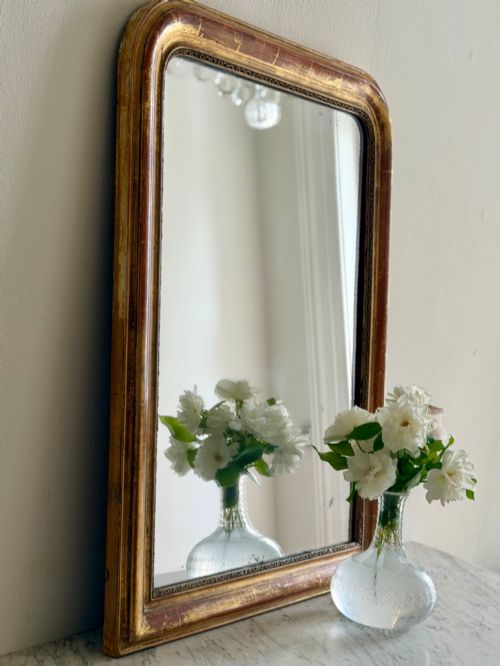
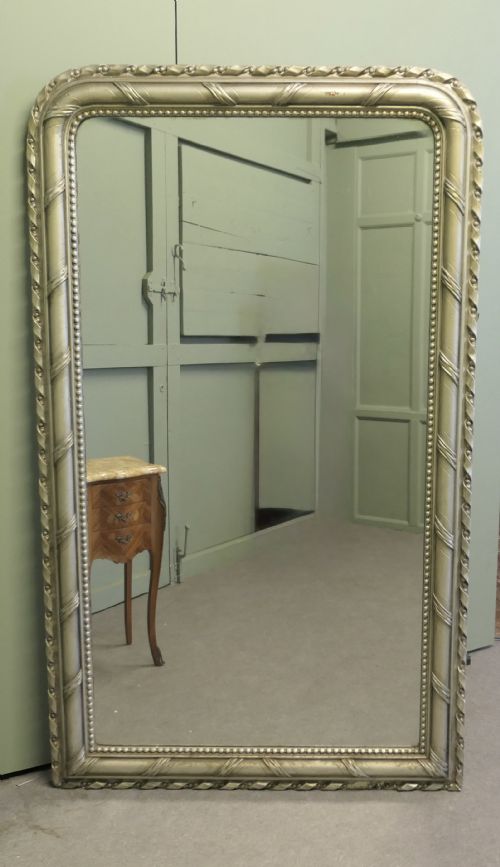
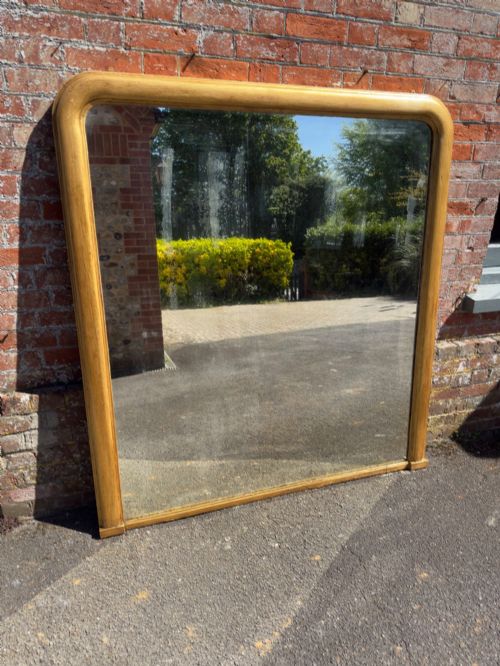
Buyers searching for a gilt wood round mirror will find various iterations ranging from compact hall mirrors to larger wall pieces, spanning Victorian, Edwardian, and Florentine Rococo styles.
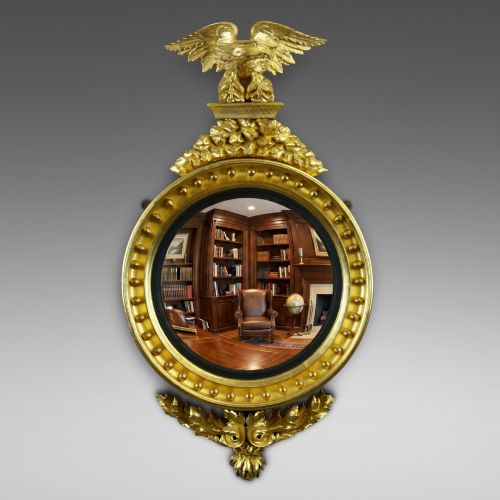
The selection includes specific sculptural variants such as eagle crests, dragon motifs, and simple moulded frames, reflecting decorative preferences across the Georgian era and the early twentieth century.
How They Were Made
Makers constructed the frames using carved wood and gesso applied over a wooden base, providing a smooth foundation for subsequent gilding.
Glass plates were often curved to form convex mirrors, capturing a wide panoramic reflection of the interior space within the circular boundary.
Some nineteenth-century convex mirrors come topped with fierce wooden eagles, keeping a watchful, glassy-eyed guard over the parlour.
What Varies in Quality
The crispness of the carved details on wooden ornaments, such as eagles or floral motifs, distinguishes the finer examples from simpler production.
The depth of the gilding and the preservation of the original gesso surface determine the visual richness and integrity of the frame over time.
The Gilt Wood Round Mirror Glossary
- Giltwood
- Wood that has been coated with gold leaf or a gold-coloured finish. This material forms the primary metallic appearance of the frames seen here.
- Convex
- Curving outward like the exterior of a sphere. This optical shape bends light to give a wide-angle view of the room.
- Gesso
- A plaster mixture applied to wood to create a smooth surface for carving and gilding. It allows for intricate relief ornamentation.
- Ebonised
- Wood treated to resemble ebony through staining or painting. It appears on contrasting details within certain frames.
Gilt Wood Round Mirror: Frequently Asked Questions
Where should I hang a convex mirror?
These mirrors function effectively in hallways, dining rooms, and living spaces where their wide-angle reflection can capture the most interior light and movement.
Position them at eye level to ensure the optimal visual impact within the room.
How do I date a giltwood mirror?
Dating relies upon examining the style of the carving, the construction methods of the wooden frame, and the characteristics of the mirror glass.
Regency and Georgian pieces often display specific motifs like eagles or rope-turn details that help identify their period of origin.
What is a butler's mirror?
A butler's mirror is another term for a convex round mirror, historically placed in dining rooms or service areas to allow staff to monitor the room.
The curved glass provided a broad view without requiring anyone to turn around.
How do I clean an antique mirror?
Maintenance requires gentle dusting with a soft, dry cloth to protect the delicate giltwood and gesso surfaces from moisture damage.
Avoid commercial cleaning sprays that might seep beneath the glass plate and harm the backing.