
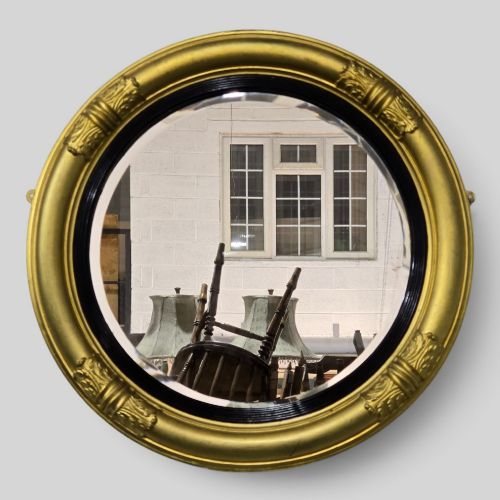
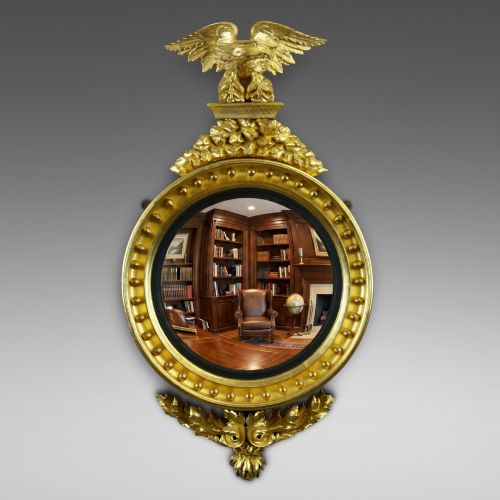
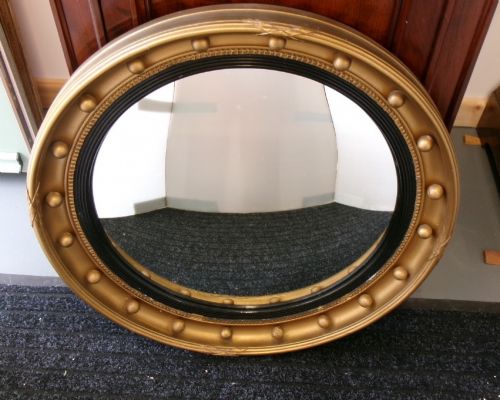
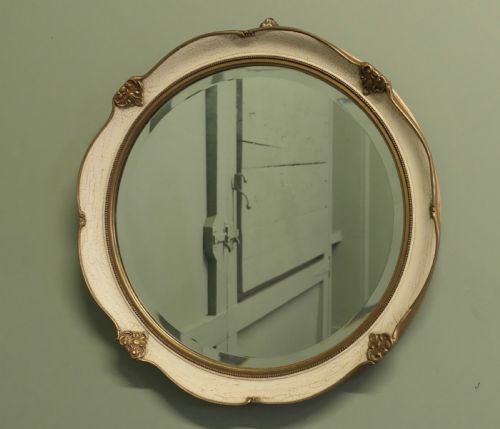



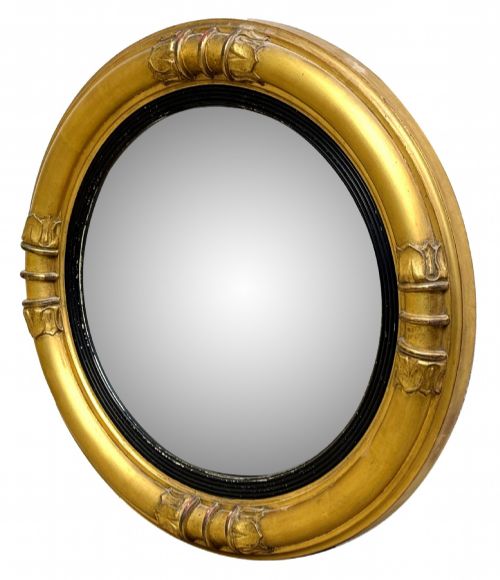
Circular Gilt Wall Mirror
A circular gilt wall mirror brings light and a sweeping, curved perspective to a room through its distinctive convex glass.
Circular Gilt Wall Mirror
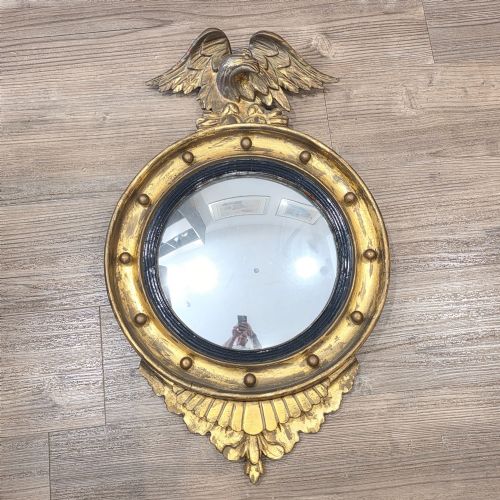
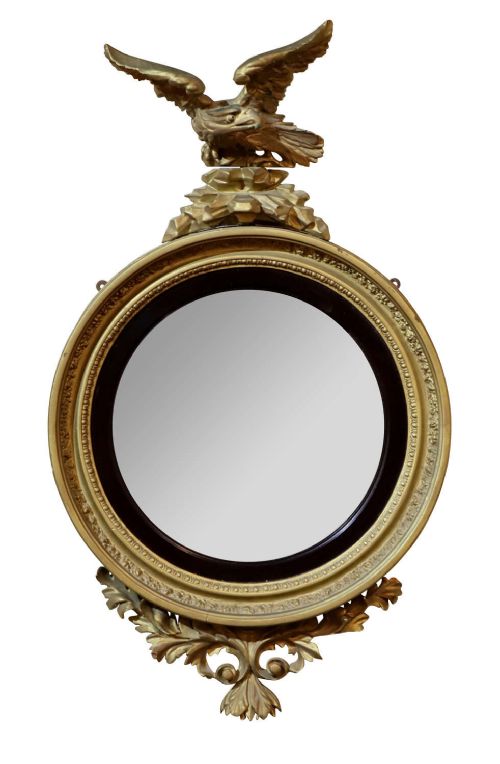
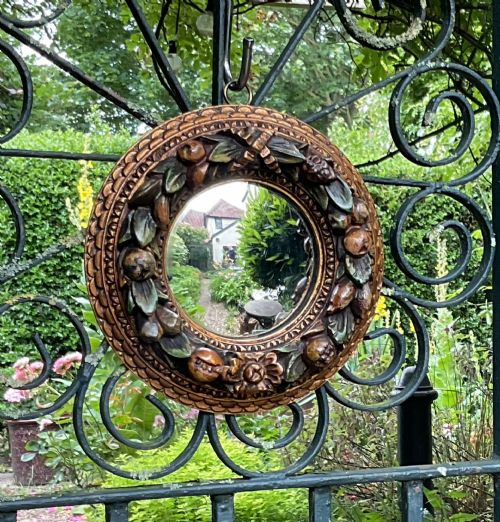
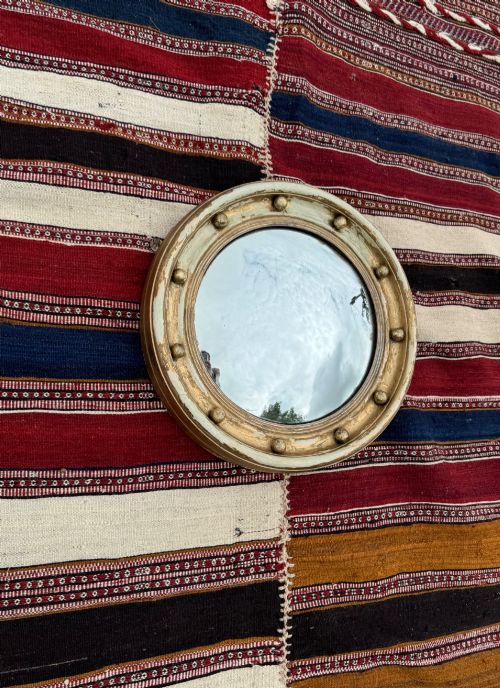
When you search for a circular gilt wall mirror, you encounter pieces designed to reflect an entire room in miniature through a curved glass plate. The most common examples on this page date from the Regency period and the nineteenth century, often bearing a giltwood or gesso frame.
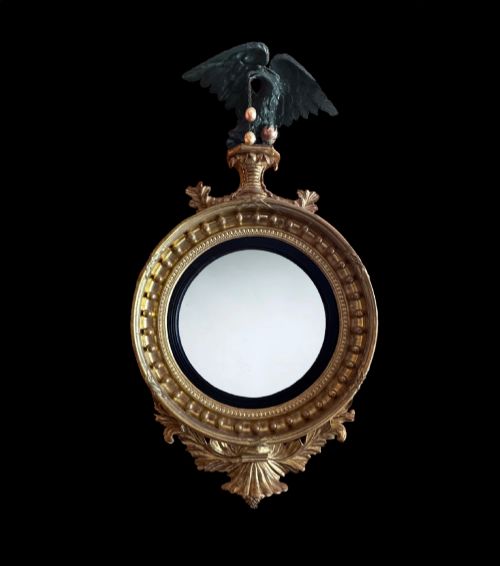
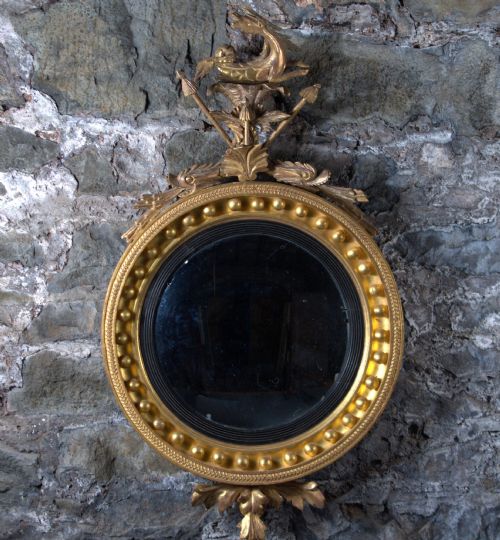
These items take various forms, from small butler's mirrors to grand, large-scale centrepieces mounted with eagle crests or ebonised details. Styles range across Regency, Victorian, Edwardian, and French Art Deco, showing how makers reinterpreted the circular format across different decades.
Many specimens feature carved wooden frames finished in gold leaf or gilt, whilst others incorporate distinct decorative flourishes such as dragons, floral leaves, or Florentine carvings. The overarching domestic purpose remains consistent: to bounce daylight into dark corners and provide an engaging focal point on a wall.
How They Were Made
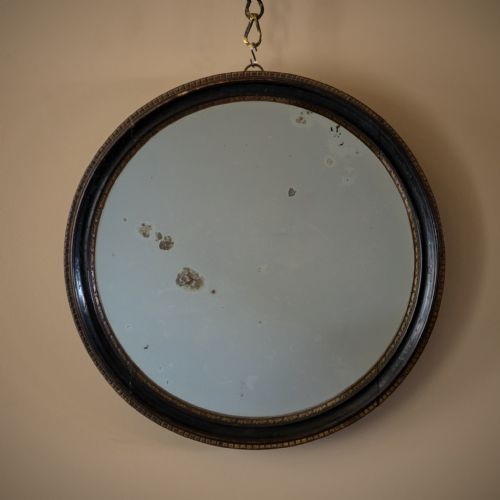
Makers constructed these frames from carved wood, such as gesso over wood or giltwood, applying gold leaf to achieve a brilliant metallic sheen. Ebonised wood and walnut also appear, contrasting sharply with the bright gilding.
The defining technical feature is the convex glass plate, which requires specialised blowing and cooling to create the curved surface that distorts reflections into a wide-angle view. Plaster ornaments like eagles and leaf motifs were moulded separately and fixed to the wooden structure before finishing.
Materials across these listings span glass, giltwood, ebonised wood, gesso, gold leaf, and carved wood.
What Varies in Quality
The calibre of a circular gilt wall mirror rests upon the depth and crispness of the hand-carved ornamentation on the frame, particularly intricate elements like spread eagles or floral leaves. Superior pieces exhibit precise joinery and finely applied gold leaf rather than heavy, uniform modern paint.
Distortion and clarity in the convex glass plate also distinguish the finer examples from simpler utilitarian alternatives. The integrity of the underlying gesso and wood construction determines how well the frame has withstood the weight of the glass over centuries.
The Circular Gilt Wall Mirror Glossary
- Convex glass
- Curved glass that bulges outward, providing a wide-angle reflection of the interior space. This form was especially popular during the Regency era.
- Giltwood
- Timber that has been coated with a thin layer of gold leaf or gold paint. It provides the characteristic bright finish seen on period frames.
- Gesso
- A plaster-like mixture applied to wood frames to create a smooth surface for gilding. It allows craftsmen to mould elaborate relief decorations.
- Butler's mirror
- A specific type of round convex mirror traditionally hung in a dining room or serving area. It allowed servants to monitor the room discreetly.
- Ebonised wood
- Timber treated to resemble ebony, usually through staining or painting black. This dark finish often contrasts with gilt details in nineteenth-century pieces.
Circular Gilt Wall Mirror: Frequently Asked Questions
Where should I hang a convex mirror?
These mirrors work best opposite a window or in a hallway where they can capture light from multiple angles and pull the room together.
Because the curved glass shrinks the reflection, hanging them at eye level ensures you can easily see the wider view of the interior.
How do I identify a Regency mirror?
Regency pieces often display distinct classical motifs, most notably the spread eagle surmount perched atop the circular frame.
They frequently utilise convex glass housed within heavy giltwood moulded frames, dating from the early nineteenth century.
What is a butler's mirror?
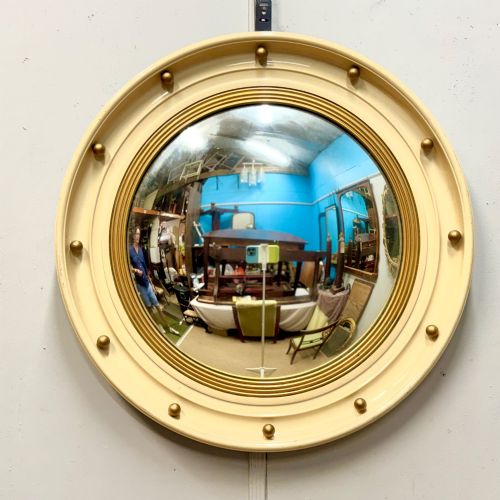
A butler's mirror is a round convex looking glass that was historically placed where staff could observe diners without being noticed.
Today, they function as decorative wall hangings valued for their compact size and wide-angle reflections.
How do I clean a giltwood frame?
Dust the carved wooden surface gently with a soft, dry brush to prevent any damage to the delicate gold leaf finish.
Avoid using water, liquid cleaners, or chemical polishes, as moisture lifts the old gesso and gilding from the wood.