


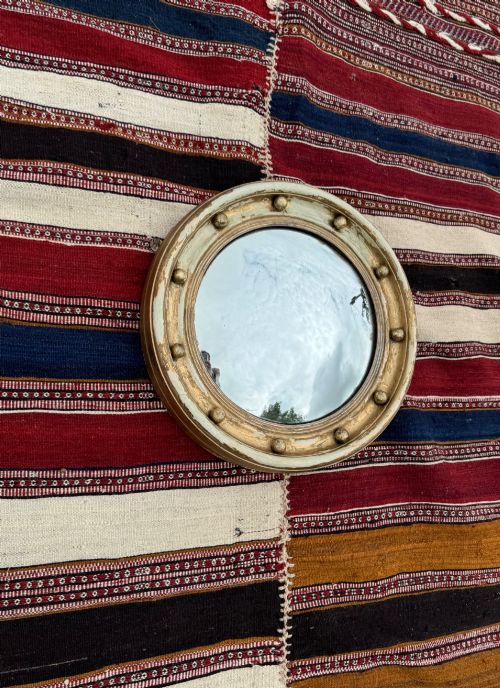

Gold Gilt Convex Mirror
A gold gilt convex mirror distorts the room in a wide circle, pulling light from every corner into a single gleaming orb.
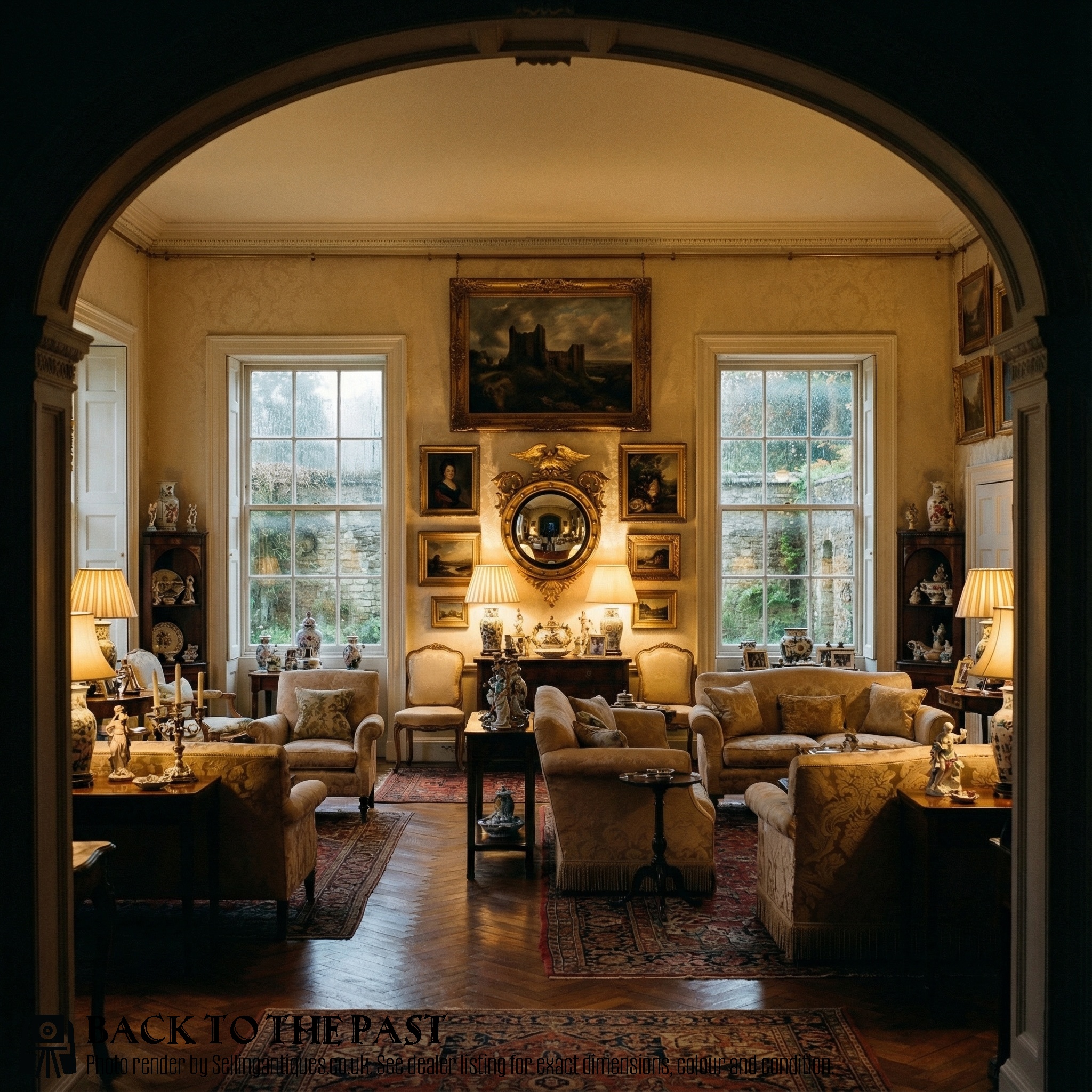
Gold Gilt Convex Mirror
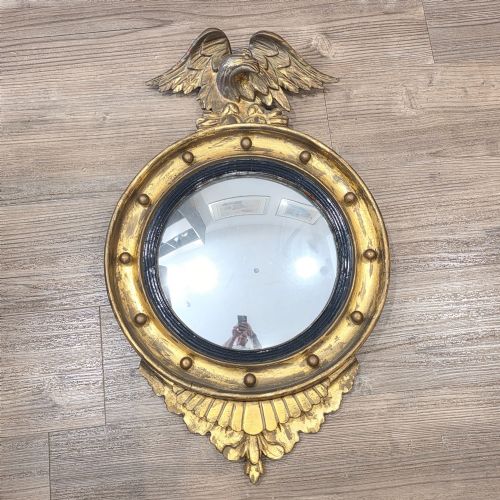
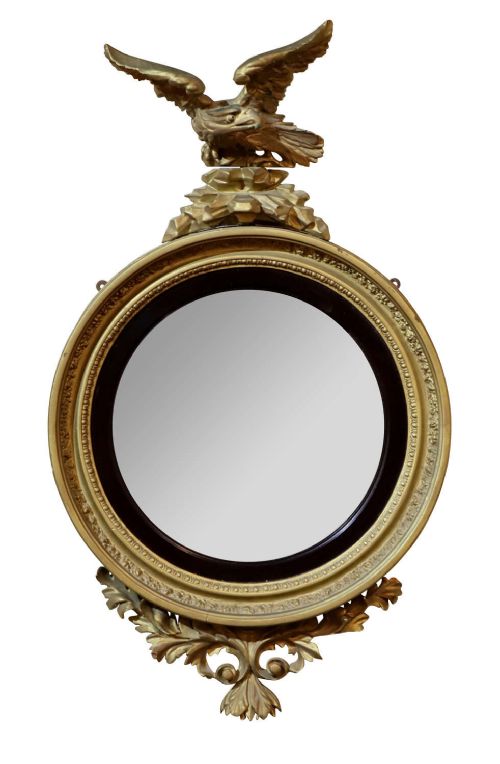
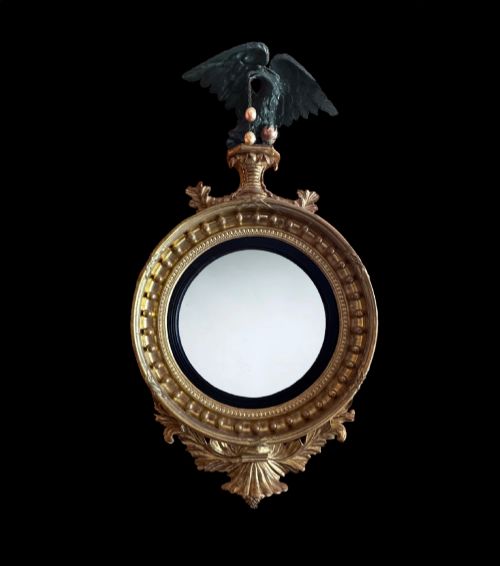
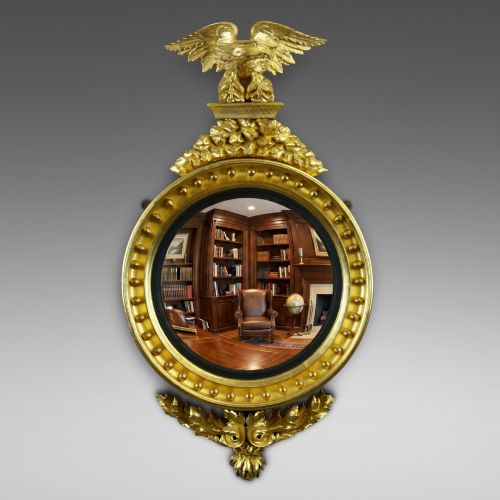
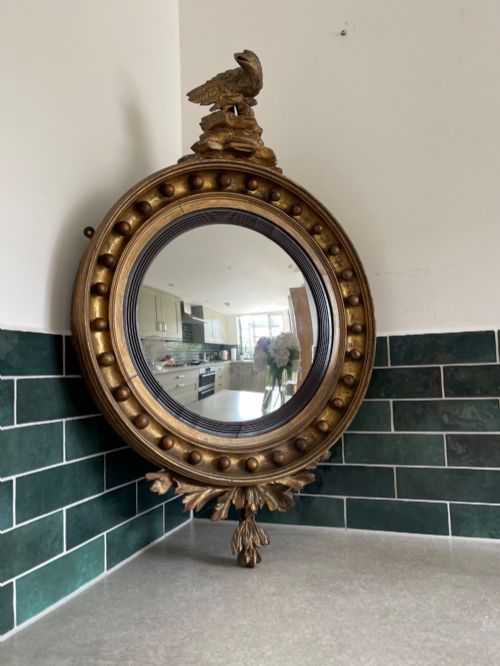
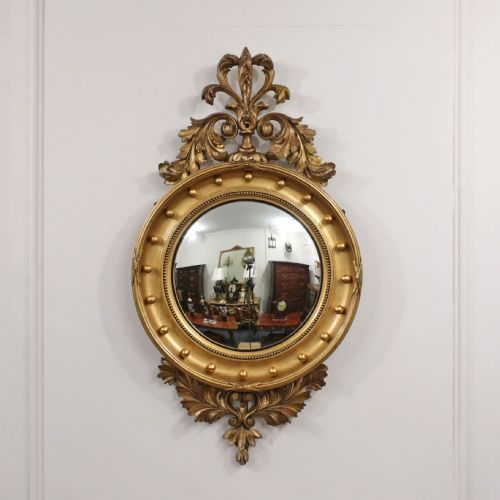
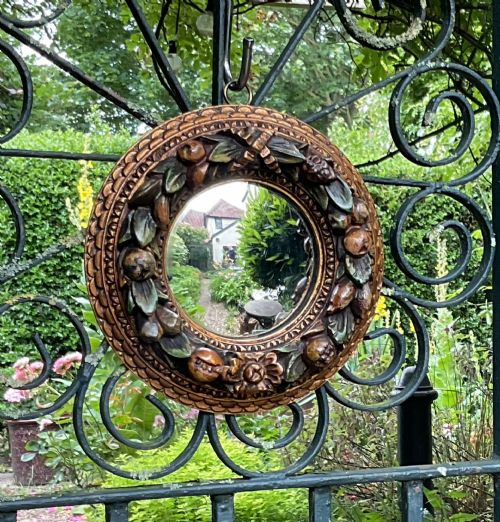
A gold gilt convex mirror is a circular wall glass designed to capture a wide-angle view of an entire interior space within a heavily ornamented circular frame. When you search for a gold gilt convex mirror, you encounter pieces that function primarily as dramatic optical focal points rather than conventional looking glasses. The most common form on this page belongs to the Regency period, featuring round giltwood frames shaped by carvers to hold curved plates.
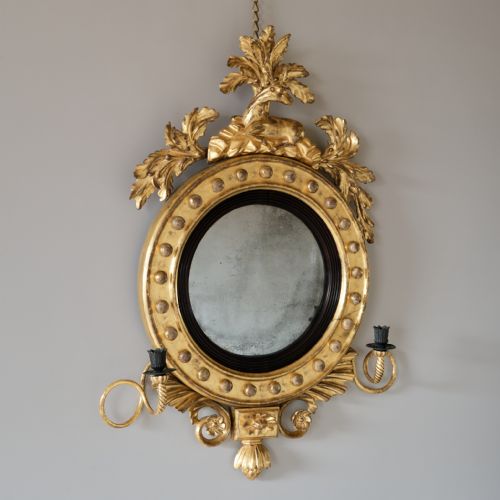
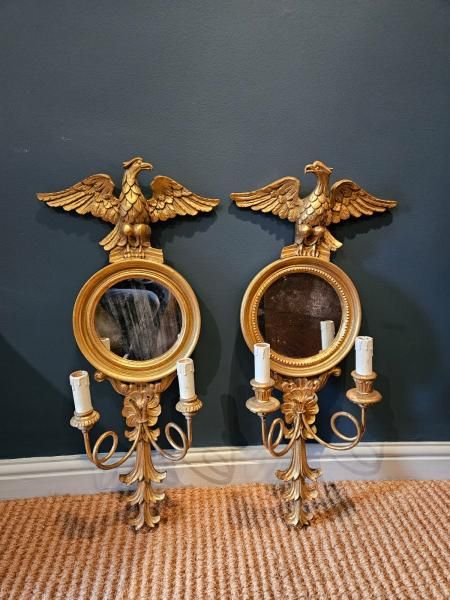
The materials recorded in these listings rely heavily on giltwood, gesso, and ebonised wood, often augmented by brass candle arms in girandole forms. Beyond Regency examples, the selections span Georgian roots through Victorian interpretations and into early twentieth-century revivals. Wall sconces and round butler's mirrors appear alongside monumental wall pieces scaled for grand reception rooms.
Materials and construction methods
Makers shaped the heavy frames of a gold gilt convex mirror from soft timbers, applying layers of gesso to build up high-relief ornaments like eagles, dragons, or leaf scrolls. Carvers then gilded these surfaces using thin gold leaf laid over bole, creating a brilliant reflective skin that catches ambient light across the room.
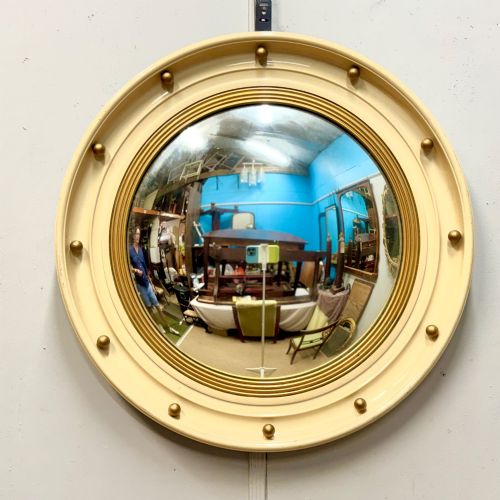
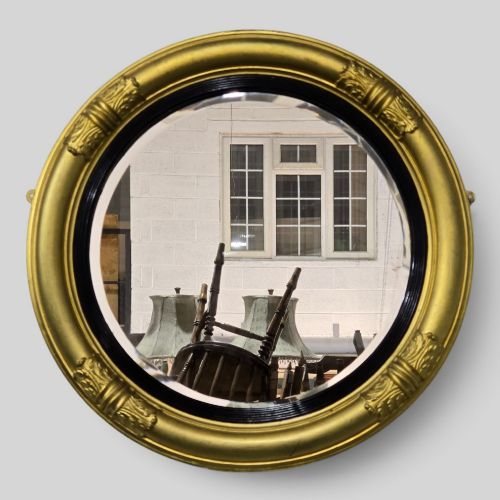
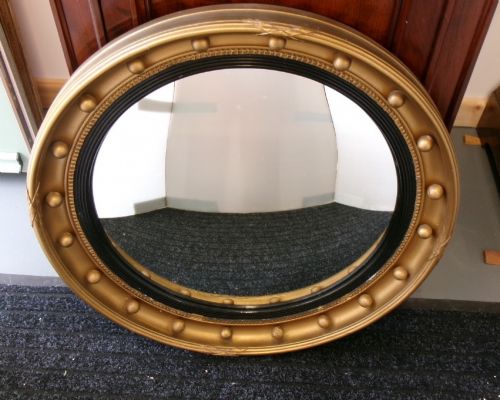
The glass itself required specialised blowing or grinding techniques to achieve the characteristic outward bulge, which shrinks the reflected room into a compact, luminous sphere. Ebonised slips often sit inside the main gold frame to create a sharp optical border between the glass and the outer moulding.
Gold Gilt Convex Mirror Retail Price Guide 2026
Typical asking prices for gold gilt convex mirror among the pieces listed under this phrase on Sellingantiques today, from the lower quarter to the upper quarter. They describe what is for sale here now, not the wider market.
Listings feature periods from Georgian and Regency eras through Victorian, 1890, 1900, 1920, and French Mid-Century styles.
Distinctions in quality and execution
Quality in a gold gilt convex mirror rests upon the depth and crispness of the carved ornamentation, particularly on crests like spread eagles or dragons where lesser examples appear soft and blurred. The handling of the gesso underneath the gold leaf determines whether the decorative details remain sharp or lose definition beneath thick layers of later finish.
The proportion between the mirror plate and the surrounding frame dictates the visual balance of the piece, with superior examples showing harmonious scale rather than heavy, unbalanced moulding. The integration of original ebonised inner rings and intact brass candle sconces further separates standard production pieces from masterwork examples.
The Gold Gilt Convex Mirror Glossary
- Convex mirror
- A round glass curved outward that reflects a wide, distortion-heavy view of the surrounding interior space. This optical property made them popular in nineteenth-century dining rooms for monitoring servants.
- Giltwood
- Timber covered with a thin layer of gold leaf applied over a prepared gesso base. It provides a warm, metallic sheen that resists tarnishing better than base metal paints.
- Ebonised slip
- A dark, black-finished inner ring placed directly against the mirror glass. This thin band creates a visual recession that frames the reflection sharply.
- Girandole
- A wall mirror fitted with attached candle arms or sconces extending from the frame. The polished brass or gilt arms multiplied candlelight effectively in dark evening rooms.
- Gesso
- A plaster mixture applied to wood frames to build up sculpted details before gilding. Master carvers incised fine lines into this layer while still pliable.
Gold Gilt Convex Mirror: Frequently Asked Questions
Where should I hang a convex mirror?
These mirrors command attention when placed opposite a window or fireplace where they can absorb and scatter natural light. Hang them at eye level in hallways, drawing rooms, or dining spaces to maximise their wide-angle optical effect.
Because they concentrate a room's entire perspective into a small circle, keep surrounding wall decorations minimal so the mirror retains its visual dominance.
How do I clean the glass safely?
Dust the curved surface gently with a soft, dry feather brush to remove loose particles without scratching the delicate silvering behind the glass. Avoid spraying liquid cleaner directly onto the plate, as moisture can seep behind the edges and damage the backing.
Instead, apply a tiny amount of mild glass cleaner to a microfiber cloth and wipe the surface lightly from the centre outwards.
Are original mirror plates usually warped?
Historic glass manufacturing methods naturally produced slight waves, bubbles, and optical distortions across the curved surface of the plate. These minor imperfections confirm the age and authenticity of nineteenth-century pieces.
Modern replacement glass tends to look too uniform, whereas antique plates display a softer, deeper reflection with characteristic historical character.
What is a butler's mirror?
A butler's mirror is a specific variant of the convex glass traditionally used in large country houses to oversee staff activities discreetly. They often feature simple round frames without elaborate crests.
Their compact scale allowed domestic staff to monitor large dining or entertaining areas from a single vantage point.