


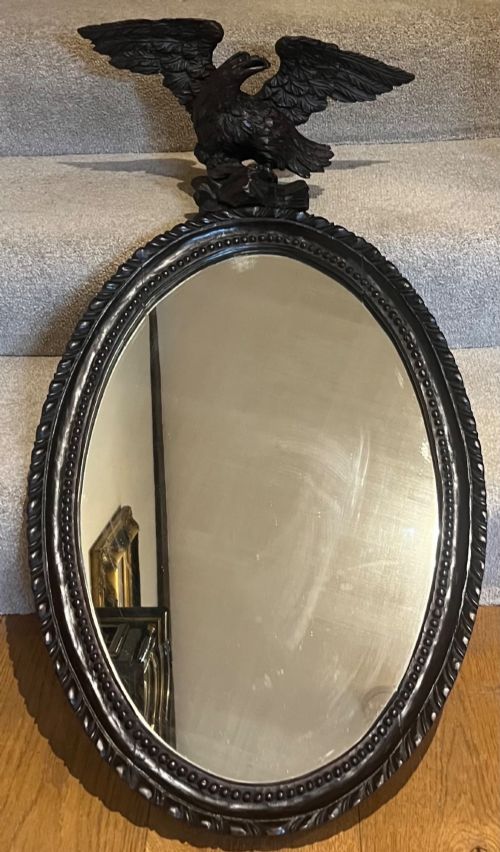

Antique Eagle Wall Mirror
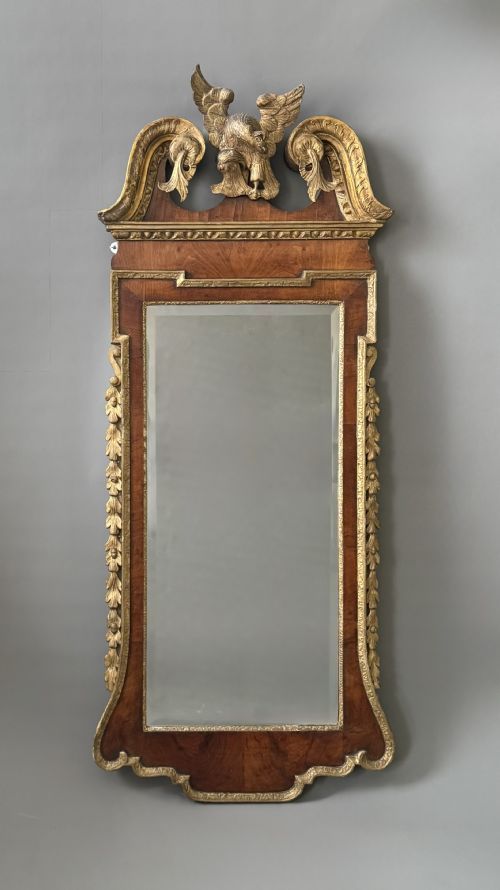
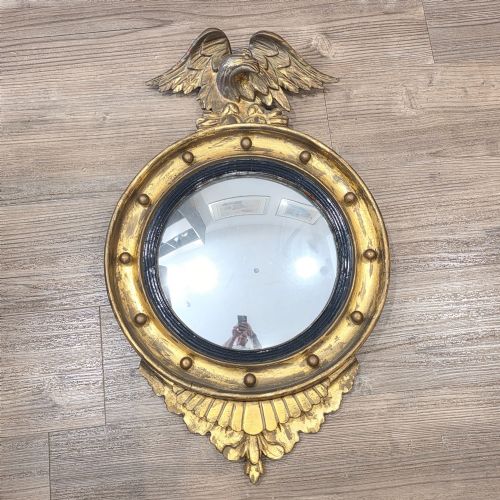
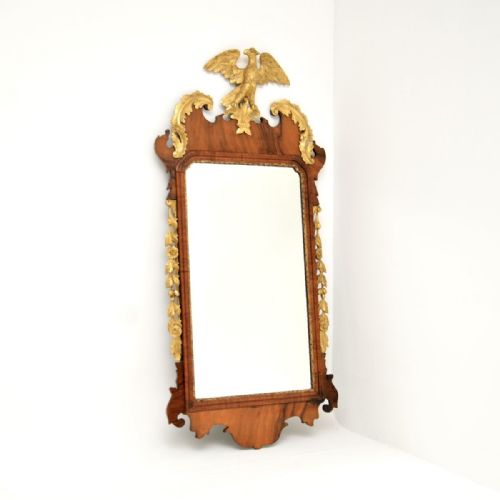
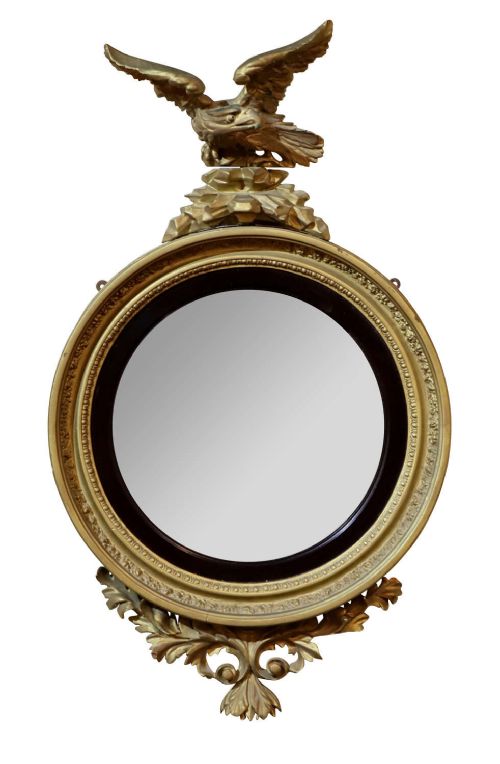
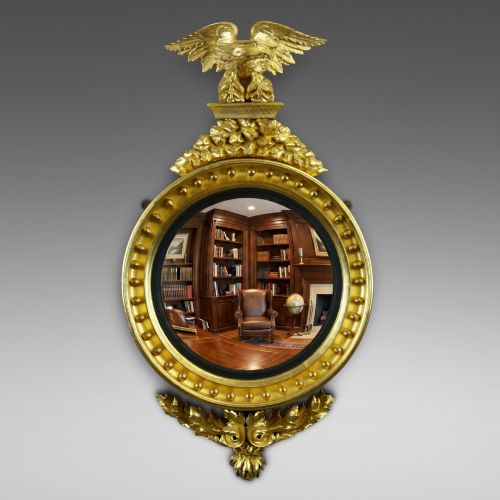
An antique eagle wall mirror brings intense focus to a room through its carved crest and deep circular frame.
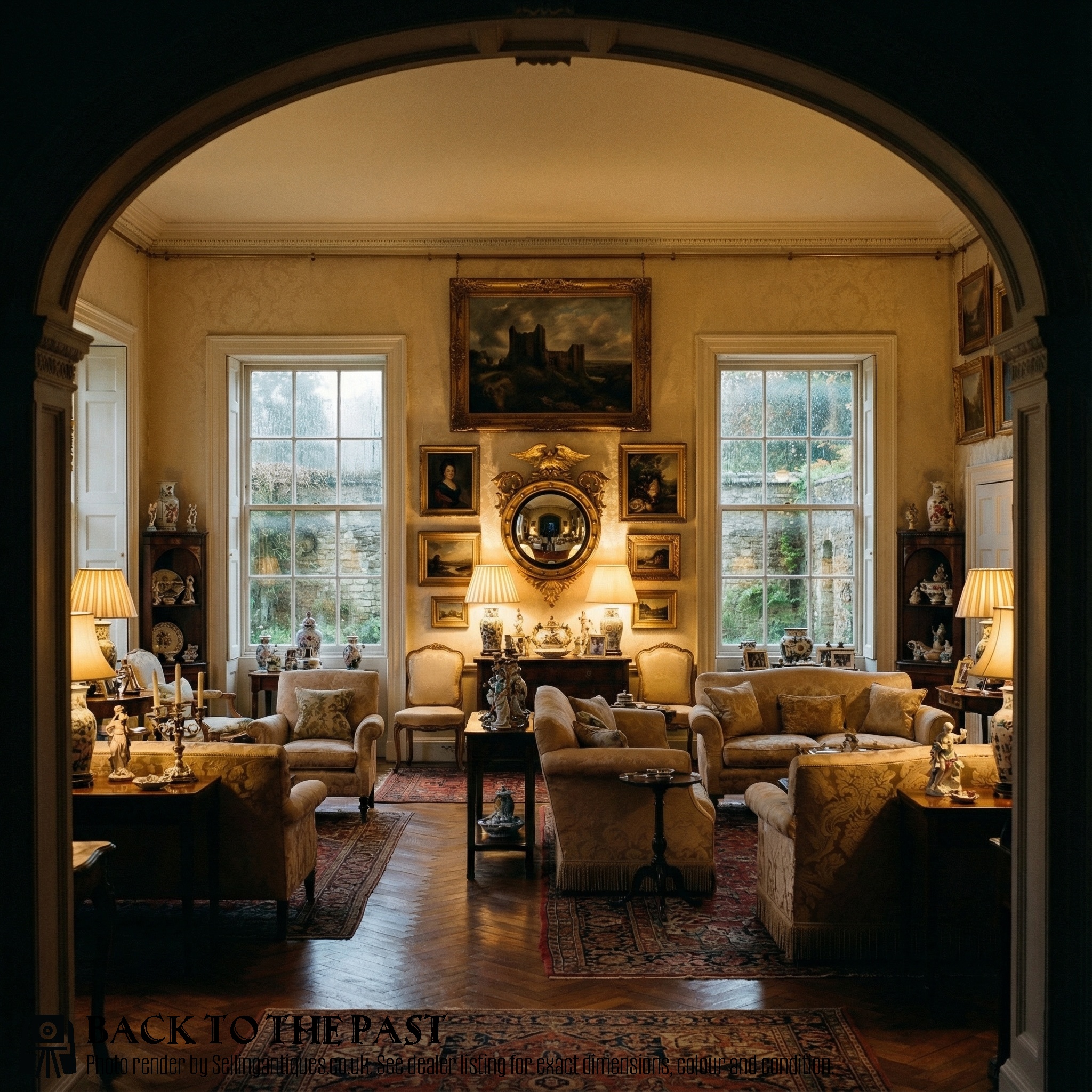
Antique Eagle Wall Mirror
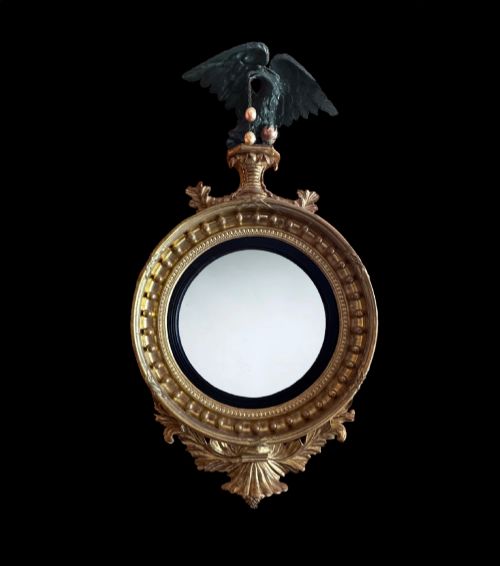
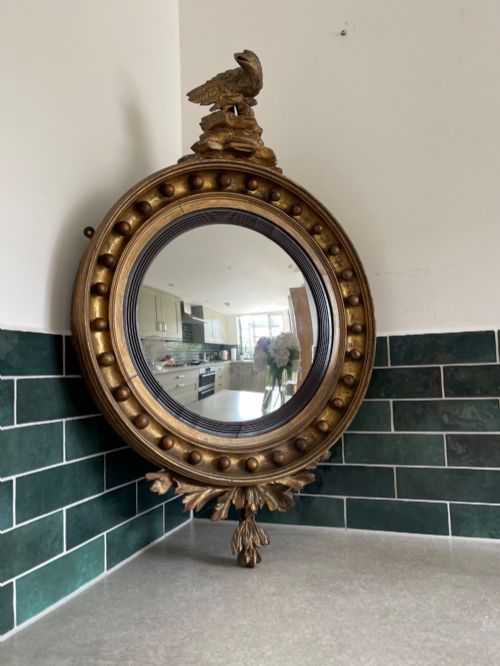
An antique eagle wall mirror is a striking decorative glass framed in timber or gesso, most often encountered in circular convex forms from the Regency and Georgian periods. These pieces serve as a distinct focal point in a room, drawing the eye upwards to the carved bird surmount or crest.
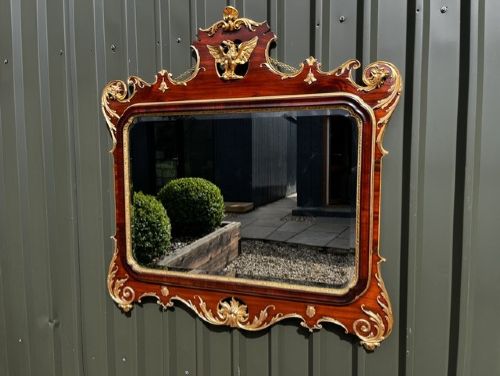
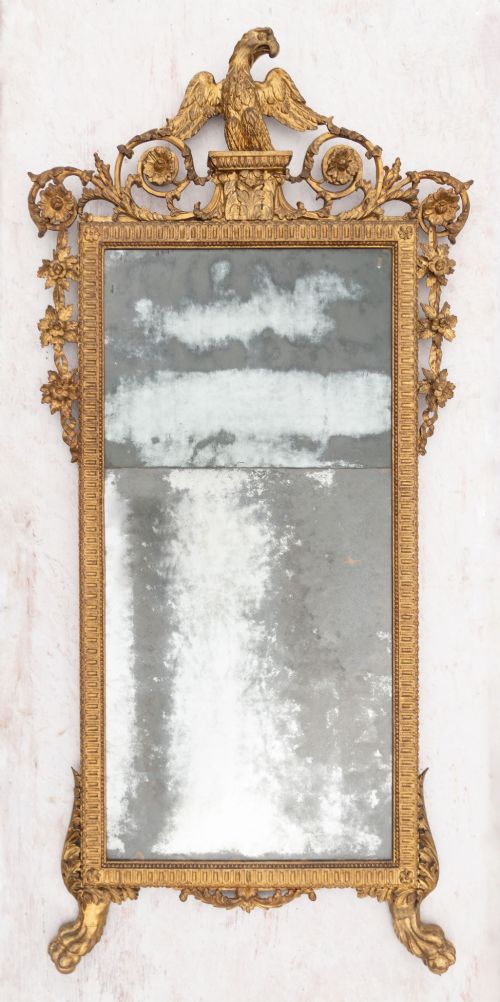
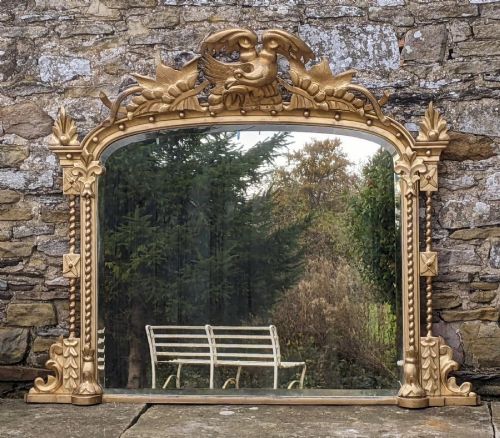
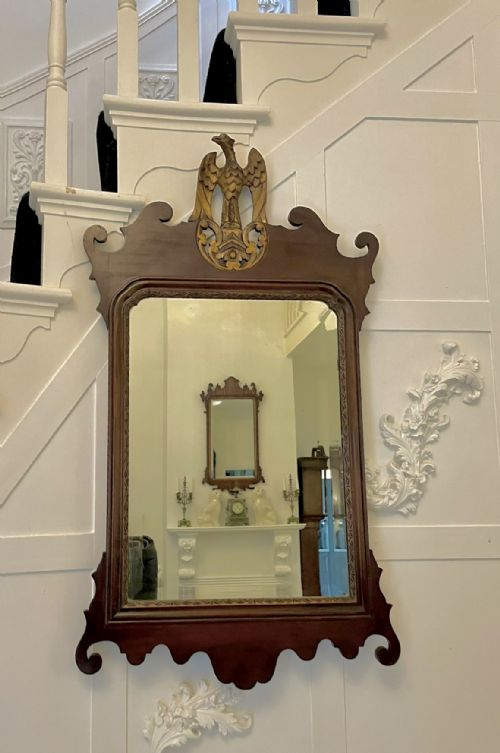
The selection ranges from George III walnut parcel-gilt designs to elaborate 19th-century giltwood convex mirrors featuring spread eagles. Buyers will also find overmantel mirrors and Edwardian fretwork variations alongside Black Forest wood-carved bird of prey pieces.
How they were made
Makers shaped these frames from dense timbers like mahogany, walnut, and ebonised wood, applying layers of gesso to build up intricate surface details. Gilding was then meticulously laid over the prepared wood to create a bright metallic finish.
Convex mirror glass was blown and silvered to distort reflections into a wide-angle view of the interior space. Carved eagles and birds of prey were fashioned separately and fixed securely to the top of the frame.
Listings feature periods spanning from the early 18th century through to the Edwardian era, with Regency convex mirrors dominating the selection.
What varies in quality
The crispness and depth of the wood carving dictate the visual impact of the piece, particularly around the eagle crest and surrounding foliage. Sharp, undercut details show the hand of a skilled carver rather than a hurried workshop output.
The preservation of the original giltwood and the clarity of the antique mirror glass determine the overall integrity of the object. Distressed surfaces with genuine age sit apart from later re-gilding or replaced glass plates.
The Antique Eagle Wall Mirror Glossary
- Convex mirror
- A curved glass plate that provides a wide-angle, spherical reflection of the room. It is typically housed in a circular frame.
- Giltwood
- Timber coated with fine gold leaf over a prepared gesso ground. This technique creates a luminous, reflective surface popular in formal interiors.
- Parcel-gilt
- A decorative treatment where only specific carved elements or mouldings are highlighted in gold leaf against a dark wood background.
- Fretwork
- Openwork patterns cut into thin boards of wood using a saw. This technique defines the edges of many Georgian and Edwardian wall mirrors.
- Girandole
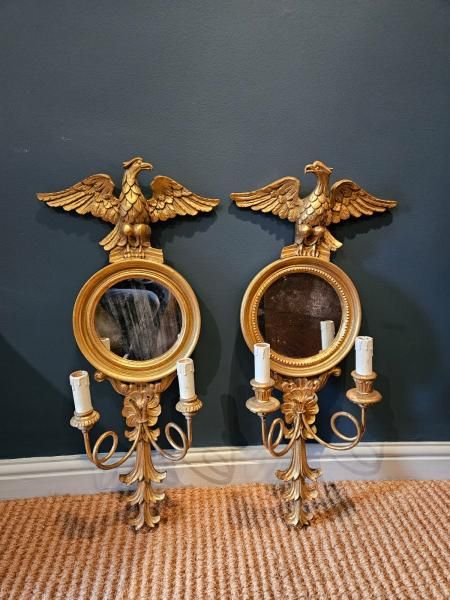
- A wall mirror featuring attached candle sconces or arms. The metal arms project forward to multiply the ambient light in the room.
Antique Eagle Wall Mirror: Frequently Asked Questions
Why is the reflection curved?
Convex glass was specifically designed to reflect a wider field of view than a flat mirror of the same size. This optical effect allowed servants to monitor activity across a large dining room.
In the Georgian and Regency periods, these mirrors were valued just as much for this panoramic reflection as for their decorative gilt frames.
How should I clean the gilt frame?
Dust the intricate carvings gently with a soft, dry brush to prevent dirt accumulation in the recessed areas. Avoid using liquid cleaners or abrasive cloths on giltwood surfaces.
Moisture can strip the delicate gold leaf and gesso layers from the underlying wood. Professional conservation is advised for any significant flaking.
What does the eagle symbolize?
The eagle surmount often carried patriotic or classical associations in British and European interiors during the 18th and 19th centuries. It added height and architectural authority to the wall piece.
Carvers used the bird to project power and watchfulness, positioning it directly above the circular glass.