


Decorative Brass Base Table
These decorative brass base table pieces combine solid metal foundations with functional lighting and horological forms.
Decorative Brass Base Table
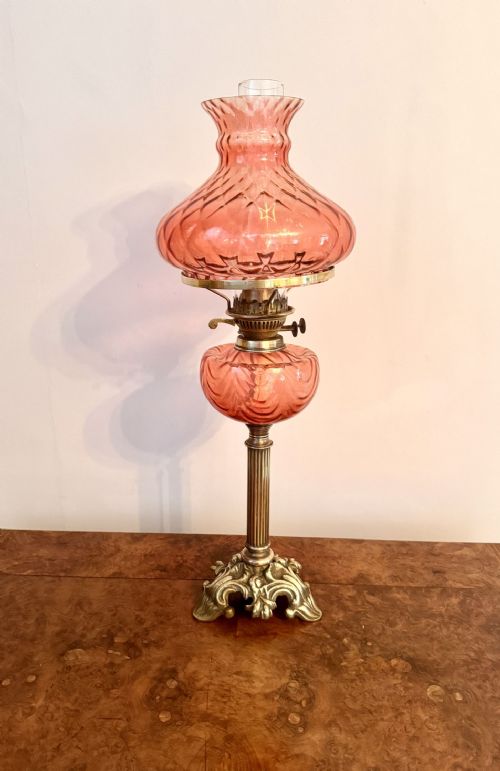
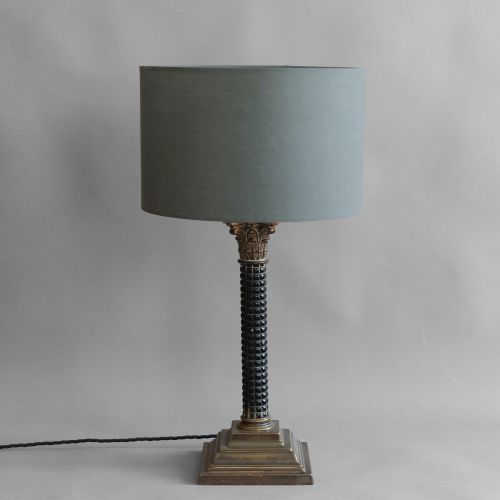
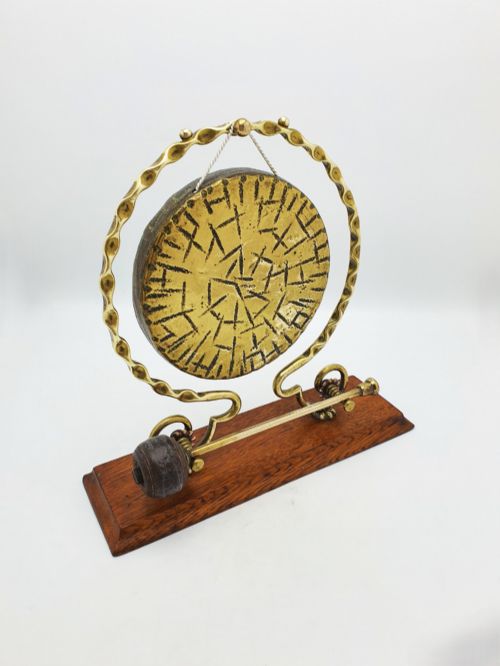
A decorative brass base table selection brings together utilitarian objects and lighting raised on metal supports, spanning periods from the nineteenth century into the twentieth. You will frequently encounter column lamp bases, mantel clocks, and tabletop gongs mounted on substantial metallic feet.
The objects originate from Victorian workshops, French ateliers, and English makers, employing styles such as Neoclassical, Art Nouveau, and Arts and Crafts. These pieces serve practical lighting and timekeeping roles while providing visual weight through their metallic components.
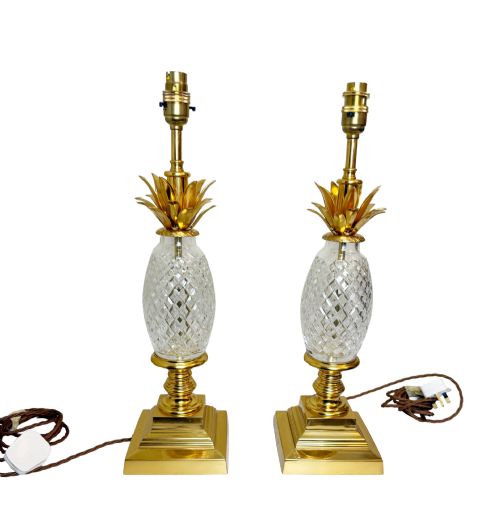
Formats vary from single Corinthian column lamps and skeleton clocks to paired crystal pineapple lamps and desk bells. Each item anchors its functional element with a sturdy foundation cast or spun in brass and gilt bronze.
Materials and Construction Methods
Makers utilised cast brass, gilt bronze, and ormolu for the foundational supports, often combining the metal with marble, ebonised wood, or porcelain de Paris. These materials provide both structural stability and decorative contrast for the upper elements.
Lighting fixtures and timepieces integrate glass shades, crystal bodies, and enamel dials into the metal frames. Techniques involve precise turning of columns, fine casting of decorative mounts, and secure mounting of electrical or mechanical components.
Elephants occasionally support a bronze bell at the base, proving that Victorian domestic life welcomed unexpected exotic details.
Distinctions in Quality and Execution
The standard of a piece rests upon the crispness of the casting in the brass base and the fidelity of classical details like fluting and acanthus leaves. Finer examples display meticulous hand-chasing on the metal surfaces and superior integration with secondary materials such as marble or porcelain.
Proportion and weight dictate the presence of quality, separating heavy, solid castings from lighter, hollow alternatives. The precision in assembling mixed-media pieces, from crystal fonts to cloisonné panels, reveals the original maker's investment of time and skill.
Le Roy·WAS Benson
The Decorative Brass Base Table Glossary
- Ormolu
- Gilded bronze used extensively in French and English decorative arts for mounts and bases. It provides a rich, gold-coloured finish that resists tarnish.
- Corinthian column
- A classical architectural order featuring ornate capitals decorated with acanthus leaves, frequently replicated in metal for lamp bases.
- Skeleton clock
- A timepiece designed with an open metal framework that exposes the going train and gear mechanisms. They were often mounted on brass or wooden bases under glass domes.
- Cloisonne
- An ancient technique for decorating metalwork objects with coloured glass paste placed within compartments defined by soldered wires.
- Toleware
- Painted and lacquered sheet metal items, often appearing alongside brass elements in nineteenth-century domestic furnishings.
Decorative Brass Base Table: Frequently Asked Questions
What is a decorative brass base table lamp?
It is a lighting fixture raised upon a cast or turned metal foundation, often taking the form of a classical column or urn.
These pieces use the weight of the metal to provide stability on furniture while adding a polished or gilt decorative element to a room.
How do I date a brass column lamp?
Dating relies on examining the casting quality, wiring methods, and associated materials like marble plinths or porcelain bodies.
Nineteenth-century examples often display heavy cast components and hand-cut threads, whereas later twentieth-century pieces incorporate different switches and standardised fittings.
Were brass gongs used in the dining room?
Table gongs served to signal the serving of meals in larger homes during the Victorian and Edwardian eras.
The metal bar or bowl was struck with a handheld mallet, resting upon dedicated wooden or brass bases.
What styles influence these brass items?
Neoclassical Revival and Victorian designs dominate, drawing inspiration from ancient Greek and Roman architecture.
You will also find Arts and Crafts simplicity alongside French Belle Epoque and Art Nouveau ornamentation.