
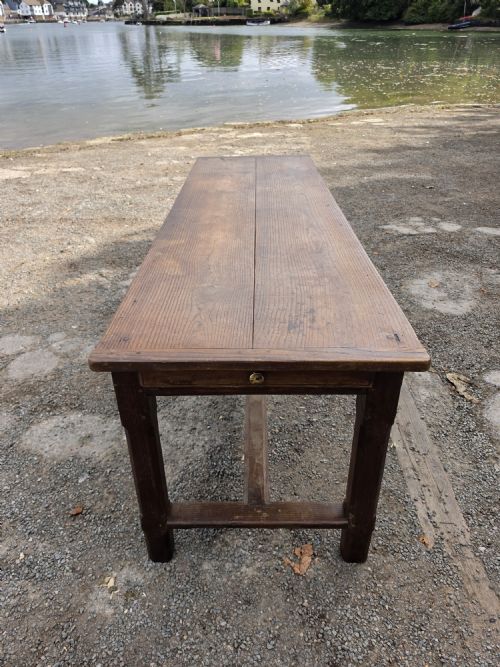
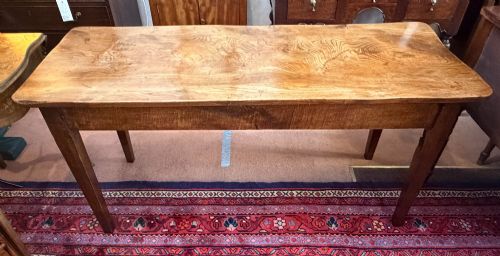
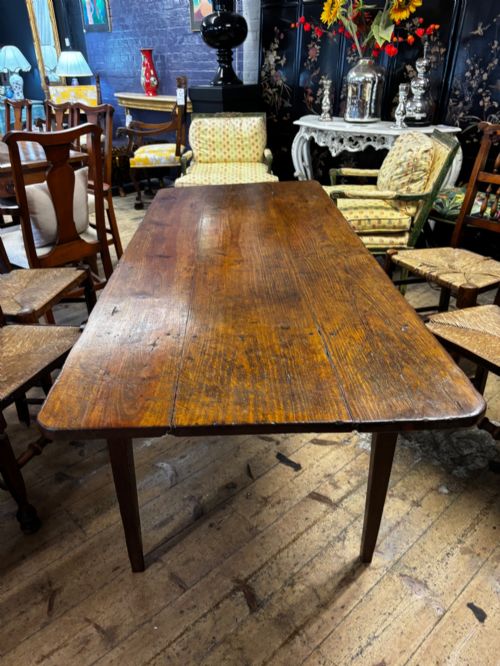
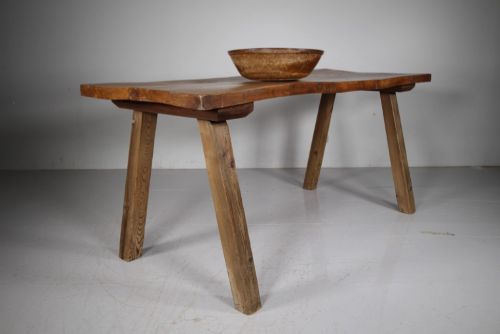
Timber Top Dining Table
A timber top dining table brings enduring utility and warmth to a room, offering a solid surface built from traditional woods for daily gatherings.
Timber Top Dining Table
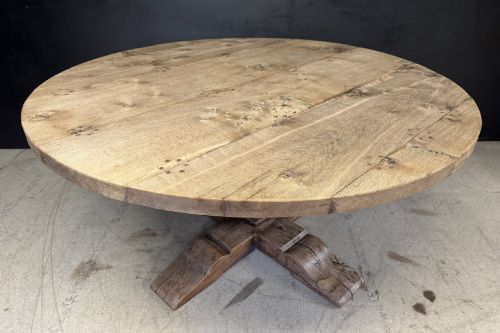
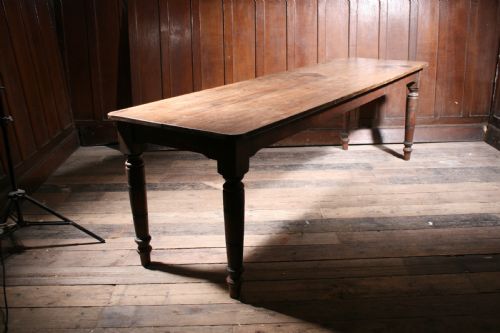
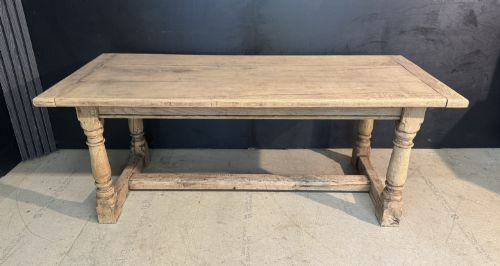
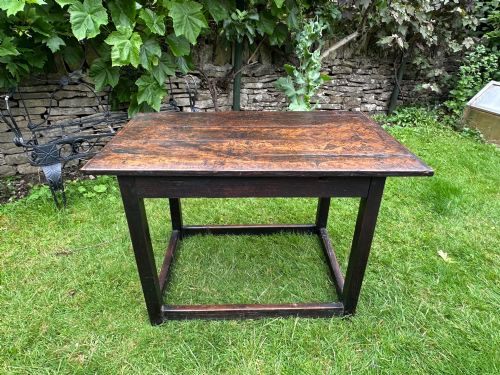
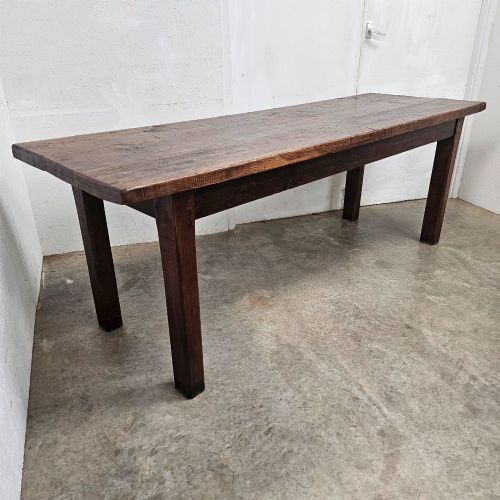
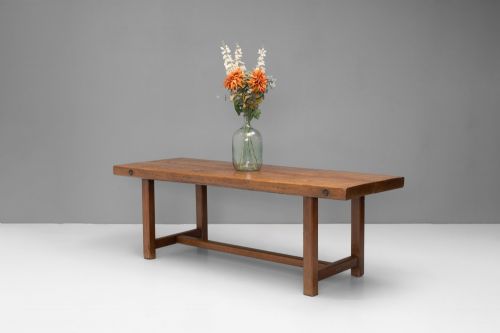
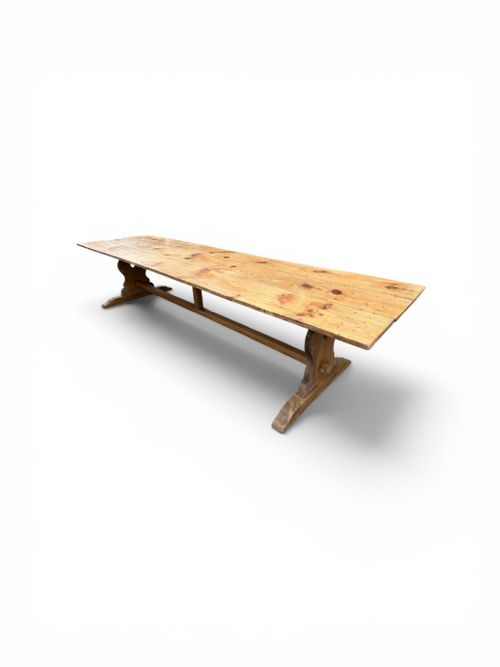
When you search for a timber top dining table, you encounter a selection spanning the nineteenth century alongside pieces from the early twentieth century. These objects include farmhouse tables, refectory tables, kitchen tables, and centre tables originating from English, French, and Italian traditions.
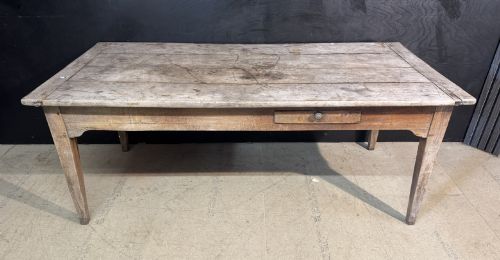
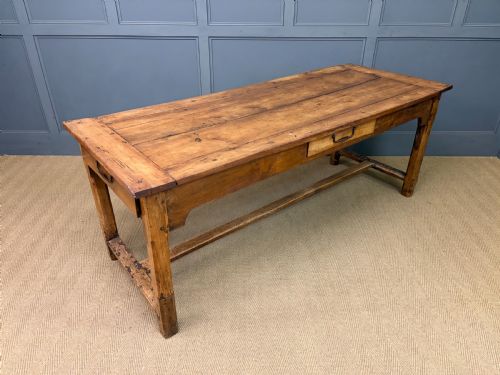
The most common versions on this page are sturdy farmhouse and kitchen tables built from pine, oak, and fruitwood. They often display rustic vernacular styles, primitive country designs, or Victorian country characteristics shaped by practical domestic use.
Materials and construction methods
Carpenters constructed these tables using solid domestic and European hardwoods and softwoods, notably oak, pine, fruitwood, elm, and beech. Planks formed the tops, sometimes supported by substantial timber frames or iron and cast iron bases.
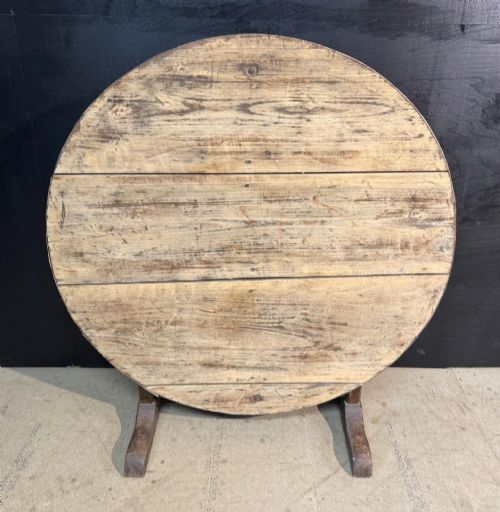
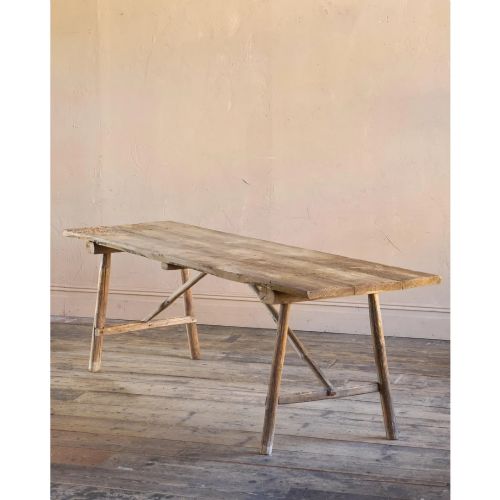
Joinery methods relied on traditional pegged joints, trestle supports, and refectory framing to ensure stability across large surfaces. Certain pieces incorporate functional elements like bread slides or folding mechanisms for versatility.
Some French vineyard tables fold flat for storage, proving that even nineteenth-century hosts appreciated clever space-saving furniture after the harvest ended.
Distinctions in quality
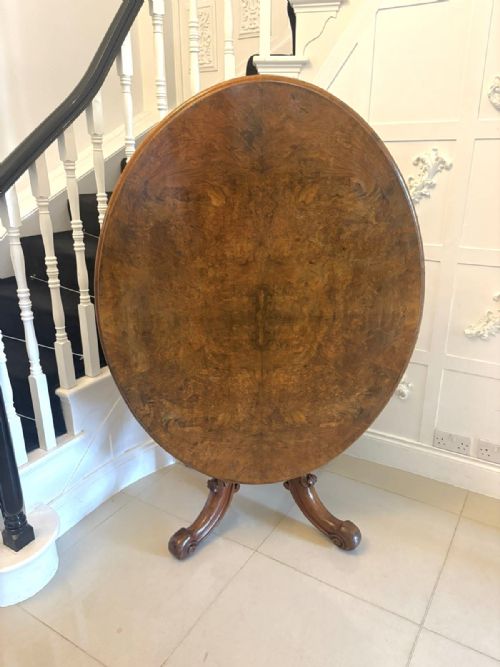
Quality rests upon the selection of timber used for the top, where thick single planks or figured woods like burr walnut, mahogany, and goncalo alves indicate superior workshops. The integrity of the underlying structure and the preservation of original patination elevate an item above standard utility pieces.
Finer examples demonstrate balanced proportions and thoughtful detailing, such as carved centre table pedestals or precise fruitwood and beech construction. Simpler utilitarian pine and oak tables derive their merit from honest signs of wear and structural soundness.
The Timber Top Dining Table Glossary
- Refectory table
- A long, narrow dining table traditionally used for communal meals in monasteries or large households. They often feature stretcher rails connecting the legs for added support.
- Trestle table
- A table consisting of two or more supports, or trestles, holding up a flat top. This design allows for maximum legroom along the length of the surface.
- Bread slide
- A pull-out wooden board integrated beneath the table top. Historically, this feature provided an extra surface for cooling bread or preparing food.
- Plank top
- A table surface constructed from joining several wide wooden boards side by side. Early examples frequently utilise thick oak or elm planks.
- Centre table
- A freestanding table designed to be viewed from all sides and placed in the middle of a room rather than against a wall.
Timber Top Dining Table: Frequently Asked Questions
How do I clean a wooden table top?
Wipe the surface gently using a damp cloth without harsh chemical detergents. Dry the timber immediately to preserve the natural finish.
Apply occasional appropriate wax to nourish older woods like oak and pine. Avoid placing hot items directly onto the timber to prevent marking.
Where were these tables used originally?
Many served in country kitchens, farmhouses, and taverns for daily food preparation and family meals. Others functioned in grander country houses as centre tables or breakfast tables.
Their robust construction suited demanding domestic environments where longevity mattered most.
How do I date an antique wooden table?
Examine the timber species, tool marks, and construction techniques visible beneath the top and around the frame. Hand-cut joints and naturally aged patination typically point to nineteenth-century or earlier origins.
Compare the style, such as Victorian or primitive country, with documented furniture vernacular from the same region.
Will a large dining table fit my room?
Measure your dining space carefully, allowing ample clearance around all sides for chairs to pull out comfortably. Consider the length of the table top and the placement of legs or trestles to ensure seating capacity meets your needs.
Keep walkway clearances in mind so the room remains practical for daily movement.