


Victorian Pine Trestle Table
These Victorian pine trestle table examples offer robust utility and honest charm, bringing a sturdy historic work surface into modern rooms.
Victorian Pine Trestle Table
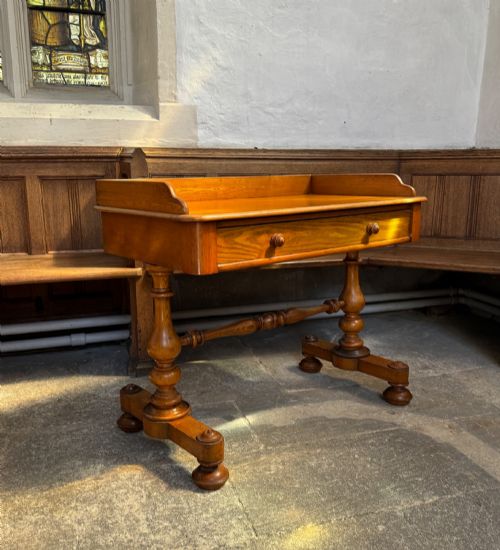
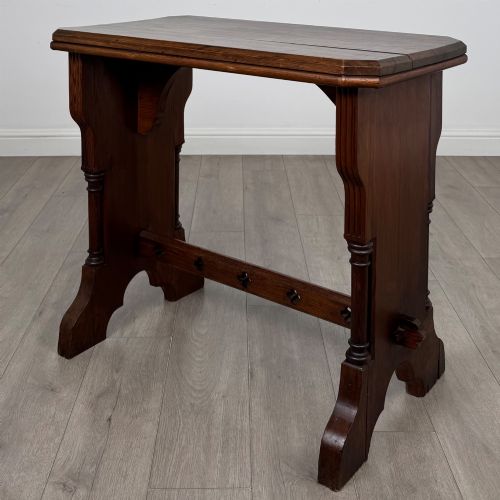
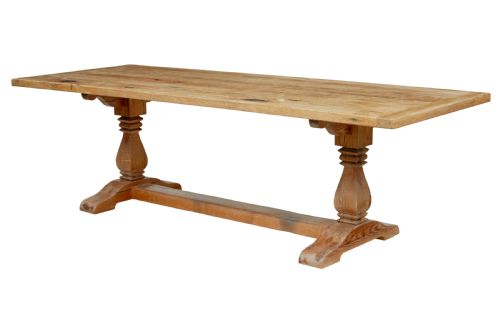
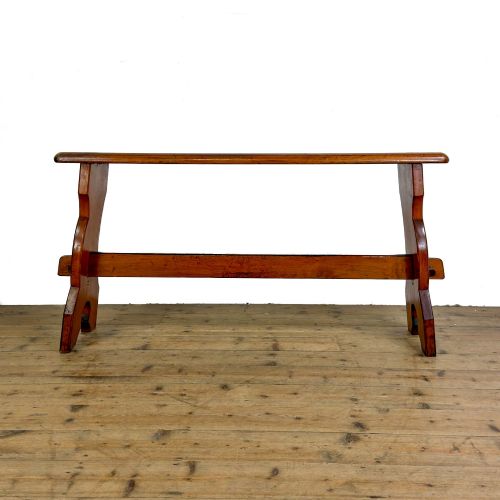
A victorian pine trestle table combines a solid timber top with supportive end supports or trestles, built to serve heavy daily demands in domestic and institutional settings. You will encounter various forms here, ranging from long refectory dining tables to narrow side tables, tavern boards, and altar or writing desks.
The materials span standard pine and dense pitch pine, frequently complemented by iron, brass, or bronze hardware, alongside surviving traces of original paint or red pigment. These pieces originate across the nineteenth century and into the early twentieth century, reflecting vernacular country traditions and industrial workshops alike.
How They Were Made
Carpenters utilised durable softwoods like pine and pitch pine for both tops and framing, often selecting heavy timber planks to withstand constant use in kitchens, refectories, and workshops. Joinery was straightforward and functional, designed to keep large surfaces stable without complex mechanisms.
Structural reinforcement frequently involved iron bracing, bronze feet, or brass elements, adding weight and stability to the trestle framework. Surfaces often retained plain scrubbed timber finishes, though some examples preserve early red or grey paint.
One listed piece originates as an original nineteenth century pig scratch.
What Varies in Quality
Quality rests in the integrity of the timber, the thickness of the top boards, and the retention of original structural hardware such as iron braces or bronze feet. Tables that keep their early painted surfaces or display specific institutional provenance carry greater historical character.
Proportion and scale also define the better examples, where narrower boards or longer refectory formats balance utility with architectural presence. The skill lies in how well the trestle base supports the top while maintaining its original alignment.
The Victorian Pine Trestle Table Glossary
- Pitch pine
- A resinous pine variety offering enhanced density and durability. It provides a harder, darker surface than standard pine.
- Refectory table
- A long dining table traditionally used in communal halls. These examples often feature substantial trestle bases.
- X frame
- A structural base formed by intersecting timber members resembling the letter X. This design gives lateral stability to tavern and trestle tables.
- Gothic Revival
- An architectural and decorative style drawing on medieval forms. Tables in this manner often display ecclesiastical detailing and pointed arches.
- Vernacular country
- Domestic design rooted in local traditions rather than academic fashion. These pieces privilege practical utility over polite ornamentation.
Victorian Pine Trestle Table: Frequently Asked Questions
How do I clean a pine trestle table?
Wash the timber surface gently with warm water and mild soap using a well-wrung cloth.
Dry the wood thoroughly immediately afterward to prevent moisture damage to old pine.
Can I use these tables for daily dining?
These tables were built for heavy kitchen and refectory use, making them ideal for everyday meals.
Use protective mats to guard historic timber surfaces from heat and moisture rings.
What is the difference between pine and pitch pine?
Standard pine is softer and lighter in tone, while pitch pine contains more resin and offers greater weight.
Pitch pine develops a darker, richer colour and withstands heavy knocks rather better.
How do I date a nineteenth century table?
Examine the saw marks, nail types, and the wear patterns on the timber joints.
Compare the construction style and any stamps or institutional markings against known period examples.