
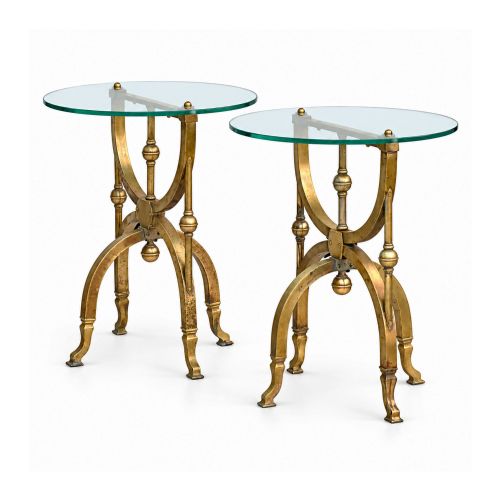
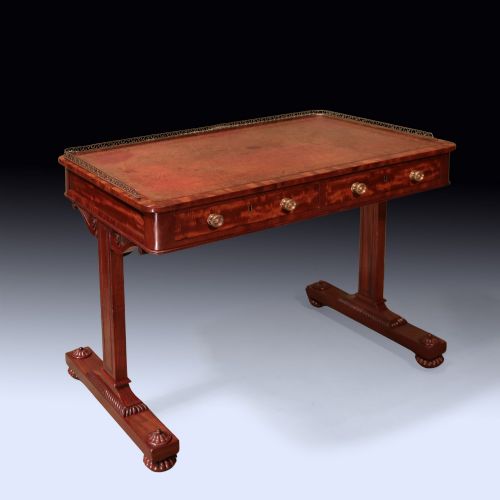


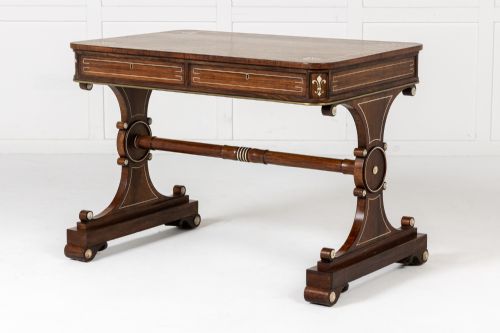


Brass Trestle Table
These pieces known as a brass trestle table combine sturdy timber frames with gleaming metal supports to anchor a room.
Brass Trestle Table
A brass trestle table takes many forms across our listings, appearing primarily as writing tables, sofa tables, and library tables from the Regency and Victorian eras. These items serve functional domestic roles while displaying the refined design vocabulary of the nineteenth century.
The materials paired with brass stretch across mahogany, rosewood, burr walnut, and occasionally pine or stone. Cabinetmakers of the period utilised these dense timbers to create solid writing desks, side tables, and occasional furniture.
The most common iterations on this page date from the early nineteenth century into the Victorian period, reflecting both formal Regency revival styles and practical Arts and Crafts construction. Buyers encounter varied formats including drop-leaf sofa tables, twin-drawer writing desks, and low coffee tables.
What varies in quality
The refinement of the timber figure and the precision of the brass inlay distinguish standard examples from finer works. Master cabinetmakers selected rich figured rosewood or flame mahogany and integrated brass stringing with absolute symmetry.
Structural stability and the crispness of the carving on the trestle supports indicate the original workshop standard. Superior pieces retain uncompromised joinery and original brass mounts that sit flush within the timber.
The listings span from the Regency period through the Arts and Crafts movement, featuring mahogany, rosewood, oak, and pine.
Gillows of Lancaster·Marsh & Tatham·Howard & Sons
The Brass Trestle Table Glossary
- Trestle
- A support consisting of a horizontal beam fixed to two pairs of splayed legs. This construction allows maximum legroom beneath the table top.
- Sofa table
- A rectangular occasional table designed to stand in front of a sofa, typically featuring drop leaves at either end. These tables often incorporate small drawers for writing materials or sewing supplies.
- Stringing
- A narrow strip of contrasting wood or metal inlaid flush into the surface of a piece of furniture. It creates fine border lines around the edges of tabletops and drawer fronts.
- Palisander
- A dense, dark timber belonging to the rosewood family, prized for its rich grain and oily texture. Cabinetmakers utilised it extensively during the Regency period for high-status desks and tables.
- Drop leaf
- A hinged flap at the side of a table that can be raised and supported by swinging brackets. This mechanism allows the table surface to expand or contract according to domestic needs.
Brass Trestle Table: Frequently Asked Questions
How do I date a brass trestle table?
Dating relies on examining the timber species, construction methods, and decorative motifs present in the piece. Regency examples frequently feature rosewood with precise brass inlay, while later Victorian versions tend toward heavier mahogany and simpler structural forms.
Hardware and secondary timbers inside drawers also provide key clues to the decade of manufacture. Comparing the stylistic details against documented nineteenth-century cabinet work helps confirm the period.
Were these tables used for writing?
Many tables featuring this configuration served primarily as writing desks or library tables in period homes. Their sturdy trestle bases provided a stable surface for correspondence and reading before the widespread adoption of fitted study furniture.
Drawers built into the apron allowed owners to store paper, ink, and pens close at hand. Today, these same surfaces function well as compact desks in modern living spaces.
How do I care for rosewood and brass?
Maintenance requires gentle cleaning with a soft, dry cloth to remove dust without scratching the delicate timber veneer. Avoid harsh chemical polishes that can discolour the metal inlay or strip natural oils from the wood.
Keeping the table away from direct sunlight and steady heat sources prevents the timber from drying and splitting. Periodic application of microcrystalline wax helps protect both the brass and the polished wood surface.
What is the difference between a sofa table and a library table?
A sofa table is traditionally longer and narrower, originally designed to stand immediately behind a sofa, and usually includes drop leaves. Library tables are heavier, freestanding pieces built for central placement in a room with all-round finished surfaces.
Library tables rarely feature drop leaves and often provide deeper drawers suited for heavy volumes and documents. Both types incorporate the stable trestle or end-support design common to the era.