




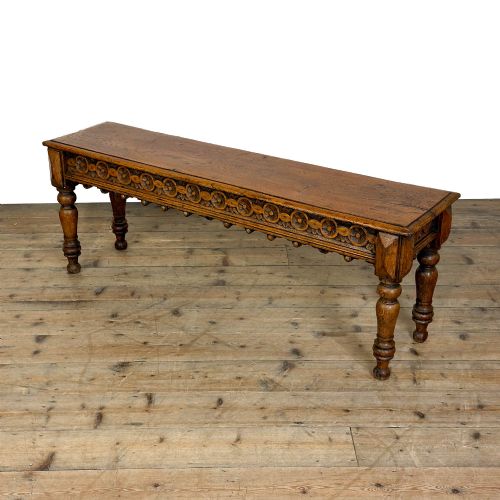
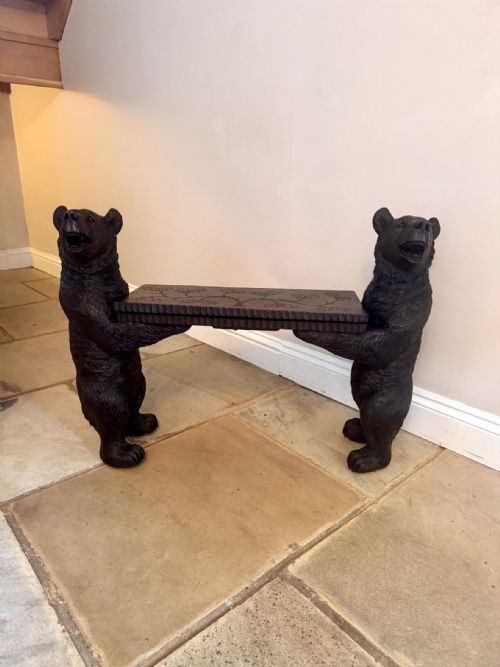
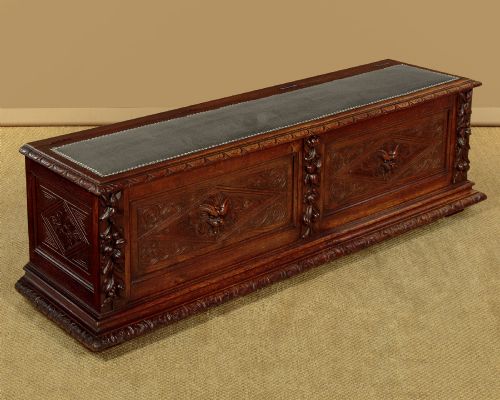
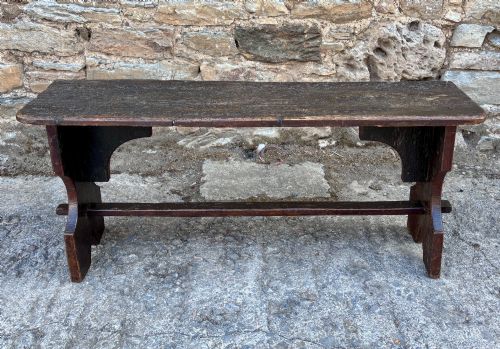
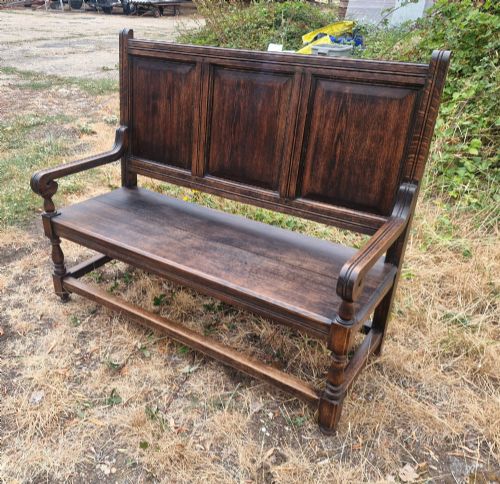
Dark Wood Hall Bench
A dark wood hall bench grounds an entranceway with heavy timber presence and practical seating.
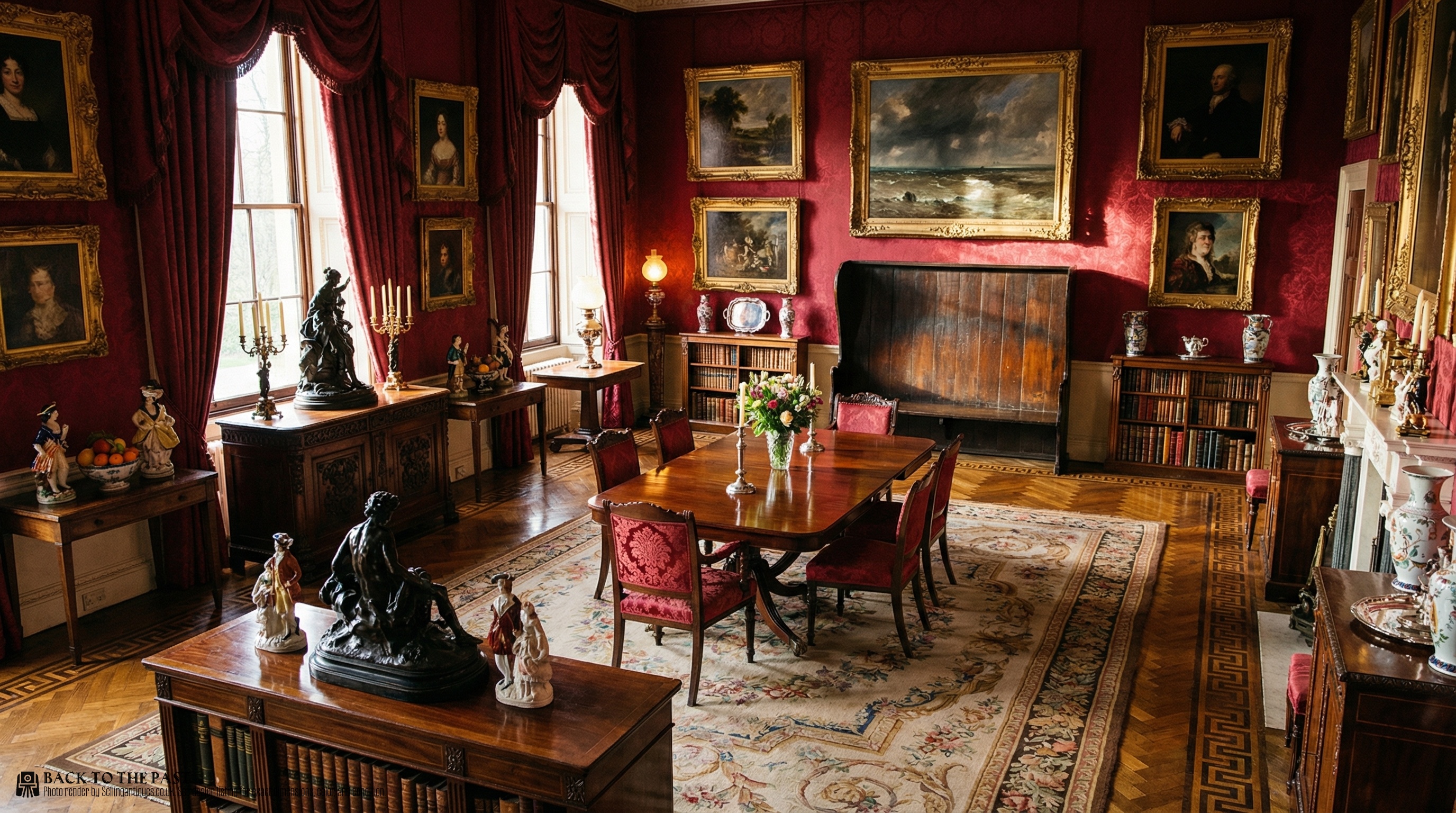
Dark Wood Hall Bench
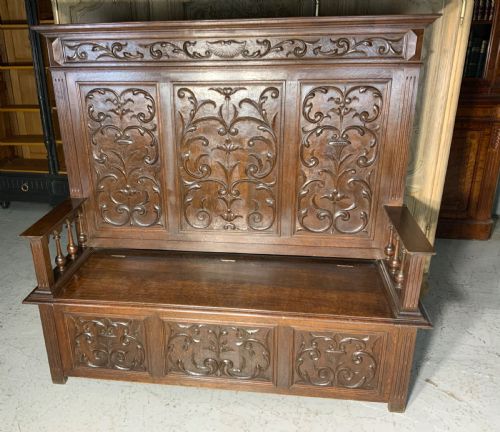
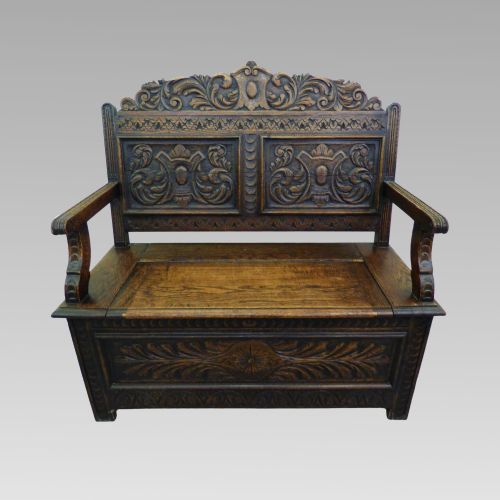
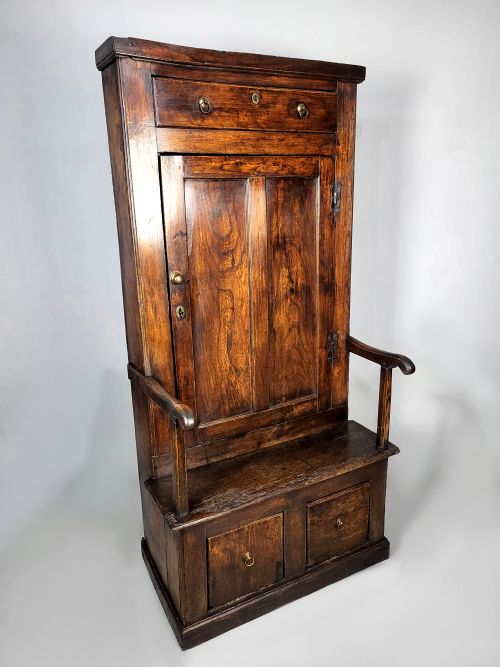
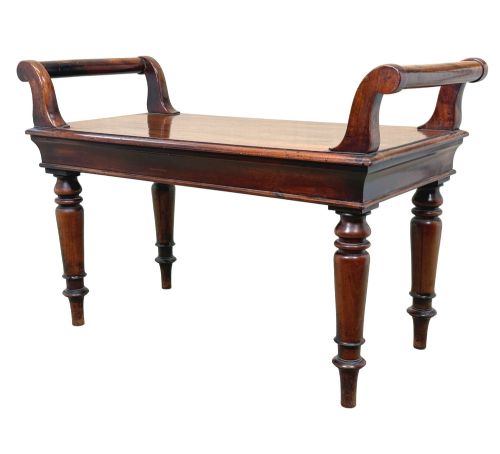
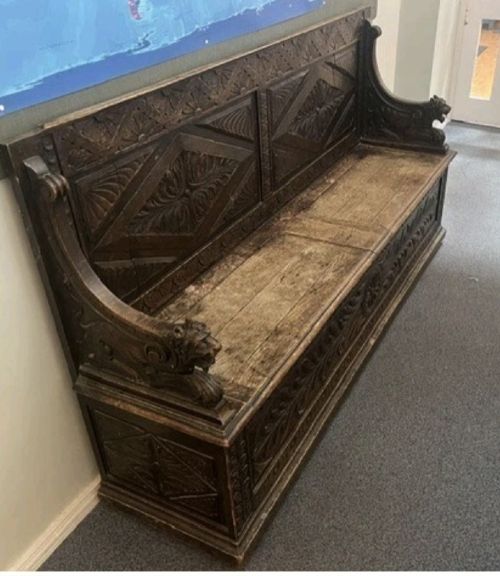
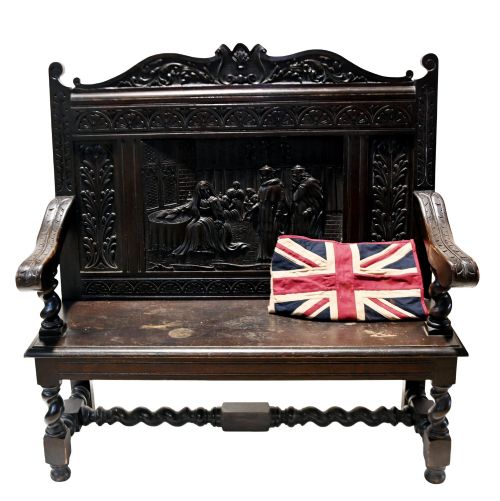
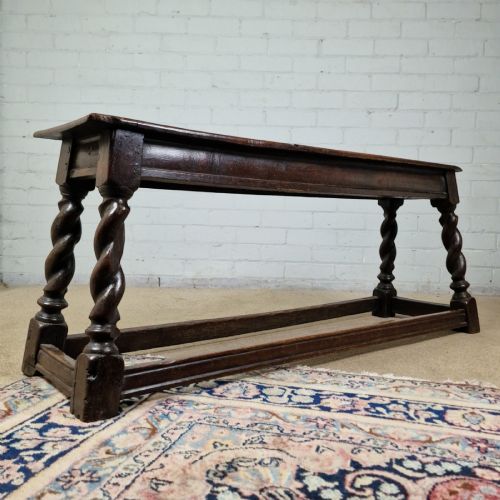
A dark wood hall bench provides a substantial seating option for corridors and vestibules, utilising dense timbers such as oak, mahogany, and walnut. These pieces often incorporate storage within box seats or serve as high-backed settles designed to block cold draughts in older properties.
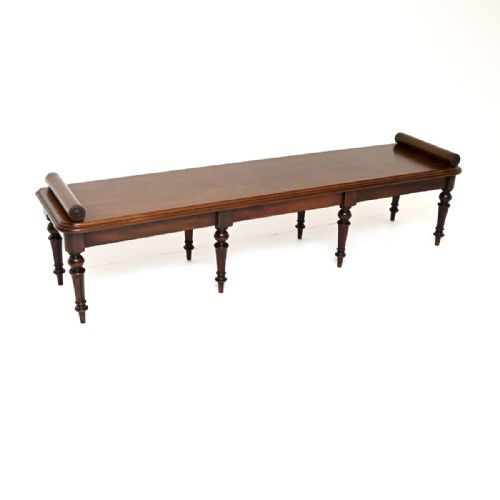
Buyers will frequently encounter nineteenth century examples featuring carved ornamentation, alongside earlier eighteenth century settles and Edwardian oak hall seats. The selection ranges from robust rustic constructions to refined Regency and Victorian window seats.
Alternative forms include monks benches with convertible tabletops, luggage racks, and carved Chinese export benches in rosewood. Each variant reflects the domestic requirements of its period, from formal reception rooms to utilitarian hallways.

How they were made
Cabinetmakers constructed these benches primarily from solid oak and mahogany, joining heavy panels with traditional mortise and tenon joints to withstand daily use. Carved details were chiselled directly into the timber by hand, creating deep relief panels, scrolling arms, and figurative motifs.
Secondary materials such as brass fittings, iron hardware, leather upholstery, and fabric pads appear on specific pieces, particularly in later Victorian and Edwardian iterations. Pearl inlay and bone detailing also feature on select imported or specialised variants from the period.
Dark Wood Hall Bench Retail Price Guide 2026
Typical asking prices for dark wood hall bench among the pieces listed under this phrase on Sellingantiques today, from the lower quarter to the upper quarter. They describe what is for sale here now, not the wider market.
Listings feature oak and mahogany predominantly, alongside walnut, rosewood, and exotic stinkwood.
What varies in quality
The standard of a dark wood hall bench rests largely on the depth and crispness of its wood carving and the selection of the timber grain. Pieces exhibiting deeply chiselled, well-defined motifs demonstrate superior workshop execution compared to softer, mechanical press-moulded ornamentation.
Proportion and structural integrity also distinguish finer examples, particularly where hinged box seats or complex high backs meet the base. Original timber patination, untouched surface finishes, and the cohesive integration of secondary materials like brass or inlay elevate a piece's standing.
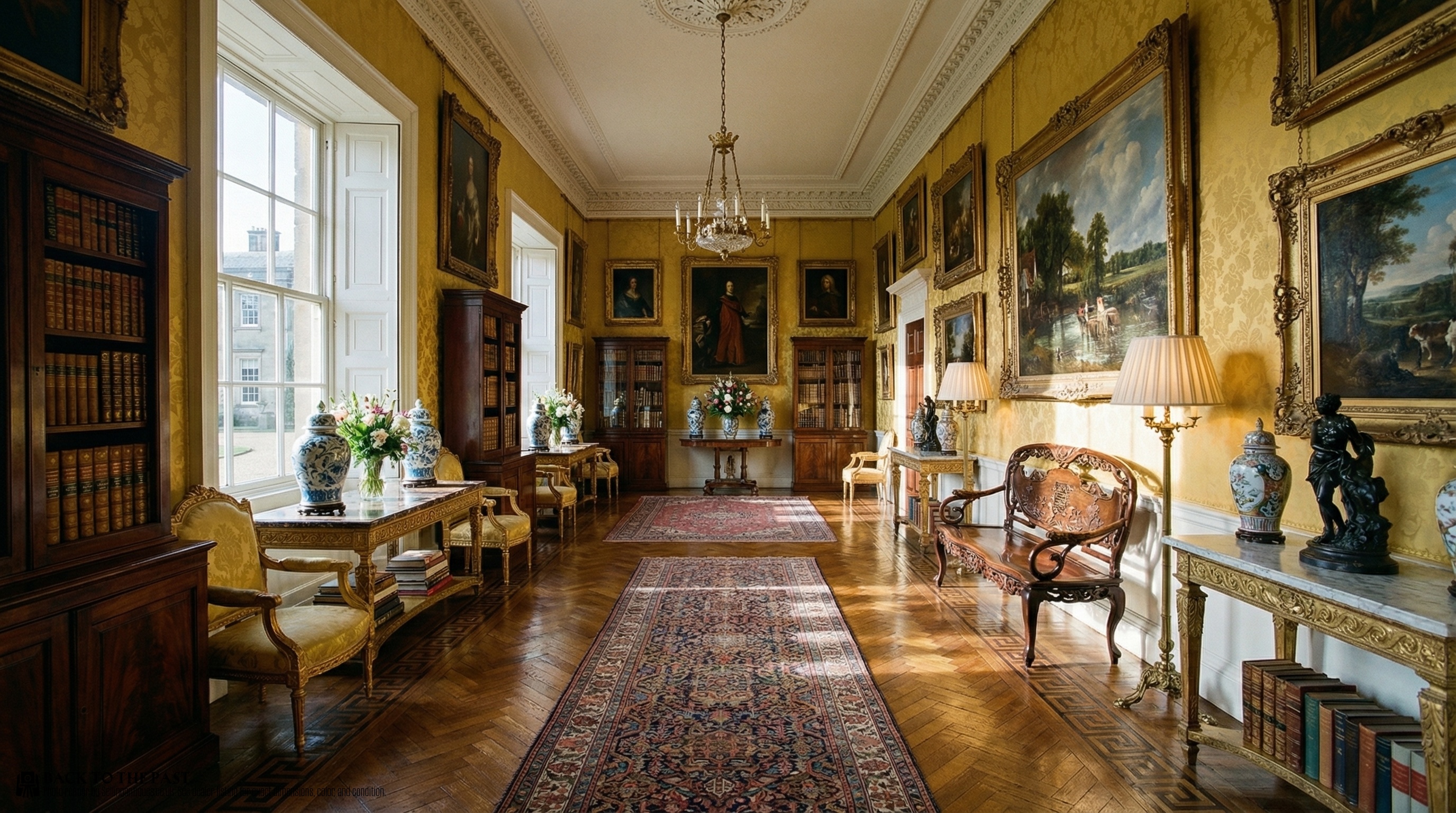
James Shoolbred & Co.·Thonet
The Dark Wood Hall Bench Glossary
- Settle
- A wooden bench with a high back, solid arms, and frequently a box seat beneath the cushion. This traditional form kept draughts away from people sitting near entryways.
- Monks Bench
- A multifunctional furniture piece featuring a hinged back that folds down to convert the seat into a table. These versatile items became popular in various revival styles during the nineteenth and twentieth centuries.
- Window Seat
- A long, narrow bench designed to fit into the recess of a window. They often share similar mahogany or oak frames and upholstery methods with hall benches.
- Box Settle
- A bench incorporating a lidded compartment beneath the seat for storing household goods. The lid also serves as the platform for the seat.
- Jacobean Revival
- A nineteenth century design style copying the heavy, geometric, and dark-finished oak furniture of the seventeenth century. Pieces in this style often feature turned legs and strapwork carving.
Dark Wood Hall Bench: Frequently Asked Questions
What is a dark wood hall bench?
A dark wood hall bench is a heavy wooden seat placed in an entrance hall or corridor, typically constructed from oak or mahogany. These pieces often include built-in storage or high backs.
They serve both a practical function for putting on shoes and a decorative role in furnishing large entrance spaces.
How were antique hall benches used?
Historically, these benches provided seating in drafty hallways while offering hidden storage beneath the seat for blankets or boots. Some convertible variants doubled as tables when needed.
In domestic settings, they functioned as the primary reception furniture for visitors waiting in the entrance.
How do I date a wooden bench?
Dating relies on identifying the primary wood used, construction methods, and stylistic revival periods like Jacobean or Gothic Revival. Tool marks and fastener types also offer clues to the age.
Examining the wear patterns and the depth of hand-carved details helps separate nineteenth century revivals from earlier pieces.