
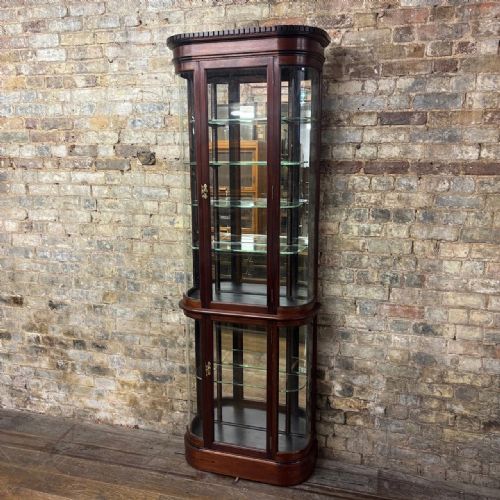
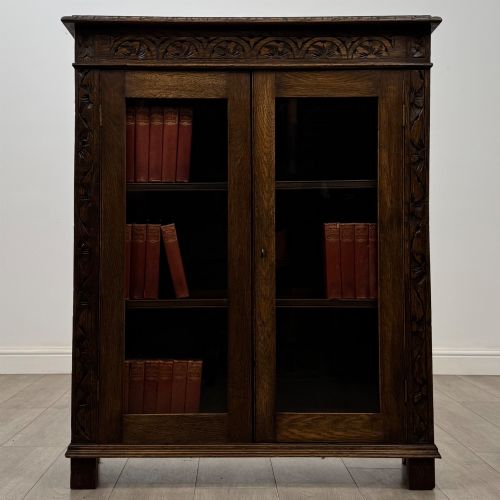
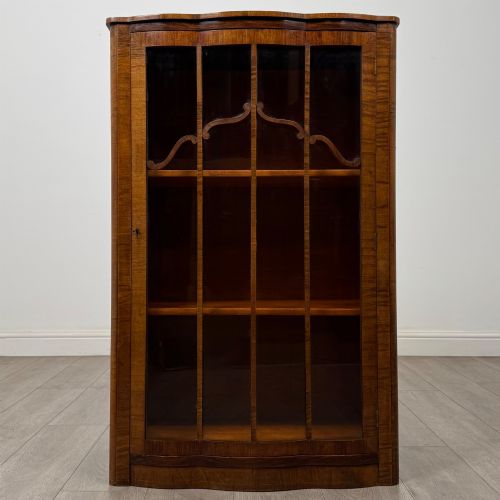
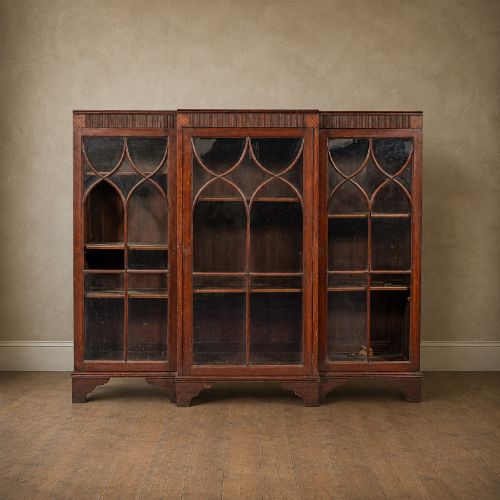
Dark Wood Glazed Vitrine
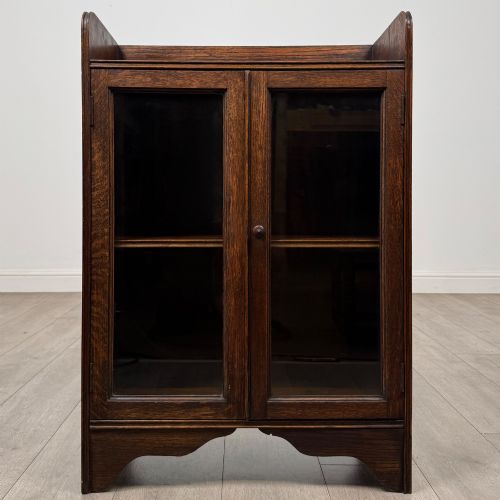
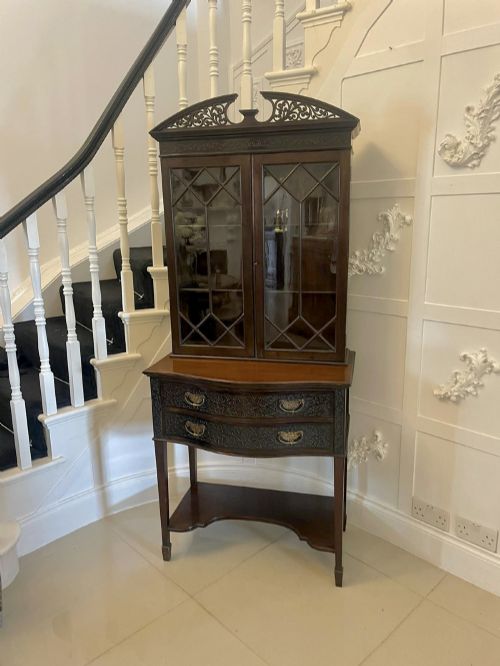
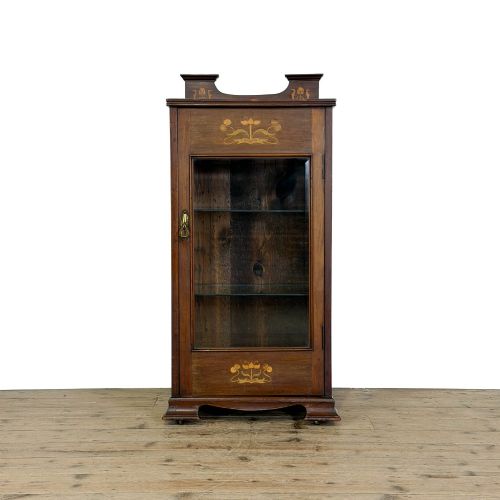
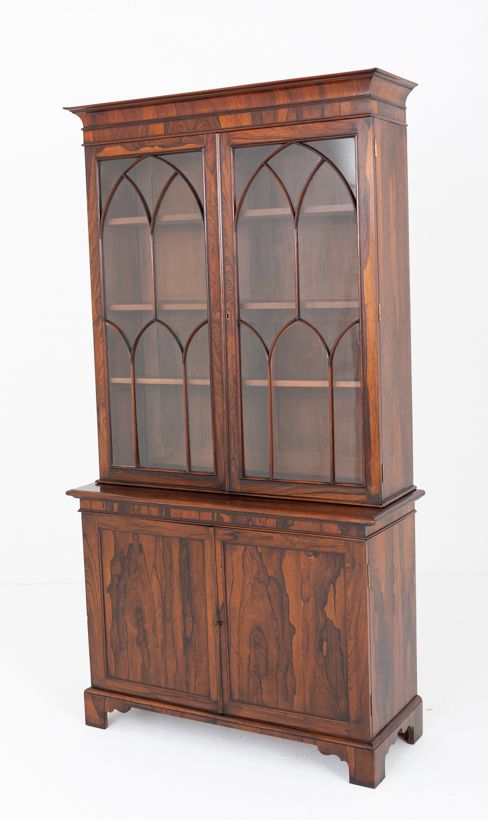
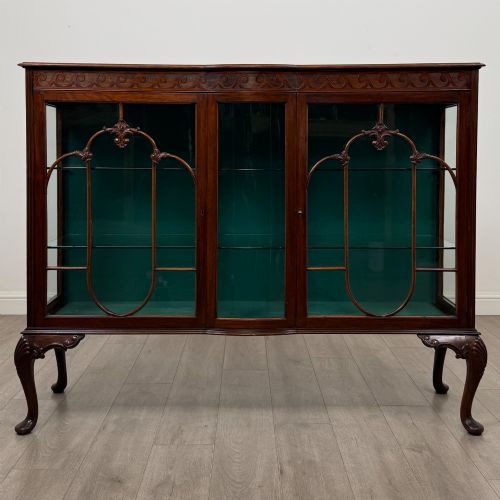
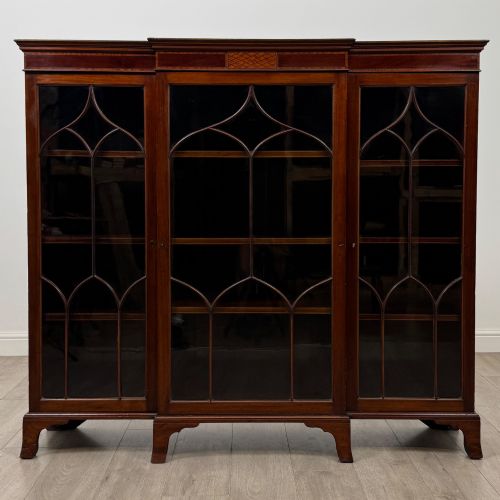
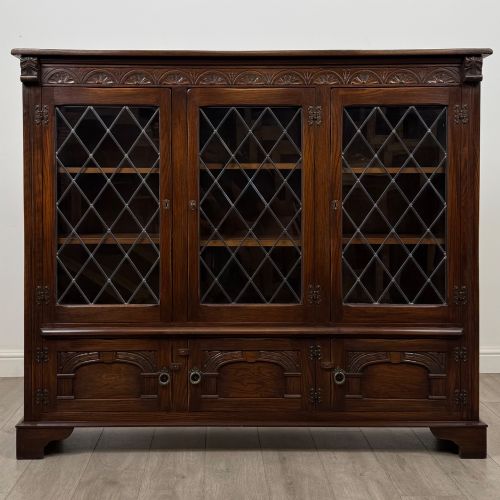
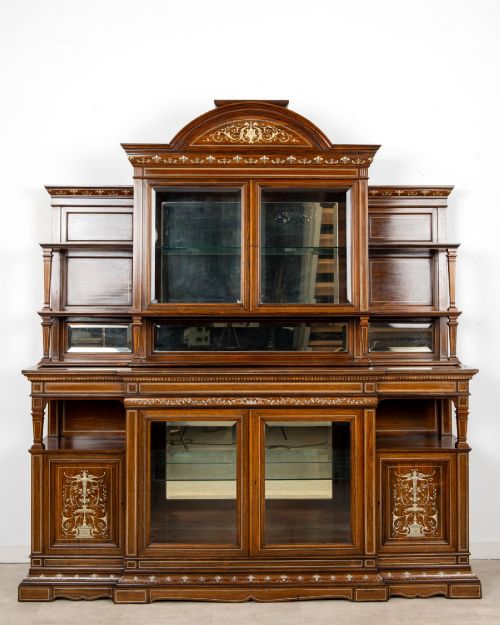
A dark wood glazed vitrine brings together fine timber and clear glass to hold objects for display.
Dark Wood Glazed Vitrine
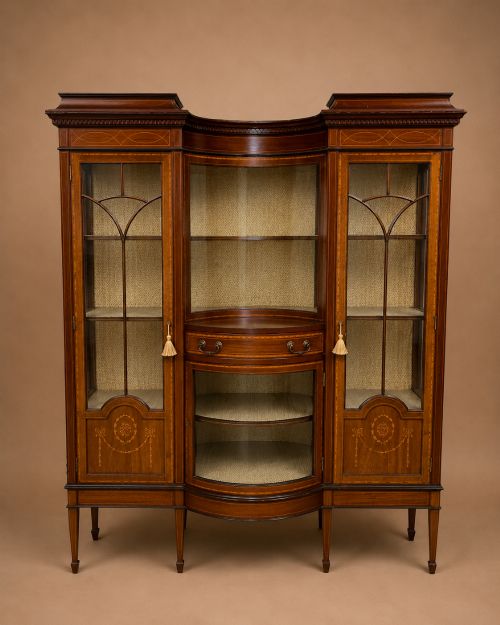
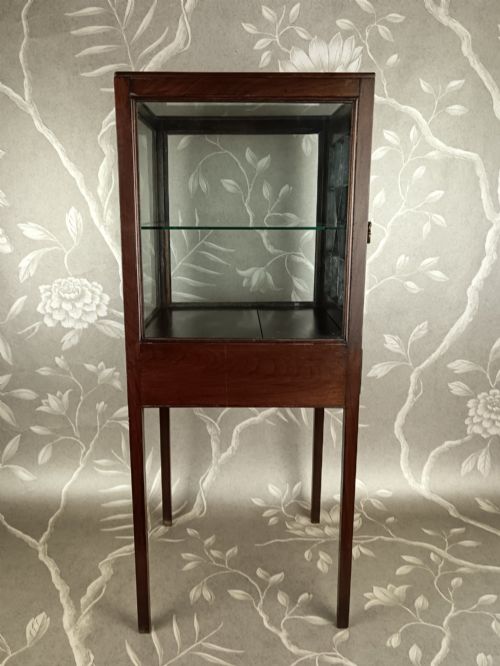
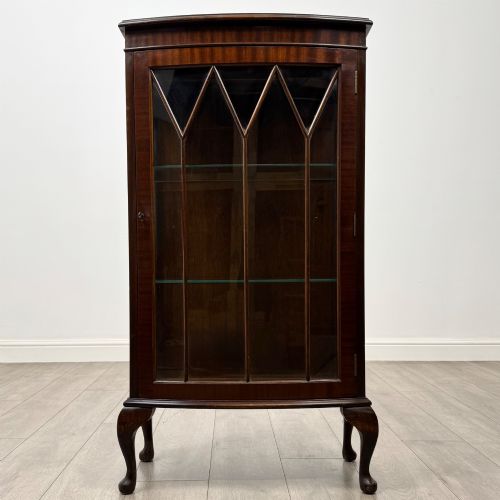
A dark wood glazed vitrine is a cabinet designed for showing off collections while protecting them from dust. These pieces take forms such as display cabinets, bookcases, corner cabinets, and bijouterie tables.
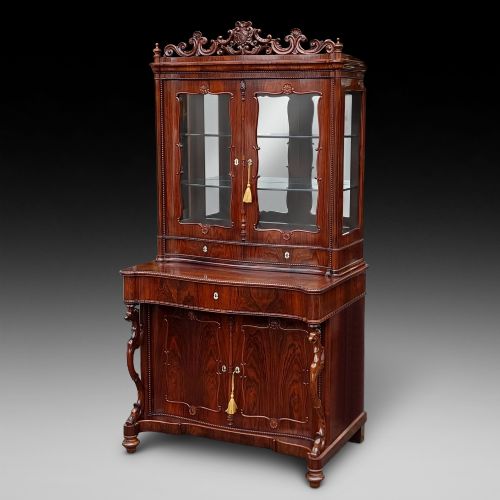
The selection ranges from Georgian and Victorian pieces to Edwardian and Art Deco examples. Mahogany and rosewood predominate, often styled in revival periods like Chippendale and Sheraton.
How they were made
Cabinet makers utilised dense timbers such as mahogany, rosewood, and oak for structural integrity and rich surface colour. These woods were often selected for their fine grain or enhanced with satinwood inlay and mirror backs.
Glass panes were set into timber doors using glazing bars to create windows for viewing the interior. Brass fittings, including hinges and handles, completed the construction alongside fabric linings in certain display sections.
Certain tables feature glass tops specifically for inspecting small treasures without opening a drawer.
What varies in quality
Quality rests in the crispness of carved wooden details and the selection of figured timber veneers. Superior examples display harmonious proportions and careful joinery that aligns doors and glass frames precisely.
Makers known for exceptional production apply refined inlay work and balanced ornamentation, distinguishing standard utility furniture from pieces finished for formal reception rooms.
Jas Shoolbred·Collinson & Lock
The Dark Wood Glazed Vitrine Glossary
- Vitrines
- Glass-fronted cabinets intended for the display of porcelain, silver, and curiosities. They protect contents while offering visibility from multiple angles.
- Bijouterie table
- A glass-topped display table designed specifically for small personal items and jewellery. These pieces often stand on slender legs with glazed compartments.
- Breakfront
- A cabinet design where the central section projects forward from the flanking wings. This architectural arrangement creates depth and visual interest in large bookcases and cabinets.
- Satinwood
- A pale, lustrous timber utilised for contrasting inlay work and banding on darker woods like mahogany. It brings a bright accent to Edwardian and Georgian furniture.
Dark Wood Glazed Vitrine: Frequently Asked Questions
What is a dark wood glazed vitrine used for?
These cabinets serve to display collections of ceramics, glass, books, and small decorative items. The glass doors allow full visibility while keeping dust away from delicate objects.
Many styles include adjustable shelving and mirrored backs to enhance light distribution inside the cabinet. They function as storage and display furniture in drawing rooms and studies.
How do I tell Edwardian cabinets from Victorian ones?
Victorian cabinets often feature heavier carved mahogany or rosewood structures with ornate details and deep colour tones. Edwardian pieces tend to present lighter proportions, frequently incorporating satinwood inlay and Sheraton revival influences.
Examination of the interior timber and construction methods also helps distinguish the earlier 19th-century examples from the later 20th-century revivals.
Where should I place a corner cabinet?
Corner cabinets fit directly into the angle of a room, making efficient use of space that might otherwise remain empty. They suit dining rooms and hallways where floor space is limited.
Floor-standing corner units provide stability and tall display capacity without projecting far into the main living area.
What timber types will I find?
The selection relies heavily on mahogany, rosewood, and oak as the primary structural woods. Figured walnut and satinwood also appear in veneers and decorative banding.
Glass, brass, and mirrored glass accompany these timbers to complete the construction of the display sections.