


Mahogany Gothic Cupboard
A mahogany gothic cupboard combines deep timber tones with pointed arch details, offering serious presence and practical storage for books and display.
Mahogany Gothic Cupboard
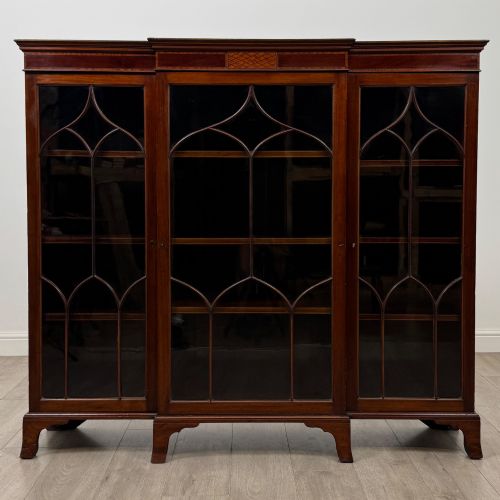
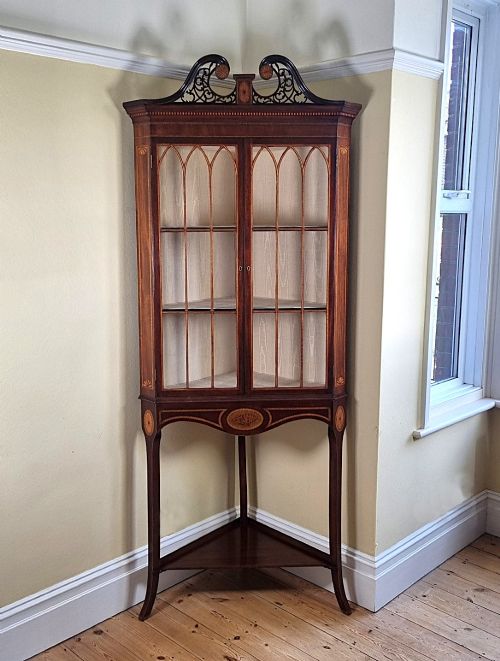
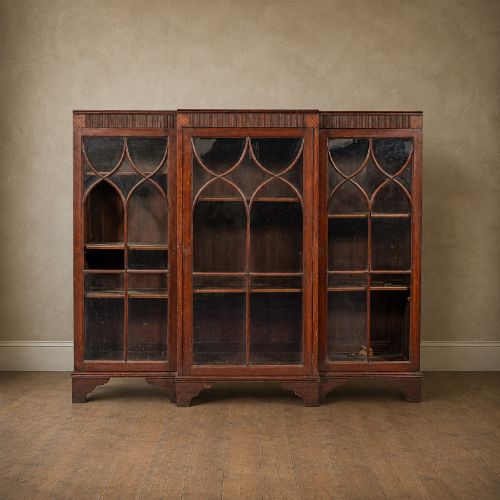
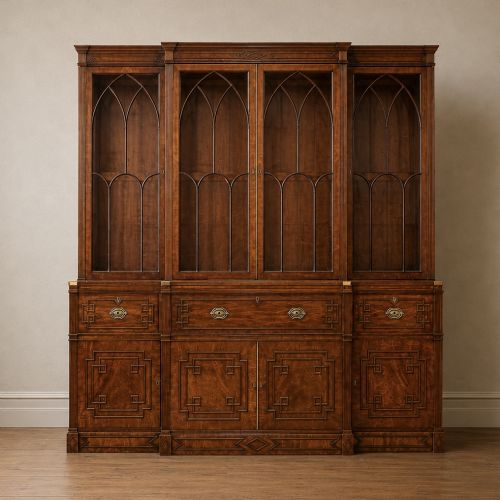
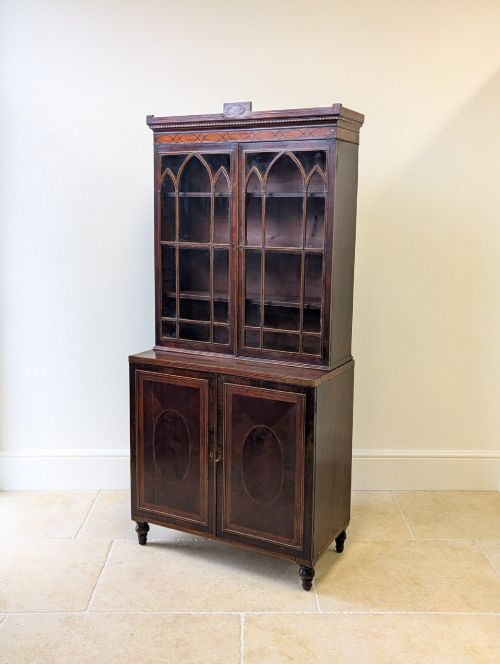
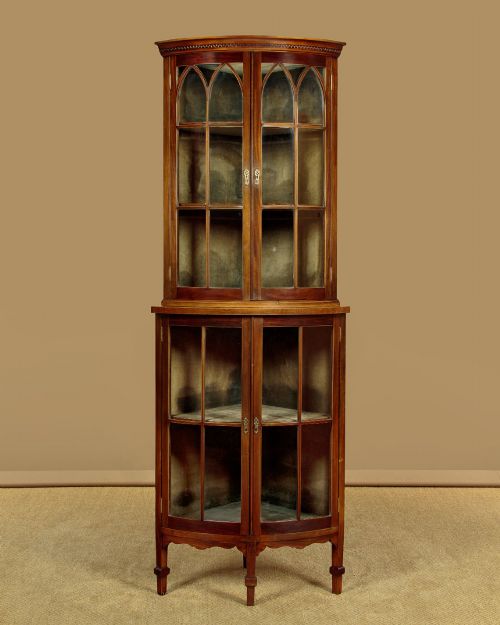
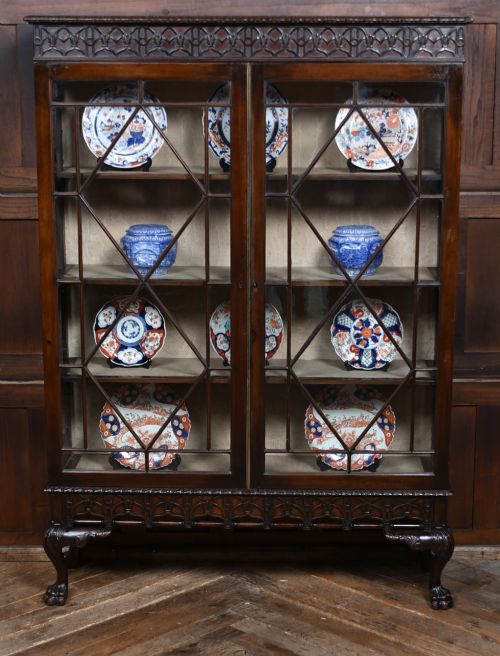
A mahogany gothic cupboard brings together rich timber and pointed arch motifs, spanning forms like tall breakfront bookcases, glazed display cabinets, and corner units. These pieces emerge across Georgian, Regency, Victorian, and Edwardian periods, reflecting revivals of medieval architecture applied to domestic storage.
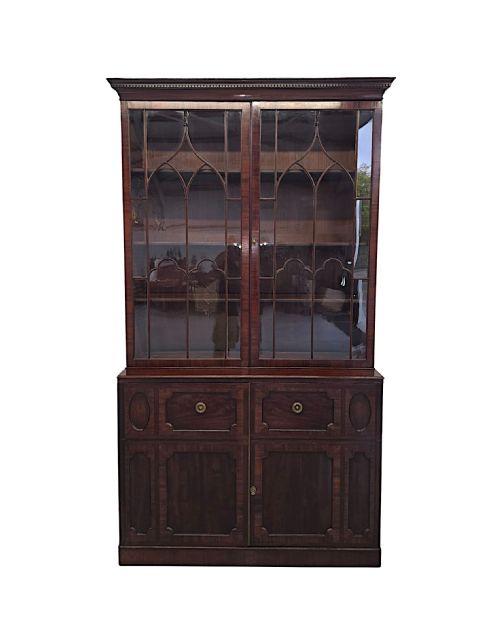
You will most frequently encounter large breakfront bookcases and corner cabinets fitted with glass doors, alongside wardrobe bases and library cupboards. The construction ranges from architectural breakfronts down to compact wall-hung or standing corner cupboards.
Makers and workshops adapted Gothic tracery for domestic interiors, employing arched glazing bars and carved panels. These forms served to house books, china, and curated collections in libraries and drawing rooms.
How they were made
Cabinet makers relied primarily on solid mahogany and flame mahogany veneers, often enhanced with satinwood inlay and brass hardware. Glass panels were integrated into doors to showcase collections while protecting contents from dust.
Surface decoration frequently utilised figured mahogany grains and fine marquetry, paired with fabric-lined interiors in display pieces. Construction techniques focused on architectural proportion, housing substantial glazed upper sections on sturdy cupboard bases.
Listings feature pieces spanning the Georgian, Regency, Victorian, and Edwardian periods, utilising mahogany, flame mahogany veneer, brass, and glass.
What varies in quality
Quality rests in the precision of the Gothic detailing, from the crispness of the arched wooden tracery in the glazing bars to the depth of the mahogany grain. Pieces featuring symmetrical flame mahogany veneers and balanced proportions command greater attention.
Internal joinery, the selection of secondary timbers, and the integration of fine brass mounts distinguish standard workshop production from exceptional library furniture. The execution of classical revival elements alongside Gothic arches marks the distinction between ordinary and ambitious cabinet work.
Jas Shoolbred·Gillows
The Mahogany Gothic Cupboard Glossary
- Breakfront
- A piece of furniture where the central section projects forward from the two side sections. This architectural layout creates depth and shadow across large bookcases and cupboards.
- Glazing bars
- The narrow strips of wood that hold individual panes of glass within a door or window. In Gothic pieces, these often form pointed arches or lancet shapes.
- Flame mahogany
- A distinct wood veneer cut from branches or forks of the mahogany tree, showing a flamy, rolling pattern. It was prized for principal door panels and drawer fronts.
- Marquetry
- The art of applying decorative pieces of veneer to a structure to form intricate designs. Edwardian and Georgian examples often incorporate contrasting light woods.
Mahogany Gothic Cupboard: Frequently Asked Questions
How do I date a mahogany gothic cupboard?
Dating relies on observing structural characteristics, hardware, and stylistic revivals present in the timber and glazing. Pieces spanning the Georgian era into the Edwardian period show shifts in proportion and inlay work.
Architectural details like pointed arches align with specific revival movements from the early nineteenth century onward. Comparing timber finishes and secondary woods helps confirm the era of manufacture.
Where should I place a breakfront bookcase?
These large library pieces require substantial wall space and benefit from rooms with adequate ceiling height to balance their architectural presence. Positioning them away from direct sunlight protects the mahogany finish and internal fabric.
Display variations work well in studies, drawing rooms, or dining spaces where books and collections are visible. Ensure floor levels are stable since large breakfronts require solid foundations to keep doors aligned.
How do I care for antique mahogany furniture?
Maintaining mahogany involves keeping pieces away from sudden temperature shifts and direct heat sources that cause timber to dry and split. Regular dusting with a soft, dry cloth preserves the finish.
Avoid silicone-based polishes and apply traditional wax sparingly when the surface appears dry. Stable indoor humidity protects both the solid timber and delicate veneer work.