
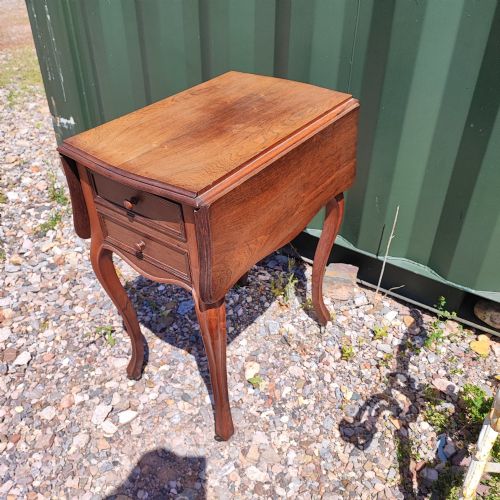
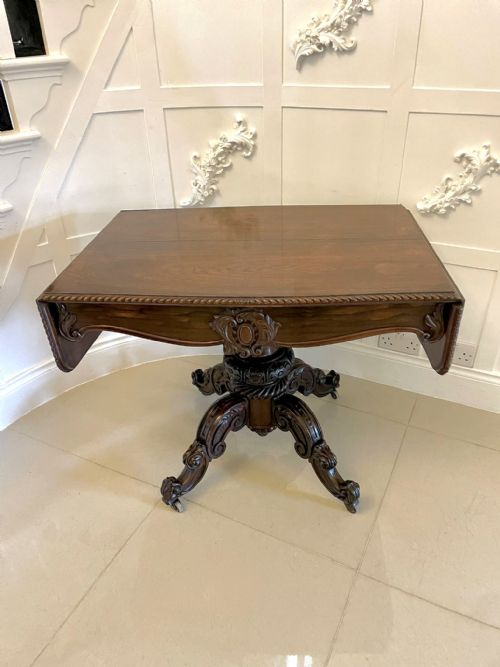

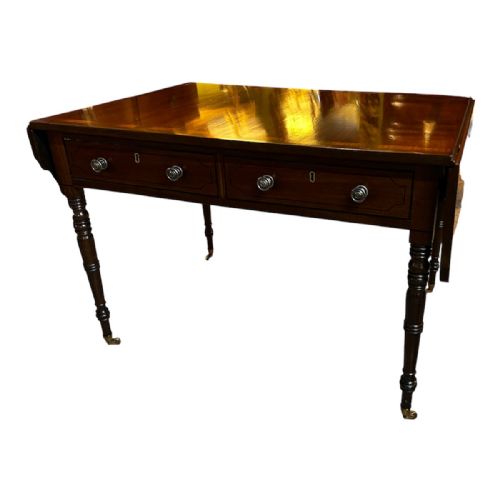


Dark Rosewood Drop Leaf Table
These dark rosewood drop leaf table examples bring rich timber and folding leaves together across Regency and Victorian rooms.
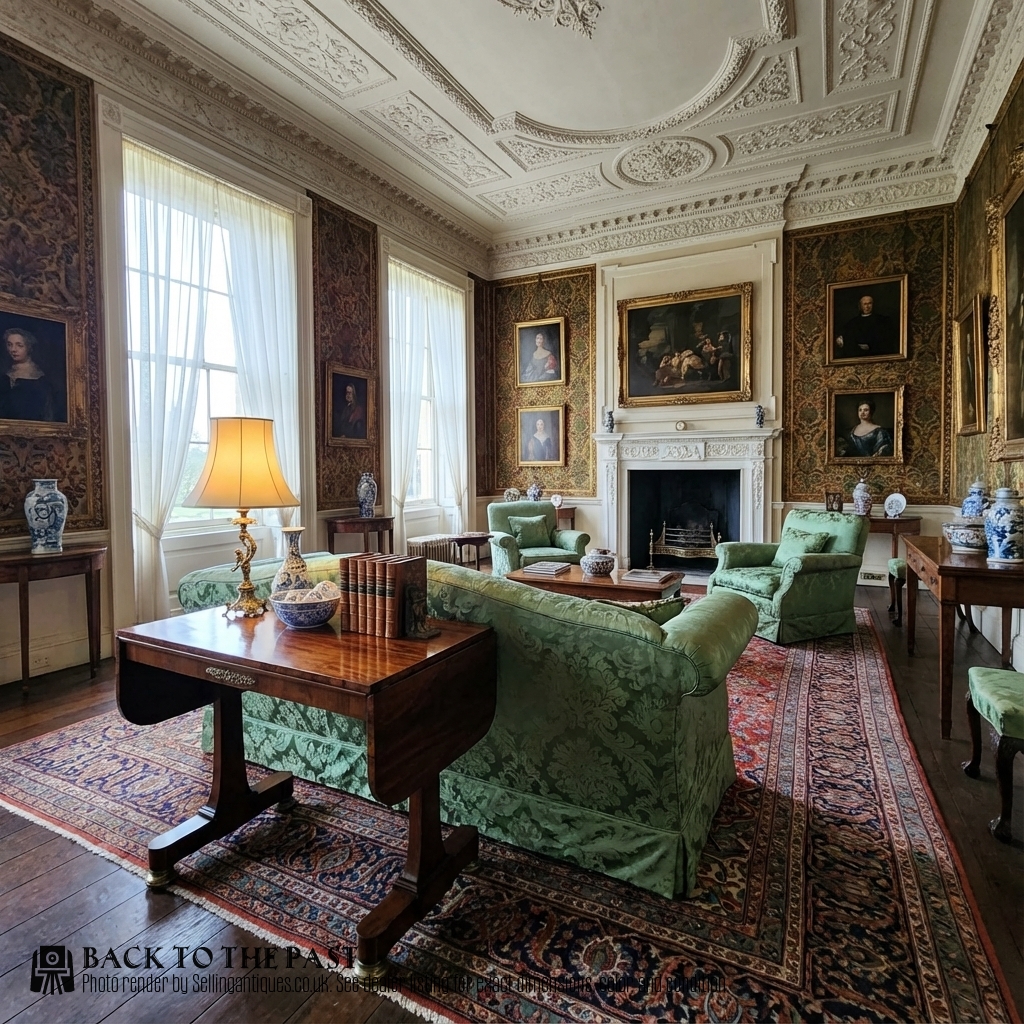
Dark Rosewood Drop Leaf Table
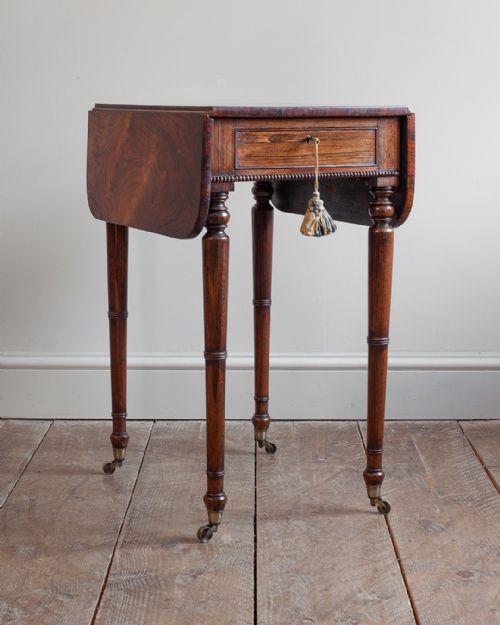
A dark rosewood drop leaf table brings functional folding leaves and dense timber grain into domestic interiors, frequently appearing in forms designed for specific rooms and daily use. Buyers exploring this category encounter a range of nineteenth-century formats intended for social or private spaces, from compact sewing pieces to extended sofa tables.
The pieces listed on this page span the Regency, Victorian, and Edwardian eras, displaying styles such as William IV and Georgian alongside regional English and Scottish variations. The most frequent forms include sofa tables, occasional tables, and work tables designed with hinged flaps that expand the surface area when needed.
Makers and workshops constructed these tables to serve as Pembroke pieces, games tables, or bedside stands, utilising the deep reddish-brown tones characteristic of seasoned rosewood. Surviving examples demonstrate how nineteenth-century cabinet makers adapted folding flaps for drawing rooms, parlours, and libraries.
How They Were Made
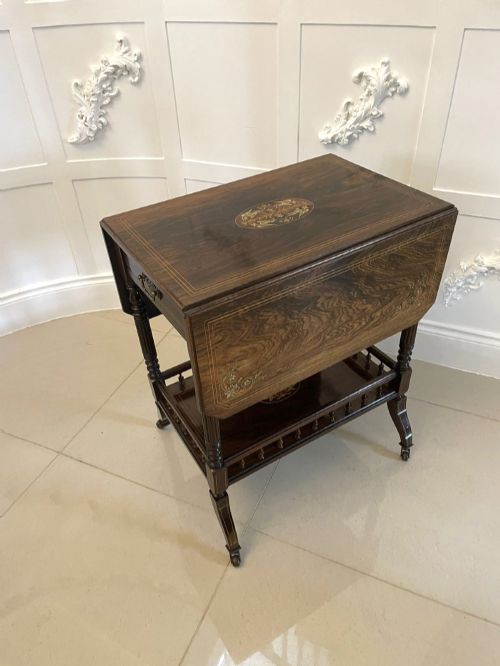
Cabinet makers constructed these tables using solid rosewood and supportive secondary timbers like mahogany, applying crossbanding and decorative veneers to display the dense grain. Workshops often incorporated brass mounts, gilt brass inlay, and boxwood stringing to highlight the edges of the leaves and drawers.
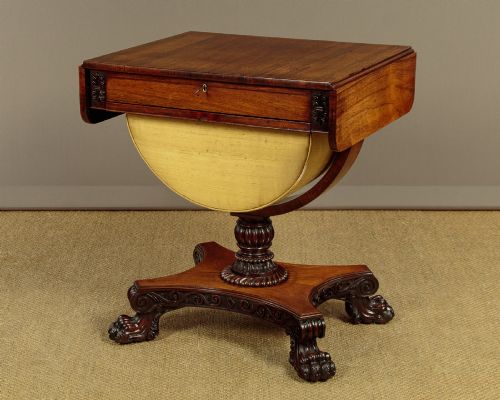
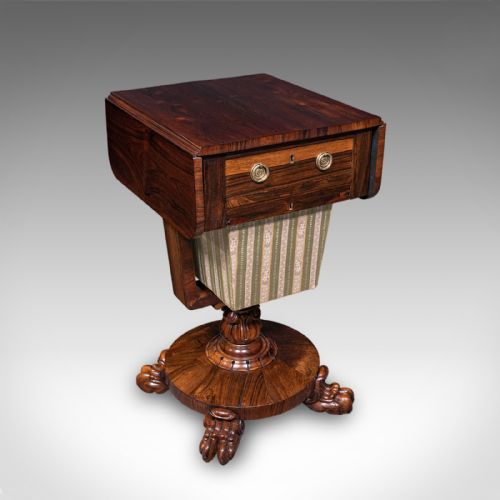
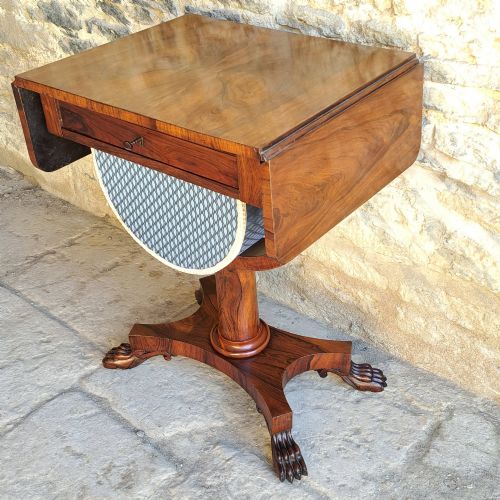
The drop leaves operate on hinged brackets or swing legs designed to support the extending flaps securely when raised. Interior components of work and sewing tables frequently feature fitted compartments lined with fabric or silk.
Object types span sofa tables, side tables, occasional tables, sewing tables, bedside tables, games tables, and desks.
What Varies in Quality
Quality in a dark rosewood drop leaf table rests upon the crispness of the brass inlay, the precision of the hinge mechanisms, and the depth of the timber's natural grain. Superior examples display careful book-matching on the top surfaces and robust underframes that support the folding leaves without sagging.
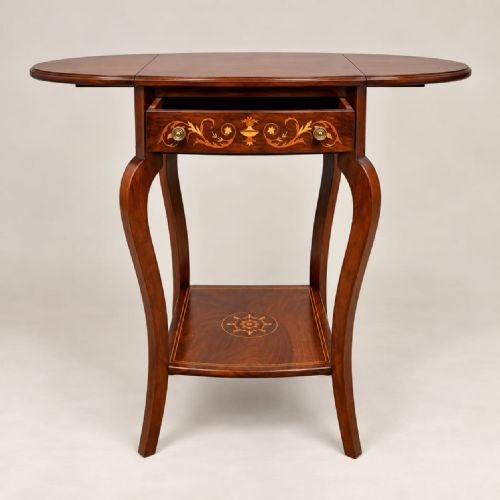
Finer pieces incorporate thoughtful details such as working drawers with original brass fittings, finely turned pedestals, and well-executed crossbanding in contrasting woods like satinwood. Lesser examples rely on plain surfaces with simpler joinery, reflecting utility rather than high-style cabinet making.
James Mein Kelso·Gillow
The Dark Rosewood Drop Leaf Table Glossary
- Drop leaf
- A table with hinged flaps on either side that fold down to save space or lift up to extend the surface. These flaps are supported by swing legs or folding brackets.
- Sofa table
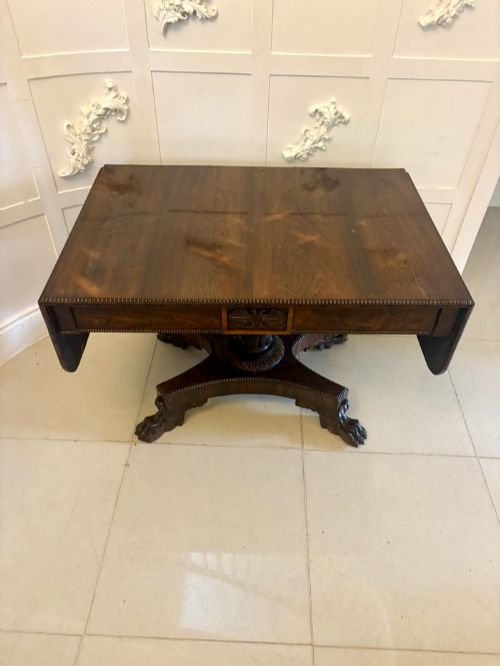
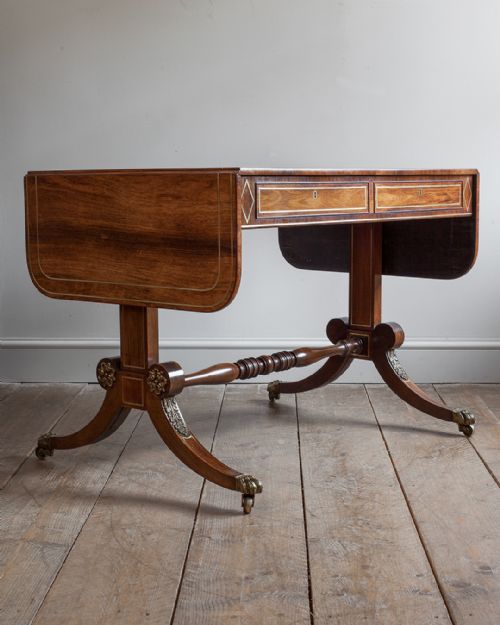
- A rectangular piece originally designed to stand in front of a sofa, featuring two drop leaves and often twin pedestal supports. They typically include small drawers beneath the top.
- Crossbanding
- A border technique where thin strips of veneer are laid around the perimeter of a tabletop so the grain runs perpendicular to the central panel. This adds a decorative frame to the timber.
- Pembroke table
- A small form with two folding leaves on opposite sides and a single drawer, popular from the eighteenth century onwards for occasional writing or breakfast use.
- Sutherland table
- A narrow drop leaf variant with exceptionally slender folding flaps that drop down almost vertically beside a central gated frame.
Dark Rosewood Drop Leaf Table: Frequently Asked Questions
How do I identify Regency rosewood?
Regency rosewood displays a deep, dark reddish-brown hue with distinctive dark grain markings and a heavy, dense weight. Makers during this period often paired the dark timber with brass inlay or gilt mounts.
Pieces from the early nineteenth century frequently show crisper carving and more formal classical proportions than later Victorian versions. The quality of the timber preparation and secondary woods helps confirm the period.
Were these tables used for sewing?
Many drop leaf examples served as work tables or sewing tables, equipped with internal compartments and hanging fabric bags for textiles. Ladies utilised these for needlework, thread storage, and small crafts in the parlour.
These pieces often combine the folding leaf mechanism with fitted drawers and writing surfaces. They functioned as versatile multi-use furniture for private domestic spaces.
Where should I place a sofa table?
A sofa table traditionally stands behind a sofa or free in the room as a centre table, taking advantage of finished timber on all sides. The drop leaves can remain down in narrow spaces or lift up when surface area is required.
In modern rooms, they work well as hall tables, writing desks, or lamp tables behind seating arrangements. Their finished backs and compact depths make them suitable for central room placement.