



Brass Mounted Rosewood Table
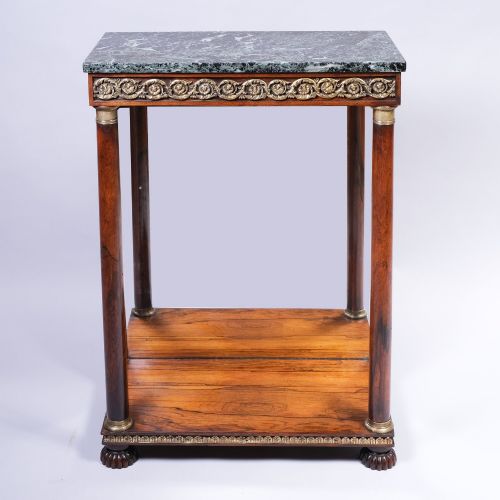
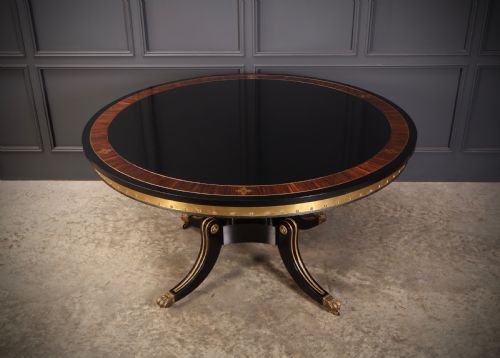
A brass mounted rosewood table brings together figured tropical timber and polished metalwork to anchor a formal interior.
Brass Mounted Rosewood Table
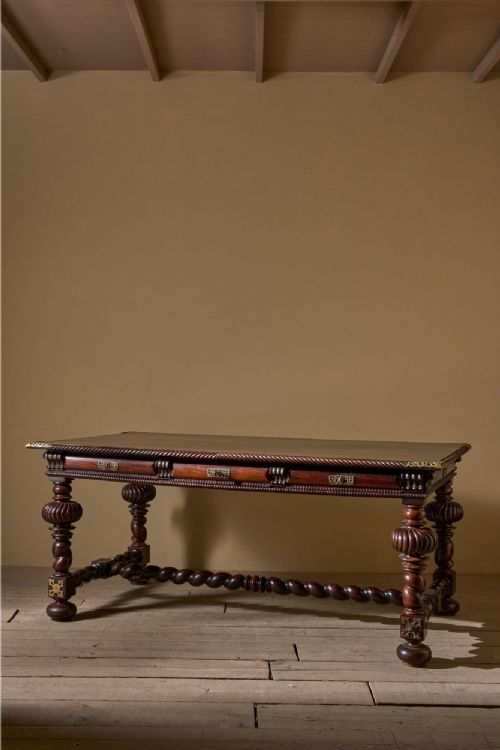
A brass mounted rosewood table covers a range of formal domestic furniture from the Regency and Victorian eras, alongside continental revivals. The listings here lean heavily towards the Regency period and the nineteenth century, encompassing sofa tables, writing desks, card tables, and occasional pieces.
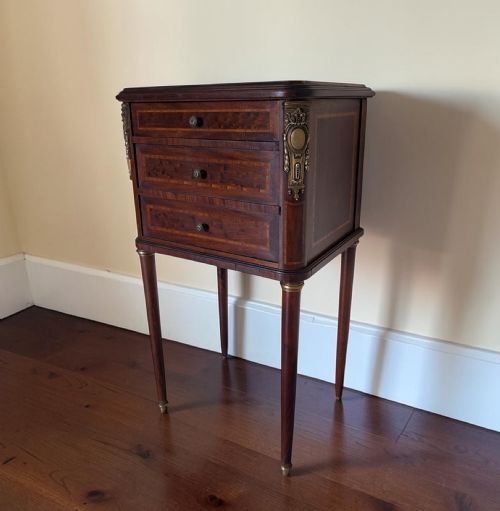
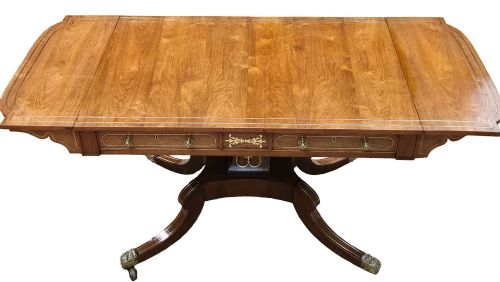
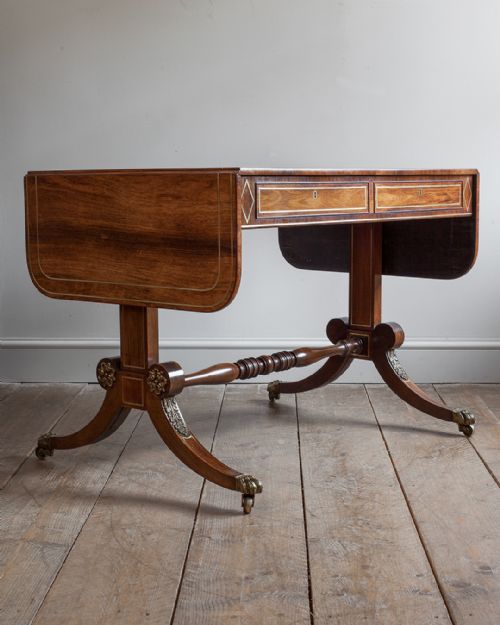
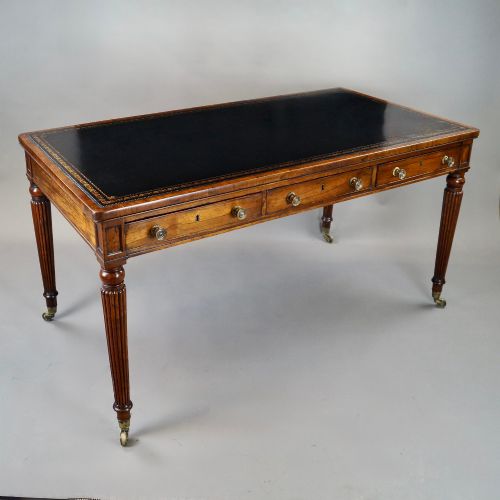
Sofa tables and writing tables dominate the selection, often taking a rectangular format with drop leaves or fitted drawers. Centre tables and card tables also appear frequently, alongside French occasional tables influenced by Louis XV and Louis XVI styles.
Origins stretch between English workshops and French cabinet makers, drawing on periods such as the Regency, the Victorian era, and Napoleon III. The pieces serve as functional desks, display surfaces, and centrepieces for reception rooms.
Materials and technique
Makers utilised dense rosewood veneers laid over secondary timbers to exploit the rich grain patterns of the wood. Brass inlay, ormolu mounts, and gilt brass details were applied to edges, legs, and friezes to accent the dark timber.
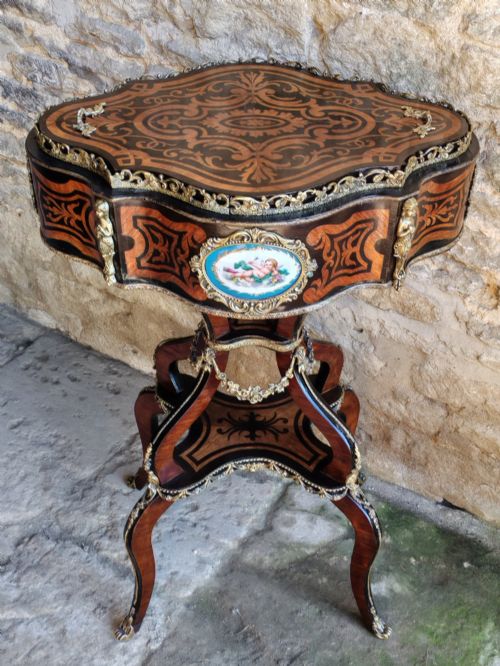
Marquetry and parquetry techniques introduced contrasting timbers such as satinwood, kingwood, and lemon wood into patterned surfaces. Ormolu cast bronze mounts provided structural ornamentation, particularly on French revival pieces from the mid to late nineteenth century.
Listings span the Regency, Victorian, and Edwardian eras, utilising rosewood, mahogany, walnut, and kingwood alongside brass and ormolu.
Craftsmanship and distinction
Quality rests in the depth of figure within the rosewood veneer and the precision of the brass inlay or ormolu mounts. Finer examples show seamless integration of metalwork into the timber without gaps or uneven edges.
Proportion and structural balance separate standard production from superior cabinet work, particularly in pedestal bases and leg mounts. The crispness of chased ormolu and the complexity of marquetry patterns indicate the workshop standard.
Barber and North·Donald Ross·John MaClean·Gillows
The Brass Mounted Rosewood Table Glossary
- Ormolu
- Gilded bronze mounts applied to furniture for decoration. This technique was widely used in French and English cabinet making during the nineteenth century.
- Sofa table
- A rectangular table designed to stand in front of a sofa, typically featuring drop leaves and two drawers. These tables often possess trestle supports or pillar pedestals.
- Card table
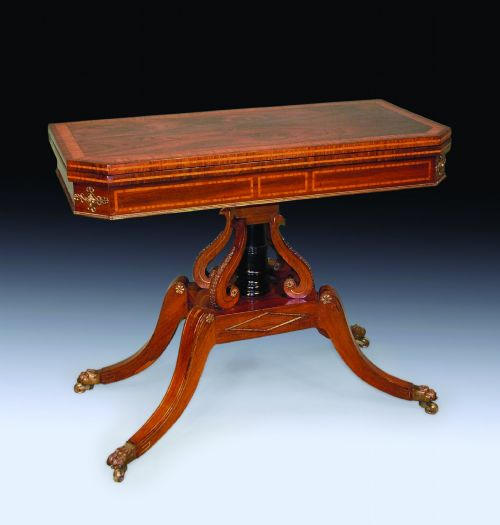
- A fold-over table designed for gaming, lined with baize or leather on the interior surface. Many examples from the Regency period utilise a swivel top supported on a pillar base.
- Marquetry
- Inlaid patterns formed from different coloured woods applied to a carcass. This technique creates pictorial or geometric designs across tabletops and friezes.
- Bonheur du jour
- A small lady's writing desk featuring a cabinet or pigeonholes on the upper surface. These pieces gained popularity during the eighteenth century and remained in production through the nineteenth century.
Brass Mounted Rosewood Table: Frequently Asked Questions
What is a brass mounted rosewood table?
These pieces are nineteenth-century tables built from tropical rosewood and decorated with brass stringing, inlays, or cast mounts. They served functional roles in homes as writing desks, card tables, or central display surfaces.
Cabinet makers utilised the deep reddish-brown grain of rosewood to create striking furniture for formal rooms. The addition of brass provided contrast and defined the structural lines of the tables.
How were these tables used originally?
Sofa tables were placed in drawing rooms, often behind seating, to hold lamps or writing materials. Card tables remained folded against walls until needed for evening games.
Writing tables and bureau de dame forms provided dedicated spaces for correspondence. Centre tables stood in the middle of reception rooms to display decorative objects or clocks.
How do I care for rosewood and brass?
Keep these pieces away from direct sunlight and heat sources to prevent the timber from drying out or splitting. Dust the surface regularly with a soft, dry cloth.
Avoid using harsh chemical polishes on the brass mounts or ormolu. Natural wax applied sparingly will maintain the lustre of the rosewood veneer.
How can I tell Regency from Victorian pieces?
Regency tables generally date from the early nineteenth century and feature classical restraint, clean lines, and architectural brass inlay. The timbers selected for this period often display strong contrast and rich grain figures. Ninteenth-century Victorian and later revival pieces often incorporate heavier ornamentation, such as French-influenced ormolu mounts and complex marquetry. Proportions became more robust as cabinet-making techniques evolved through the century.