


Dark Red Tribal Textile
These pieces known as dark red tribal textile examples bring rich wool work and striking regional motifs straight from nineteenth- and early twentieth-century nomadic weavers into modern rooms.
Dark Red Tribal Textile
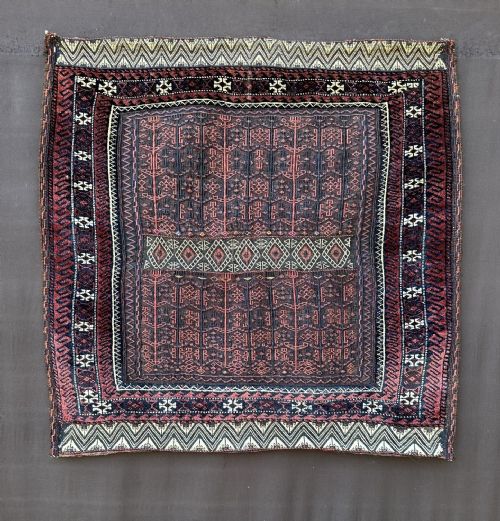
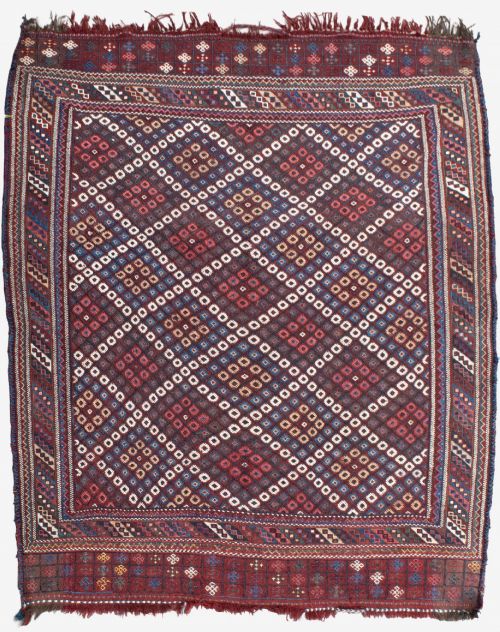
A dark red tribal textile is a hand-woven creation made by nomadic and village groups across Central Asia, Persia, and Afghanistan during the nineteenth and early twentieth centuries. When searching for a dark red tribal textile, buyers encounter diverse forms including rugs, torba faces, storage bags, animal trappings, and wall hangings. These items reflect the specific heritage of groups such as the Turkmen, Baluch, Afshar, and Qashqa'i.
The objects on this page centre heavily on functional pieces made for daily nomadic life, such as bread sofreh, grain bags, and saddle-bag faces. Many items retain structural elements like hanging loops, tassels, or complete plain-weave backs. Their primary purpose was domestic utility and transport, shaped by the practical needs of tribal communities.
Materials and construction
Weavers relied on wool as the foundational material for pile and flat-weave surfaces, paired with cotton in specific structures. Natural dyes provided the dominant dark red palette characteristic of these pieces, alongside secondary tones. The construction combines knotting and flat-weave techniques executed on portable tribal looms.
Individual structures range from fine weaves with high knot densities to robust utility bags with plain-weave backs. Specific tribal workshops utilised distinct design layouts, such as repeating guls, lattice patterns, and ikat motifs. Artisans finished edges and added hanging loops or tassels by hand.
Listings span production dates from eighteen-fifty through nineteen-twenty, utilising wool, cotton, and natural dyes across seven distinct tribal styles.
Variations in quality
Quality rests upon the precision of the weave and the depth of the natural dyes. Pieces with very fine weaves and crisp tribal designs demonstrate superior artisan skill compared to coarser examples. The retention of original backs, tassels, and hanging loops elevates the integrity of a textile.
The strength and vibrancy of the dark red colouration indicate the quality of the dye work. Well-preserved structures with complete borders and minimal structural loss represent the upper tier of surviving items.
The Dark Red Tribal Textile Glossary
- Sofreh
- A flat-woven cloth used for dining, food preparation, or handling bread within nomadic households. These textiles often feature geometric field patterns.
- Torba
- A small storage bag or bag face traditionally used inside a tent for household possessions. They frequently display characteristic tribal guls along the main field.
- Gul
- A primary medallion or repeating motif used in Turkmen and other Central Asian rug designs. Each pattern typically identifies a specific tribe or sub-group.
- Chuval
- A large tent-storage bag produced by nomadic weavers. These items often feature multiple rows of guls across the face.
- Asmalyk
- A large pentagonal trapping hung on the flanks of a camel during wedding processions. These decorative pieces frequently incorporate full pile work and tassels.
Dark Red Tribal Textile: Frequently Asked Questions
What is a tribal sofreh used for?
Nomadic families utilised a sofreh as a cloth for rolling bread dough and serving communal meals on the ground. These flat-woven textiles protected food from dirt inside felt tents.
Today, collectors often display smaller examples as wall hangings or table runners to highlight their geometric patterns.
How do I identify a Turkmen torba?
A torba is a small rectangular storage bag face characterised by repeating tribal medallions known as guls. They were traditionally hung against the interior lattice walls of a yurt.
Examining the specific design of the guls and the surrounding border motifs helps distinguish pieces made by Tekke, Yomut, or Ersari weavers.
Can I hang these textiles on a wall?
Many smaller pieces, such as torba faces and saddle-bag fronts, lend themselves well to wall mounting. Their durable wool construction and compact dimensions suit vertical display.
Using a professional sleeve or non-invasive mounting method protects the structure of the vintage textile over time.