
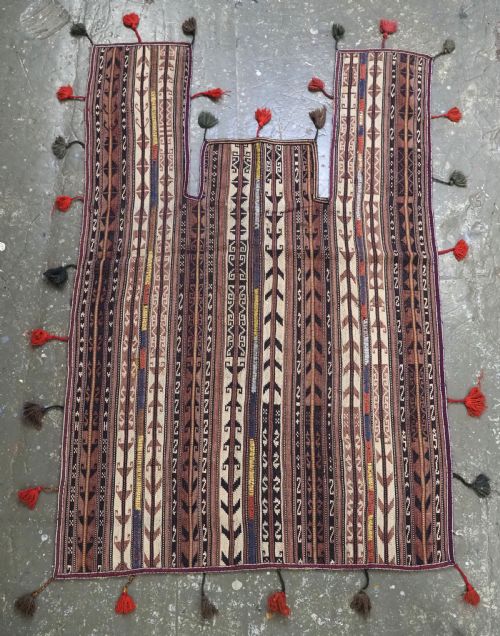
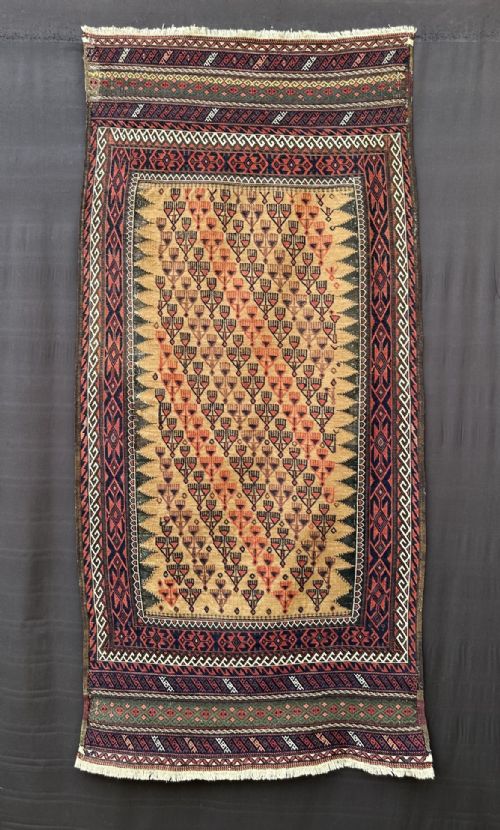
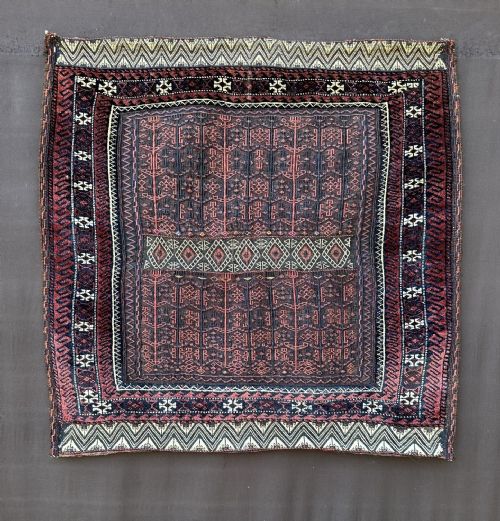


Afghan Flatweave Rug
An afghan flatweave rug brings tribal utility into the home, prized for geometric designs and rich textile traditions.
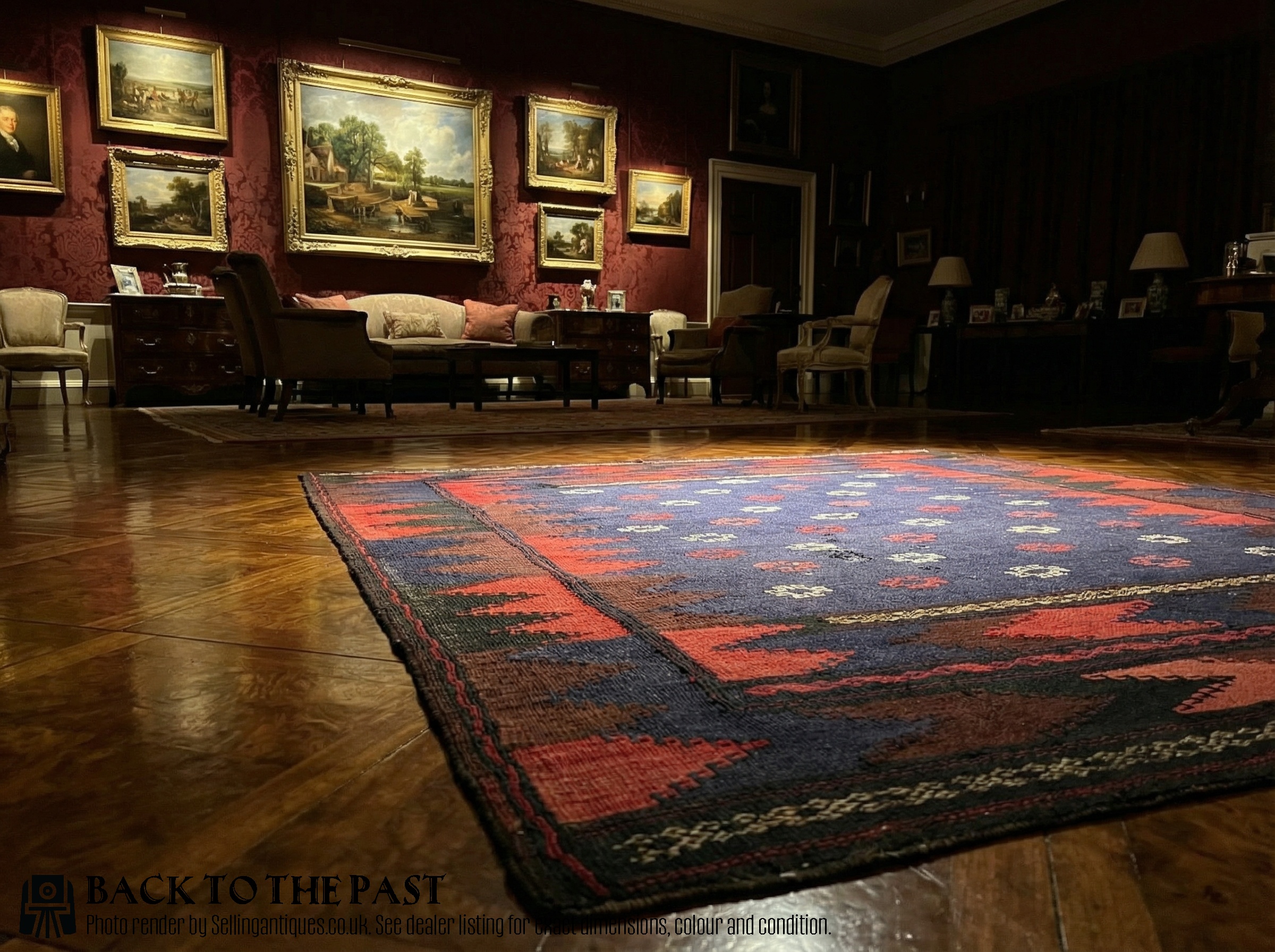
Afghan Flatweave Rug
An afghan flatweave rug encompasses diverse tribal textiles, including kilims, sofres, and prayer rugs created by nomadic groups across the region. You will frequently encounter nineteenth-century and early twentieth-century examples shaped by Baluch, Timuri, and Firozkohi makers.
Tribal styles dominate the listings, showing distinct regional aesthetics from the borderlands of Persia and Afghanistan. Pieces are often woven in two separate parts and joined together to achieve larger formats.
Materials and construction
Weavers utilised hand-spun wool, cotton, camel wool, and goat hair to build durable structures without pile. Natural dyes provide the underlying palette, showing up in bands of weftwork decoration and chevron designs.
Several pieces incorporate mixed techniques, pairing flatweaving with embroidery or additional weft-wrap methods. Nomadic workshops constructed these textiles on portable looms, often producing narrow panels that required careful stitching down the centre.
Several pieces double as dining cloths, meaning your rug may have once held nomadic bread and tea.
What separates examples
Quality rests in the tightness of the weave, the clarity of the tribal motifs, and the depth of the natural dyes. Fineness of hand-spun wool and the complexity of bands of weftwork elevate certain examples above standard utility pieces.
The integrity of the two-part joins and the survival of original edge finishes dictate the structural success of larger kilims and sofres. Examples retaining their full length and uncompromised nomadic materials represent the high watermark of the craft.
The Afghan Flatweave Rug Glossary
- Sofreh
- A ceremonial or dining cloth used for serving food or gathering bread in nomadic households. These textiles often feature specialised tribal iconography.
- Kilim
- A flat-weave carpet or covering produced without a pile by tightly interlacing warp and weft threads. This technique creates a lightweight, reversible textile.
- Weftwork
- Decorative supplementary threads woven horizontally across the warp to create geometric patterns and bands of colour. It adds structural texture to flatweaves.
- Baluch tribal
- A designation for rugs and textiles associated with nomadic groups originating from the borderlands of Afghanistan and Persia. Their work is known for dark palettes and geometric precision.
Afghan Flatweave Rug: Frequently Asked Questions
How were these rugs used originally?
Nomadic families utilised these flatweaves as dining cloths, bread covers, horse blankets, and storage bags for salt. They formed essential items for daily domestic life rather than purely decorative floor coverings.
Over time, these utilitarian textiles adapted to various household functions across the Afghan borderlands, combining practical durability with tribal artistry.
How do I care for an antique flatweave?
Protect the wool and natural dyes by keeping the textile out of direct, harsh sunlight and using a breathable underlay. Gentle vacuuming without a rotating brush roll helps remove embedded dust.
Professional textile cleaners experienced in nomadic woolwork should handle any necessary washing to preserve the historical fibres and structure.
Why are some rugs woven in two parts?
Nomadic weavers used portable looms constrained by tent dimensions, making it necessary to weave textiles in two narrow lengthwise strips. They then joined these panels down the centre to create larger carpets and sofres.
This technique allowed tribal makers to produce wider functional cloths and floor coverings despite the physical limits of their portable equipment.
How can I tell different tribal styles apart?
Tribal styles reveal themselves through distinct regional palettes, structural materials like camel wool or goat hair, and specific motif arrangements. Baluch and Timuri pieces often display characteristic geometric bands and dark tones.
Comparing the specific weftwork techniques and border designs helps connect a textile to its particular weaving group or region of origin.