
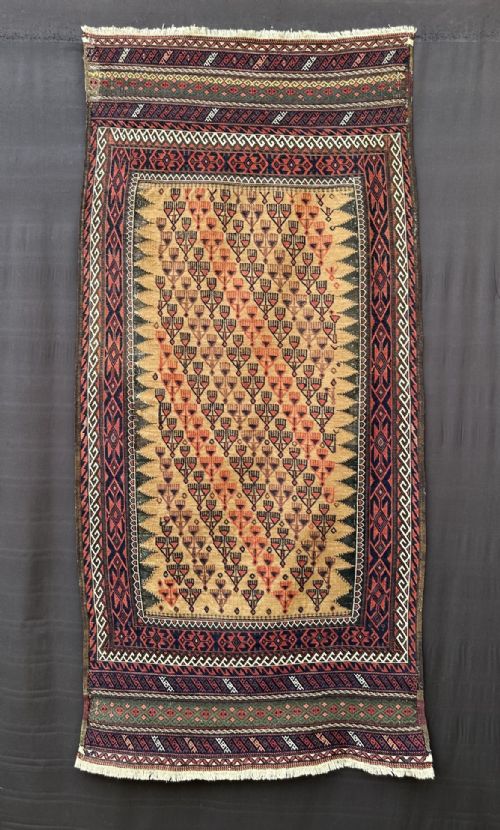
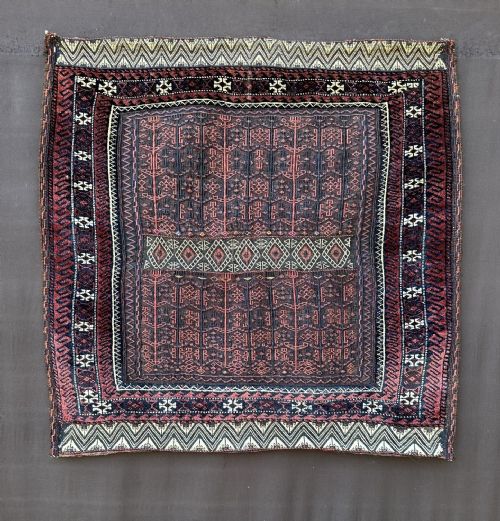
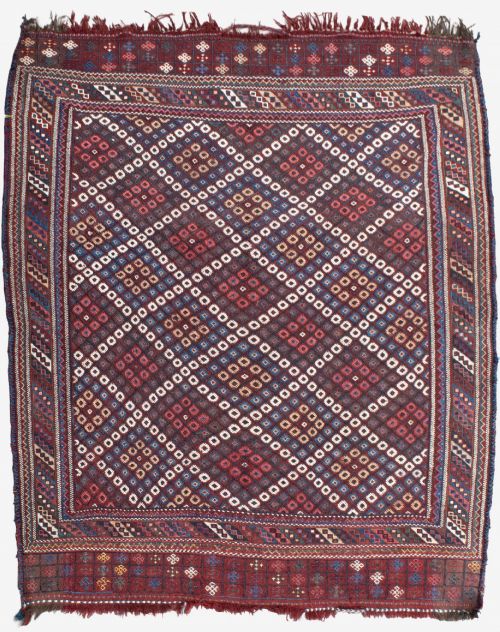


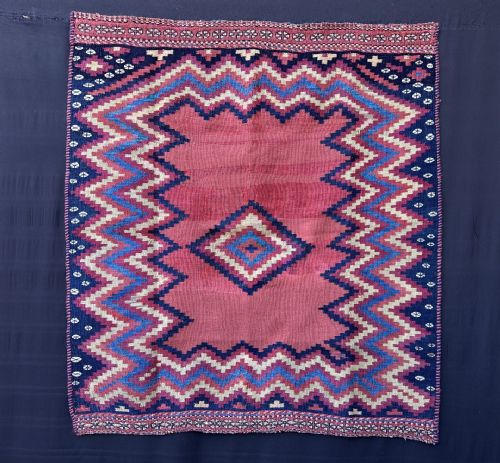


Antique Wool Sofreh
These antique wool sofreh are tribal eating cloths and dining textiles used for spreading on the ground during meals.
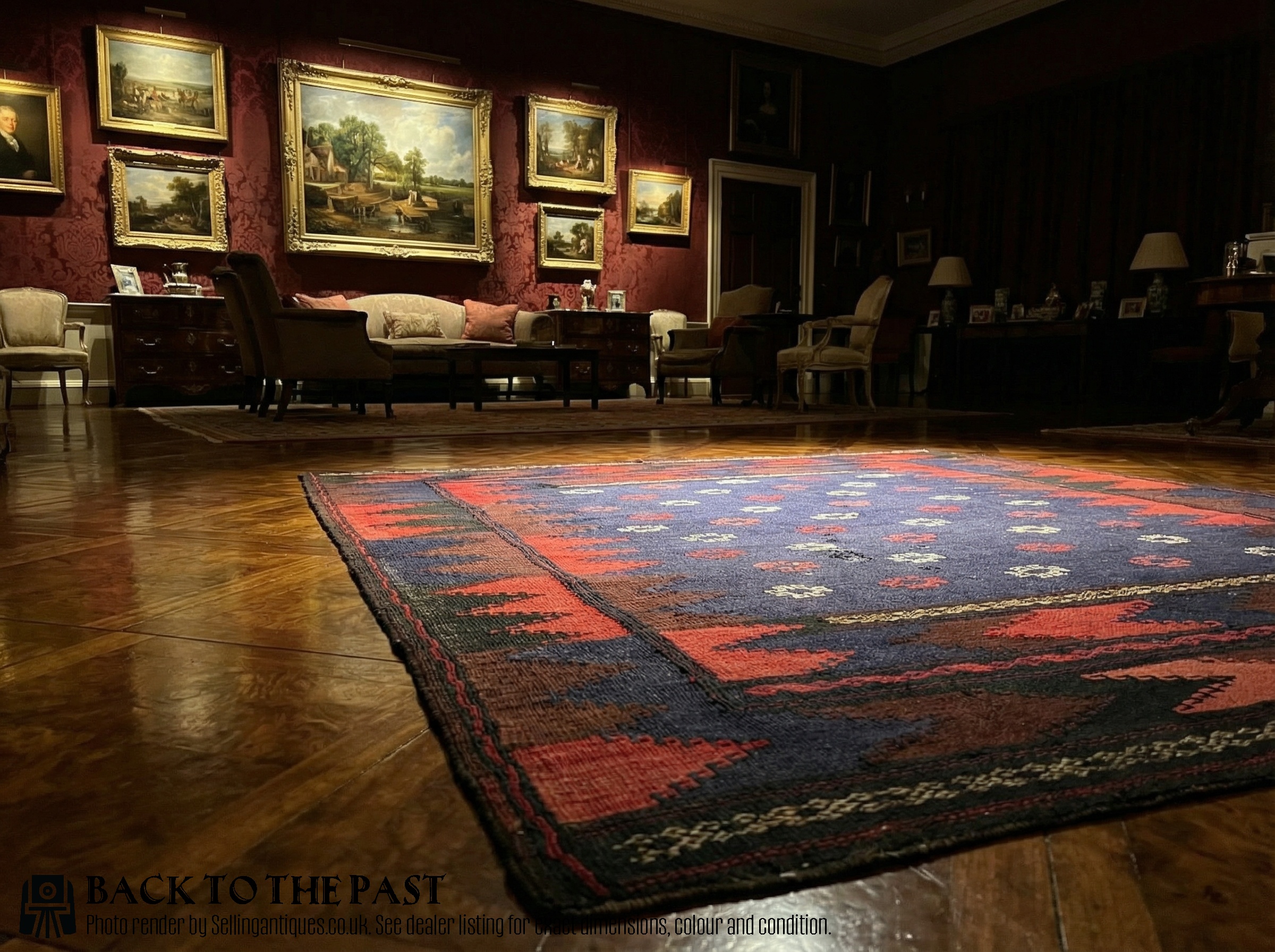
Antique Wool Sofreh
When you search for an antique wool sofreh, you are looking at flatweave rugs and textiles produced by nomadic and tribal groups across Persia and Afghanistan. These utilitarian cloths served specific domestic purposes, principally as dining or bread sofreh used during communal meals.
The pieces you are most likely to meet on this page originate from tribal weavers including the Afshar, Timuri, Luri-Bakhtiari, and Baluch groups. Their formats vary from square dining spreads to elongated kilim rugs created in regional centres such as Kerman, Khorassan, and the borderlands of Persia and Afghanistan.
Dating across the listings spans from the late nineteenth century into the early decades of the twentieth century. Each piece reflects the specific regional weaving traditions and nomadic requirements of its makers.
How they were made
Weavers constructed these textiles primarily using wool, cotton, and occasional camel hair, employing flatweave and kilim techniques without a knotted pile. The structural integrity relied on tightly beaten weft-faced weaves designed to withstand daily domestic use on the ground.
Natural dyes provide the palette across the pieces, imparting rich tones that develop character over time. The combination of local animal fibres and traditional dyestuffs results in durable textiles suited for utilitarian food preparation and dining.
Bread was treated with such respect that special flatweaves were woven solely to handle and wrap the daily loaves.
What varies in quality
Quality in these tribal textiles rests on the tightness of the weave and the precision of the geometric flatweave structure. Finer examples display meticulous control over the weft-faced technique, creating crisp borders and balanced field designs.
The complexity and nuance of the natural dye palette also distinguish finer pieces from simpler utilitarian cloths. Softer transitions of colour and well-preserved structural edges elevate certain tribal weaving traditions above standard domestic work.
The Antique Wool Sofreh Glossary
- Sofreh
- A flatweave cloth or textile used traditionally for spreading on the floor during meals or for wrapping and preparing bread. These utilitarian objects double as tribal flatweave rugs.
- Flatweave
- A textile produced by interlocking warp and weft threads without creating a pile, resulting in a thin, tapestry-like fabric. This technique defines kilims and dining spreads.
- Natural Dyes
- Colourants derived from plant, insect, or mineral sources rather than synthetic chemicals. They give antique tribal wool a shifting, organic depth of tone.
- Kilim
- A pileless woven textile sharing techniques with flatweave sofreh. These pieces often feature geometric motifs tied to specific tribal identities.
- Tribal
- Pertaining to nomadic or semi-nomadic confederations and groups such as the Afshar, Baluch, and Luri. Their textile output follows distinct regional patterns passed down through generations.
Antique Wool Sofreh: Frequently Asked Questions
What is an antique wool sofreh?
An antique wool sofreh is a traditional flatweave textile made by nomadic and tribal weavers in Persia and Afghanistan. These cloths were utilised primarily as floor coverings during meals or for wrapping bread.
Today, collectors value them as authentic examples of tribal weaving, appreciated for their geometric designs and practical origins.
How were these cloths used?
Nomadic families spread these flatweaves directly on the ground inside tents or dwellings to serve as a clean surface for dining. They also functioned as protective wrappers for storing and carrying bread.
Their sturdy construction ensured they could endure the rigours of nomadic life and daily domestic routines.
Where do these textiles come from?
The pieces originate from various tribal groups and regions, including Afshar nomads in Kerman, Baluch and Timuri tribes near the Afghan border, and Luri weavers in western Persia.
Each region developed distinct geometric patterns, colour combinations, and weaving structures specific to its tribal heritage.
How should I live with one?
Because these pieces are flatweaves, they function well as wall hangings, table covers, or light floor rugs in low-traffic areas. Placing them away from direct sunlight preserves the natural dyes used in their construction.
Gentle vacuuming without a rotating brush helps maintain the flatweave structure over time.