

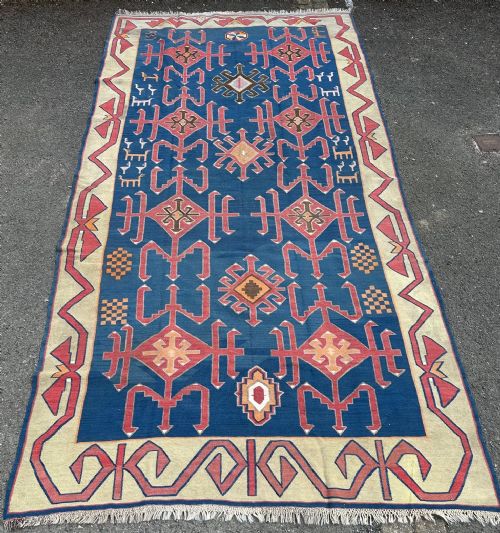


Indigo Wool Flatweave Rug
An indigo wool flatweave rug brings deep blue dyed tones and geometric tribal structure into a room, offering durability without heavy pile.
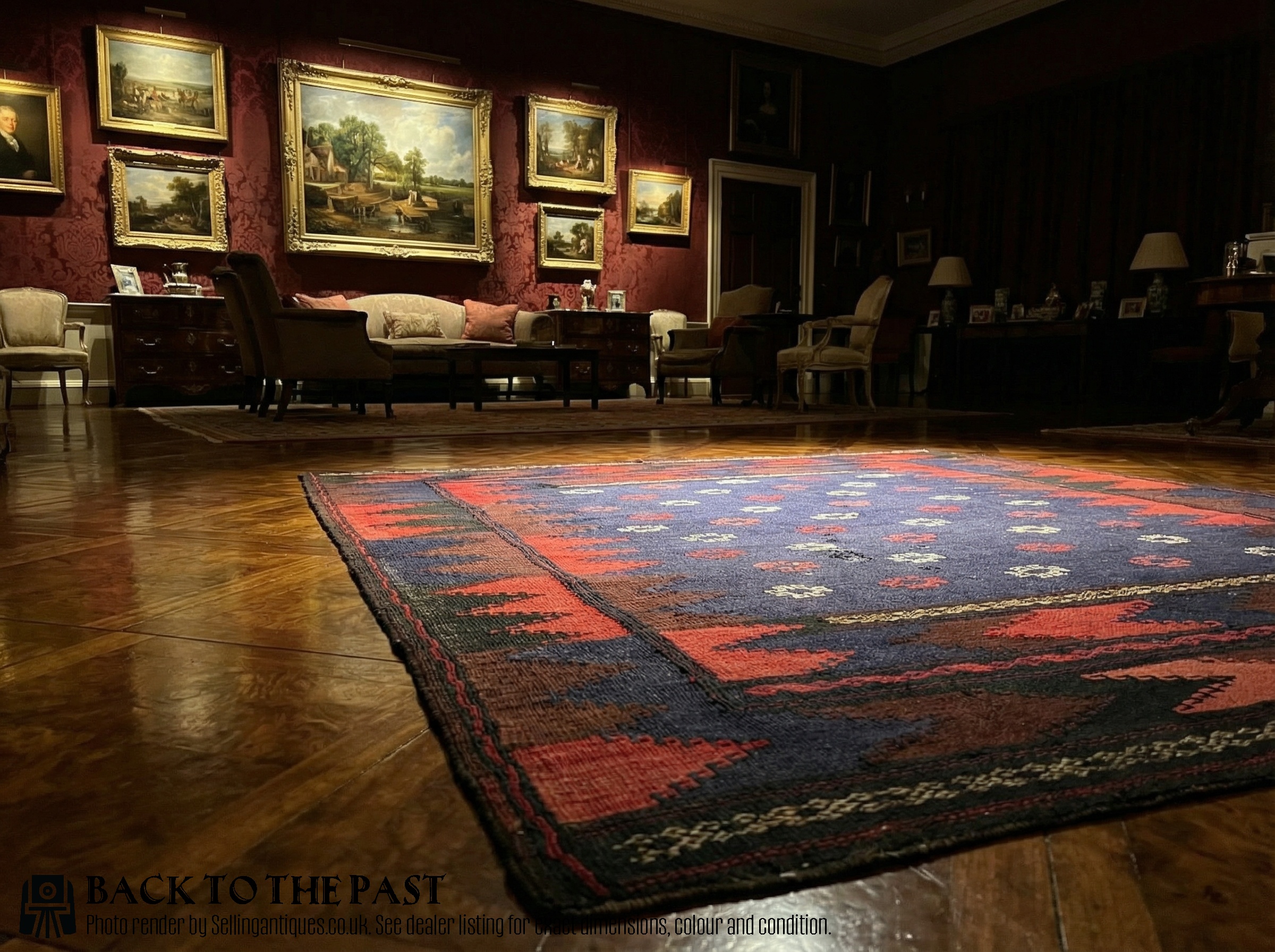
Indigo Wool Flatweave Rug
An indigo wool flatweave rug encompasses flat-woven tribal textiles, kilims, and converted nomad bags originating from regions including the Caucasus, Persia, Afghanistan, and Central Asia. These pieces date across the late nineteenth and early twentieth centuries, spanning periods from 1880 to 1940.
Buyers will most frequently encounter Turkish kelims, Caucasian flatweaves, and Afghan Baluch pieces alongside utilitarian textile panels and storage bag faces adapted into floor coverings. The forms range from larger two-part kilims to smaller assembled mafresh panels and saddle-bags.
Materials and Construction
These textiles rely primarily on hand-spun wool combined with natural dyes to create rich indigo fields and geometric patterns. Certain examples incorporate cotton foundations or structural elements alongside specialised techniques like soumak work.
Weavers constructed these pieces as kilims, flatweaves, and stitched panel assemblies, creating sturdy non-pile surfaces designed originally for utilitarian nomadic use or tent furnishings.
Several items began life as nomadic storage sacks or eating cloths before finding new life as flatweave rugs.
Assessing Quality and Character
Quality rests in the depth of the natural indigo dye and the clarity of the tribal motifs executed by weavers from groups such as the Baluch, Afshar, Shahsavan, and Yomut Turkmen. Rich variations in tone within the wool signal skilled traditional dyeing methods.
The integrity of the flatweave structure and the careful preservation of original tribal panels, whether from saddle-bags, tent-pole bags, or eating cloths, determine the distinction of each textile.
The Indigo Wool Flatweave Rug Glossary
- Flatweave
- A rug or textile produced without pile by interwaving warp and weft threads directly. This technique creates a thin, durable fabric without knots.
- Kilim
- A tapestry-woven carpet or rug made across Turkey, the Caucasus, and Central Asia. These pieces feature striking geometric designs formed by leaving slit-like openings where different colour blocks meet.
- Soumak
- A brocade-like flatweaving technique where coloured weft threads wrap over the warp threads for added texture and strength. It results in a sturdy surface with a braided appearance on the face.
- Sofreh
- A woven spread or cloth used by nomadic groups for eating or food preparation. They often display bold tribal iconography.
- Mafrash
- A large rectangular storage bag used by nomadic tribes for bedding and household goods. Panels from these containers are frequently repurposed into flatweave rugs.
Indigo Wool Flatweave Rug: Frequently Asked Questions
What is an indigo wool flatweave rug?
An indigo wool flatweave rug is a non-pile textile, often originating as a tribal kilim, animal trappings, or storage bag panel, characterised by its blue natural dye and flat-woven structure.
These pieces reflect the weaving traditions of nomadic and village groups across the Caucasus, Persia, and Central Asia from the late nineteenth and early twentieth centuries.
How were these tribal flatweaves used?
Nomadic groups utilised these flatweaves as floor coverings, tent dividers, eating cloths, and practical storage containers for bedding and provisions.
Over time, many bags and utilitarian panels have been carefully opened or joined together to function as decorative area rugs.
How do I care for a flatweave rug?
Care involves gentle vacuuming without a rotating brush and occasional professional cleaning suited to antique wool and natural dyes.
Using a quality underlay helps prevent slipping and reduces friction against hard floors, preserving the thin flatweave structure.
How are different tribal origins told apart?
Tribal origins are distinguished through specific geometric motif structures, weaving techniques like soumak work, and regional wool characteristics.
Pieces from weavers such as the Shahsavan, Baluch, Afshar, and Yomut Turkmen each display distinct visual vocabularies developed across different geographic regions.