

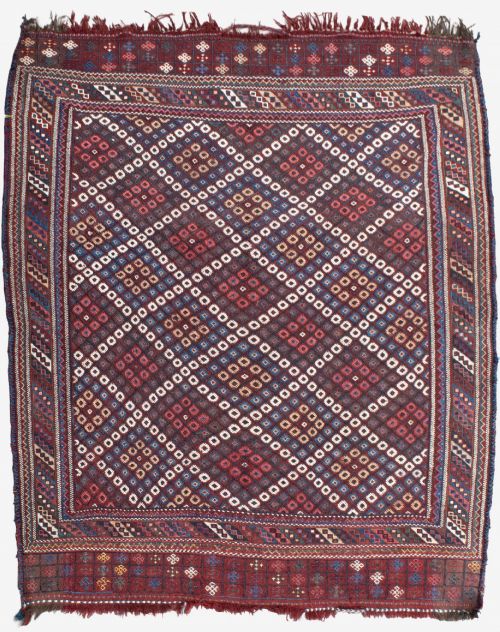


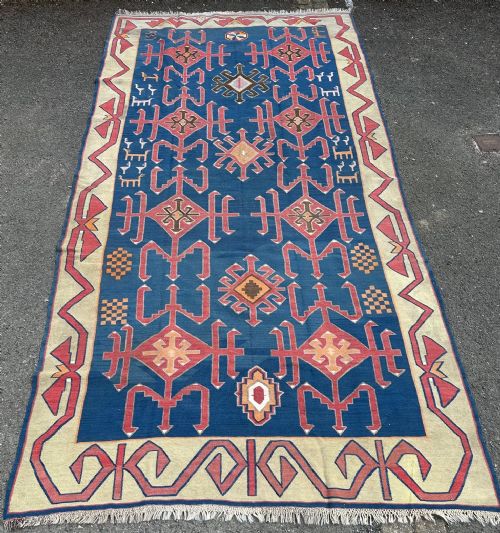

Antique Geometric Flatweave
These antique geometric flatweave textiles are tribal floor coverings and utilitarian bags created by nomadic weavers across Persia, the Caucasus, and Anatolia.
Antique Geometric Flatweave
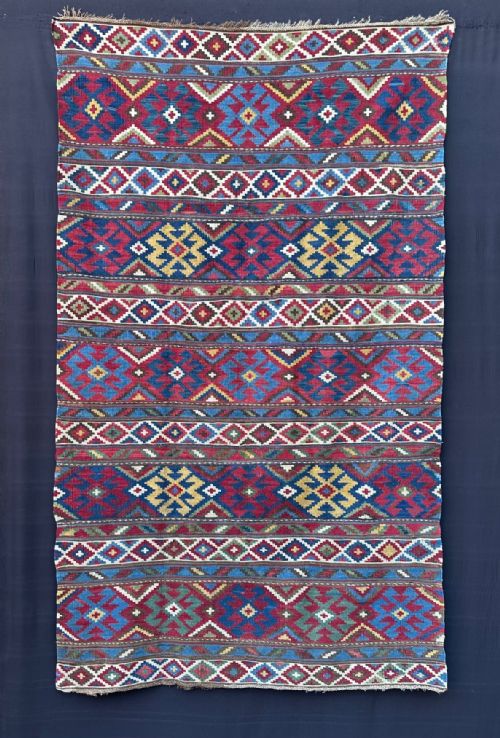
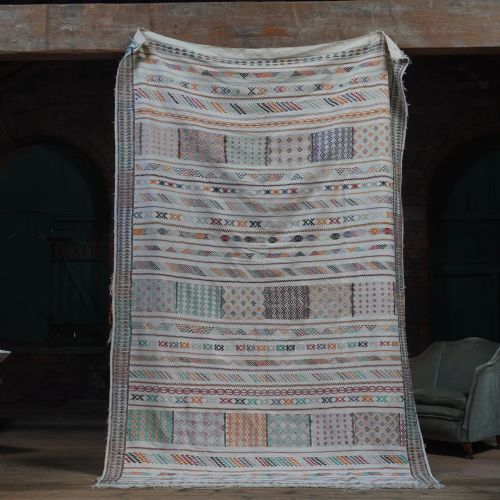
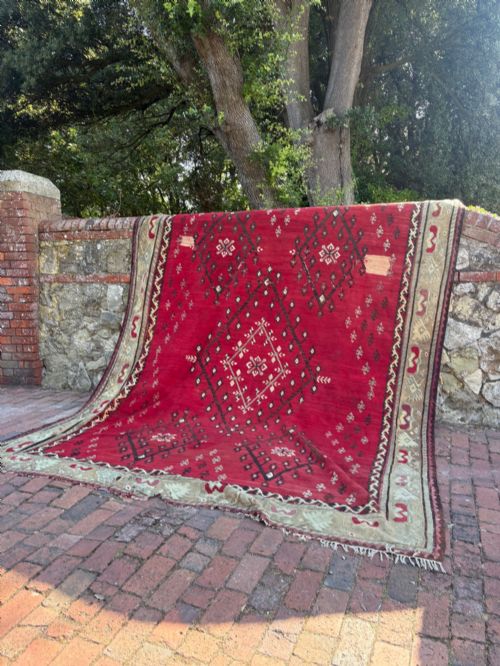
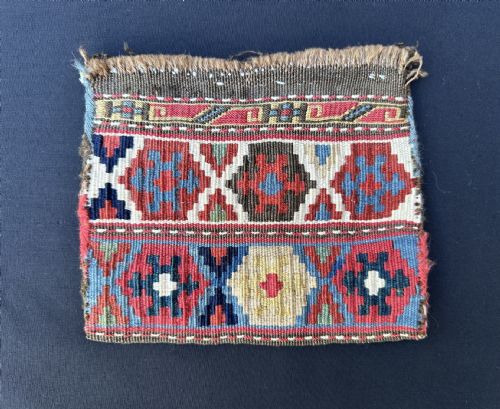
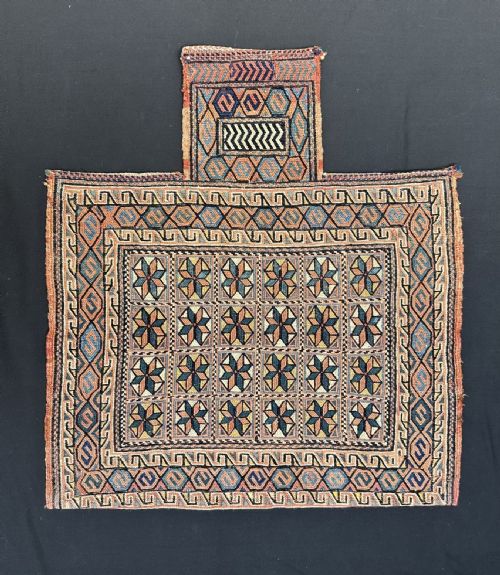
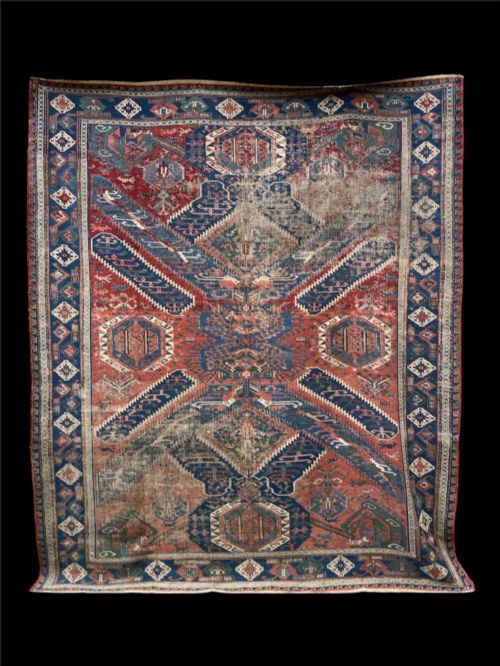
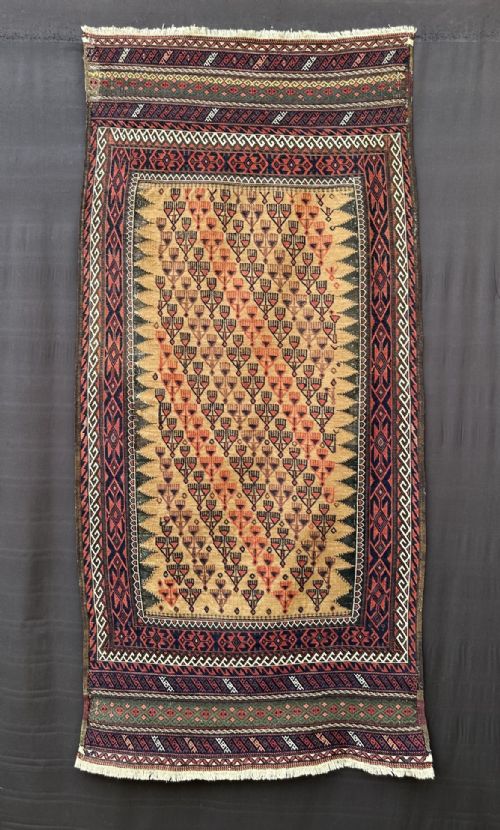
When you search for antique geometric flatweave, you encounter nomadic and village tribal textiles produced across the Caucasus, Persia, and Anatolia during the nineteenth and early twentieth centuries. These pieces encompass utilitarian items such as kilim rugs, runner rugs, saddlebags, bread sofreh, and storage bags originating from tribes like the Shahsevan, Afshar, and Qashqai.
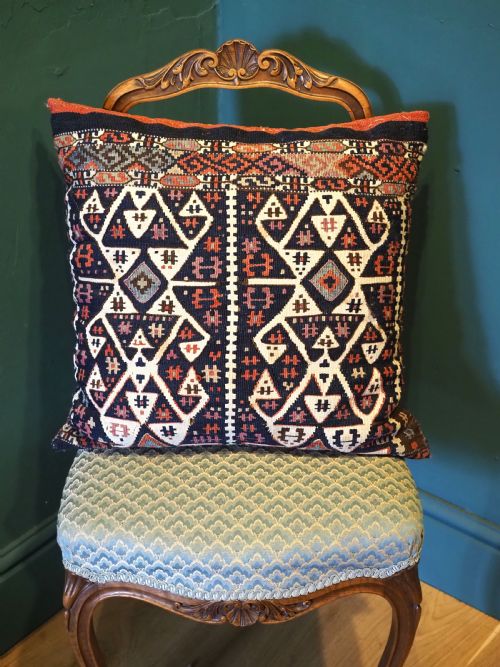
You are most likely to meet kilim rugs and smaller tribal textile fragments such as cushions and sofreh dining cloths dating from the late nineteenth century to the 1920s. These textiles display distinct regional patterns rooted in tribal traditions, ranging from the structured medallions of Caucasian regions to the bold graphic motifs of Central Asian Uzbek and Turkmen makers.
Materials and construction
Weavers constructed these flatweaves using hand-spun wool and cotton, relying on inter-lacing warp and weft threads without a piled surface to achieve a smooth, durable fabric. Artisans employed natural dyes to colour the wool, yielding rich hues that patinate gracefully over decades of use.
The technique involves wrapping or interlocking weft yarns around warp threads to form sharp, angular lines and distinct patterns. This structure produces a lightweight yet resilient textile originally designed for nomadic utility, including transport bags, floor coverings, and eating cloths.
Nomads routinely packed their entire worldly possessions into flatwoven bags before loading them onto camels for the seasonal migration.
Distinctions in quality
Quality in these flatweaves rests upon the fineness of the weave, the precision of the geometric layout, and the clarity of the natural dye palette. Tighter, more intricate construction indicates superior craftsmanship by the tribal weaver.
The integrity of the original wool and the preservation of structural edges also dictate the standing of a piece. Examples that retain their authentic tribal proportions and clear regional iconography represent the higher tier of the range.
The Antique Geometric Flatweave Glossary
- Kilim
- A flatwoven textile produced without a pile, utilising interlocked weft techniques to form geometric patterns. These pieces serve as rugs, wall hangings, or covers.
- Sofreh
- A woven spread or cloth utilised by nomadic tribes for dining, food preparation, or bread making. They typically feature strong geometric field designs.
- Sumak
- A brocade-like flatweaving technique where decorative weft threads are wrapped around the warp threads for added texture and durability. This method often appears on Caucasian storage bags and carpets.
- Mafrash
- A large rectangular storage bag or chest panel used by nomadic groups for bedding and household possessions. They are frequently encountered as complete containers or individual flatwoven sides.
- Warp
- The stationary vertical threads stretched upon a loom that provide the foundational structure for the weaving. The weft threads pass horizontally through these structural elements.
Antique Geometric Flatweave: Frequently Asked Questions
How were antique flatweaves used?
Nomadic tribes utilised these flatweaves for multiple daily functions, including floor coverings, tent dividers, and heavy-duty transport bags for household goods.
Specific formats like sofreh served as eating cloths or dough-preparation mats, while smaller bags carried salt, utensils, or personal belongings during migrations.
How do I clean an antique flatweave?
Gentle surface brushing and careful vacuuming without a rotating power head help remove embedded dust from the flat structure without damaging the historical wool fibres.
Professional textile conservators should handle wet cleaning or washing to prevent dye migration and shrinkage in natural-dyed wool.
How can I date an antique flatweave?
Dating relies on assessing the materials, specifically the presence of hand-spun wool and early natural dye palettes before synthetic alternatives became widespread.
Structural characteristics, regional provenance, and traditional tribal motifs also provide strong chronological indicators pointing to the nineteenth or early twentieth century.