
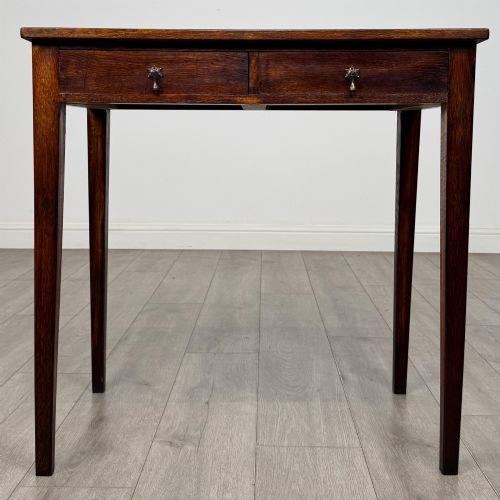
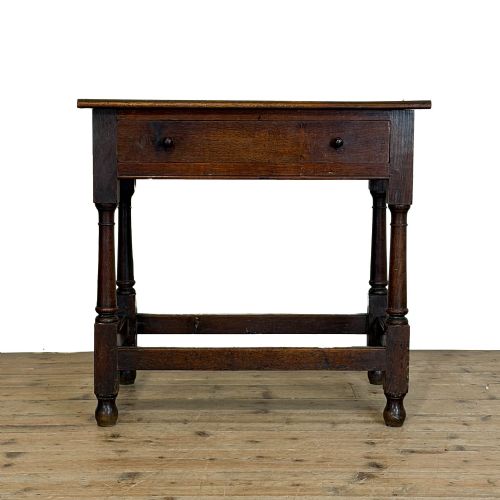
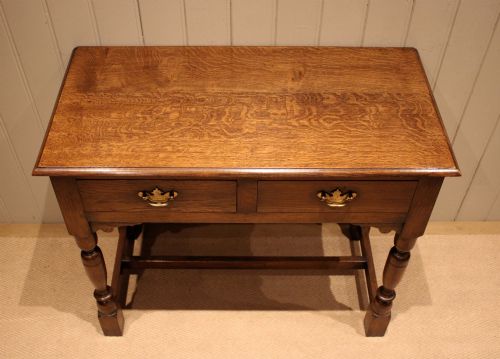
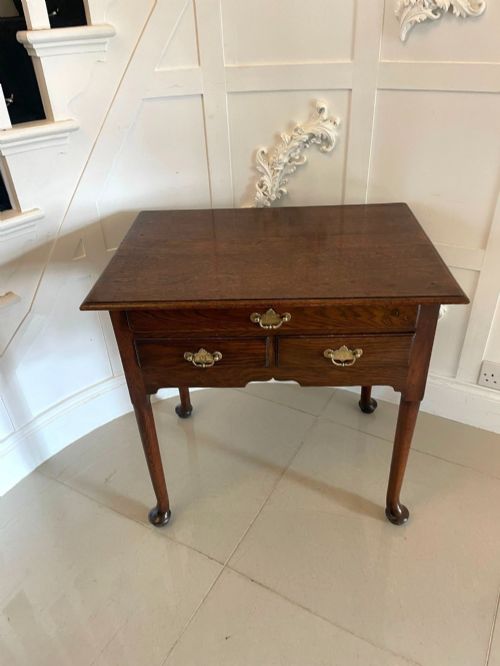

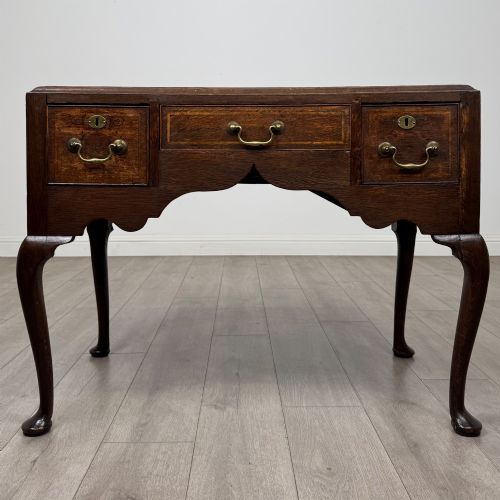
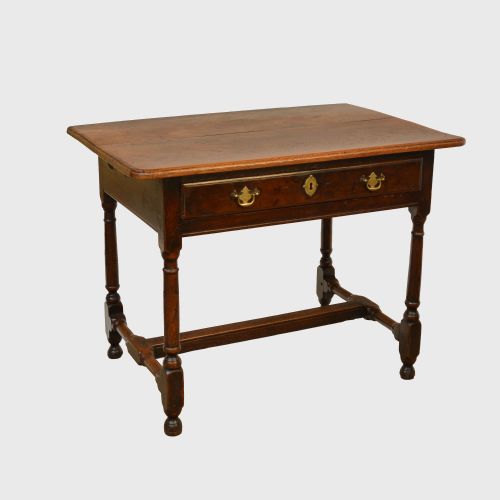
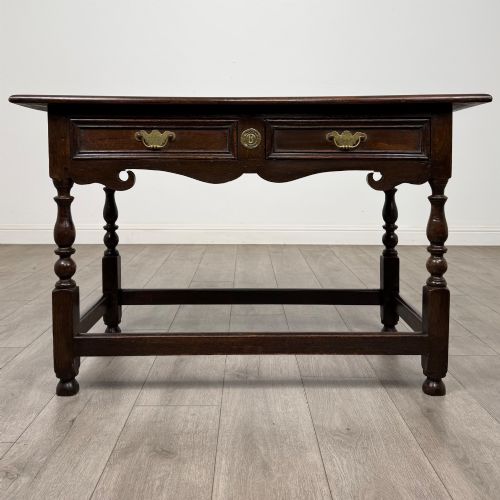
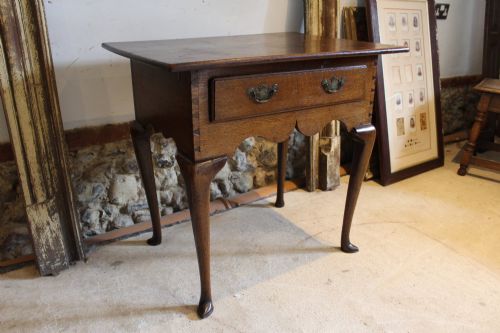
Dark Oak Side Desk
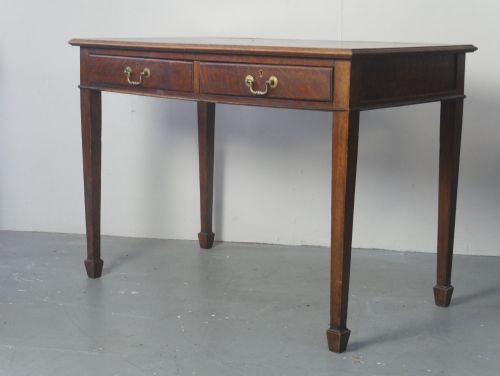
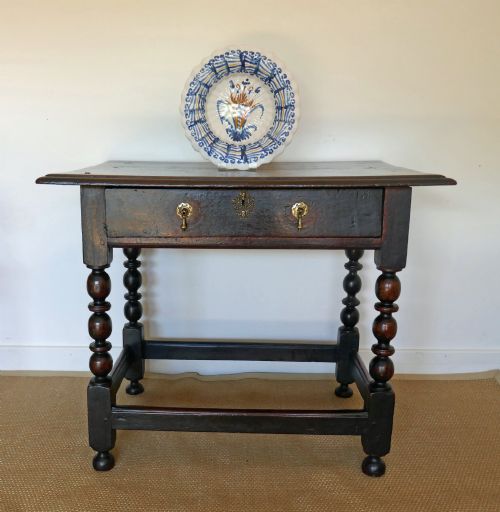
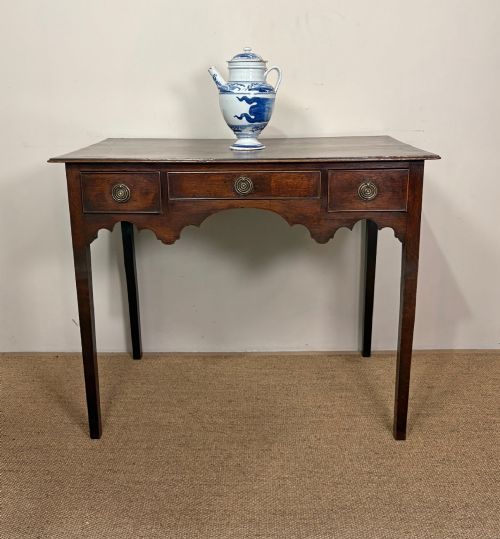
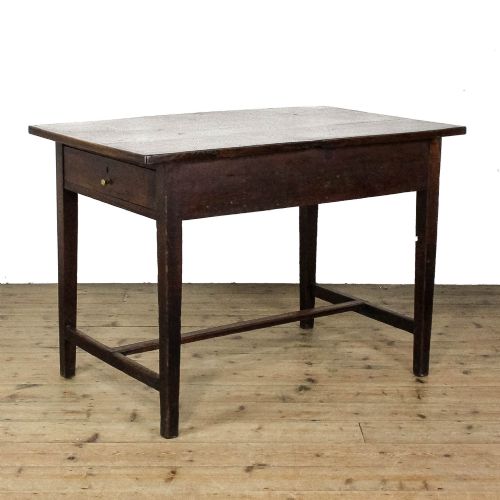
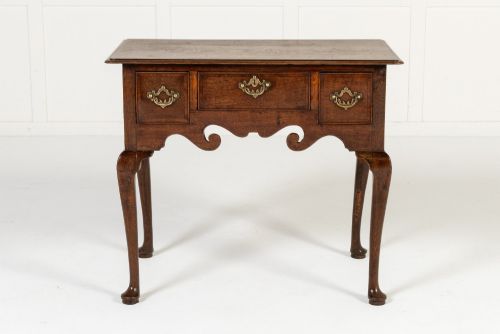
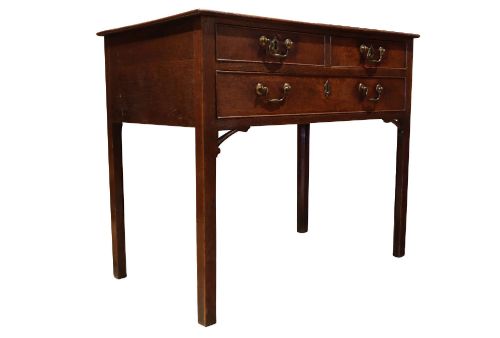
A dark oak side desk or lowboy brings practical timber storage and a working surface into a room with seventeenth- or eighteenth-century presence.
Dark Oak Side Desk
Georgian and George II examples appear frequently, alongside earlier Charles II pieces and later Victorian or Edwardian adaptations. These forms function as compact writing surfaces or hallway tables, often bearing a single drawer beneath the top plank.
Secondary timbers like elm and yew occasionally join the primary oak structure in earlier pieces, while twentieth-century examples bring simpler lines and console proportions.
Materials and construction methods
Makers built these pieces primarily from solid oak, sometimes combining elm, yew, or mahogany within the construction. Planks formed the tops, whilst regional joinery traditions governed the framing and drawer assembly.
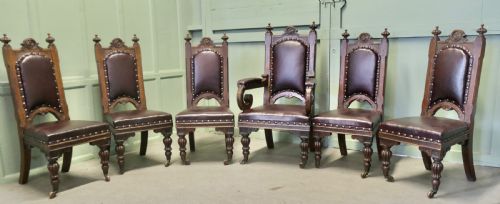
Brass handles and escutcheons punctuate the dark timber surfaces on pieces equipped with drawers. Carving and Gothic details appear on specific Victorian and revival iterations, contrasting with the plain plank tops of earlier country house furniture.
Listings span from the seventeenth century through the Edwardian era, featuring oak alongside brass, elm, and yew.
Distinctions in construction and timber
The integrity of the timber top and the originality of the drawer framing separate standard examples from finer pieces. Bold proportions and untouched surface patination elevate seventeenth-century lowboys and Georgian side tables.
Subtle details such as pegged joints, timber thickness, and the retention of period brass hardware dictate the standing of an individual desk or lowboy.
The Dark Oak Side Desk Glossary
- Lowboy
- A small table with one or more drawers, standing on relatively tall legs, commonly used as a dressing or writing desk in the seventeenth and eighteenth centuries.
- Plank top
- A table surface constructed from solid boards of timber joined side by side, typical of early oak furniture.
- Escutcheon
- A protective plate surrounding the keyhole of a drawer, frequently made of brass on period desks.
- Vernacular
- Furniture made by local craftsmen for regional domestic use rather than following high court fashions.
Dark Oak Side Desk: Frequently Asked Questions
What is a lowboy?
A lowboy is a small table featuring one or more drawers and slender legs, serving historically as a compact writing desk or dressing table.
These pieces offer surface space and enclosed storage without dominating a room.
How do I date an oak desk?
Dating relies on observing construction methods, timber selection, and hardware styles such as brass drawer pulls.
Earlier pieces from the seventeenth and eighteenth centuries display pegged joinery and hand-worked plank tops.
Where should I place a side desk?
These compact tables fit well in hallways, studies, or living rooms as writing surfaces or display areas.
Their shallow depth allows them to sit against walls without obstructing walkways.
Did secondary woods get used?
Makers often incorporated elm, yew, or other regional timbers alongside the primary oak structure.
Such timber combinations frequently appear in eighteenth-century vernacular furniture.