






Green Man Oak Desk
A green man oak desk brings robust nineteenth-century character and deeply carved foliage into a room.
Green Man Oak Desk
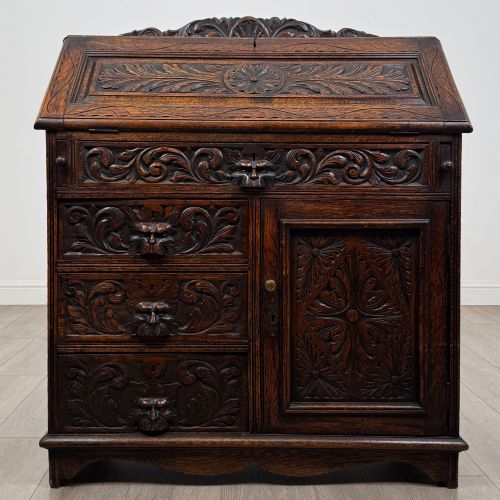
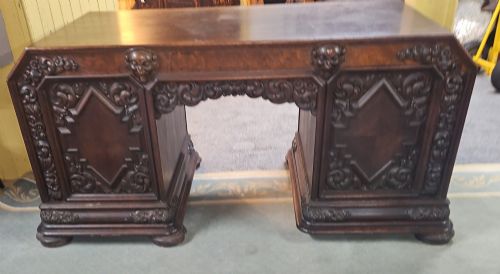
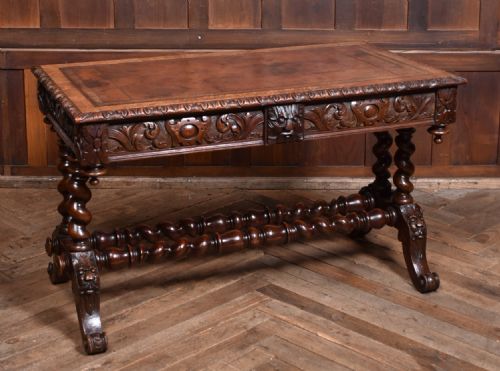
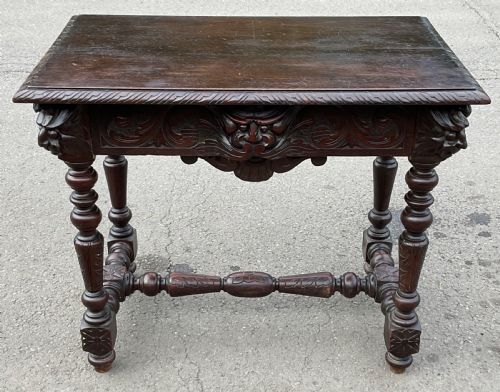
A green man oak desk is a nineteenth-century writing piece defined by carved foliate masks merging with human faces. The versions met on this page range from compact writing tables and davenports to substantial twin pedestal desks and bureaux. Most examples date from the Victorian era and adopt Gothic, Renaissance or Jacobean revival idioms.
These pieces served as functional writing furniture for libraries, studies and offices of the period. Buyers find variations spanning simple side tables with carved drawer aprons to massive kneehole desks fitted with leather writing surfaces and banks of drawers. The recurring presence of the carved green man motif unites them all across different nineteenth-century revival styles.
Distinctions in craftsmanship and design
Quality in a green man oak desk rests primarily on the depth and animation of the carving. Superior examples display crisp, spirited sculptural work around the drawers and pedestals rather than shallow, mechanical execution. The choice of timber grain and the integrity of the original leather writing inserts also mark out better pieces.
Proportion and scale distinguish the range, from neat ladies' writing desks to large twin pedestal partners desks. Well-balanced proportions and retained original hardware elevate an individual piece within the nineteenth-century revival category.
Listings and past archives for this phrase feature Victorian pieces executed in solid oak, occasionally incorporating brass hardware and leather inserts.
Edwards and Roberts
The Green Man Oak Desk Glossary
- Green Man
- A sculptural architectural and furniture motif depicting a human face emerging from or entwined with leaves and vines. It symbolises rebirth and spring in various revival styles.
- Pedestal Desk
- A heavy writing table comprising two separate pedestals of drawers supporting a single desktop. This form provides substantial storage underneath the working surface.
- Bureau
- A sloping desk with a hinged flap that opens to reveal internal compartments and pigeonholes for writing materials. They often sit above a series of graduated lower drawers.
- Gothic Revival
- An architectural and decorative style popular during the nineteenth century that revived medieval forms, pointed arches and heavy ecclesiastical ornamentation. It heavily influenced nineteenth-century carved furniture.
- Partners Desk
- A large double-sided desk designed for two people to sit opposite one another. These pieces feature drawers and cupboards accessible from both sides.
Green Man Oak Desk: Frequently Asked Questions
How do I date an oak desk?
Dating relies on stylistic clues such as Victorian Gothic, Jacobean or Renaissance revival characteristics alongside construction methods. The presence of nineteenth-century hardware and secondary timbers helps narrow the period.
Most surviving examples date from the mid-nineteenth century through to about nineteen hundred. Archive records show the majority cluster around the Victorian era.
Were these desks used in offices?
Larger pedestal and partners desks served professional studies, libraries and administrative spaces during the nineteenth century. They provided ample storage through deep drawers and large writing surfaces.
Smaller variants like writing tables and bureaux suited domestic drawing rooms and private chambers. Their robust construction handled daily correspondence and paperwork.
How do I care for an oak surface?
Maintain antique oak by dusting regularly with a soft dry cloth and avoiding excessive moisture. Occasional applications of traditional wax help nourish the timber grain.
Keep such desks away from direct heat sources and strong sunlight to protect leather inserts and prevent wood splitting. Proper placement preserves the finish over time.