


Antique Oak Server Desk
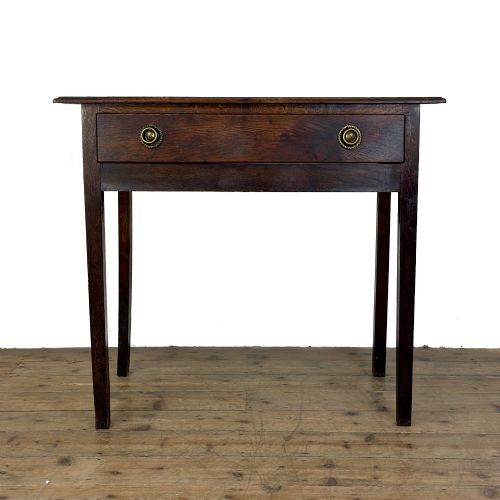
An antique oak server desk offers sturdy timber construction and practical surface space suited for daily domestic use.
Antique Oak Server Desk
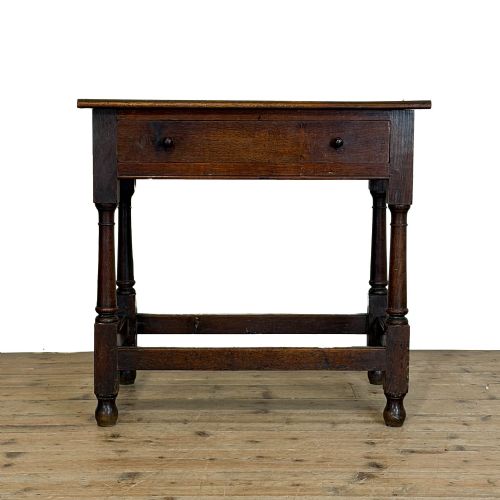
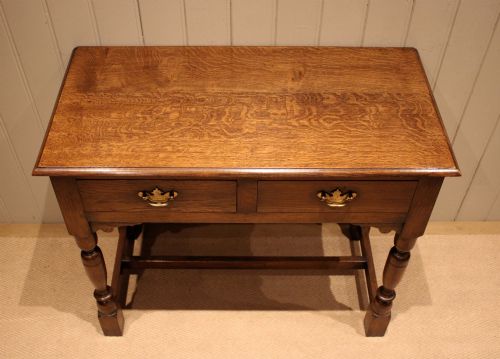
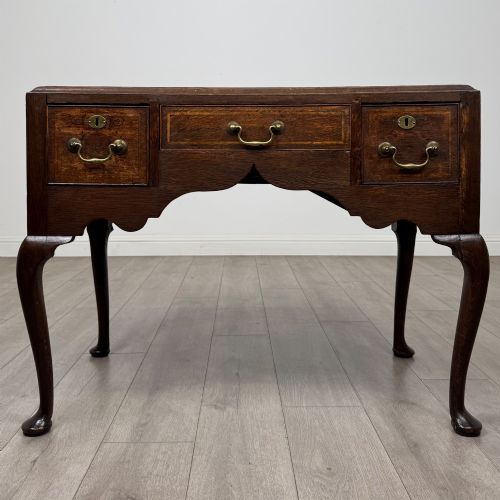
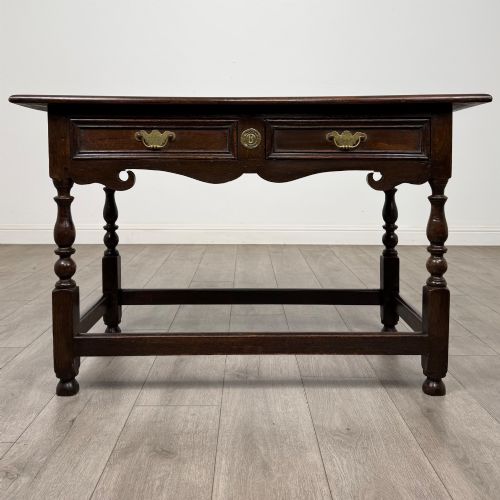
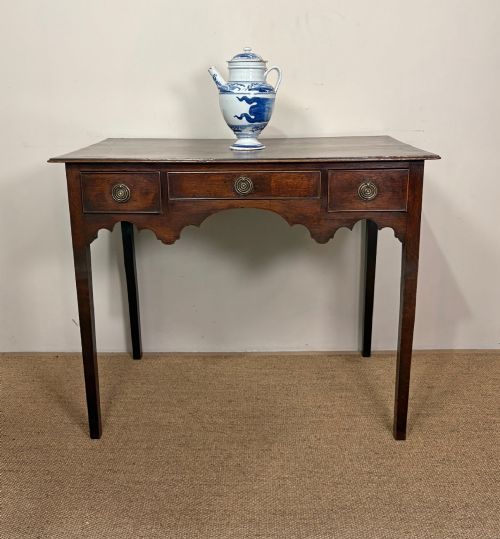
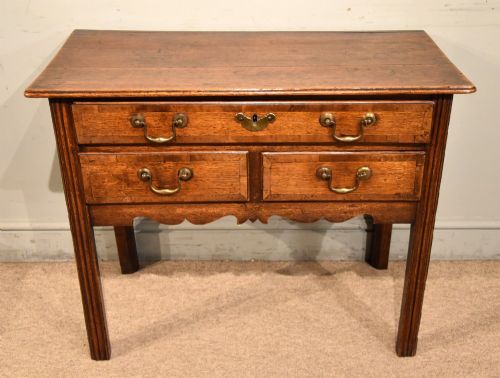
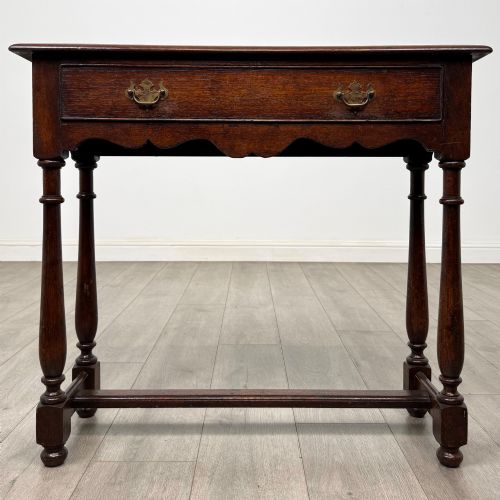
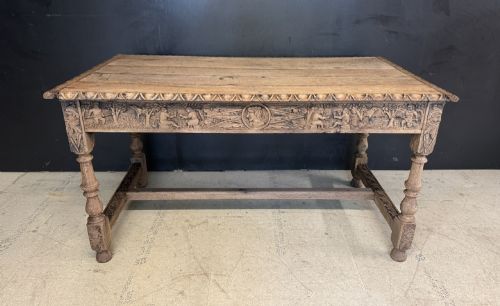
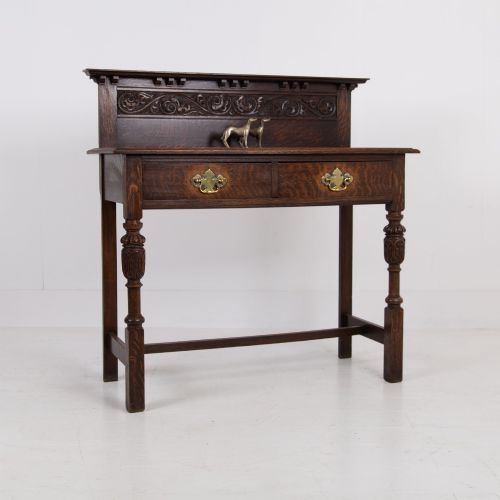
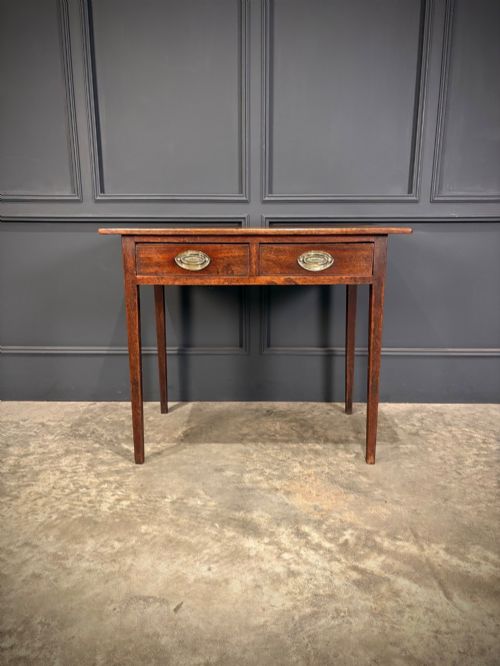
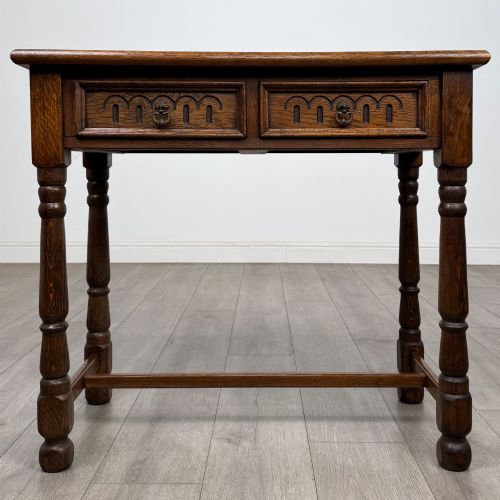
The term antique oak server desk gathers various sturdy wooden tables originating from the seventeenth, eighteenth, and nineteenth centuries. Buyers encounter forms such as lowboys, console tables, and side tables constructed primarily from solid oak.
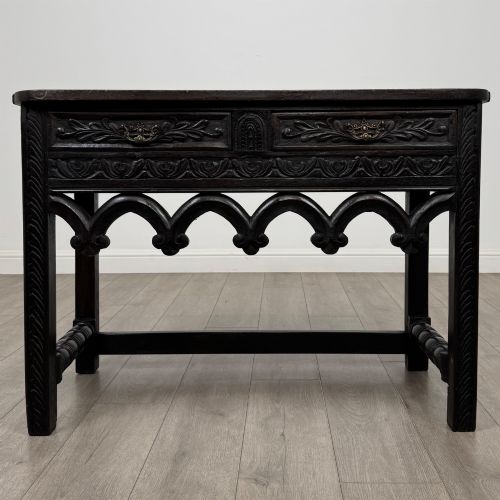
The selection ranges from early seventeenth-century examples with simple drawers to later Georgian and Victorian interpretations featuring carved panels and cabriole legs. Pieces span multiple styles including Gothic Revival, Jacobean, and English Country.
Most entries function as side tables, serving tables, or hall desks rather than standard office desks. The inventory relies heavily on seventeenth-century and eighteenth-century foundations alongside nineteenth-century revivals.
Materials and construction
Makers utilised solid oak alongside secondary timbers like fruitwood, elm, and mahogany for drawers and internal framing. Brass hardware appears on drawer pulls and mounts across Georgian and Victorian examples.
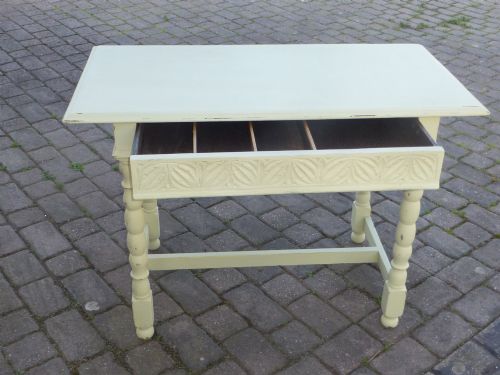
Surfaces often show carved decoration in Jacobean and Gothic Revival styles, whilst others feature painted finishes or bleached oak treatments. Traditional joinery secures the heavy timber frames without modern adhesives.
Several Victorian tables stare back at visitors through carved green man faces hiding amongst the foliage.
Distinguishing quality
The refinement of hand-carved detailing and the depth of the timber grain determine the upper tier of these pieces. Heavy, stable construction distinguishes superior tables from lighter, more utilitarian counterparts.
Original brass fittings, untouched surface patination, and proportional drawer dovetailing elevate specific examples above standard utility tables.
The Antique Oak Server Desk Glossary
- Lowboy
- A small oak or fruitwood table with one or more drawers, originating in the late seventeenth and eighteenth centuries.
- Cabriole leg
- A furniture leg that curves out and then in, commonly found on Georgian furniture.
- Refectory
- A long narrow table traditionally used for dining, adapted into serving and side formats in later periods.
- Dovetail
- A joint formed by interlocking wedge-shaped fingers, used in drawer construction for strength.
- Patina
- The surface sheen and colour developed on wood over centuries of handling and exposure.
Antique Oak Server Desk: Frequently Asked Questions
What is an antique oak server desk used for?
These tables function as sideboards, serving surfaces, or hall desks for holding lamps, books, and household objects.
Their narrow proportions allow them to fit easily into hallways, dining rooms, and living spaces without obstructing pathways.
How do I tell an 18th century table from a Victorian copy?
Eighteenth-century examples typically display hand-cut joinery, pegged joints, and natural timber wear acquired through decades of daily use.
Victorian and later revival pieces often feature heavier, deeper machine carving and distinct Gothic or Jacobean Revival stylistic motifs.
Are all these tables made of solid oak?
Whilst the primary material across the listings is oak, makers frequently incorporated secondary timbers such as fruitwood, elm, and mahogany into drawer linings and internal frames.
Some specific examples also feature painted finishes or bleached wood treatments applied during the nineteenth century.
How do I care for an antique oak surface?
Keep wooden surfaces away from direct heat sources and strong sunlight to prevent timber splitting and fading over time.
Apply traditional wax polish occasionally and buff with a soft cloth to maintain the natural sheen of the wood.