


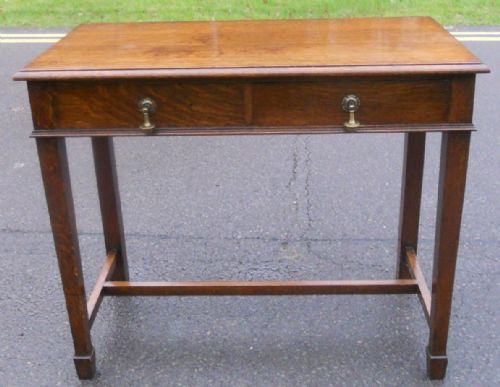
Vintage Oak Hallway Desk
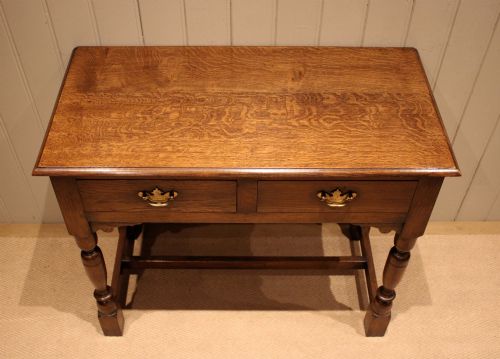
A vintage oak hallway desk brings solid timber structure and practical writing space directly into a narrow entryway.
Vintage Oak Hallway Desk
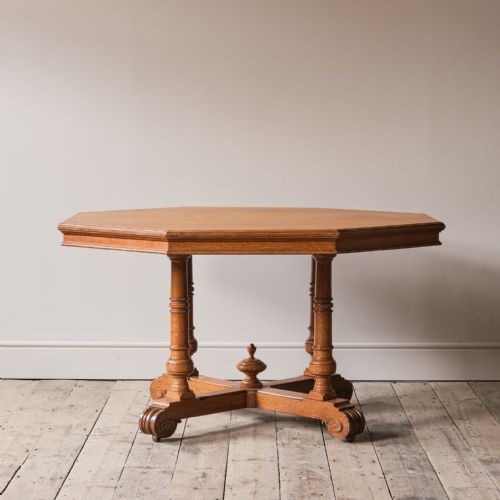
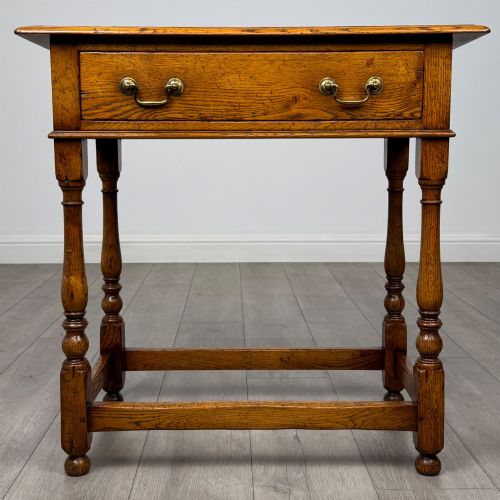
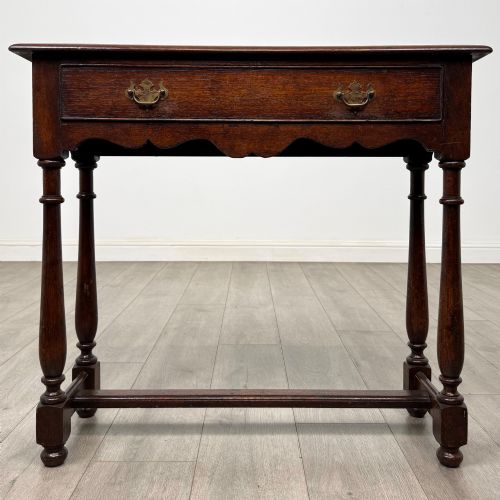
When you search for a vintage oak hallway desk, you are looking at practical side tables, console tables, centre tables, and writing desks produced across the Victorian, Edwardian, and 19th Century periods up to 1930. The versions most commonly met on this page take the form of narrow side tables and console tables constructed in oak, suited for compact spaces.
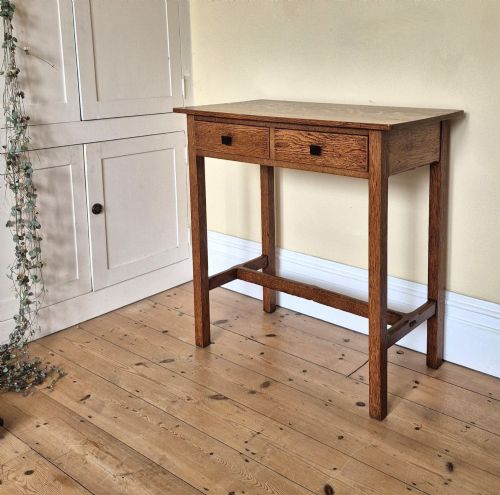
The styles range from English Country and Arts and Crafts to Gothic Revival, Industrial, Jacobean Revival, and Georgian Style. These pieces bridge the gap between utilitarian hallway furniture and decorative period objects, often showing regional British craftsmanship or specific attribution to makers like Hubert Simpson of Kendal.
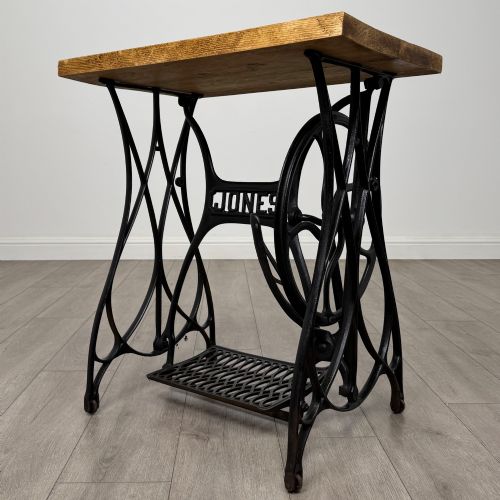
Makers utilised resilient timbers to build surfaces intended for daily correspondence and placement in high-traffic corridors. The variety spans simple solid oak side tables to carved buffet tables featuring green man motifs and industrial iron elements.
How they were made
Construction relies primarily on solid oak, timber, and supporting hardware in brass and cast iron. Workshops combined traditional joinery methods with sturdy metal fixings to ensure long-term durability in domestic spaces.
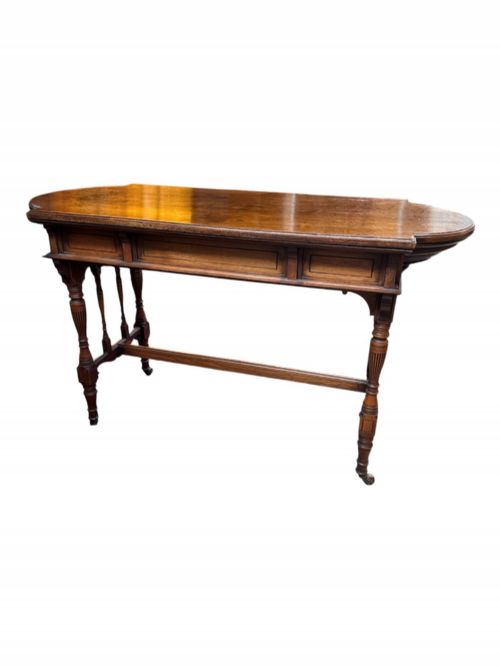
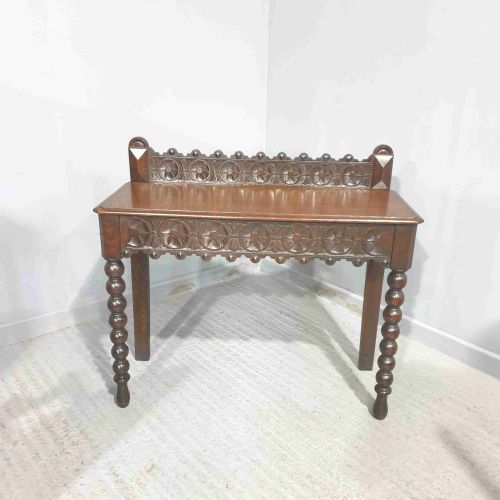
Surface treatments and decorative details include deep relief carving, as seen on Flemish style buffet tables, alongside simpler panelled construction typical of the Edwardian and Victorian eras.
Keep an eye out for carved green man faces peering out from the woodwork of Gothic revival desks.
What varies in quality
Quality rests upon the selection of timber and the execution of carved or structural details. Pieces with attributed workshop origins, such as those linked to Kendal makers, or those incorporating thoughtful Gothic Revival carving, stand apart from simpler utility tables.
The integrity of the timber, the crispness of applied mouldings, and the integration of contrasting materials like cast iron or brass fittings determine the refinement of each desk.
Hubert Simpson of Kendal
The Vintage Oak Hallway Desk Glossary
- Console table
- A table designed to stand against a wall, frequently supported by brackets or legs that emphasise a shallow depth ideal for narrow hallways.
- Gothic Revival
- An architectural and decorative style popular in the 19th century that reinterprets medieval forms, featuring pointed arches, heavy carvings, and religious motifs.
- Arts and Crafts
- A design movement valuing traditional craftsmanship, simple forms, and visible construction methods using local timbers like oak.
- Jacobean Revival
- A style popular in the later periods mimicking 17th-century English furniture with turned legs, geometric panels, and dark finishes.
- Green Man
- A sculptural motif of a face carved from or surrounded by leaves and vines, frequently found on Gothic Revival and Flemish carved oak pieces.
Vintage Oak Hallway Desk: Frequently Asked Questions
What is a vintage oak hallway desk?
A vintage oak hallway desk encompasses narrow side tables, console tables, and writing furniture produced during the Victorian, Edwardian, and early 20th-century periods. These tables provide a functional surface for compact entryways.
They utilise solid oak and incorporate styles ranging from industrial iron frames to heavily carved Gothic Revival motifs.
How do I date a hallway desk?
Dating relies on stylistic clues, construction methods, and materials recorded across the Victorian, Edwardian, and 19th-century periods. Pieces often display specific revival characteristics like Jacobean turning or Arts and Crafts simplicity.
Makers' attributions, such as work originating from Kendal around 1930, also help establish precise timelines for individual pieces.
Where should I place a console table?
A console table fits naturally against an empty wall in an entrance hall or narrow passage where floor space is limited. Its shallow profile allows it to function as a drop zone for post or keys.
Pairing the desk with a mirror or placing it beneath artwork creates a deliberate focal point upon entering the home.
What styles are available?
The available styles span English Country, Georgian Style, Gothic Revival, Industrial, and Arts and Crafts. Each style reflects the aesthetic priorities of its respective period.
Selections range from simple golden oak side tables to elaborate Flemish carved buffet tables featuring green man details.