
Dark Oak Server Table
A dark oak server table brings deep grain and sturdy utility to a dining room or hall, offering surface space built to last.
Dark Oak Server Table
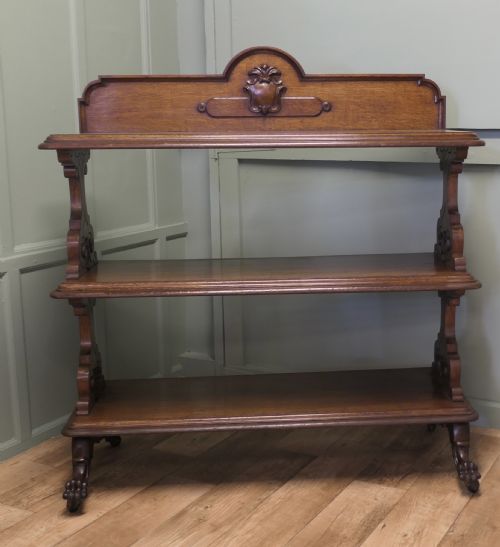
When you search for a dark oak server table, you encounter substantial serving furniture, dresser bases, and sideboards designed for domestic use. The pieces appearing here span centuries of British and continental design, ranging from early country house furniture to later revival styles.
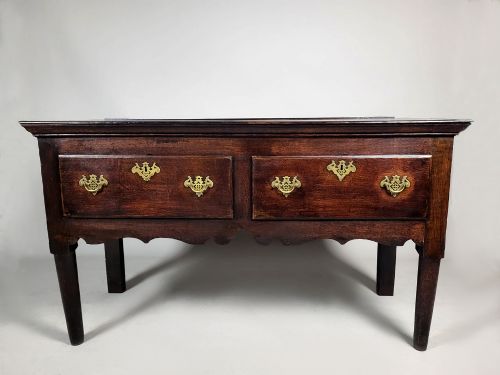
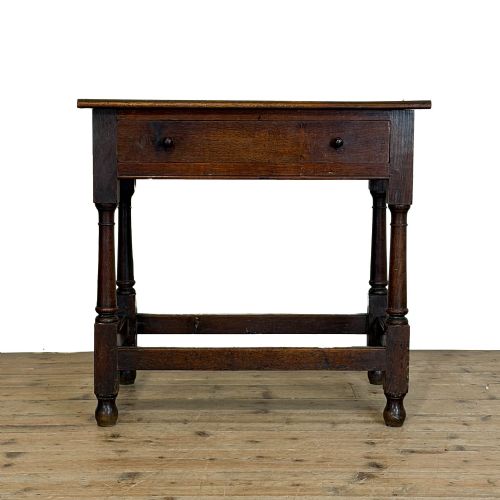
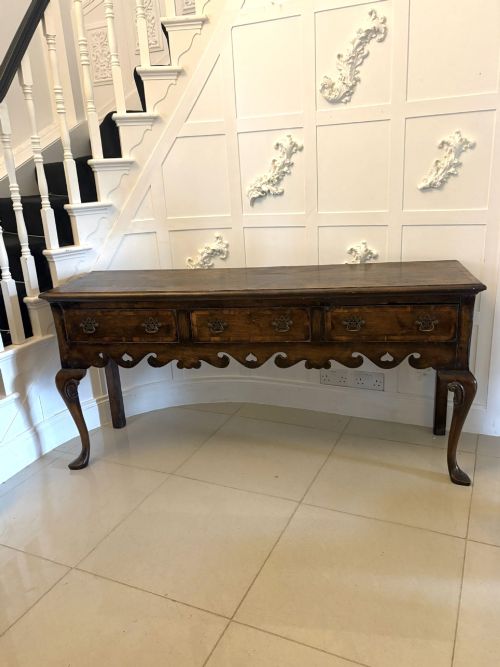
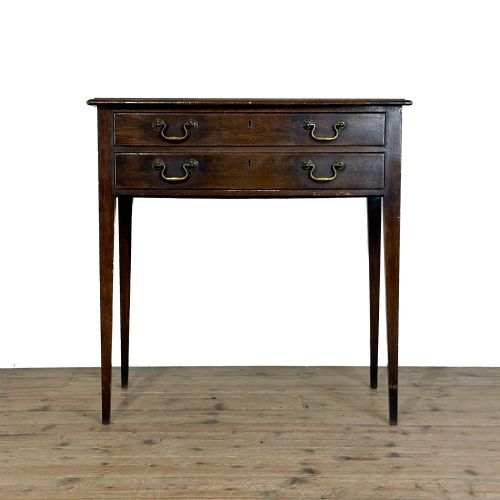
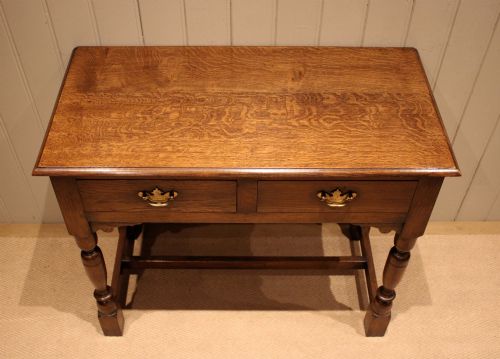
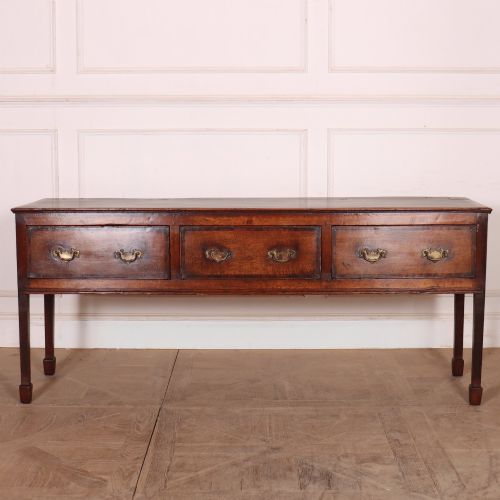
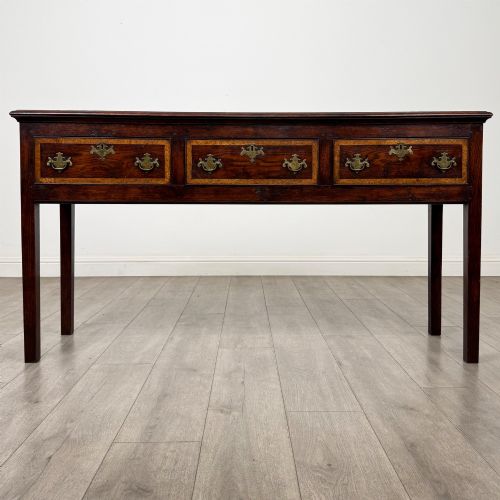
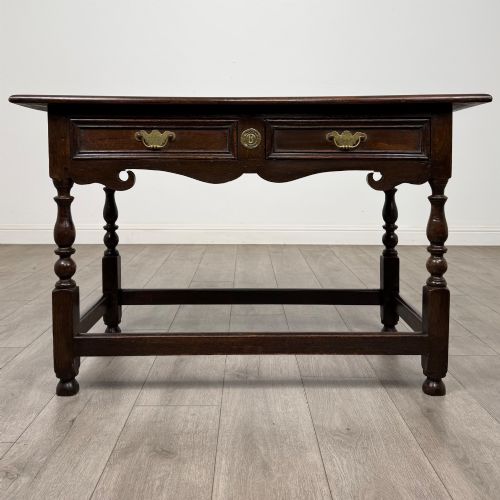
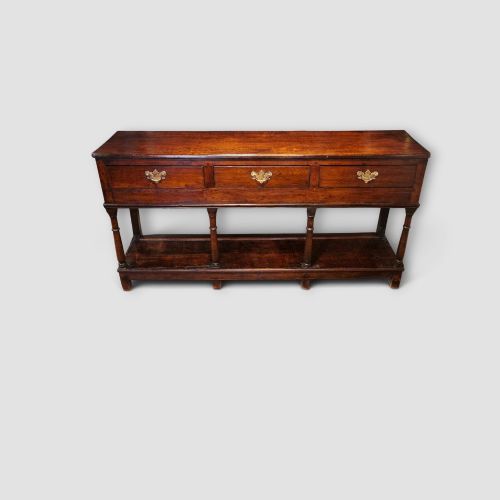
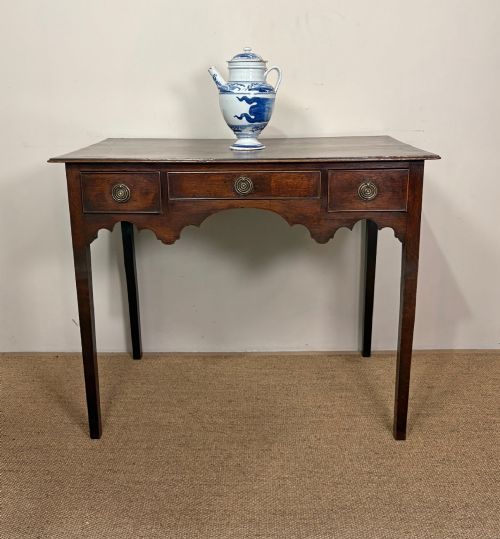
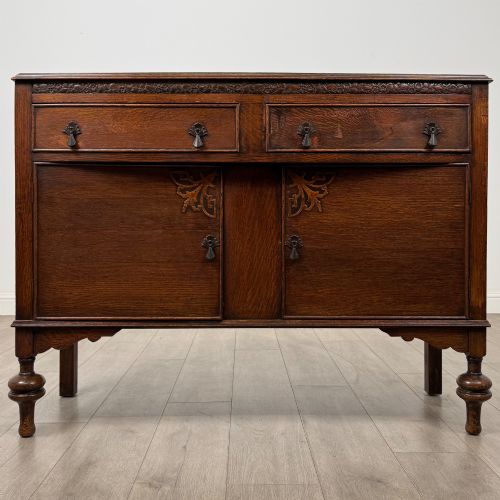
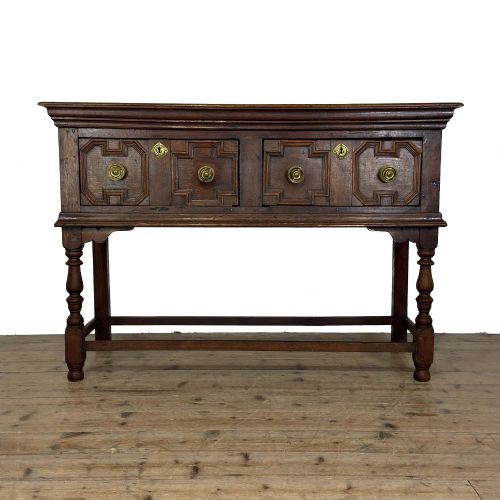
The version you are most likely to meet on this page is a sturdy dresser base, side table, or lowboy constructed from solid oak, often featuring practical drawers or lower potboards. These utilitarian items served kitchens and dining rooms for generations before finding a place in modern reception spaces.
Makers and craftsmen built these items to function as reliable surfaces for food preparation, serving, and storage. Their forms reflect the practical demands of historic households, utilising generous proportions and robust timber frames.
How they were made
Makers relied on solid oak as the primary timber, valued for its durability and prominent grain pattern. Iron and brass fittings such as drop handles and drawer pulls provided functional hardware, while occasional examples incorporated wood inlay or marble tops.
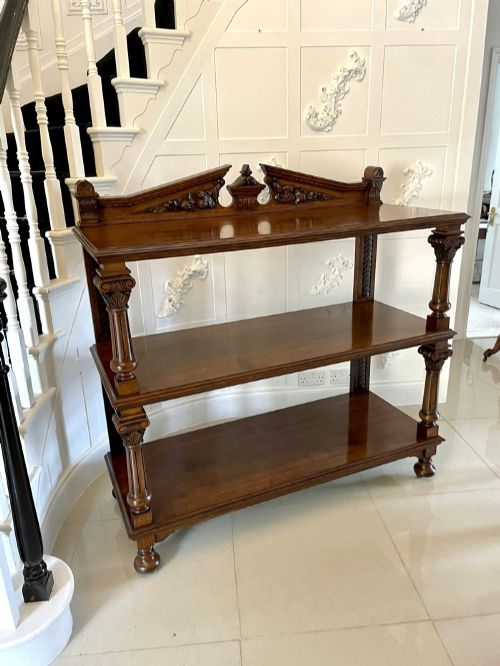
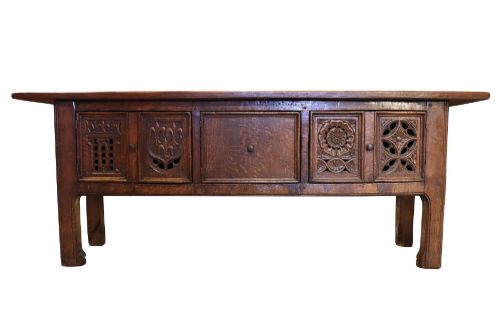
Construction methods involved traditional joinery techniques suited to heavy domestic use. Carved details, geometric mouldings, and panelled doors frequently adorned the structural framework, drawing upon Jacobean, Gothic Revival, and Georgian stylistic influences.
Some sturdy oak serving tables spent centuries absorbing spilled gravy and ale before retiring to quiet hallways.
What varies in quality
The distinction between ordinary and superior pieces rests upon the quality of the timber selection and the crispness of any hand carving. Dense, well-figured oak with deep natural patination commands greater appreciation than plain timber.
Proportion and structural integrity also define a superior example. Pieces maintaining balanced dimensions, original brass hardware, and sound joinery demonstrate the skill of the original workshop.
The Dark Oak Server Table Glossary
- Dresser base
- A low wooden sideboard or table featuring drawers and sometimes a lower shelf, traditionally used for food preparation and serving. It forms the lower section of a larger traditional kitchen dresser.
- Lowboy
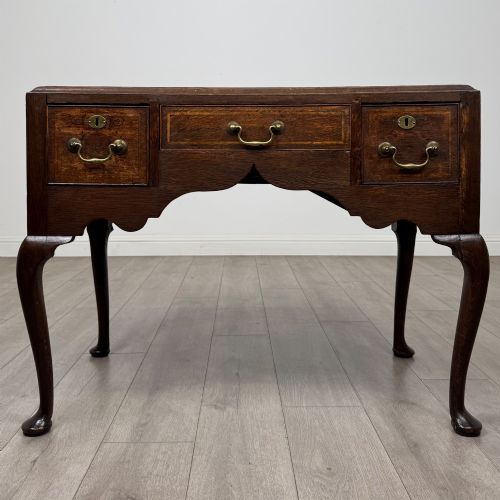
- A small oak side table fitted with drawers, standing on relatively tall legs. This form originated in the late seventeenth century and served various domestic functions.
- Potboard
- An open lower shelf fitted between the legs of a dresser base or serving table. It provided practical storage for pots and heavy kitchen utensils.
- Geometric moulding
- Raised wooden decoration arranged in repeating geometric patterns on drawer fronts or cabinet doors. This technique was particularly popular during the seventeenth and early eighteenth centuries.
- Cabriole leg
- A furniture leg that curves outward in a convex arc and then bends inward in a concave arc, terminating in a foot. It became prominent in British furniture during the early eighteenth century.
Dark Oak Server Table: Frequently Asked Questions
What is a dark oak server table used for today?
These tables function well as sideboards in dining rooms for serving food and storing tableware. They also serve as console tables in hallways or living areas.
The deep wooden tones and practical surface area provide both storage and display space for lamps, books, and decorative items.
How can I tell an 18th-century piece from a later revival?
Eighteenth-century examples display natural timber patination, hand-cut joinery marks, and wear patterns consistent with extended domestic use. The construction methods reflect the hand tools of the period.
Later revival pieces often show machine-sawn timber elements and styling that imitates earlier eras while maintaining solid construction.
What maintenance do these oak tables require?
Regular dusting with a dry cloth keeps the timber surface clean. Applying traditional beeswax periodically helps nourish the oak and maintain its natural sheen.
Keeping the furniture away from direct heat sources and strong sunlight prevents the timber from drying out or splitting over time.
Did these tables originate in specific regions?
Many examples originate from English workshops, reflecting regional cabinet-making traditions from counties such as Lancashire. Continental pieces, including French provincial serving tables, also appear.
Local timber availability and regional style preferences influenced the distinct proportions and carving details found on these tables.