


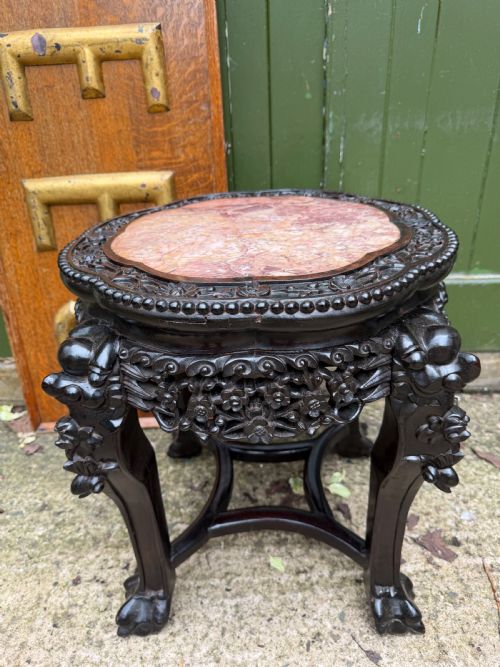

Dark Hardwood Occasional Tables
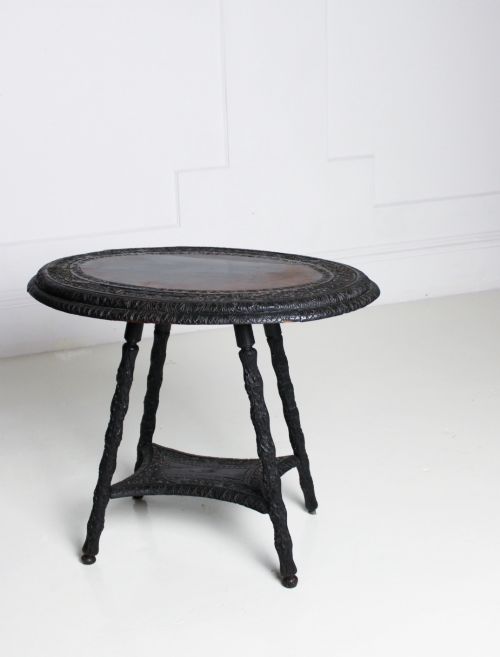
Dark hardwood occasional tables bring dense grain, deep carving and export craftsmanship into a room.
Dark Hardwood Occasional Tables
Dark hardwood occasional tables encompass side tables, plant stands and nested sets originating largely from 19th-century trade and colonial workshops. These pieces serve small surfaces in sitting rooms where compact utility meets substantial joinery.
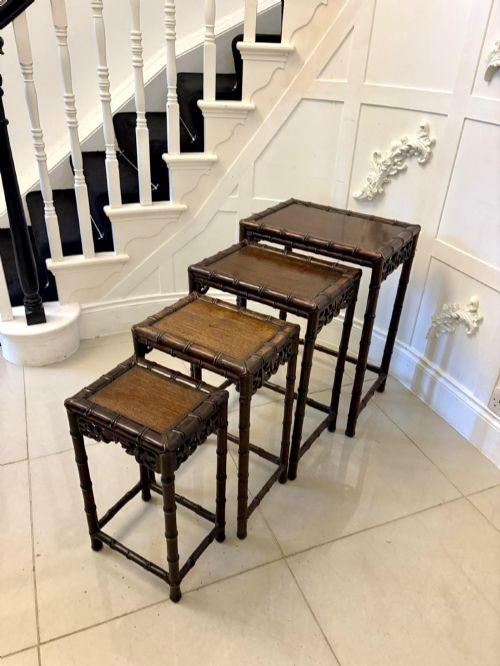
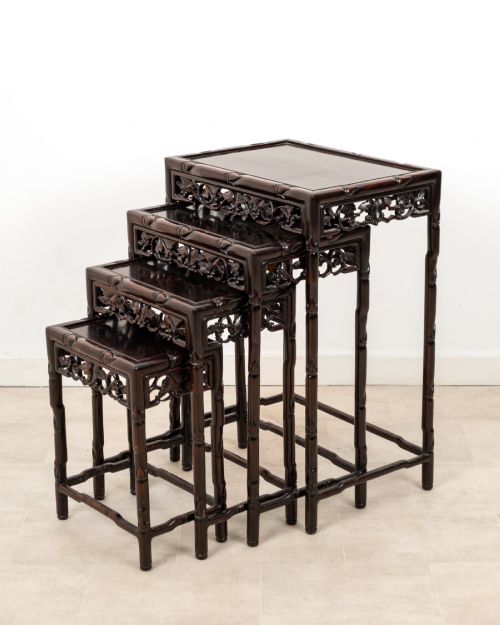
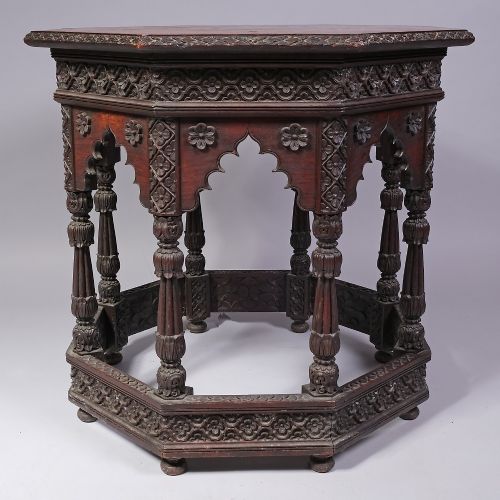
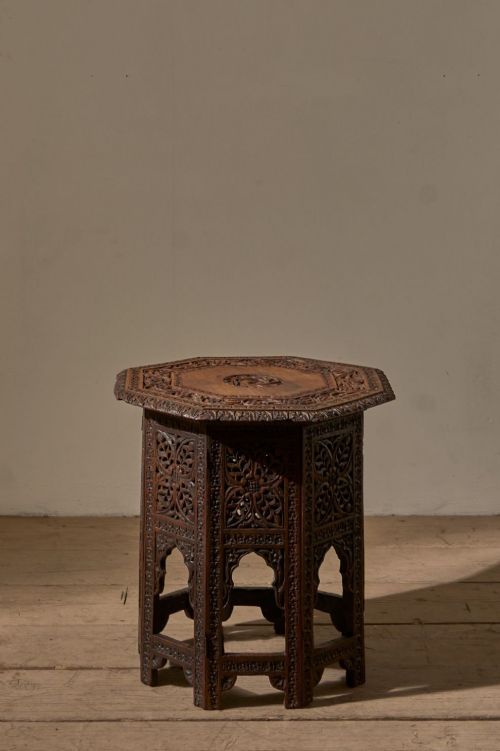
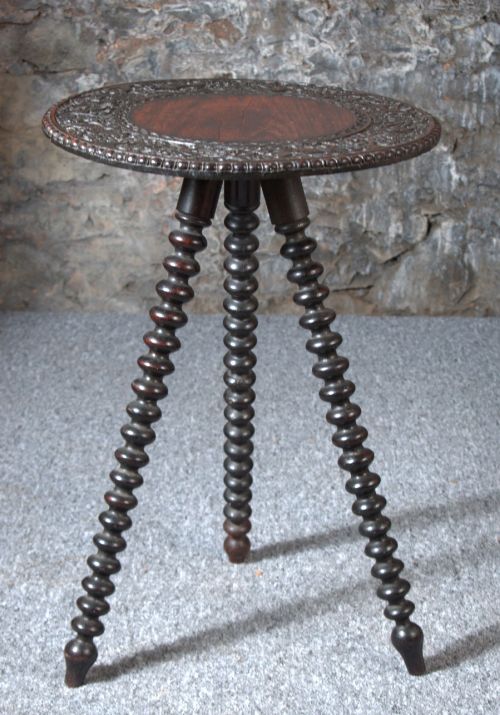
The selections here lean heavily toward Anglo-Indian production and Chinese export workshops, ranging from modest folding stands to elaborate multi-tiered nests. Forms span simple octagonal lamp tables and circular tilt-tops to complex nests of four graduated tables.
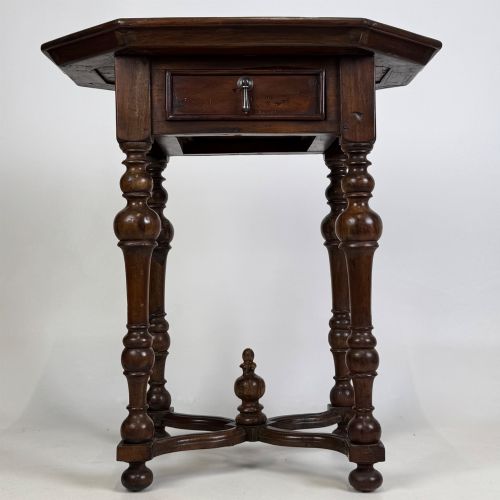
Makers drew on diverse design languages, uniting William & Mary influences with Qing Dynasty traditions and Moorish geometry. Buyers encounter pieces intended for expatriate homes alongside items made for domestic Asian markets.
How they were made
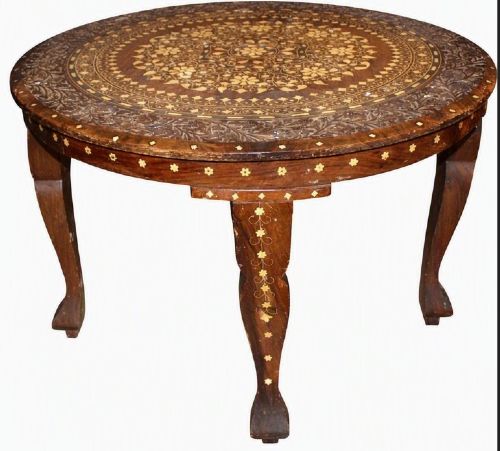
Constructors worked with heavy dense timbers including padauk, teak, rosewood, elm and hongmu, often carved across every available surface with foliage, dragons or geometric strapwork. These strong woods allowed deep relief work without compromising structural integrity.
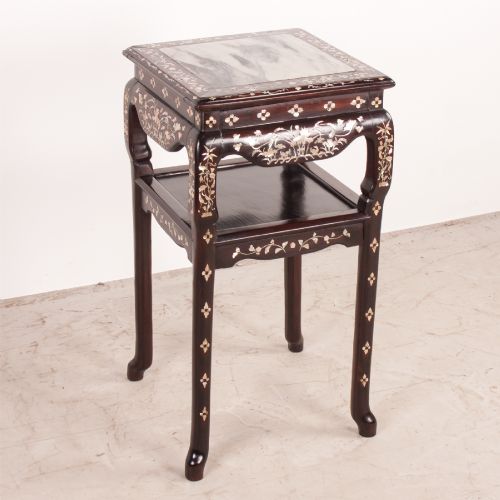
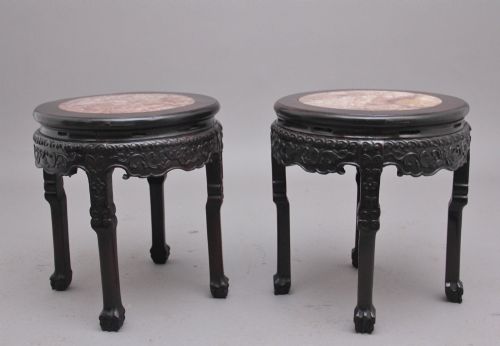
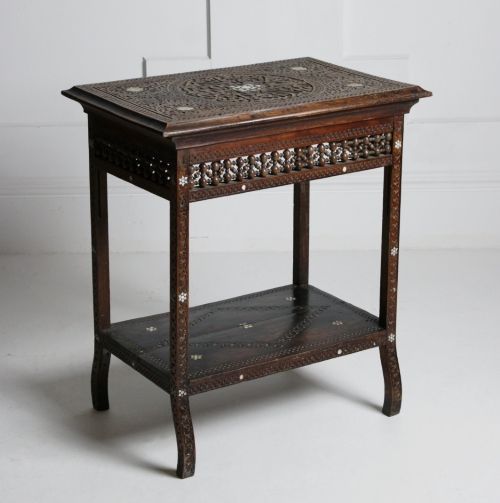
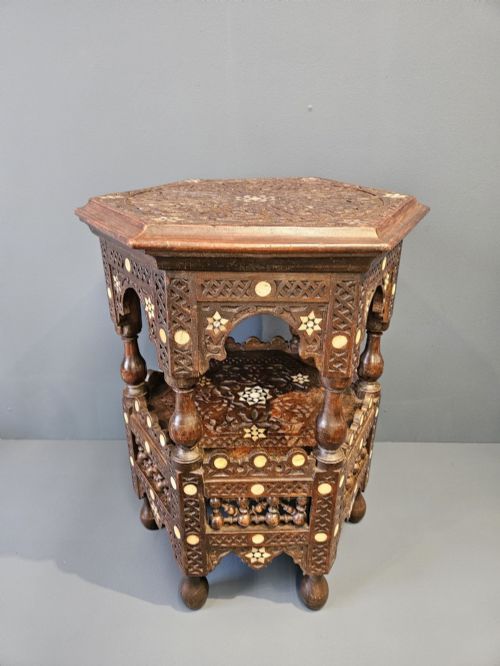
Many surfaces integrate contrasting materials such as polished marble inserts, mother-of-pearl inlay, bone work and brass wire or sheet. Joinery frequently incorporated folding frames or nested sliding dimensions designed for transport.
Carvers utilised hand chisels to execute undercut foliage and figurative elements, while inlay artisans set shell and bone into channels cut directly into the dense timber.
Several tables feature carved elephants supporting the top with their trunks, turning a simple occasional surface into a small menagerie.
What varies in quality
Quality rests in the crispness of the hand-carved detail and the selection of the timber grain. Finer examples display deep, sharp undercutting on foliage and animal motifs rather than shallow, mechanical stamping.
The integrity of inlaid elements - whether marble, bone or mother-of-pearl - determines the standard of the piece, as does the tightness of fit in nested sets. Superior tables maintain stable joints without excessive shrinkage cracks across wide timber panels.
Liberty & Co·Gabriel Viardot
The Dark Hardwood Occasional Tables Glossary
- Padauk
- A heavy, durable tropical timber with a reddish-brown hue that darkens with age. It accepts fine carving exceptionally well.
- Hongmu
- A Chinese term for dense hardwoods, literally meaning red wood. It describes several heavy timber species used in Qing Dynasty furniture.
- Nesting tables
- A set of graduated tables designed to slide one beneath another. They save floor space when not in use.
- Tilt-top table
- A table with a hinged top that pivots to a vertical position. This mechanism allows the furniture to stand flat against a wall when idle.
- Japonisme
- A 19th-century artistic movement reflecting Japanese aesthetic influence on European design. It appears in furniture featuring asymmetrical compositions and natural motifs.
Dark Hardwood Occasional Tables: Frequently Asked Questions
What is an occasional table?
An occasional table is a small, movable piece designed for specific, intermittent use in a room, such as holding a lamp, drink or book.
These items provide surface space without dominating a floor plan, making them practical for corners and beside seating.
How do I identify Anglo-Indian tables?
Anglo-Indian tables combine British furniture forms with dense, traditional Indian carving motifs such as elephants, dense foliage and pierced fretwork.
They frequently employ heavy tropical timbers like teak and padauk, reflecting colonial production for export markets.
What are nesting tables used for?
Nesting tables provide multiple small surfaces that stack together in a single footprint. They deploy easily when guests require extra tables for drinks.
Historically, sets often consisted of four graduated pieces that slide snugly beneath the largest top.
How do I clean marble top tables?
Marble inserts require gentle cleaning with a damp cloth and mild, neutral soap to avoid dulling the polished surface. Acidic liquids must be kept away from the stone to prevent etching.
Wooden surrounds need regular dusting and occasional nourishment with appropriate wax suited to dense hardwoods.