


Dark Bronze Spelter Figures
Dark bronze spelter figures are cast zinc-alloy ornamental pieces finished with dark patination, offering the weight and presence of bronze at a domestic scale.
Dark Bronze Spelter Figures
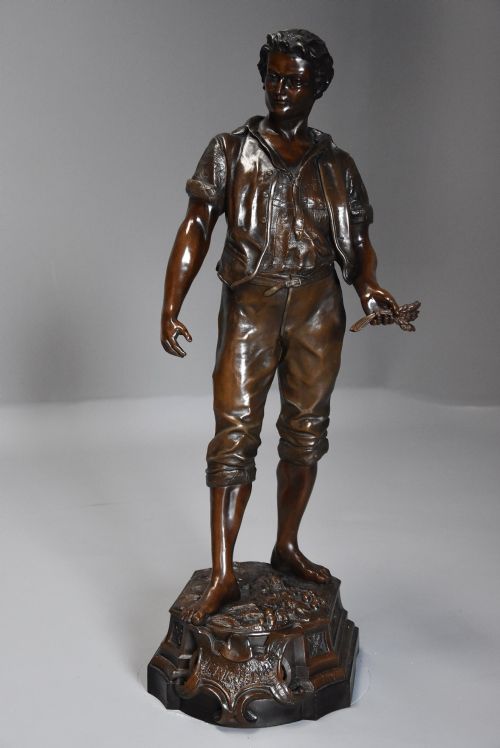
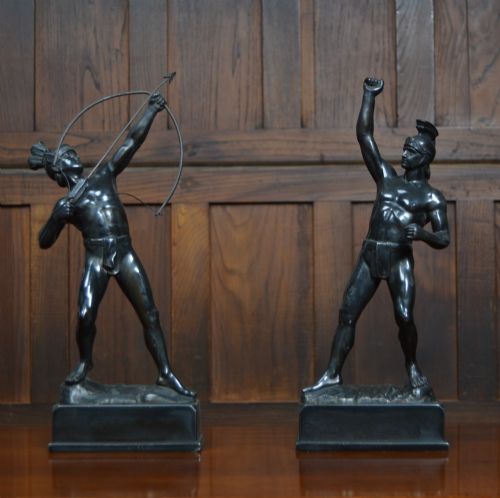
Dark bronze spelter figures comprise decorative sculptures, figural lamps, candlesticks, bookends, and mirrors produced across the nineteenth and early twentieth centuries. These pieces typically depict historical characters, soldiers, farm labourers, cavalier figures, or classical subjects styled to resemble heavier cast bronze. French workshops generated a significant proportion of these works, utilising zinc alloy as an accessible medium for domestic display.
Buyers encountering dark bronze spelter figures will frequently find pairs of candlesticks, matching bookends, or individual sculptural models mounted on timber, marble, or metal bases. The surfaces carry a dark bronze finish, bronze patination, or silvered treatment that mimics traditional foundry patinas. These objects span periods from the mid-Victorian era through the Edwardian period and into the Art Deco years of the nineteen thirties.
What varies in quality in dark bronze spelter figures
The integrity of the original surface finish and patination largely determines the visual coherence of the piece. Well-preserved dark bronze patinas or patinated finishes that have aged evenly without extensive flaking or poor repainting maintain the intended aesthetic of the sculpture.
Listings for dark bronze spelter figures frequently feature Victorian and Edwardian periods, alongside materials such as zinc alloy, marble, and glass.
F.Milliot·Auguste Moreau
The Dark Bronze Spelter Figures Glossary
- Spelter
- A zinc alloy commonly utilised for nineteenth-century decorative sculptures and ornamental metalwork. It provides a lighter and more affordable alternative to traditional bronze casting.
- Patination
- The surface coloration or applied finish that alters the appearance of the metal. In these pieces, dark bronze patinas are applied to simulate aged bronze.
- Figural
- Containing human or animal forms as the primary decorative element. These figures often represent historical, literary, or allegorical characters.
- Ormolu
- Gilt metal mountings occasionally found accompanying decorative pieces, though spelter relies primarily on dark bronze or painted finishes. It denotes applied gilding over base metals.
- Spelter casting
- The manufacturing process of pouring molten zinc alloy into moulds. This technique defined nineteenth-century mass ornamental production.
Dark Bronze Spelter Figures: Frequently Asked Questions
What is a spelter figure?
A spelter figure is an ornamental sculpture cast from a zinc alloy rather than traditional bronze or brass. These pieces were widely produced in the nineteenth and early twentieth centuries for domestic decoration.
Craftsmen finished the metal with dark patinas to mimic the appearance of genuine bronze sculptures. They frequently took the form of historical characters, soldiers, or allegorical figures.
How do I date a spelter figure?
Dating relies on stylistic clues, mounting materials, and any signature or foundry marks present on the base. Victorian and Edwardian examples often feature classical or Renaissance revival motifs.
Later pieces from the nineteen thirties lean towards Art Deco forms and functional items like bookends or electric lamps. Examining the base construction and fastener types also helps establish the era of manufacture.
Were spelter figures used for lighting?
Many figural spelter pieces doubled as functional lighting items, including candlesticks, mantel ornaments, and table lamps. Makers integrated torchere shades or lamp fittings into the sculptural design.
These functional objects allowed households to combine decorative art with practical domestic illumination during the Victorian and Edwardian periods.
How should I clean dark bronze spelter?
Cleaning requires only a soft, dry cloth to remove dust from the surface details and crevices. Moisture and harsh chemical cleaners should be avoided to protect the applied dark bronze patina.
Preserving the original surface finish maintains both the visual character and the historical integrity of the piece.