





19th Century Military Figurines
These 19th century military figurines capture historic campaigns and leaders in bronze, earthenware, and porcelain, offering a tangible link to the martial history of the Victorian era.
19th Century Military Figurines
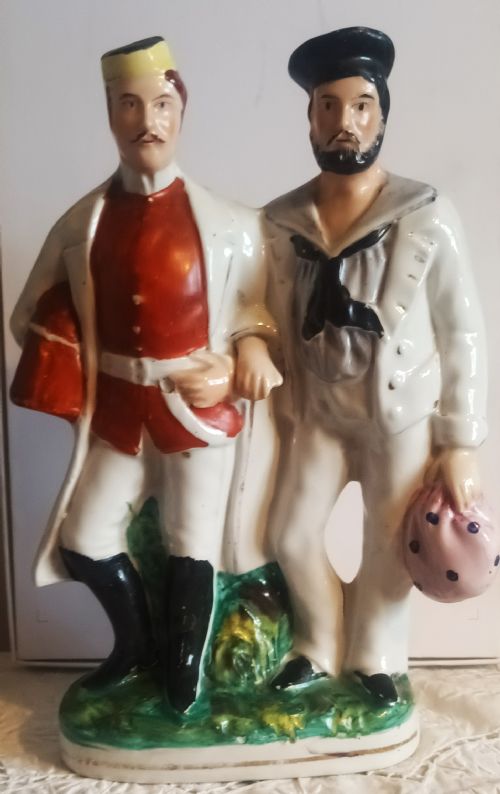
The objects range from modest Staffordshire portrait figures to substantial patinated bronze sculptures by named continental makers. These pieces were created to commemorate specific campaigns, historical events, and prominent military personalities of the nineteenth century.
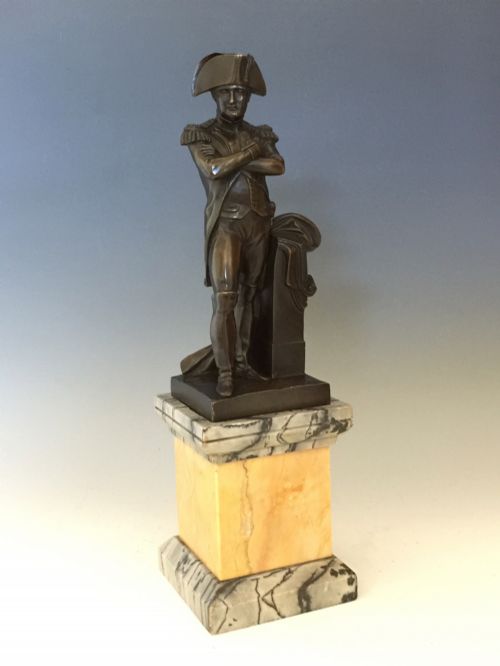
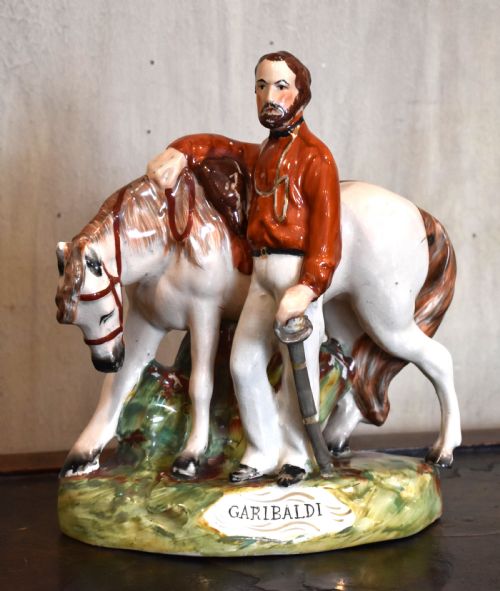
Subjects include French imperial figures such as Napoleon Bonaparte and Napoleon III, alongside classical and medieval commanders like Alexander the Great and Saladin. English subjects commonly celebrate domestic royalty and military figures such as Prince Albert and Garibaldi.
How they were made
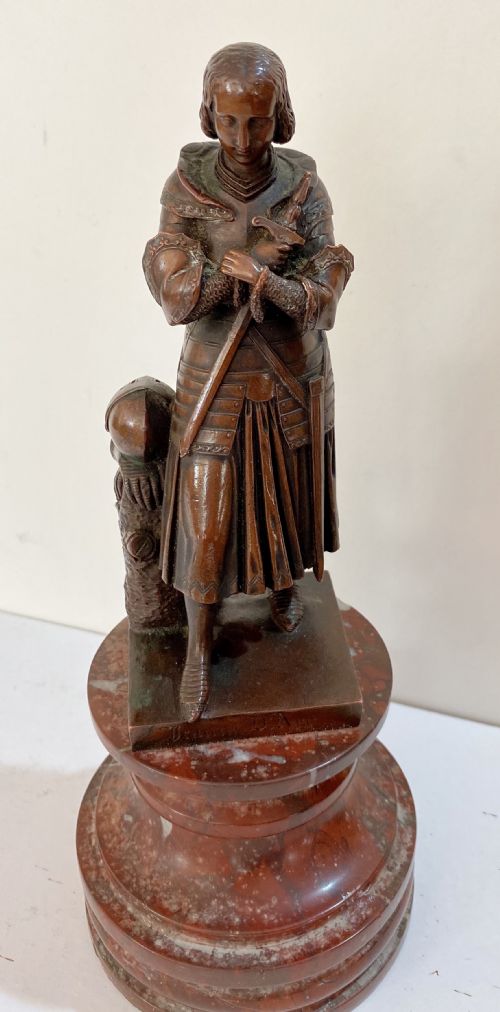
Bronze figures are produced through traditional metal casting methods, finished with patination to create deep brown or black surface tones. These casts frequently bear the distinct signature or stamp of the foundry or sculptor.
Earthenware pieces utilise moulded clay bodies decorated with lead glaze and hand-painted enamel colours. Staffordshire potteries shaped these figures in two-part moulds before firing and hand-colouring the details.
Alexander the Great rides into battle on a pair of porcelain elephants rather than a horse.
What varies in quality
E.H. Dumaige·C. Anfrie·Meissen
The 19th Century Military Figurines Glossary
- Patinated bronze
- Bronze that has been treated with chemical solutions to produce a specific surface colour, most commonly deep brown, green, or black. This finish protects the metal and defines the sculptural contours.
- Staffordshire pottery
- Earthenware figures produced in the potteries of Staffordshire, England, typically painted with enamel colours over a lead glaze. They served as affordable decorative mantel ornaments during the Victorian period.
- Spelter
- An alloy of zinc and lead often used as a cheaper alternative to bronze for nineteenth-century figures. It is softer than bronze and generally finished with a metallic paint or bronze-look coating.
- Enamel
- Opaque vitreous material fused to pottery or metal surfaces through firing to provide permanent colour. On earthenware figures, it is applied by hand over the initial glaze.
19th Century Military Figurines: Frequently Asked Questions
What materials are these figurines made from?
The pieces available utilise materials such as cast bronze, patinated bronze, spelter, and earthenware ceramic.
Pottery pieces feature lead glaze and hand-painted enamel decoration, while metal sculptures rely on patination for their surface finish.
Who do these figures typically depict?
Subjects include prominent historical commanders, French emperors such as Napoleon Bonaparte, and nineteenth-century political figures.
You also find figures of classical heroes like Alexander the Great and medieval leaders such as Saladin alongside British royals.
How do I identify a Staffordshire figure?
Staffordshire figures are made from earthenware ceramic with a characteristic lead glaze and hand-painted enamel colours.
They were produced in English potteries as decorative mantel ornaments and often depict named historical or royal personalities.
What is the difference between bronze and spelter?
Bronze is a durable copper alloy that takes a deep, stable patination and allows for sharp sculptural detail in casting.
Spelter is a softer zinc alloy used for more economical nineteenth-century figures, typically finished with a bronze-effect coating.