
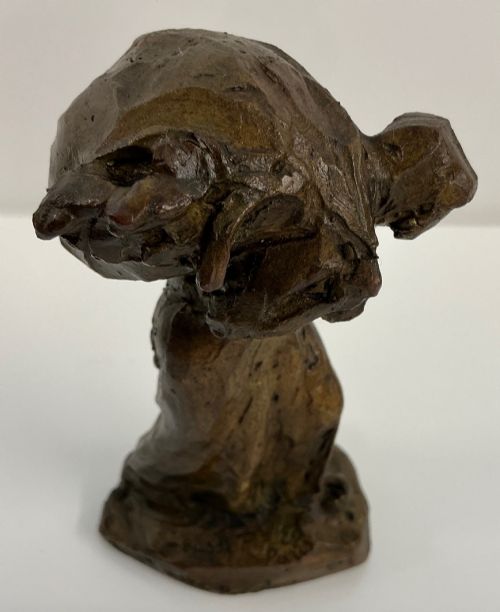
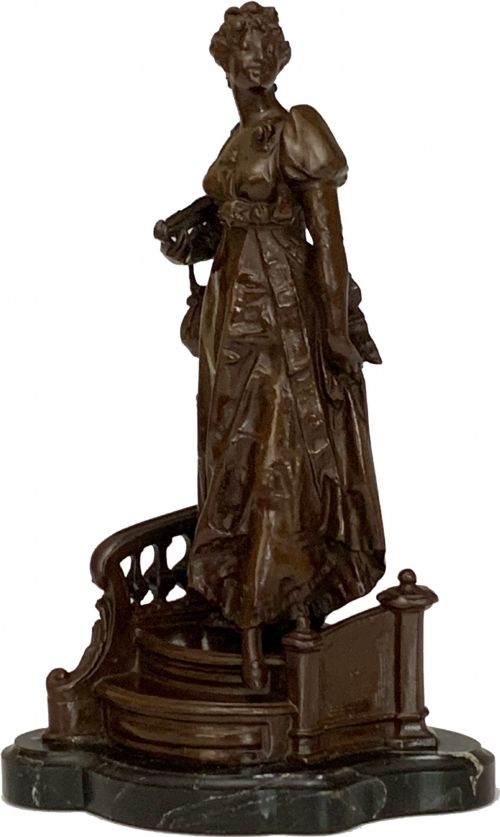
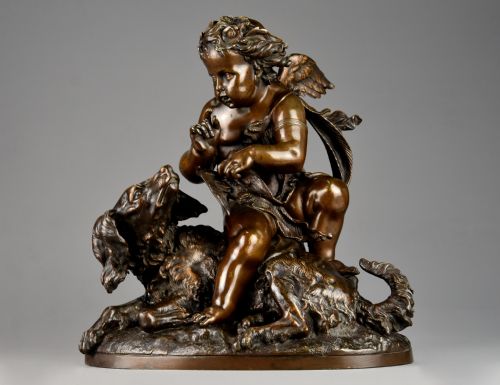


Dark Bronze Figural Statue
A dark bronze figural statue brings sculptural weight and narrative detail to a room, drawing the eye with rich patination and classical or romantic forms.
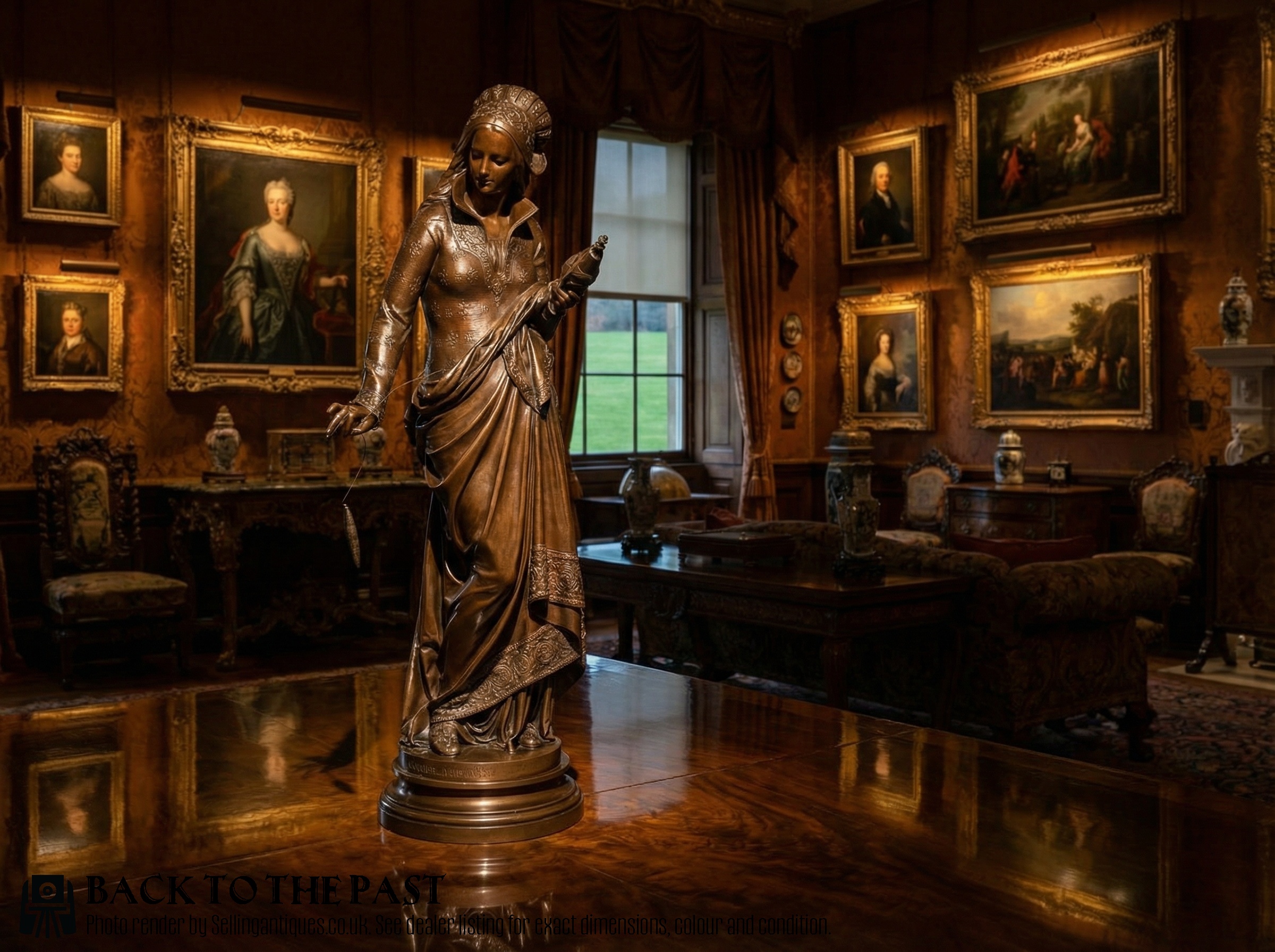
Dark Bronze Figural Statue
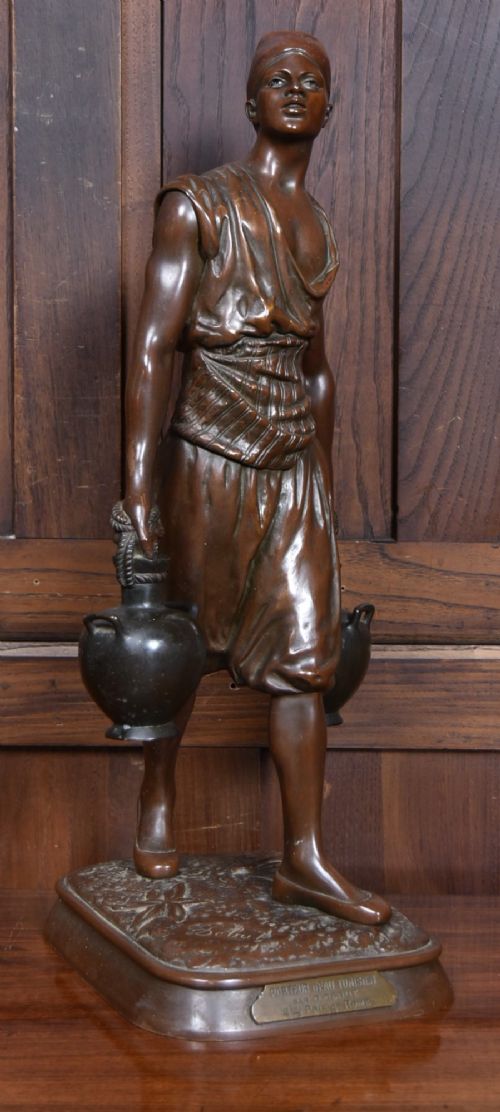
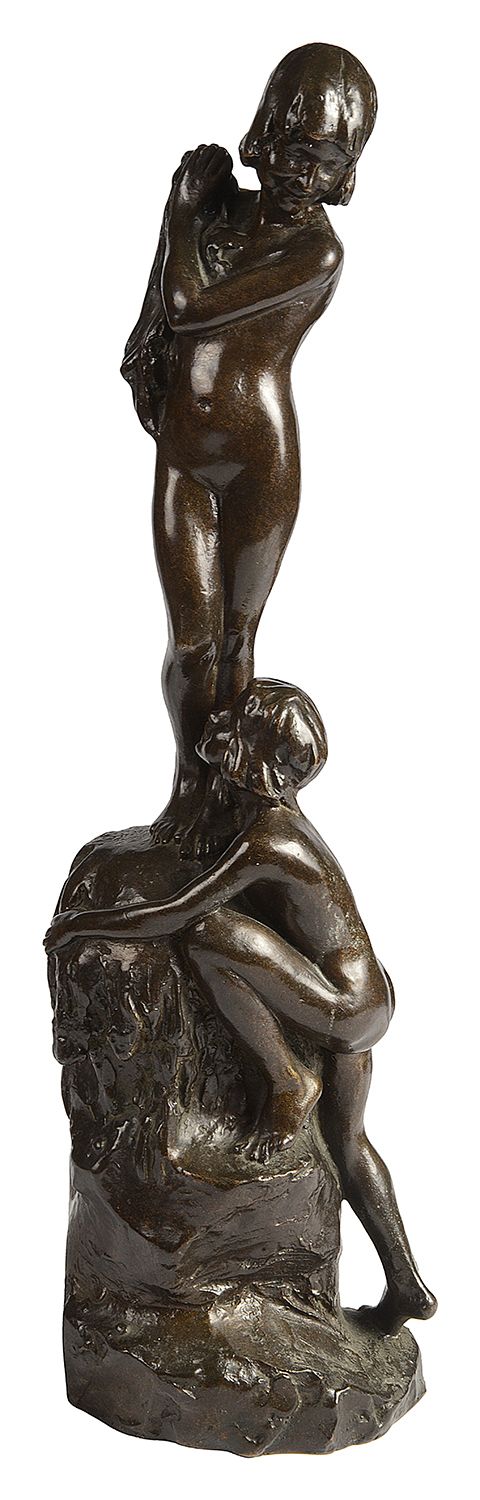
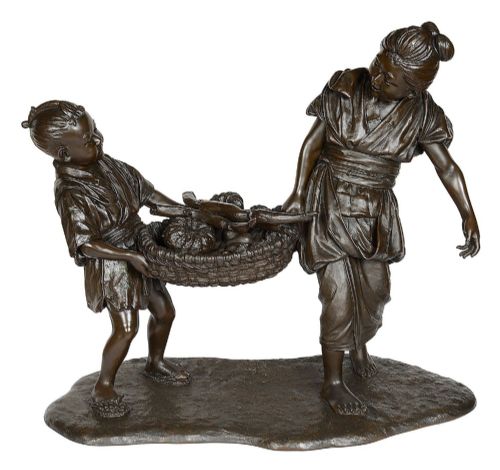
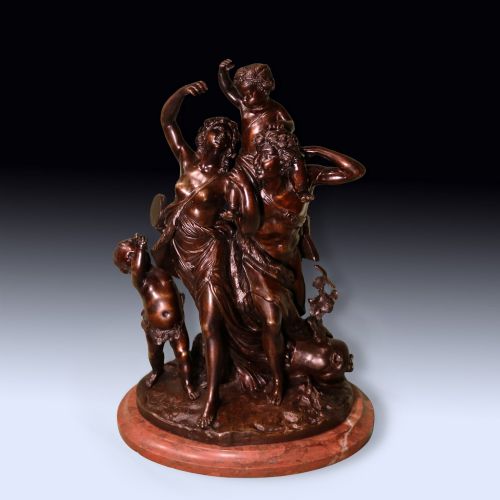
When you search for a dark bronze figural statue, you encounter cast metal sculptures that portray human figures, mythological subjects, and allegorical scenes. These works range from small tabletop studies to large floor-standing pieces that double as lamps or torchieres.
The versions most commonly met on this page originate from nineteenth-century France, alongside pieces spanning the eighteenth to the early twentieth century. Makers rendered subjects varying from children bathing and classical nymphs to Renaissance soldiers and literary characters in solid metal.
Many of these statues incorporate functional elements such as candelabras, candle holders, and lamp fittings alongside their purely sculptural forms. They frequently rest on integrated marble bases or wooden plinths that complement the dark patinated metal.
What varies in quality
The division between standard production pieces and superior works lies in the crispness of the chasing and the depth of the metal finish. Master founders cleaned up every casting seam by hand with chisels and files, preserving sharp musculature and delicate drapery folds rather than leaving soft, blurred edges.
Signatures from recognised sculptors and foundry stamps elevate a piece, indicating a higher tier of artistic conception and supervisory oversight during casting. The weight of the metal and the stability of the mounting also signal the integrity of the construction.
Several bronze subjects capture animals behaving remarkably like people, including dogs sitting attentively and cats joining children in play.
E.A. Clapp·Jules Dalou·Georges Van Der Straeten·Clodion·Giambologna·Hector Lemaire·Emile Picault·Humphrey Hopper·Claudius Marioton·Auguste Moreau·Lucien Madrassi·Emmanuel Villanis·Dumond·Jean-Jules Cambos·H. Moreau·Carl Kauba
The Dark Bronze Figural Statue Glossary
- Patina
- The surface coloration and sheen developed naturally over time or applied chemically by the foundry. Dark bronze patinas range from deep chocolate brown to near black.
- Spelter
- A zinc alloy commonly used as a less expensive substitute for bronze in nineteenth-century figures. It possesses a lighter weight and typically holds a painted or electroplated dark finish.
- Torchere
- A tall ornamental stand or standing lamp designed to hold lights aloft. Several pieces in this category integrate figural bronze statues with lamp fittings.
- Chasing
- The manual finishing process where a metalworker refines the surface of a raw casting with punches and chisels. This step restores details lost during the mould-removal process.
Dark Bronze Figural Statue: Frequently Asked Questions
How do I clean a dark bronze figural statue?
Dust the surface gently with a soft, dry microfibre cloth to remove settling particles without disturbing the underlying patination. Avoid using water, oils, or household cleaning sprays, which can strip the chemical finish or leave residue in recessed details.
Apply a very thin coat of microcrystalline wax if the metal appears dry, buffing it off completely with a clean cloth. This creates a protective barrier against moisture and handling without altering the dark tone.
Are spelter and bronze statues easy to tell apart?
Spelter is noticeably lighter than bronze when lifted and often reveals a grey or silvery metal underneath where the dark surface coating has worn away. Bronze maintains a denser feel and shows a warm golden-brown tone beneath scratches.
Examine the underside or threaded mounting areas for clues, as spelter is softer and more prone to bending or flaking under pressure. True bronze withstands handling firmly and ages with a stable, deep patina.
What rooms suit these figural statues best?
These pieces fit naturally into studies, libraries, and hallways where their dark metallic tones anchor traditional or eclectic interior schemes. Statues that double as lamps or candelabras bring functional ambient light to sideboards and mantelpieces.
Place them on sturdy wooden furniture or stone surfaces where their weight is fully supported and their silhouettes stand against a neutral background.
How can I identify the period of a bronze figure?
Look at the style of the dress, hair, and base construction, comparing them against known nineteenth-century design movements like Art Nouveau or Neoclassical revival. Signatures or foundry stamps etched into the base metal often point to active dates for specific sculptors and workshops.
The casting method and the composition of the attached marble or wood plinth also offer clues, as earlier nineteenth-century pieces often utilised specific multi-part construction techniques.