


Bronze Nude on Marble Base
A bronze nude on marble base brings classical form or striking modernity into a room, uniting metal and stone.
Bronze Nude on Marble Base
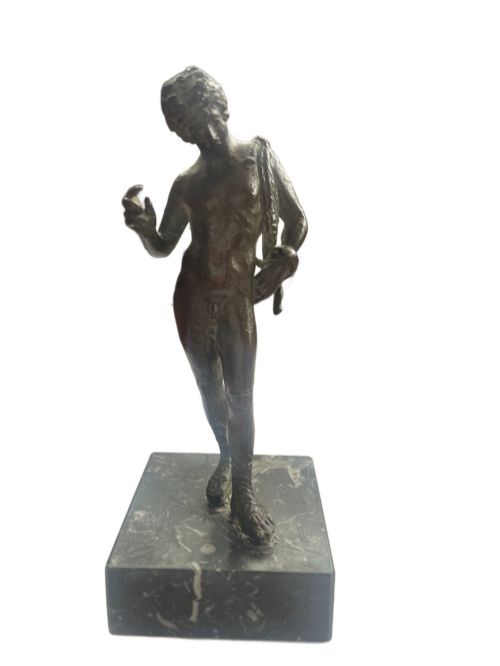
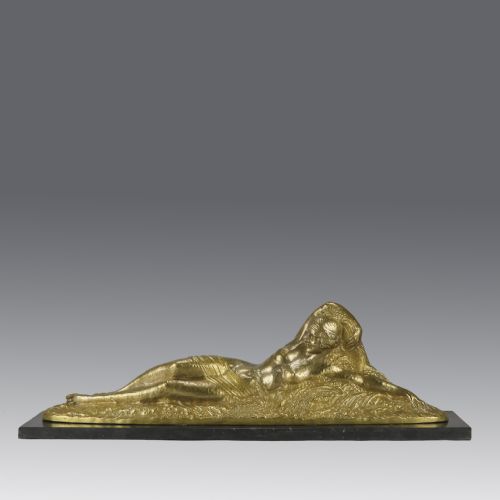
A bronze nude on marble base combines figurative metal sculpture with a sturdy stone plinth, appearing in forms ranging from mythological figures to modernist dancers. Buyers encounter these pieces as cabinet bronzes, bookends, table lamps, and larger decorative sculptures.
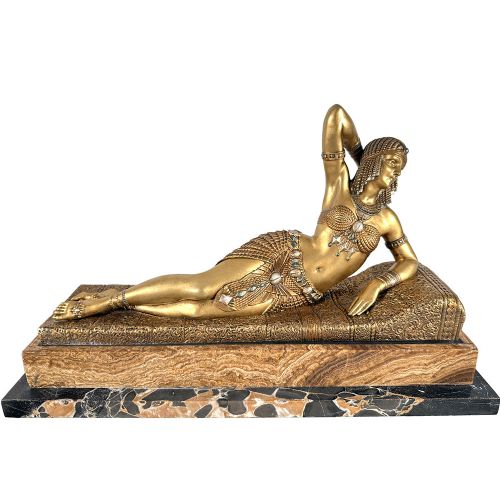
The selection on this page draws heavily from nineteenth-century Grand Tour souvenirs and twentieth-century Art Deco creations. These works capture human figures in motion or repose, supported by bases of plain marble, fossil marble, or onyx.
How they were made
Foundries shaped the figures using traditional metal casting techniques, then applied patination, cold painting, or gilt finishes to the surface of the bronze. Artisans frequently mounted these metal sculptures onto shaped blocks of marble or onyx to provide stability and visual contrast.
Makers utilised various alloys alongside stone, sometimes incorporating enamel or glass details into the composition. The joinery between the bronze figure and the stone base often relied on threaded pins or concealed fixings embedded in the marble.
Several sculptors turned athletic Greek heroes and dancing fauns into domestic companions for nineteenth-century mantelpieces.
What varies in quality
The refinement of the chasing and the subtlety of the patination distinguish superior casts from simpler commercial productions. Artisans who spent time hand-finishing the metal surface achieved sharper anatomical detail and more expressive drapery.
The choice and preparation of the mounting stone also mark the distinction between ordinary pieces and finer examples. Dense, well-polished fossil marble or richly veined onyx elevates the overall presence of the sculpture.
Ferdinand Preiss·Demetre Chiparus·Eugene Barillot·Maurice Guiraud Riviere·Claire Jeanne Roberte Colinet·Pierre le Faguays·Franz Iffland
The Bronze Nude on Marble Base Glossary
- Patination
- The chemical treatment or natural ageing applied to the surface of the bronze to create colour and tone. This process accentuates the contours of the figure.
- Grand Tour
- A nineteenth-century tradition where travellers collected classical souvenir bronzes in Italy. These pieces frequently replicate ancient sculpture.
- Cold painted
- A technique where paint is applied to an unheated bronze casting, often seen in specific twentieth-century decorative figures. The pigments require careful handling to survive intact.
- Fossil marble
- A natural limestone containing ancient organic remains, cut and polished for use as a sculptural base. Its patterned surface provides a distinct geological backdrop to the metal figure.
Bronze Nude on Marble Base: Frequently Asked Questions
How do I clean a bronze nude on marble base?
Dust the bronze gently with a soft dry brush and wipe the marble with a slightly damp cloth. Avoid harsh chemical cleaners that might strip the patination from the metal.
Keep the piece away from direct sunlight and excessive moisture to protect both the bronze surface and the polished stone plinth over time.
What periods do these sculptures come from?
The listings span the nineteenth century through the early decades of the twentieth century. Pieces from the eighteen-eighties and eighteen-nineties lean towards classical or Grand Tour subjects.
Works from the nineteen-twenties and nineteen-thirties typically showcase Art Deco styling, geometric lines, and stylised human figures.
Are all the bases made of marble?
Most bases consist of marble, but the evidence also records onyx and fossil marble among the stone supports. These natural stones were selected to complement the tone of the patinated metal.
Some examples feature multi-coloured or contrasting stone tiers to enhance the architectural presence of the sculpture.
How can I tell a Grand Tour piece apart?
Grand Tour bronzes usually replicate famous classical antiquities seen by travellers in Italy during the nineteenth century. Subjects frequently include mythological figures and ancient athletic statues.
These sculptures often rest on simple dark marble or slate plinths, designed as portable souvenirs of educational journeys abroad.